
Saint Modoald of Trier
Originally from Aquitaine and close to the Carolingian family, Modoald became Bishop of Trier during the reign of Dagobert. He succeeded in converting the king to a holier life, using royal largesse to found numerous monasteries, including that of Saint-Symphorien directed by his sister Severa. He governed his diocese with charity and simplicity for more than twenty years.
Contemporaries

Figures and markers around the normalized period for this entry.
Guided reading
6 reading sections
SAINT MODOALD, BISHOP OF TRIER (640).
Origins and illustrious kinship
Modoald was born in Aquitaine into an influential family, allied to Pepin the Short and brother of Itta, mother of Saint Gertrude of Nivelles.
Life at court and elevation
Educated in piety and the sciences, he joined the court of King Dagobert where he associated with Saint Arnulf and Saint Cunibert before being appointed Archbishop of Trier.
Modoald received an excellent education from his parents, both in terms of science and piety. He was received at the court of Dagobert, where he met several figures of great virtue, such as Arnulf of Metz and Cunibe rt of Cologne. T he li centiousness that re igned at court did not cause him to lose any of his piety, which is why Dagobert chose him to raise him to the archiepiscopal see of Trier.
Advisor to King Dagobert
Modoald exerts a moral influence on Dagobert, calling him back to virtue and obtaining significant gifts from the sovereign for the Church.
When, after the feast of Saint Arnulf, the king had given himself over to the most dissolute life, our Saint, while carefully watching over his flock, did not cease to warn the king and call him back to self-respect and the observance of the law of God. His counsel finally bore fruit, God having touched and changed the heart of the prince, to the great advantage of the Catholic faith and religion.
From this happy change onwards, Dagobert, weeping for the faults of his past life, always looked upon Modoald as his father, and he called him by that name, adding, to his marks of affection, rich gifts intended for the adornment and expansion of the Church of God. It was with these liberalities that Modoald erected numerous monasteries in honor of Christ and his holy Mother, and richly endowed others.
Foundations and religious life
Thanks to royal generosity, he founded several female monasteries, notably for the daughters of Dagobert and for his own sister Sévéra.
He also founded several congregations of nuns, always with the generosity of Dagobert, who was all the more disposed toward this type of institution as he himself had two daughters of very great piety, and very zealous for the solitary and religious life. One of them, Irmine, founded a monastery at Horren, near Trier, and lived there with other virgins under the direction of Modoald. The other, named Adèle, after the death of her husband, followed the example of her sister and enclosed herself at Pointiolum, another monastery for women.
Modoald did not stop at these foundations; he built, on the banks of the Moselle, a third monastery for women which he placed under the invocation of Saint Symphorian of Autun. Could the holy bishop have better entrusted the care of the chaste spouses of Jesus Christ than to the young martyr who had united so much courage with so much innocence? He established his s ister, Sévéra, as the first abbess of the community; and this pious virgin sanctified herself there by taking the holy patron of her monastery as her model.
There, without shedding her blood for Jesus Christ, she too was nevertheless a voluntary victim, not of her faith, but of her love: for, did she not immolate each day on the altar of charity, by the sword of mortification, her body, her will, her heart? The fervent abbey that she governed, by following the advice of her brother, with a firmness tempered by the most amiable mildness, was simple and modest. Instead of gold and silver, one saw shining there like precious stones, says the hagiographer, all the religious virtues upon which the white pearl of virginal purity radiated its soft brilliance. What a delightful flowerbed in the eyes of the angels was this holy house where, in the midst of all the others, the admirable abbess rose like a beautiful lily and blossomed under the gaze of God and Saint Symphorian, exhaling her celestial perfume!
Death, burial and cult
After twenty years of episcopate, Modoald died and was buried next to his sister Severa in the church of Saint-Symphorien in Trier.
Saint Severa is honored on August 20, and her brother, Saint Modoald, on May 12. Both wished to rest after their death next to each other in the church of Saint-Symphorien, having loved each other, the historian adds, like Saint Benedict and Saint Scholastica. This monastery was destroyed during the Norman invasion.
Sai nt Modoald at tained high perfection: his modesty, his simplicity, his patience, his charity for God and his neighbor were equal to those of the greatest Saints. When he had thus not only practiced piety for his part, but had also made great progress for religion throughout his diocese during the more than twenty years he governed it, he departed from this world to go to God.
Modoald has always been honored as the father of the poor and the refuge of the unfortunate. His head was formerly kept wit h great veneration in the archiepiscopal chapel of Trier.
Iconographic attributes
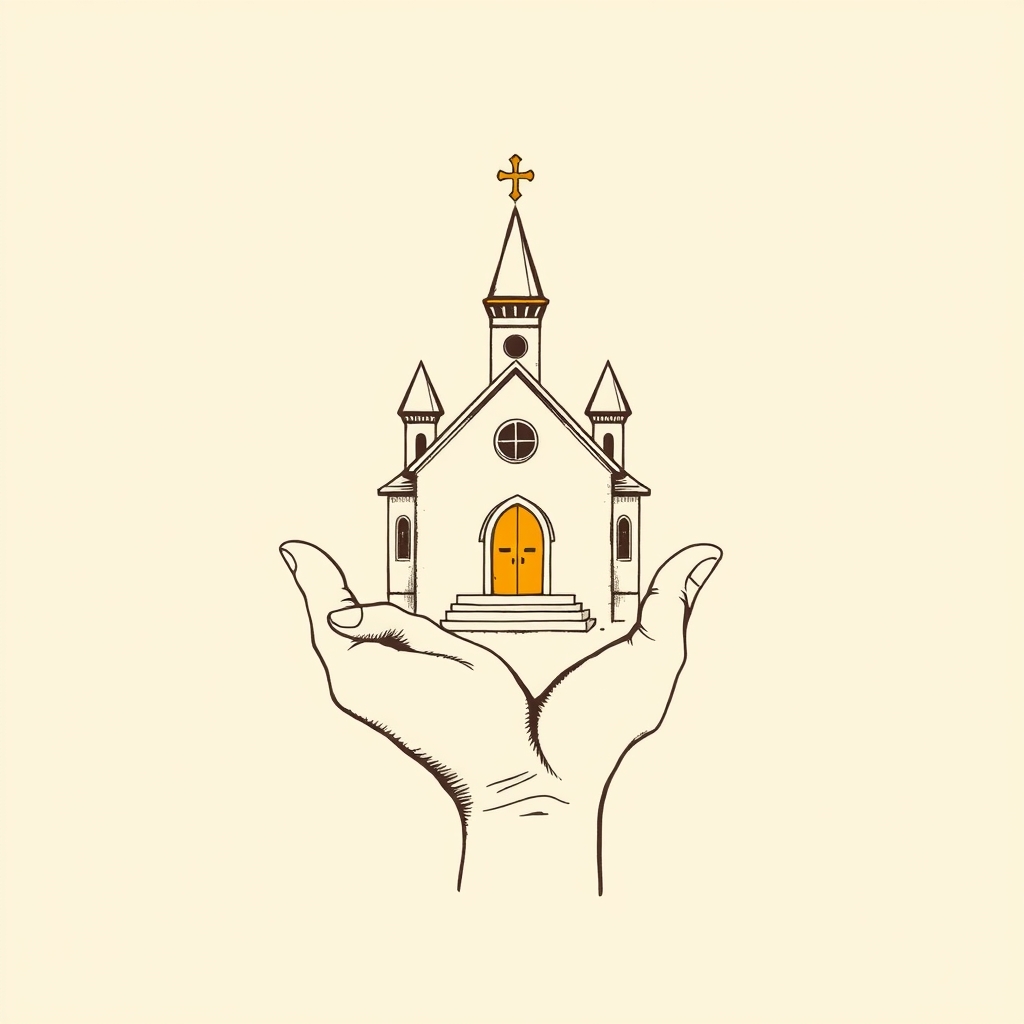
The saint is traditionally depicted carrying a church, a symbol of his founding of the monastery of Saint-Symphorien.
Saint Modoald is depicted with a church in his hand, to recall the founding of the monastery of Saint-Symphorien.
Proper of Trier; Cult of Saint Symphorien, etc.
Iconography
Signs and attributes
Entities
Narrative network
The names, places, and concepts most present in the entry, weighted by centrality in the text.
Frequently asked questions about Saint Modoald of Trier
Who was Saint Modoald of Trier?
Originally from Aquitaine and close to the Carolingian family, Modoald became Bishop of Trier during the reign of Dagobert. He succeeded in converting the king to a holier life, using royal largesse to found numerous monasteries, including that of Saint-Symphorien directed by his sister Severa. He governed his diocese with charity and simplicity for more than twenty years.
What is Saint Modoald of Trier the patron saint of?
Patronage of Saint Modoald of Trier: Trier.
What is Saint Modoald of Trier invoked for?
Saint Modoald of Trier is invoked for: father of the poor and refuge for the unfortunate.
How is Saint Modoald of Trier depicted in Christian art?
In iconography, Saint Modoald of Trier is recognizable by: church in hand.
Which saints were contemporaries of Saint Modoald of Trier?
Contemporaries include: Saint Priest (Prix), Saint Gregory the Great (Pope and Doctor of the Church), Saint Die (Didier, Deodat) and Saint Augustine of Canterbury.
When did Saint Modoald of Trier die?
Saint Modoald of Trier died around 700.
What are the other names of Saint Modoald of Trier?
Other forms of the name: Modould.
Who are the relatives of Saint Modoald of Trier?
Relatives of Saint Modoald of Trier: Itte (sister), Sainte Sévéra (sister), Pépin (brother-in-law) and Sainte Gertrude de Nivelle (niece).
Annexes & related entities
Structured data for exploration: events, miracles, quotes, places, attributes, patronages, and important entities cited in the text.
Key Events
- Scientific and pious education in Aquitaine
- Entered the court of King Dagobert
- Elevation to the archiepiscopal see of Trier
- Moral reform of King Dagobert through his counsel
- Foundation of numerous monasteries and congregations
- Governed the diocese for over twenty years
Quotes
-
Modoald has always been honored as the father of the poor and the refuge of the unfortunate.
Source text