
Saint Mayeul of Cluny
Fourth Abbot of Cluny in the 10th century, Mayeul was one of the greatest monastic reformers in Europe. Captured by the Saracens and having refused the papal throne, he governed his order with profound humility and great erudition. He died in Souvigny in 994, leaving behind a reputation as an exceptional thaumaturge.
Contemporaries

Figures and markers around the normalized period for this entry.
Guided reading
7 reading sections
SAINT MAYEUL, FOURTH ABBOT OF CLUNY
Youth and formation
Born around 906 in Valensole, Mayeul fled the barbarian invasions to take refuge in Burgundy. He studied in Lyon before becoming archdeacon in Mâcon, where he distinguished himself by his exemplary charity.
Saint Mayeul was born around the year 906, to a noble and opulent fami ly of Vale nsole, a small town in the diocese of Riez. He lost his parents at a very young age. Foucher, his father, had given twenty estates to the abbey of Cluny, along with the churches that depended on them. Our Saint still possessed immense holdings, which were ravaged by the Hungarians and the Saracens. Mayeul, because of the incursions of these barbarians, left Provence and retired to Burgundy, to Mâcon, to the home of a wealthy lord, his relative. Bernon, bishop of that city, having persuaded him to enter the ecclesiastical state, made him a canon of his cathedral and sent him to study philosophy in Lyon, a famous school, under a skillful master named Antoine, abbot of the monastery of Ile-Barbe.
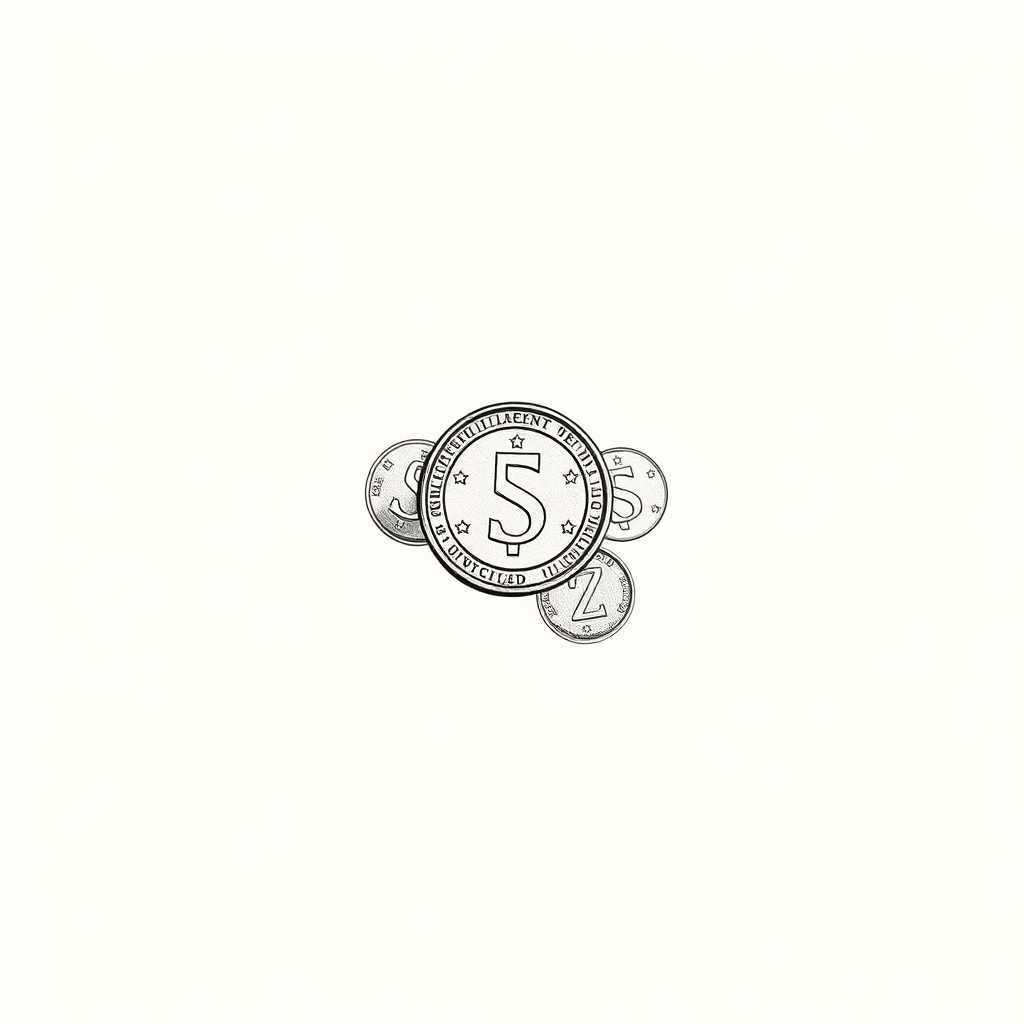
Upon his return to Mâcon, Mayeul was promoted, through all the degrees, to the diaconate by the bishop, who even made him archdeacon. He discharged this office, under Bernon and his successor Maimbeu, with the piety and charity of a new Stephen: he took no less care of the poor than of the altars; he was not content with distributing the alms of the faithful to them, as his position required; he added his own to them, that is to say, he devoted all his income to them, reserving for himself only the strict necessities for his daily subsistence. His steward reproached him for what he called his improvidence. During a famine, Mayeul could no longer give or borrow, or even feed himself and his people; his resources were exhausted. He stood firm, nevertheless, against the murmurs and discouragement of those who did not have the same trust in God as he did. He implored Providence; his faith was rewarded: he found near his room a purse containing seven silver coins. A scruple similar to that of the holy man Tobit made him fear that this purse belonged to someone else and was not intended for him. He had it announced throughout the city by a public crier that he was ready to return this sum to whoever had lost it: no one came to claim it. He distributed it entirely to the poor, even though he himself was reduced at that moment to the utmost indigence. The next day, there arrived from a place where he expected nothing, carts full of provisions, which finally put an end to the complaints of his steward and his servants.
Entry into Cluny and early responsibilities
After refusing the archbishopric of Besançon, Mayeul entered the Abbey of Cluny in 943. There, he served as librarian and secretary of the Order under Abbot Aymard.
Some time later, he was tasked with teaching philosophy and theology to the clerics of the church of Mâcon and to others who would come to follow his lessons. He performed this with great success and without charge: something that had not been done before him. It was not as easy for him to avoid applause as it was to avoid fees; but he gave no more place in his heart to vainglory than to avarice. Expecting his reward only from God, he would have wished to be known only by God. But he could not prevent his reputation from spreading far and wide. The archbishopric of Besançon having become vacant upon the death of Guifred, the clergy, the people, and the prince nominated Mayeul to occupy this see. But our Saint refused to acquiesce to this election, and, to shelter himself from the dangers of ambition and the illusions of the world, he entered the Abbey of Cluny , which was very flourishing under the government of Aymar d, its third abbot (943). Virtuous as he was, Mayeul had little more than his habit to change to lead the monastic life. He made progress there that drew all eyes upon him, as upon a model.
The abbot made him librarian and apocrisiarius. He fulfilled the first duty by filling the monastery's library with good books; he excluded profane poets from it, and would not even allow the religious to read Virgil. The office of apocrisiarius encompassed at once the functions of secretary of the Order, procurator, and treasurer. He was thereby obliged to make numerous journeys, in which he acted only out of obedience and remained always recollected. While going to Rome, when he was in Ivrea, he healed by the anointing of holy oil the monk Heldric (a former courtier of the King of Italy), who was accompanying him.
The Abbacy and the Trial of Humility
Appointed abbot in 948, he governed with profound humility, even accepting to be temporarily deposed by his predecessor Aymard to appease tensions.
In 948, Abbot Aymard, feeling old and blind, had Mayeul appointed abbot in his place; Mayeul was obliged to accept this charge so as not to disobey his superior, the Chapter of the Order, and several bishops assembled for this purpose.
Obliged to sign, as Abbot of Cluny, the acts where he had to put his name, he nevertheless regarded himself only as the vicar of the former abbot, or rather as the servant of all the religious of the house. Never was he seen to be more humble, more obliging, more exact, or more regular in doing what he was obliged to command others.
However, almost nothing was done except under his authority: the former abbot, having entirely lost his sight, judged himself quite useless for government and retired to the infirmary, where, while keeping his title, he was left to enjoy the rest that his infirmities and great age required. Although he was humble in his sentiments, patient in his afflictions, and very submissive to the orders of God, he did not appear insensible to sorrow and jealousy when he noticed that people were becoming accustomed to forgetting him, and he imagined that he was being despised. One day, when he sent to ask for cheese for his meal, the cellarer, burdened with several things at once, refused to give any to the brother who served him, and replied rather sharply that it was too much to have two masters in the house, and that one could not obey so many abbots who meddled in commanding at the same time. The old man, to whom the serving brother had the indiscretion to report this harshness, became quite seriously angry. The next day, he had himself led to the Chapter by the brother; and, addressing Mayeul, he told him that if he had raised him above himself, it was not to be persecuted by him; that he had only given him his authority as a father can give it to his son; that he had not sold it to him, and that he did not intend for him to use it to treat him like a slave. "Are you my master or my religious?" he added. Abbot Mayeul replied, with the gentleness that was natural to him, that he was still his religious, and that he would never regard himself otherwise, professing to obey him until the end. "If that is so," replied the blind old man, "quit the rank of abbot and resume your former place among the brothers." Saint Mayeul obeyed immediately; and Aymard, declaring himself the sole abbot, behaved as the judge and president of the Chapter. He immediately accused the cellarer who had offended him, had him prostrate himself on the ground, gave him a severe correction, and imposed upon him a penance as harsh as he deemed appropriate. After having thus performed the office of judge for half an hour, he stepped down from the seat and ordered Mayeul to return to it. Our Saint obeyed with the same ease and indifference that he had shown when he had stepped down, and gave, by this conduct, very solid proofs of his humility and the little attachment he had for a post that he only occupied against his will. From that time, which the former Abbot Aymard did not long survive, Mayeul governed his house and his Order with the reputation of the holiest man of his century, and God contributed to confirming this opinion by various supernatural graces, with which He took pleasure in filling him, to reward, or rather to increase, his virtue. Constantly applied to the needs of his religious, he provided with no less zeal for those of the poor and strangers, and he had even more ardor for the salvation of souls than for the preservation of bodies. Constantly, he was either instructing by word of mouth, or exhorting by letters, or making regulations for religious discipline, or answering consultations of conscience, or praying, or reading: for he was such an enemy of idleness and the waste of time that he always had a book in his hand, even when he was on horseback to make his journeys. This assiduity in study made him very well-versed in the science of the Holy Scriptures and the Canons. He had also made himself very skilled in civil law and philosophy, and he did not believe he was doing an injury to his profession, nor wasting the time he owed to his religious, by still sometimes reviewing the books of the ancient philosophers: he regarded this knowledge as captives, from whom it sufficed to remove what was foreign or harmful, in order to make them serve the truth of our religion or the regulation of our morals.
Reformer and advisor to the powerful
Mayeul reformed numerous monasteries in Europe under the impetus of Otto I and the popes. He is recognized for his vast culture and his influence among the sovereigns of his time.
He enjoyed great consideration among the popes, emperors, and kings of his time, several of whom had occasion to know his rare merit when the affairs of the Church and his Order, and sometimes even charity, compelled him to go to their courts. Otto I and the Empress Alice or Adelaide, his wife, charged him with reform ing the monasteries of Germany and others that were located in the lands of the empire. He worked there with great success in Ravenna, in Pavia, and in other places in Lombardy; in the country of the Swiss, in Swabia, and then in several other monasteries in Germany, where he re-established or had the Cluny institute received anew. He also reformed a great number in France, among others Marmoutier in Touraine, Saint-Germain d'Auxerre, Saint-Jean de Réolné or Moutier-Saint-Jean, Saint-Bénigne de Dijon, and Saint-Maur des Fossés, near Paris. A few years later, Pope Benedict VII had him take charge of that of Lérins or Saint-Honora t, to establish this same reform there. The authors of his Life, who, in the judgment of Baillet, deserve to be listened to as admissible witnesses—some because they lived with him, others because of their knowledge and probity—report various wonders that God operated through him to authorize the efforts he made for His glory, or for the advantage of the Church, or for his own sanctification. One of his favorite devotions was to go on pilgrimage to places where it was reported that God granted extraordinary graces under the invocation of His Saints. He satisfied his piety and charity along the roads by praying and distributing the alms of which he made good provision before leaving his abbey. One day, while he was visiting Notre-Dame du Puy-en-Velay out of devotion, a blind man told him he had received a revelation from Saint Peter t hat he would recover his s ight by washing his eyes with the water in which Abbot Mayeul had washed his hands. The humble abbot sent him away with a strong reprimand, and, knowing that he had asked his servants for this water, he forbade them, with threats, to give him any. The blind man was not discouraged: after being rebuffed several times, he waited for the abbot on his return from Le Puy, on the road, on a neighboring mountain named Mont-Joie, took his horse by the bridle, and swore that he would not leave him until he had obtained what he asked for; so that there would be no excuse, he carried water in a vase hanging from his neck. Mayeul, touched by such a lively faith, dismounted, and, having blessed the water, made the sign of the cross with it on the blind man's eyes; then, having prostrated himself with all his retinue, he prayed with tears to the Mother of Mercy. His prayer was not finished when the blind man cried out: "I am healed." "Return then in peace to your home," replied the holy abbot, "and recount the miracle that the power of the Blessed Virgin has operated in your favor." It appears that it is because of this miracle that the feast of Saint Mayeul is celebrated in the church of Le Puy.
Passing one day, while going to Rome, through the city of Chur, in the Grisons, Bishop Alpert, sick to the point of death, begged him to visit him. Mayeul therefore came to see him and exhorted him to patience and submission to the orders of God. The bishop wished to confess his sins to him. Mayeul heard him and prescribed the remedies he judged most proper to heal the wounds of his soul. The bishop conceived some hope for the healing of his body as well, and conjured this great servant of God to ask, through his prayers, that he might be in a state to make the holy Chrism for Easter day, which was approaching. The faith of both was answered: the bishop was healed. During this journey, a religious who accompanied him, having gravely disobeyed him, asked his pardon for his disobedience and submitted to whatever penance he might please to impose upon him to expiate it. "Is it quite seriously," said the Saint, "that you ask for penance?" "Yes," replied the brother. There was a leper there who was asking for alms: "Approach this leper then," resumed the Saint, "and kiss him." At this order, the religious embraced the leper, who was horrible to look at. He kissed him without showing any repugnance; and God, to make known how agreeable this obedience was to Him, restored health to the leper through this kiss.
Captivity and refusal of the papacy
Captured by the Saracens in the Alps, he was released in exchange for a ransom. Later, he refused the papal tiara offered by Emperor Otto II, preferring to devote himself to the development of Cluny.
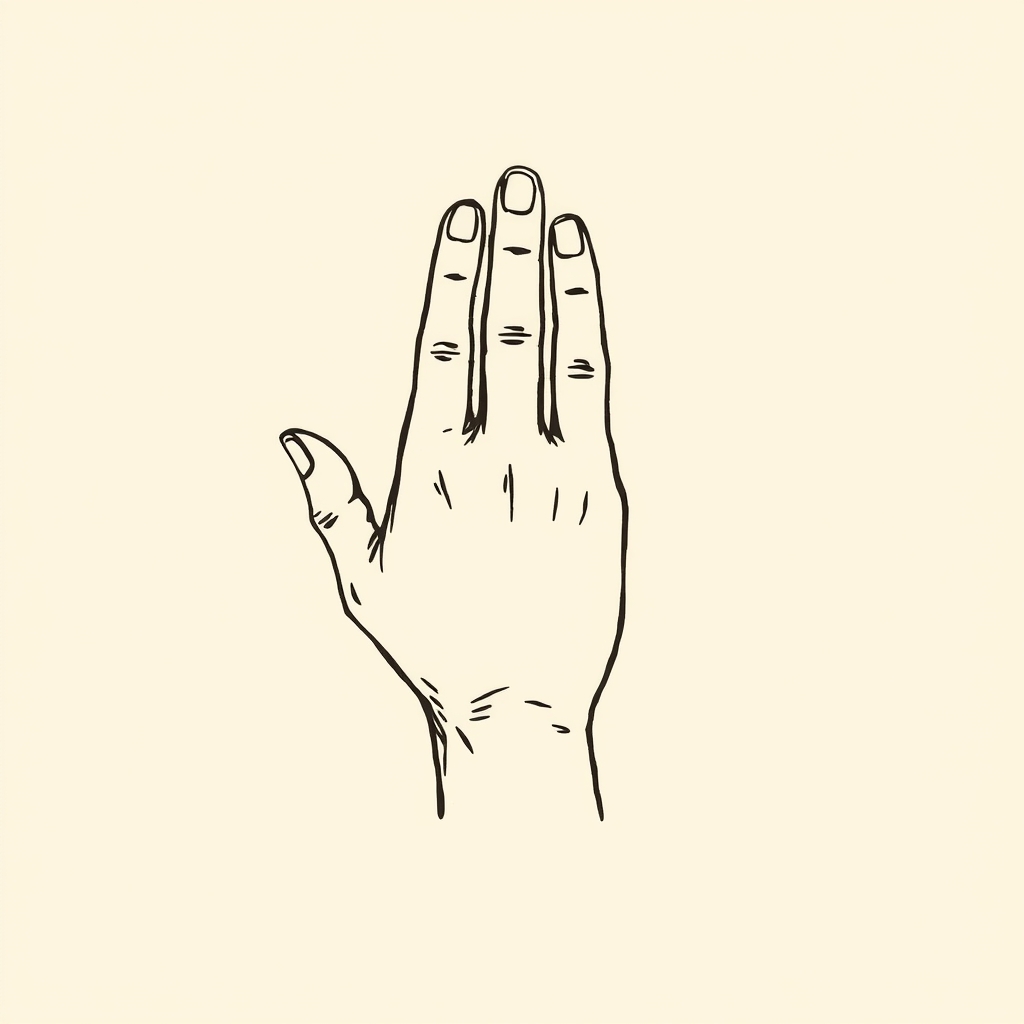
On his return from Rome, Saint Mayeul was met by a troop of Saracens who were carrying out their brigandage in the Alps and occupying all the passes of Italy. He was taken with his entire retinue, which was numerous, at the foot of the mountain that we commonly call the Great Saint Bernard, between S avoy and the Valais; and, after being robbed and beaten, he was held prisoner in the village of Pont-Oursier (on the Dranse, which flows into the Rhône at Martigny). He consoled his companions and spurred them on by his exhortations and his example to bear this disgrace generously. Having caught sight of one of the barbarians raising his saber to split the head of one of his servants, he ran to hold back his arm and saved the life of that unfortunate man; but he was himself wounded in the hand, and the scar remained with him for the rest of his days. He refused to eat meat, and he kept his rule as regularly as in his cloister. He made a place of prayer of the dreadful cavern where the Barbarians threw him, loaded with chains, and he led those who were held with him to sanctify all this time of their captivity through prayer and the other exercises of piety that their state allowed them. The Barbarians had inadvertently left him a book, the Treatise on the Assumption of the Virgin, attributed even then to Saint Jerome. This was a great consolation for Mayeul. He prayed to the Mother of God to obtain his deliverance before the feast of her Assumption, which was still twenty-four days away. Having fallen asleep after this prayer, he found, upon waking, his irons broken. He was permitted to send one of his companions to Cluny to seek his ransom, which was to be one thousand pounds weight of silver. This sum was soon provided by the monastery of Cluny and the surrounding lands, where the news of Mayeul's captivity had excited the deepest sorrow and caused tears to flow. The Saint was delivered before the Assumption. His books, which he was bringing back from Rome, were returned to him. But the most important fruit of his captivity was the conversion of several Saracens whom he instructed in his chains, and who were so touched by the sight of his holiness that they asked for baptism. His deliverance caused much joy, not only to the religious of his Order, but also to the great of the world: for they had a rare veneration for him; but no one honored or loved him more than Emperor Otto II, who seemed to have inherited the sentiments of his f ather. The Saint took advantage of his influence over this prince to reconcile him with Empress Adelaide, his mother. In 974, the Holy See having become vacant, the emperor made every effort to persuade Mayeul to accept the tiara: no one was more worthy of it than he; he nevertheless refused constantly, and, what is no less admirable, he never took vanity from a refusal that seemed destined to be so glorious for him; he continued to humble himself ceaselessly before God, to whose glory he attributed all his thoughts and all his actions. It was for the glory of God that he worked to increase and strengthen his Order: he hoped that God would be served and honored therein in the manner He wills and as He must be by those whom He would choose, by withdrawing them from the corruption of the world. He had nine hundred and fifty-nine charters or titles drawn up in favor of his house and his Order during the entire time of his government until the year 991: which has caused him to be considered the second founder of Cluny.
Death and succession
He chose Saint Odilo to succeed him and died in 994 at Souvigny, while traveling to Paris to reform the Abbey of Saint-Denis at the request of Hugh Capet.
In that year (991), feeling himself increasingly failing under the weight of old age, and not far from his end, he chose Saint Odil o, his disci ple, to be his successor. In this, he followed in the footsteps of his predecessors: just as the blessed Berno, the first founder of Cluny, had Saint Odo put in his place during his lifetime; and we have seen that Abbot Aymard had done the same regarding our Saint. Odilo, after having been elected through his care, with the general consent of the congregation, blessed by the bishops, and accepted by the princes and lords, remained his coadjutor with the title of abbot, just as Mayeul had been during the lifetime of Aymard. These first abbots of Cluny only chose their successors themselves in this way to better ensure the future of this institute, by entrusting it to capable and pious superiors. It is for the same reason that they also endeavored to have their election approved by the kings and the great men of the land and by the prelates. The government of this great Order was bound to encounter far fewer obstacles, having the approval and protection of the ecclesiastical and secular powers: in this way, troubles and divisions were avoided. Moreover, Saint Odilo did not take long to justify, through the wisdom of his conduct, the choice of Saint Mayeul, who lived for another three years. He continued to exercise his duties as abbot during this time, and to work still with a vigor that the frailty of his age could only be attributed to a very special assistance from heaven. His bodily strength having entirely failed him in the year 992, he refrained from going out any further and no longer wished to appear in public. The King of France, Hugh Capet, who was unaware of his condition, urged him insistently to come to Paris to implement reform in the Abbey of Saint-Denis and to revive there the spirit of Saint Benedict. The Saint had not yet lost any of his zeal, even though he had lost his strength: seeing that the prince reiterated his requests day by day, he set out on the journey, and said goodbye to his brothers, convinced that he would never see them again. Having arrived at Souvigny in Bourbonnais, one of the first five priories of the Order, fourteen leagues from Cluny, in the diocese of Clermont in Auvergne, he was detained there by the illness whose end was that of his labors and the beginning of his eternal rest. He died there the death of the just in the arms of his brothers, on the eleventh day of May in the year 994, on Friday, the day after the Ascension, aged about eighty-eight years.
Cult and relics at Souvigny
Buried at Souvigny, his tomb became a major center of pilgrimage in Europe. Despite the destruction of his relics during the Revolution, his veneration remains vivid in the Bourbonnais region.
## RELICS AND CULT OF SAINT MAYEUL.
Mayeul, Abbot of Cluny, died at Souvigny in 994. The monks, who had come with him from the mother house, wished to take his body back. This news, soon known in the city, sparked a pious riot. "Let us keep our Saint!" they cried from all sides, "let us keep our Saint!" A thousand arms from the surrounding area gathered and formed an impregnable barrier. They kept watch, guarding all the exits of the monastery: it was therefore necessary to leave the venerable deceased, who was buried at Souvigny, in the old basilica of Saint-Pierre.
People flocked in crowds before these precious remains. Miracles broke out, miracles so evident that Boggan, Bishop of Clermont, did not hesitate to erect an altar over this tomb, which heaven covered with so many favors. This was, as we know, the way of canonizing at that time. One hundred years later, in 1093, Urban II raised the body of the venerated Benedictine from the ground: he wished by this to expose it more solemnly to the veneration of the faithful.
Mayeul was one of the Saints to whom one turned with the greatest confidence: the wonders performed at his tomb explain the cause. Peter the Venerable did not fear to say "that, after the Blessed Virgin, there was no Saint in Europe who had performed more miracles than Saint Mayeul." This confidence has survived the loss of the thaumaturge's relics. A few years ago, a Christian from Souvigny, following a novena to Saint Mayeul, obtained a healing that was regarded everywhere as miraculous.
The cult of Saint Mayeul began at his death and has been perpetuated from century to century to our days. Already, in the time of Peter the Venerable, people flocked from all parts of Europe to this tomb, which became the goal of one of the most famous pilgrimages. For centuries, one saw a crowd of visitors, Popes, kings, princes, lords, people of all classes and all professions.
The inhabitants of Souvigny regarded Saint Mayeul above all as their Patron and Protector.
The University of the cathedral of Le Puy-en-Velay paid him the same honor in 1210: the grand vicars wrote to the religious of Souvigny to ask for some relics of this personage, in whom the diocese of Le Puy had such confidence. They were sent a part of the scapular that had belonged to the humble abbot. The letters and minutes that were exchanged on this occasion between the Chapter of Le Puy and the priory of Souvigny are kept in the archives of Souvigny. One sees there what precautions were taken then to preserve the authenticity of the relics. Not only the Bourbonnais and France, but the peoples of Italy had a particular veneration for the illustrious son of Saint Benedict. In 1482, the Grand Duke of Florence thanked the prior of Souvigny for the precious relic he had received. The regular clerks of the Congregation of Somasca, in Italy, honor Saint Mayeul as a Saint of their Order, or rather as one of their Patrons, since they were given the church and monastery of his name in Pavia, in Lombardy.
Four holy bodies have rested in the beautiful church of Souvigny: Saint Léger, Saint Principin, Saint Odilon, and Saint Mayeul. Their images appear on the frontispiece of Dom Marcaille's work. Saint Léger was transferred to Ebreuil; Saint Principin to Hérisson, where the place of his martyrdom (Chataloi) was; the other two remained in the church that had received the deposit. But the Revolution of '93 came. The head of Saint Mayeul and his body, as well as what belonged to Saint Odilon, in a word everything precious that the treasury of the priory church contained, everything was then sacrilegiously burned. Some people believe they possess fragments of the Saint's tunic or scapular; but we regret to say that nothing is authentic in this regard. Of all these precious objects, only the reliquary is preserved today in the church of Souvigny. One sees, in a piece of furniture in the sacristy, an instrument of rudimentary form, to which not enough attention is paid: it is the comb of Saint Mayeul. Liturgical combs were still used in the Middle Ages; priests had to use them immediately before going to the altar. At one end of the town of Souvigny, one used to see the legendary tree of Saint Mayeul; it has fallen from old age. A cross of very good taste has replaced the one that the secular elm shaded, and each year, at the Rogations, a procession is made to the cross of Saint Mayeul. It has the privilege of attracting a gathered and numerous crowd; all the memory of the Saint is still vivid in the country. Old minutes, deposited in the archives of the same monastery, speak of some processions where the heads of Saint Odilon and Saint Mayeul were carried. What faith, what enthusiasm in all these festivals! Who does not know the church of Souvigny, the glory and the wonder of the Bourbonnais? To those who will be astonished by the vast extent of this monument, we will answer: "This is not the oratory of thirty or forty monks, it is the basilica of Saint-Mayeul." The cult of this great Saint required a vessel in harmony with the immense quantity of faithful who went there to pray. This place was, moreover, the Saint-Denis of our Dukes of Bourbon. Nobles and princes came to bend their knees there during their lives; and, after their death, they wanted to rest under these majestic vaults, near the one who possessed so much power in heaven.
For the current state of the abbey of Souvigny and its relics, see, on January 1st, the end of the Life of Saint Odilon.
Notes provided by Mr. Boudant, parish priest of Chantelle (Allier).
Iconography
Signs and attributes


Entities
Narrative network
The names, places, and concepts most present in the entry, weighted by centrality in the text.
The supernatural in their life
The miracles of Saint Mayeul of Cluny
Frequently asked questions about Saint Mayeul of Cluny
Who was Saint Mayeul of Cluny?
Fourth Abbot of Cluny in the 10th century, Mayeul was one of the greatest monastic reformers in Europe. Captured by the Saracens and having refused the papal throne, he governed his order with profound humility and great erudition. He died in Souvigny in 994, leaving behind a reputation as an exceptional thaumaturge.
What is Saint Mayeul of Cluny the patron saint of?
Patronage of Saint Mayeul of Cluny: Souvigny, Pavia and Lombardy.
What is Saint Mayeul of Cluny invoked for?
Saint Mayeul of Cluny is invoked for: healing of blindness and deliverance of prisoners.
How is Saint Mayeul of Cluny depicted in Christian art?
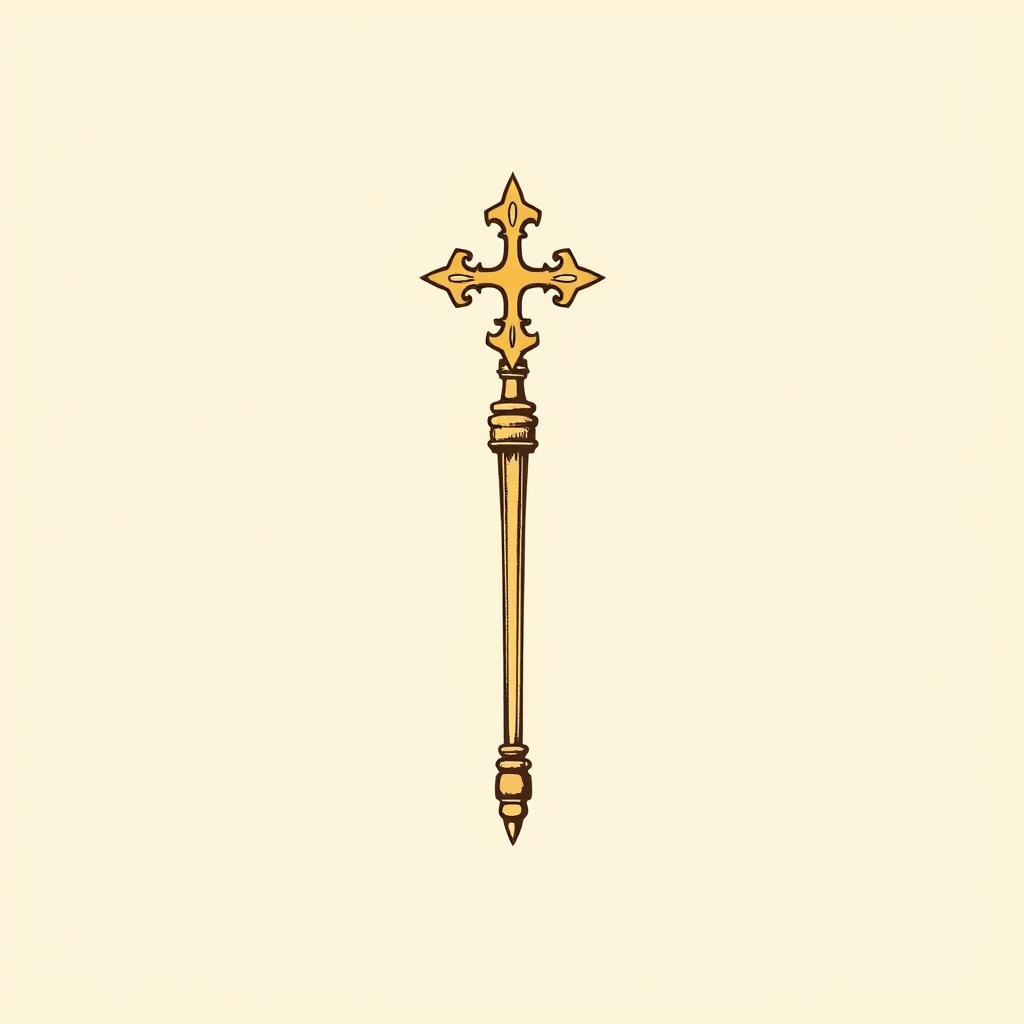
In iconography, Saint Mayeul of Cluny is recognizable by: seven silver coins, book, abbot's crozier, healed hand and liturgical comb.
What miracles are attributed to Saint Mayeul of Cluny?
5 miracles are attributed to this saint, notably: Multiplication / provision, Healing and Protection / deliverance.
Which saints were contemporaries of Saint Mayeul of Cluny?
Contemporaries include: Saint Bernard of Menthon (Apostle of the Alps), Saint Ansgar (Apostle of the North), Saint Stephen of Hungary and Saint Anselm of Canterbury.
When did Saint Mayeul of Cluny die?
Saint Mayeul of Cluny died around 994.
What are the other names of Saint Mayeul of Cluny?
Other forms of the name: Majolus.
Who are the relatives of Saint Mayeul of Cluny?
Relatives of Saint Mayeul of Cluny: Foucher (father).
Annexes & related entities
Structured data for exploration: events, miracles, quotes, places, attributes, patronages, and important entities cited in the text.
Key Events
- Born in Valensole around 906
- Studies in Lyon under Abbot Antoine
- Archdeacon of Mâcon
- Entered the Abbey of Cluny in 943
- Appointed Abbot of Cluny in 948
- Reform of numerous monasteries in Europe
- Captivity by the Saracens at the Great St. Bernard Pass
- Refusal of the papacy
- Died in Souvigny in 994
Quotes
-
Are you my master or my monk?
Abbot Aymard addressing Mayeul