
Blessed Bernard the Penitent
Originally from Provence, Bernard received a rigorous public penance in 1170 for mysterious crimes, possibly the murder of a tyrannical governor. After long pilgrimages to Jerusalem and the Indies, he ended his life in extreme austerity in Saint-Omer, becoming a monk at the Abbey of Saint-Bertin. His holiness was confirmed by numerous healing miracles and his body was elevated in 1208.
Contemporaries

Figures and markers around the normalized period for this entry.
Guided reading
5 reading sections
BLESSED BERNARD THE PENITENT
Origins and sentence of penance
A native of Provence, in 1170 Bernard received from Bishop John of Maguelone a sentence of perpetual and rigorous penance for crimes whose exact nature remains debated, possibly a political murder.
He was born in Provence, in the diocese of Maguelone, the see of which was later transferred to Montpellier. Neither his family, nor the education he received, nor even the faults for which he submitted himself to such a long and rigorous penance are known. The letter he requested from his bishop, before beginning it, enters into no detail; it is conceived in these terms: "John, by the grace of God, Bishop of Maguelone, to all the pastors and all the faithful of the Catholic Church, eternal salvation in the Lord. Be it known to you all, that in expiation of the horrible crimes committed by him, we have inflicted upon Bernard, the be arer of these present letters, the penance mentioned herein: that he walk barefoot for seven years, that he wear no shirt for all the days of his life, that he fast, as in Lent, during the forty days preceding the birth of the Savior, that he abstain from meat or fat on Wednesday of each week and take only a little bread and wine on Friday. As for the Fridays of Lent and the Ember Days, that he drink only water, and that every Saturday, except on solemn days or when his health requires it, he abstain from meat and fat. Therefore, we conjure your clemency in Jesus Christ with prayer, that, for the redemption of your souls and in a spirit of mercy, you give to this very poor penitent the necessary clothing and food, that you assist him with your prayers, and that you relax some part of his penance, if you deem it good. Given at Maguelone, in the year of the Incarnation of the Lord 1170, in the month of October. To be valid for seven years only."
This letter, as one can see, does not explain what the crimes are for which Bernard requested such a rigorous penance. Perhaps he was guilty only of faults quite ordinary for young men of his age, and it was by an inspiration from heaven that he embraced this life of labors and austerities for the edification of the people. Perhaps also he had committed a murder in a sedition, as some authors seem to believe. The contemporary historian of his life shares this opinion. "For my part," he says, "I believe that the blessed Bernard, following the example of other penitents, believed that it was good for him to leave his country for the love of God, and that he himself asked that his sins, always horrible in the eyes of the Saints, be declared as such in the eyes of the whole world. I have sought," he adds, "to know the truth about this fact, I have questioned persons who knew his father and his mother, and I have never been able to learn that any other crime was reproached to him, except that of having, in a sedition in which he took part with several considerable persons, assassinated a governor who had made himself odious by his exactions and the excessive tributes he imposed."
The great pilgrimages
Wearing iron bands, Bernard undertook three pilgrimages to Jerusalem and traveled to the Indies to honor Saint Thomas, enduring multiple privations during his journeys.
Equipped with a letter from his bishop and his body laden with iron bands, according to the custom of the great penitents of that era, the blessed Bernard began his life of pilgrimages, fatigues, and extraordinary penances. Three times he went to Jerusalem to shed tears at the tomb of the Savior. From there he traveled to the Indies, to seek the protection of Saint Thomas, the Apostle, who was th e first to preach the faith in those vast regions. He is also seen appearing successively in other countries, leaving everywhere in his path the sweet odor of the virtues of Jesus Christ. Who could express all that he had to suffer from hunger, thirst, heat, cold, and nakedness during these journeys?
Asceticism in Saint-Omer
Settled in Saint-Omer in a modest dwelling near the Abbey of Saint-Bertin, he led a life of extreme austerities, braving the frost barefoot and treating his wounds with fire.
The illustrious penitent, having ar rived in S aint-Omer, understood through an inner light that he was to stop in this city and settle there. He therefore accepted the small house offered to him by a virtuous inhabitant named Guillaume. This dwelling was ad jacent to the Abbey of Saint-Bertin, and it gave Bernard the means to go and pay his respects to God at almost every hour of the day and night. He always arrived among the first for the Matins that the monks sang at the monastery during the night: from there he would go to the basilica of Saint-Omer where the office was then beginning, and finally to the parish church, towards the first hours of the day. He had his feet and legs bare, even in the most rigorous cold. "I learned," continues the Saint's biographer, "from the testimony of men and women filled with religion, that often, in the harshest winters, he would stand barefoot on the cold earth for a considerable time. He would sometimes leave the skin of his feet attached to the ground by the frost. And as the excessive cold caused large cracks in his feet, he would apply a remedy himself in this way: he would withdraw at night into a corner of his narrow dwelling, burn the tears in his flesh with a torch, and let a little wax drip into them."
These extraordinary austerities were still not enough for the spirit of penance that animated the blessed Bernard. He was so eager for them that he knew how to find them everywhere and for all hours of the day and night. After a few moments of sleep on a blanket that hid large and sharp stones, he would rise for prayer. As soon as it was finished, the penitent would devote himself to all kinds of works of charity and religion. He took care of the sick and the unfortunate, saw to the cleanliness of the churches, not only inside but also outside, picking up the stones he encountered around the house of God and carrying them further away or sometimes under his bed. Poor and destitute of everything, he received from the monastery of Saint-Bertin the things necessary for life, and would immediately share them with the poor for whom he was filled with the most affectionate compassion. In the midst of these frightening mortifications, the face of the blessed Bernard was always radiant with joy and happiness, and it was enough to see him to recognize that the grace of Jesus Christ superabounded in his soul. Thus, this sacred name was constantly on his lips, and he often made it ring in the ears of those he met. A phrase that was also very familiar to him and which he addressed to most of the people who stopped him is this: "May God grant us a good end."
Monastic life and end of life
He eventually joined the Order of Saint-Bertin where he performed miracles during his lifetime before passing away surrounded by his brothers.
This holy man, who had already done so much for God, later asked the Abbot of Sain t-Bertin for the habit of his Order and entry into his monastery. All the religious rejoiced at the thought of having as a brother a man whose holiness edified the whole country, and through whose prayers miracles were obtained from heaven. Indeed, even before his death, Bernard the Penitent performed wonders, which, despite all his humility, he could not hide from public knowledge. A violent fire extinguished by a sign of the cross, a large wound on the leg healed in the same way, a drowned child regaining life in his hands when he had placed her on an altar, and many other similar facts are attributed to him by the historians of the time. The spirit of prophecy also manifested itself in him on several occasions and especially in the last days of his life. Being on his deathbed, in the midst of his gathered brothers, he still healed, by touching him, a small child who was brought to him in a desperate state. The admirable penitent surrendered, a few moments later, his beautiful soul to his creator, and went to receive in heaven the reward for his mortifications and all his other good works.
Cult, relics, and miracles
His death triggered an immediate popular fervor; numerous miracles were reported throughout Morinia and beyond, leading to the elevation of his body in 1208.
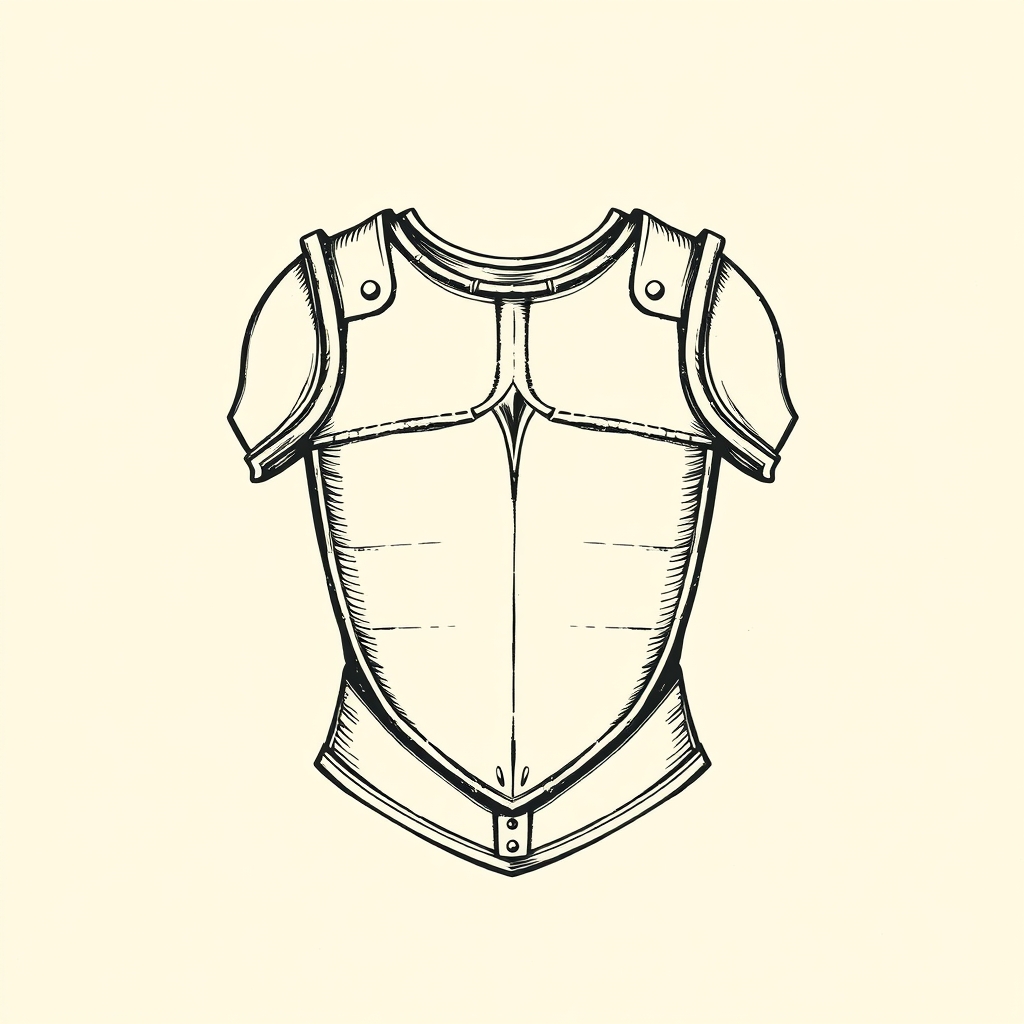
Hardly was his death known than people flocked from all sides to his mortal remains to see once more this holy personage who had been the edification and admiration of the whole region for many years. Everyone vied to ask for, or rather to take, a piece of his clothing or some object that had been in his use. The religious, in the midst of this constantly renewing crowd, could neither perform their duties nor proceed with the funeral ceremony. Some extraordinary healings performed at that moment added to the enthusiasm of the people, who could not tire of contemplating this penitent who had become a great Saint and one of their patrons in heaven. The religious of Saint-Bertin could only bury the body of the man of God with difficulty, because of the crowd that they did not know how to contain. They removed the instruments of penance that were on his body, such as the hair shirt, the iron cuirass, and the iron chains; then, after having respectfully washed his limbs which exhaled a sweet odor, they buried him in the monastery.
The historian of the life of the blessed Bernard, who is an eyewitness to almost all the facts he reports, cites in detail a large number of miraculous healings that took place after his death. Several blind people and many sick people in Saint-Omer, a dropsical person and a blind woman from Fauquemberg, an infirm child in Bergues, a little blind girl and a cripple named Gérard in Cassel, an infirm woman in Arques, a man sick for two years in Furnes, a woman in Bourg who was suffering horribly in her ears because an insect had entered them, were healed by commending themselves to the prayers of the new patron of Morinia. Other healings, also attested by eyewitnesses and reported in det ail, also took place in the following localities: Drinckam, Terdeghem, Saint-Pol, Blaringhem, near Cassel, Vissant, north of Boulogne, Helchy, near that same city, Calais, Bailleul, Aire, Furnes, Messines, Fécamp in Normandy, and Utrecht in Holland. Formerly, in the abbey of Saint-Bertin, a proper office of the blessed Bernard was celeb rated on April 19, the anniversary of his death. His name is found in almost all martyrologies, and several give him the title of Saint. His body, raised from the earth in 1208, was placed in a monument on which these two leonine verses had been engraved:
Formam virtutis tegit hic lapis atque salutis: This stone covers the form of virtue and holiness;
Virtus Bernardi redolet sanctis vice nardi. The virtue of Bernard exhales the odor of the sweetest perfume.
Abbé Destombes.
Iconography
Signs and attributes




Entities
Narrative network
The names, places, and concepts most present in the entry, weighted by centrality in the text.
The supernatural in their life
The miracles of Blessed Bernard the Penitent
Frequently asked questions about Blessed Bernard the Penitent
Who was Blessed Bernard the Penitent?
Originally from Provence, Bernard received a rigorous public penance in 1170 for mysterious crimes, possibly the murder of a tyrannical governor. After long pilgrimages to Jerusalem and the Indies, he ended his life in extreme austerity in Saint-Omer, becoming a monk at the Abbey of Saint-Bertin. His holiness was confirmed by numerous healing miracles and his body was elevated in 1208.
What is Blessed Bernard the Penitent the patron saint of?
Patronage of Blessed Bernard the Penitent: Morinia and Saint-Omer.
What is Blessed Bernard the Penitent invoked for?
Blessed Bernard the Penitent is invoked for: healing of the blind, healing of the infirm and protection against fires.
How is Blessed Bernard the Penitent depicted in Christian art?
In iconography, Blessed Bernard the Penitent is recognizable by: barefoot, iron circles, iron cuirass, chains and hairshirt.
What miracles are attributed to Blessed Bernard the Penitent?
5 miracles are attributed to this saint, notably: Mastery of the elements, Healing and Resurrection.
Which saints were contemporaries of Blessed Bernard the Penitent?
Contemporaries include: Saint Norbert of Magdeburg, Saint Bernard of Clairvaux, Saint Stephen of Hungary and Saint Arthaud of Belley.
When did Blessed Bernard the Penitent die?
Blessed Bernard the Penitent died around 1200.
What are the other names of Blessed Bernard the Penitent?
Other forms of the name: Bernardus.
Who are the relatives of Blessed Bernard the Penitent?
Relatives of Blessed Bernard the Penitent: Inconnu (father) and Inconnue (mother).
Annexes & related entities
Structured data for exploration: events, miracles, quotes, places, attributes, patronages, and important entities cited in the text.
Key Events
- Sentenced to a seven-year penance by the Bishop of Maguelone in 1170
- Three pilgrimages to Jerusalem
- Journey to the Indies to venerate Saint Thomas
- Settled in Saint-Omer in a small house near the Abbey of Saint-Bertin
- Entered the Order of Saint-Bertin as a monk
- Elevation of his body in 1208
Quotes
-
May God grant us a good end
Familiar saying of the Saint -
Formam virtutis tegit hic lapis atque salutis : Virtus Bernardi redolet sanctis vice nardi.
Epitaph on his monument (1208)