
John Henry Newman
English theologian converted to Catholicism, figure of the Oxford Movement, founder of the Birmingham Oratory and cardinal, canonized in 2019 and proclaimed a Doctor of the Church in 2025.
Contemporaries

Figures and markers around the normalized period for this entry.
Guided reading
5 reading sections
Biography
Born in London in 1801 into an Anglican family, John Henry Newman was a priest and Oxford academic before converting to Catholicism in 1845.
John Henry Newman was born on February 21, 1801, in London, the eldest of a middle-class Anglican family. A student at Trinity College and later a fellow of Oriel College at Oxford, he led a brilliant academic career there. Ordained a deacon in 1824 and then an Anglican priest on May 29, 1825, he became vicar of the University Church of St Mary the Virgin in Oxford, where his preaching exerted a profound influence. From 1833, he was one of the major figures of the Oxford Movement (or Tractarianism), which sought to revive the patristic and Catholic roots of the Church of England. The publication of Tract 90 in 1841, which proposed a Catholic reading of the Anglican Thirty-Nine Articles, sparked a lively controversy. After a long intellectual and spiritual maturation marked by the study of the Church Fathers, Newman retired to Littlemore. On October 9, 1845, he was received into the Catholic Church by the Italian Passionist Dominic Barberi. He then went to Rome, where he was ordained a Catholic priest on May 30, 1847. Remaining in England for the rest of his life, he died on August 11, 1890, in Edgbaston, near Birmingham.
Life and Work
Newman introduced the Oratory of Saint Philip Neri to England, founded the Birmingham Oratory, and left behind a considerable theological and literary body of work.
Upon his return from Rome, Newman introduced the Oratory of Saint Philip Neri to England and founded the Birmingham Oratory, canonically established on February 2, 1848; he would remain its superior for decades. He also engaged in higher education: called to lead the new Catholic University of Ireland in Dublin, he drew from it the lectures collected under the title The Idea of a University (1852-1858), a major reflection on intellectual formation. His work encompasses theology, history, and literature. An Essay on the Development of Christian Doctrine (1845) proposes an influential theory of the organic evolution of dogma. The Apologia Pro Vita Sua (1864), written in response to the attacks of Charles Kingsley, is a famous autobiographical account of his journey of conscience. An Essay in Aid of a Grammar of Assent (1870) analyzes the nature of faith and certainty. Newman was also a poet: he composed the hymn Lead, Kindly Light (1833) and the poem The Dream of Gerontius, set to music by Edward Elgar. On May 12, 1879, Pope Leo XIII created him a cardinal-deacon, in recognition of his service to the Church; he adopted the motto Cor ad cor loquitur, "heart speaks unto heart."
Journey toward holiness
Newman's holiness is manifested in his fidelity to conscience, his honest quest for truth, and a spirituality centered on the heart's encounter with God.
Newman's spiritual figure is inseparable from his uncompromising quest for truth, which he pursued at the cost of his career, his friendships, and his reputation within the Anglican establishment. His conversion, long matured, testifies to an obedience to conscience, which he held to be the voice of God in man; he would write that conscience is "the aboriginal Vicar of Christ." His spirituality, heir to Saint Philip Neri and the Fathers of the Church, favors interiority, personal prayer, and a lived faith rather than one that is purely speculative, which is summarized by his motto Cor ad cor loquitur. The epitaph he chose for his tomb, Ex umbris et imaginibus in veritatem ("out of shadows and phantasms into the truth"), condenses his entire journey. His reputation for holiness grew after his death, supported by the publication of his letters and sermons. Pope Benedict XVI, who esteemed him deeply, saw in him a master of the interior life and a model of intellectual integrity in the service of faith.
Beatification and canonization
Beatified in 2010 by Benedict XVI and canonized in 2019 by Francis, Newman was proclaimed a Doctor of the Church by Leo XIV in 2025; his feast day is set for October 9.
Newman's cause, opened in the 20th century, led to his declaration as venerable. Pope Benedict XVI recognized a first miracle, the unexplained healing of the American deacon Jack Sullivan from a serious spinal disorder, attributed to Newman's intercession; he beatified him personally on September 19, 2010, at Cofton Park in Birmingham, during his visit to the United Kingdom. A second miracle, the healing of Melissa Villalobos, a Chicago lawyer who suffered from a hemorrhage threatening her pregnancy, was recognized in February 2019. Pope Francis canonized John Henry Newman on October 13, 2019, in St. Peter's Square, along with four other blessed women. On November 1, 2025, on the Solemnity of All Saints and at the conclusion of the Jubilee of the World of Education, Pope Leo XIV proclaimed him a Doctor of the Church, the thirty-eighth to receive this title, and declared him co-patron of Catholic education alongside Saint Thomas Aquinas. His liturgical feast is celebrated on October 9, the anniversary of his reception into the Catholic Church.
Spirituality and Heritage
Newman left his mark on theology, Catholic education, and the dialogue between faith and reason; his influence radiates notably through the university centers that bear his name.
Newman's legacy is immense and widely recognized beyond Catholicism. His thought on the development of doctrine, on the role of the laity, and on the relationship between faith and reason has marked modern theology; several commentators have seen in some of his intuitions an anticipation of the orientations of the Second Vatican Council. As a co-patron of Catholic education, he remains a reference for the conception of the university and the integral formation of the person. His name is borne by numerous English-speaking Catholic university centers, the "Newman Centers" and "Newman Societies," as well as by schools and parishes in the Anglo-Saxon world. Venerated by Catholics as well as, in memory, by the Anglican Communion which commemorates him on August 11, he appears as a figure of reconciliation and ecumenical dialogue. His remains rest at the Birmingham Oratory. His spiritual writings and his hymn Lead, Kindly Light continue to be read and sung, perpetuating the influence of a thinker whose life was a constant journey toward the truth.
Iconography
Signs and attributes
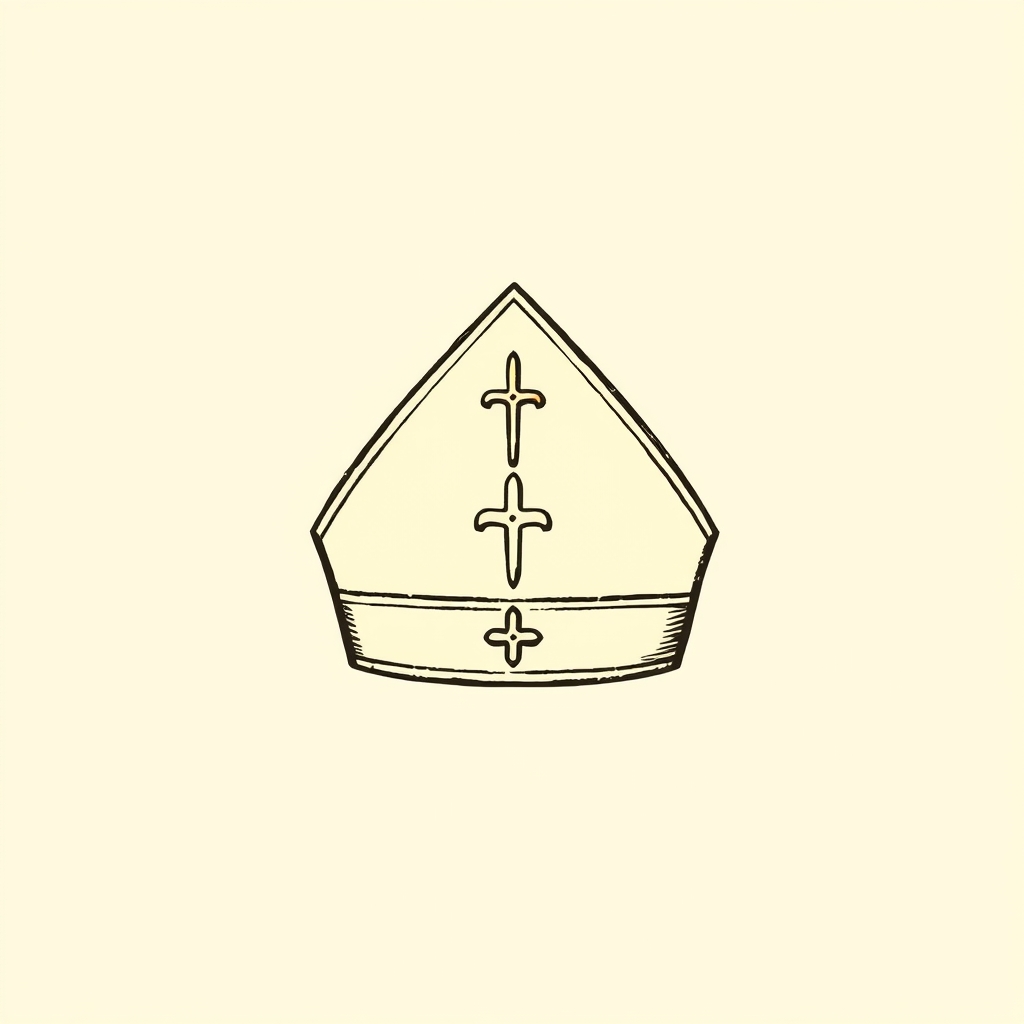

The supernatural in their life
The miracles of John Henry Newman
Frequently asked questions about John Henry Newman
Who was John Henry Newman?
English theologian converted to Catholicism, figure of the Oxford Movement, founder of the Birmingham Oratory and cardinal, canonized in 2019 and proclaimed a Doctor of the Church in 2025.
What is John Henry Newman the patron saint of?
Patronage of John Henry Newman: Co-patron de l'éducation catholique (avec saint Thomas d'Aquin), proclamé par Léon XIV en 2025 and Co-patron of Catholic education (with Saint Thomas Aquinas), proclaimed by Leo XIV in 2025.
How is John Henry Newman depicted in Christian art?
In iconography, John Henry Newman is recognizable by: red cardinal's habit, cardinal's biretta and book.
What miracles are attributed to John Henry Newman?
2 miracles are attributed to this saint, notably: Healing.
Which saints were contemporaries of John Henry Newman?
Contemporaries include: Jesús María Echavarría Aguirre, Pauline of the Agonizing Heart of Jesus, Narcisa de Jesús and Juan de Jesús López y González.
When did John Henry Newman die?
John Henry Newman died around 1890.
What are the other names of John Henry Newman?
Other forms of the name: Jean-Henri Newman and Cardinal Newman.
Annexes & related entities
Structured data for exploration: events, miracles, quotes, places, attributes, patronages, and important entities cited in the text.
Key Events
- Era / death: 1890
- Canonized in 2019 by Francis
Quotes
-
To live is to change, and to be perfect is to have changed often.
John Henry Newman, An Essay on the Development of Christian Doctrine (1845) -
Cor ad cor loquitur (Heart speaks to heart).
Cardinalatial motto of John Henry Newman (1879) -
Ex umbris et imaginibus in veritatem (From shadows and images into the truth).
Epitaph chosen by John Henry Newman for his tomb