
Blessed Eberhard
COUNT OF NELLENBURG, FOUNDER OF THE MONASTERY AND THE CITY OF SCHAFFHAUSEN
Count of Nellenburg in the 11th century, Eberhard founded the Benedictine monastery and the city of Schaffhausen after pilgrimages to Rome and Compostela. Following the advice of a boatman and with the consent of his wife Itta, he eventually embraced monastic life in his own foundation. He died in 1075, leaving behind a reputation for holiness confirmed by numerous miracles.
Contemporaries

Figures and markers around the normalized period for this entry.
Guided reading
5 reading sections
BLESSED EBERHARD,
COUNT OF NELLENBURG, FOUNDER OF THE MONASTERY AND THE CITY OF SCHAFFHAUSEN
Pilgrimages and the foundation of Schaffhausen
After pilgrimages to Rome and Compostela, Eberhard founded a Benedictine monastery in Schaffhausen, near the Rhine Falls, with the agreement of his wife.
He therefore began by going to bring his offering to the tomb of the Apostles in Rome, and to Saint James of Compostela in Spain. Having returned to his manor, he resolved to carry out a thought he had long nurtured, that of founding a monastery of Saint Benedict. Having shared his design with his wife, she fully agreed to it. It remained to choose the place where the new foundation would be established, for at that time a monastery was always the nucleus of a town, and one could not neglect the advantages of the location, whether for commerce or for agriculture. After commending himself to the prayers of a holy man of the region, a boatman by profession, Eberhard settled his choice on a pla ce designated to him by the boatman, about three kilometers from the Rhine Falls and already marked by a few fishermen's huts: there was to be Schaffhausen. He first erec ted a chape l in honor of the Resurrection of Our Lord (1052).<br><br>As soon as the house of God was standing, to bless the works that were to be undertaken, the construction of the monastery began, which lasted twelve years. In 1064, the Bishop of Constance came to consecrate the c hurch and bless the monastery, both placed under the invocation of the divine Savior and all the Saints.
Papal protection and miraculous healing
Evrard returns to Rome to obtain the Pope's protection for his foundation and obtains the miraculous healing of his son Burchard.
However, Evrard did not yet renounce the world. His first pilgrimage to Rome had brought him too many sweet joys not to undertake it again. Perhaps he also wished to obtain from the Sovereign Pontiff both his blessing and those special guarantees which were not always sufficient to protect the most pious foundations from theft and violence. Upon his return, he had the sorrow of finding his only remaining son, Burchard, ill; but God reserved for him the con solation of calling him as if a second time to life by healing him in a truly miraculous manner.
The influence of Mangold and monastic life
Following a vision of the repentant abbot Mangold, Eberhard decides to withdraw from the world and enters as a monk into his own monastery.
A circumstance which was on the part of our Saint a good work finally determined him to hide the rest of his existence in the monastery he had founded.
A certain Mangold, abbot of Saint-Georges, in Stein, near Schaffhausen, had left monastic life and returned to the world. Eberhard, meeting h im one day, reproached him so sharply on this subject that he repented of his fault, and requested from the convent he had abandoned the grace to be able to enter as the last of the brothers into that of Schaffhausen. The request was granted to him; he was absolved of the sin of having left his convent, and died in Schaffhausen, after having made every effort to expiate his error. Eberhard, to whom he owed this return to himself, interceded for the deceased through prayers and other works of piety. This is why Mangold appeared to him one day, and thanked him for having delivered him from purgatory through his good works. He told him at the same time that his conduct was pleasing to God and that it would be even more so if he continued to grow in virtues. It is this event that engaged Eberhard to ask for the consent of his virtuous wife Itta to e nter the convent he had himself founded. He pronounced his vows there, faithfully fulfilled the duties prescribed to him by obedience, humility, and the practice of all other virtues, and died in the Lord around the year 1075, on April 7, at the age of sixty, after having been a monk for six years. Many miracles, it is said, were performed at his tomb. His widow Itta, wishing to follow the example of her husband, entered Schaffhausen, into a community of nuns also founded by the two spouses, and died there in the odor of sanctity.
Death and posterity
Eberhard died in 1075 after six years of monastic life; his wife Itta followed him into religious life and the monastery became a center of holiness.
The convent of t he Order of Saint Ben edict in Schaffhausen produced a great number of saints and scholars.
Hagiographic sources
The text is based on the Acta Sanctorum.
Acta Sanctorum, new trans.
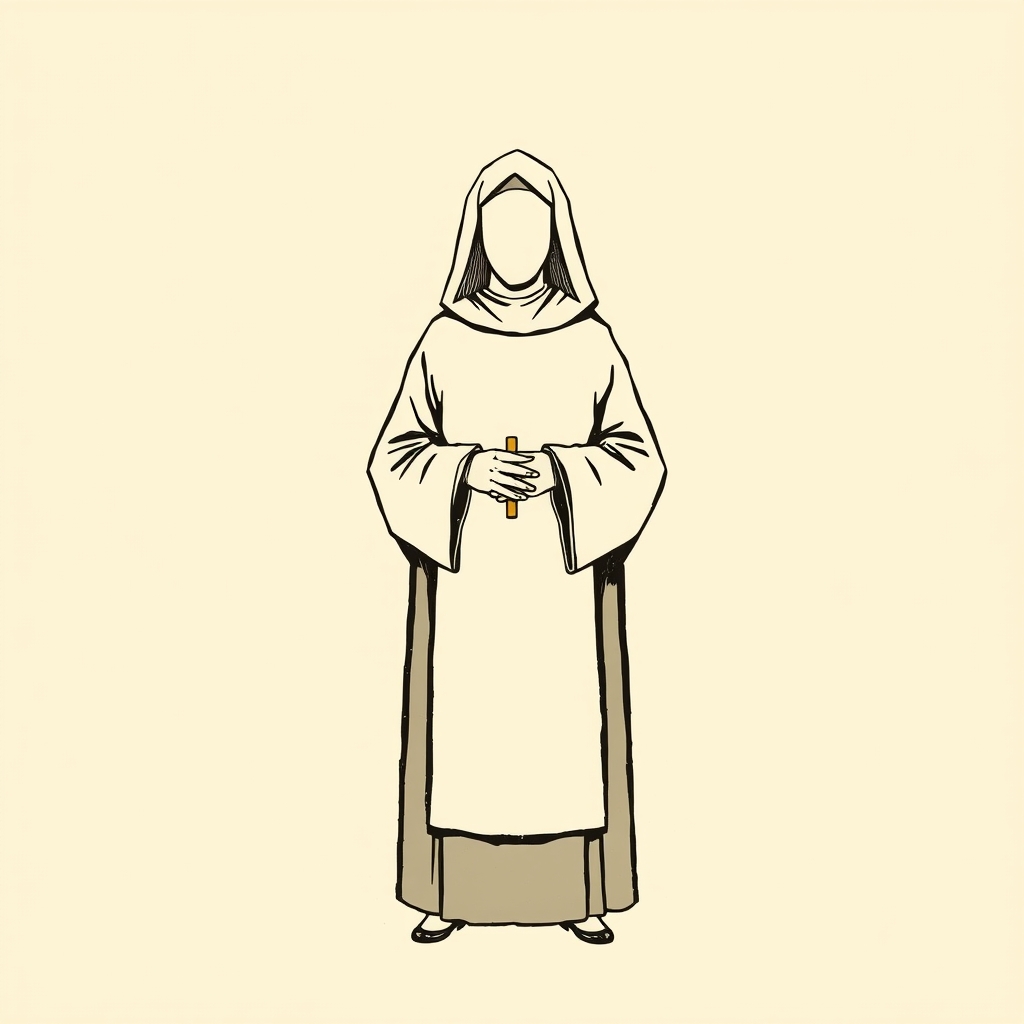
Iconography
Signs and attributes

Entities
Narrative network
The names, places, and concepts most present in the entry, weighted by centrality in the text.
The supernatural in their life
The miracles of Blessed Eberhard
Frequently asked questions about Blessed Eberhard
Who was Blessed Eberhard?
Count of Nellenburg in the 11th century, Eberhard founded the Benedictine monastery and the city of Schaffhausen after pilgrimages to Rome and Compostela. Following the advice of a boatman and with the consent of his wife Itta, he eventually embraced monastic life in his own foundation. He died in 1075, leaving behind a reputation for holiness confirmed by numerous miracles.
What is Blessed Eberhard the patron saint of?
Patronage of Blessed Eberhard: Schaffhausen.
How is Blessed Eberhard depicted in Christian art?
In iconography, Blessed Eberhard is recognizable by: Benedictine monk habit and model of a church or city.
What miracles are attributed to Blessed Eberhard?
3 miracles are attributed to this saint, notably: Healing, Vision / apparition, Conversion and Sign / wonder.
Which saints were contemporaries of Blessed Eberhard?
Contemporaries include: Saint Bernard of Menthon (Apostle of the Alps), Saint Stephen of Hungary, Saint Norbert of Magdeburg and Saint Bernard of Clairvaux.
When did Blessed Eberhard die?
Blessed Eberhard died around 1100.
What are the other names of Blessed Eberhard?
Other forms of the name: Eberhard.
Who are the relatives of Blessed Eberhard?
Relatives of Blessed Eberhard: Itta (wife) and Burchard (son).
Annexes & related entities
Structured data for exploration: events, miracles, quotes, places, attributes, patronages, and important entities cited in the text.
Key Events
- Pilgrimages to Rome and Santiago de Compostela
- Foundation of the Chapel of the Resurrection (1052)
- Foundation of the monastery and the city of Schaffhausen
- Consecration of the church by the Bishop of Constance (1064)
- Miraculous healing of his son Burchard
- Entered the monastery as a monk after his wife's consent
- Died at the age of sixty after six years of monastic life