
Saint Bertrand of Comminges
A former soldier who became Archdeacon of Toulouse and then Bishop of Comminges in the 12th century, Bertrand rebuilt his cathedral and governed his diocese for fifty years. Renowned for his charity and numerous miracles, he was canonized by Alexander III. His cult is marked by the privilege of the 'Grand Pardon' instituted by Clement V.
Contemporaries

Figures and markers around the normalized period for this entry.
Guided reading
8 reading sections
SAINT BERTRAND, ARCHDEACON OF TOULOUSE,
Youth and Virtues
Bertrand passes through his youth with piety and wisdom, using his material riches to rise toward God rather than becoming attached to them.
to his neighbor, closing his ear to the remarks made against him, neither angering nor despising anyone, prompt to listen, slow to speak and to anger, he made himself loved by all, rich and poor, great and small, and he made them love the God who had placed these virtues in him and whose gifts he preserved so preciously.
Guided by this light that God makes shine in the eyes of every soul He sends upon the earth, Bertrand was able to pass through the perilous years of youth without shipwreck. Faithful to the grace that led him, he proved to us that if God sometimes traces a painful path for us, He also gives us the thread that must lead us through trials, and brings us to the port despite the difficulties of the road. Bertrand was endowed with all the goods that the world esteems: deceptive goods, the possession of which so often makes those who enjoy them forget that they are usually only reefs; fragile goods, which have lulled to sleep on the side of the road so many souls who, upon waking, found themselves stripped of them; miserable goods, which have hardened so many hearts and attached so many minds to the earth as if it were their homeland, while it was only their footstool.
Religious commitment and elevation
A former soldier, he became a canon and then archdeacon in Toulouse before being called to the episcopate of Comminges.
Bertrand was rich in the goods of this world; and they were true riches for him, for he used them to raise himself to the source of all good, which is God. Far from yielding to the sweetness of their allure, he turned them into virtues, for virtue is strength; it is in combat that God knows His servants. Our Saint thus justified the name he had received from his parents, for Bertchram means illustrious in combat. But the agitations of the world were not suited to this faithful soul. A soldier of Jesus Christ, he felt called to other battles than those where he saw the blood of his brothers flow. He wished, like the Christian soldier he had taken as his model, to attach himself indissolubly to the Lord; and, dedicating himself to the service of the altars, he enlisted under the banner of the supreme Chief of nations, the peaceful Conqueror of souls. Bertrand brought to this new state the virtues that had distinguished him under the military habit. He became a canon and soon after archdeacon of the church of Toulouse. And it was in this church, illustrated by martyrs and confessors, that God came to seek him to place him on the see of Commin ges.
When the deputies of the church of Comminges came to ask for him from Bishop Izarn and the chapter of Saint-Étienne, all rejoiced at the elevation of the holy man; but their joy was mingled with sorrow, for they saw a cherished brother departing. Bertrand received episcopal consecration at A uch, at the hands of Archbis hop Bernard de Mon taut, whose church was the metropolis of ten episcopal cities. And the deputies brought back to the city of Comminges their new bishop, "this man known for all kinds of good works, who owed his dignity neither to gifts nor to prayers, this man remarkable for the lily of chastity, agreeable for his humility, full of works of mercy." Bertrand began by rebuilding the walls of his cathedral. He also built a cloister where he gathered his canons under the Rule of Saint Augustine.
An episcopate of builder and pastor
For fifty years, he led his diocese, rebuilt the cathedral, and participated in several major councils of his time.
The church of Comminges possessed its venerated pastor for about fifty years; and, during this half-century, he led the people who had been entrusted to him in the ways of God, instructing them, praying for them, edifying them by his examples, and healing the sick through the virtue of his miracles. Saint Bertrand attended the Council of Bordeaux in 1093; in 1100, the famous Council of Poitiers, where King Philip was excommunicated, which excited such fury among the people that stones were thrown at the bishops who, removing their miters, remained unshakable in their seats; in 1119, at the consecration of the cemetery of Sainte-Marie d'Auch, during which the monks of Saint-Orens, furious to see their claims dismissed by Pope Callixtus II, and stripping off their monastic habit, invaded the church in arms, seeking to set it on fire and massacre the bishops; and in 1122, at the consecration of a church dedicated to Saint-Orens in the diocese of Toulouse.
Final moments and passing
Feeling his end was near, he had himself carried before the altar of the Virgin in his cathedral, where he died on October 16, 1130.
He was still visiting the parishes of his diocese when he felt the end of his pilgrimage approaching. He was seized by a violent fever, and seeing his strength failing him, he had himself carried to his cathedral. He wished to see once more before dying the temple that his hands had rebuilt, this people who had gathered around him like chicks under their mother's wing. His illness having become more severe, he wished to be carried by his canons before the altar of the Virgin Mary, the august patroness of his church. And, full of a sweet joy, and as if certain of the reward, for he had fought the good fight, he consoled those who surrounded him and instructed them still. Finally, having given them his last blessing, he brought his last day to a glorious end; and the angels, who were waiting in silence for this supreme moment, flew away, carrying with them this faithful soul before Him who was to crown it. Thus died, on October 16, 1130, th e patron saint of Comming es, leaving, in his long career, the example of all virtues, but principally of a chastity whose brilliance was never tarnished, of a deep and sincere humility, and of a boundless charity.
Miracles and divine signs
The text recounts several wonders: a boiling water ordeal to prove paternity, the punishment of a soldier, and a miraculous catch of fish.
The life of Saint Bertrand had been filled with charity and humility, and God had crowned with the gift of miracles those virtues which are the foundation of the Christian life. We shall report a few of them to which even death did not put an end:
A woman had a child whose father, to excuse himself from supporting it, said everywhere that it was not his. This unhappy mother presented herself one day, all in tears, to the bishop and said to him: Charitable father, the child you see in my arms is dying of hunger, because I have nothing to feed him and the one from whom I had him refuses to acknowledge him as his son and to give him food. Order him, by the authority that God has given you, to feed this poor creature. The holy bishop, having sent for the man, reproached him for his unnatural cruelty, telling him that since he had given life to this child, he should preserve it, and not add, as he was doing, a second crime to the first. This man denied that he was the father of the child and maintained that the woman's complaint was a slander. Then Bertrand had a vase of cold water brought, blessed it, put a stone in it, and said to the man: In the name of Our Lord Jesus Christ, remove this stone from the water; if you are innocent, God will show us. The man plunged his hand into the cold water, removed the stone, and his hand appeared burned as if it had cooked in boiling water. Then he confessed his crime, acknowledged his child, and took it upon himself to feed him; and all were seized with fear upon seeing imposture confounded in this way.
One day, the holy bishop was traveling with someone who had placed himself in his company, believing himself to be safer. A soldier, who wished harm to this man, ran to him and tore him from his horse and from the side of the Saint. Bertrand begged the soldier to return his companion whom he was taking from him with a sacrilegious hand; but the ravisher despised his prayer. Then the bishop groaned and struck him with excommunication, and, on the spot, the soldier felt himself struck in the eyes with a wound that came to him from heaven. Like the impious Cain, he was seized with a continuous trembling of the eyelids, which forced him to return his prisoner without having mistreated him.
Women busy weeding the fields saw the holy bishop pass by, who, according to custom, gave them his blessing. Lord, they said to him, listen to the prayer of your servants; a bad plant, which is called tares, usually grows in these places in such great quantity that it chokes the harvests and prevents the fields from producing good grain, and even from yielding the seed they have received. Please, holy father, bless these fields and curse this harmful herb, so that its sterility may disappear and that by your merits abundance may henceforth reign there. The Saint cast his curse upon the tares, and this plant no longer appeared in that land.
Our Saint was one day in a small village on the banks of the Neste, where he found a fisherman to whom he commanded to go and catch a certain quantity of fish that he specified for him. The fisherman obeyed and had soon caught the number that had been indicated to him without being able to exceed it, even though he prolonged his fishing. The man of God repeated this wonder three times in the same house. Finally, a last time he ordered the fisherman to go and catch a large quantity; this man, trusting in the virtue of the Saint whose power he had experienced, ran to cast his nets, and he returned after a few moments, bent under the weight of an abundant catch, to the dwelling where the holy prelate, full of good works and liberality, still was: at which the assistants were greatly amazed.
Tradition tells us that the place where the miracle of the catch occurred is the one where the castle of Boucoulan stands today, in the territory of Tibiran, at the confluence of the Neste and the Garonne, and that Saint Bertrand sometimes resided in this place to rest from the fatigues of his glorious apostolate.
The Deliverance of Sancius-Parra
After his death, Bertrand appears in Spain to liberate a prisoner who had once done him a service, thus founding the tradition of the Jubilee.
The counts of Comminges and Bigorre were at war. Sancius- Parra of Olcia, who co mmanded for the count of Bigorre, came with his army into the land of Comminges, which he ravaged up to the very walls of Lugdunu m. Bertr and, seeing his children in desolation because the animals intended for agriculture were being taken from them, came to beg Sancius to return them. The latter refused unless their value was paid to him. The pontiff, redoubling his entreaties, said to him: Return them to me, I will pay you before you die. Sancius returned them to him and they parted ways. Bertrand died, and Sancius later went to fight the Saracens in Spain. He was taken prisoner, loaded with chains, and thrown into a dark dungeon, from where he was to be transported across the sea with other companions in misfortune. One night, as he was lamenting his fate, he saw his prison illuminated by a great light, and he heard a voice say to him: "Sancius, rise and come." "Who are you, lord?" he replied. And the voice continued: "I am Bishop Bertrand, to whom you returned the oxen of his people; I have come to fulfill my promise." Then the captive's chains broke, he rose, they both went out, and at the break of dawn they found themselves on the mountain of Esquito, near Olcie, in the Aspe valley. There, Saint Bertrand instructed Sancius to visit, each year, with devotion, the church where his body rested, and having greeted him, he disappeared. Sancius, having gathered the people of the region, made himself known to them and told them how he had been delivered from prison: everyone gave glory to God and to Saint Bertrand for it, and he himself was faithful in coming every year to thank his liberator. It is this miracle that gave rise to the institution of the Jubilee.
Recognition and expansion of the cult
Canonized by Alexander III, his cult spread from France to Styria, carried by the canons regular.
[APPENDIX: CULT AND RELICS.]
Bertrand was buried, according to his express recommendation, at the foot of the altar of Our Lady, and soon "the fragrance of his virtues exhaling from his tomb proclaimed the glory of the sovereign King in the humility of his servant."
The fame of the miracles that occurred through the intercession of the blessed pontiff spread fa r and wide; Pope Alex ander III, who was in Toulouse, proceeded with the canonization.
The cult of Saint Bertrand spread from the beginning in several dioceses of France, in the congregations of canons regular of which he had been a member, and which he instituted in Lugdunum and as far as Gratz and Voraw, in Styria.
There existed in the vicinity of Auch a church that was dedicated to him; the church has disappeared, but its memory is recalled by a cross that bears the name of Saint Bertrand's Cross.
History of the relics and papal privileges
Pope Clement V institutes the 'Great Pardon' of Comminges. The relics survive the centuries, the Wars of Religion, and the Revolution.
The relics of Saint Bertrand were saved from the fury of the heretics and transported to Lectoure. They were returned by the chapter of that city, and this restitution was long celebrated on March 31. The Saint's pastoral staff, vulgarly called the 'adicorne', which was carefully preserved, was taken during the invasion of 1393. The chapter, which valued this relic highly, made claims to the king to obtain its restitution; this step met with the desired success.
In 1733, under the episcopate of Mgr du Bouchel, our Saint received a touching tribute from his compatriots. For a long time, L'Isle-Jourdain, this daughter of the ancestors of Saint Bertrand, had desired to possess one of his relics; it was granted to her; and, on September 5, the sound of all the bells of the collegiate church and the convent of Valcabrère announced the arrival of the deputies from L'Isle—canons, consuls, nobles, and bourgeois—who came to receive a part of this treasure.
L'Isle still preserves a great devotion to our Saint today; his feast is celebrated there with pomp; his relics, saved during the Revolution by a pious hand and recognized as authentic by Cardinal d'Issard in 1836, are still carried in procession through the streets of the city in the rich pavilion that came to fetch them in 1753; his antiphon is sung every Sunday before his chapel. Tradition has preserved the memory of the place where our Saint was born. His father's castle has disappeared, but the house built on its site bears the name of the house of Saint Bertrand. There is also, at a short distance from the city, a fountain to which the people have given his name, because they believe that Saint Bertrand, while going to say Mass in an adjacent church, drew from it the water necessary for the holy sacrifice. When they are struck by illness, the compatriots of our Saint have recourse to the water of this fountain, half-hidden in the brambles that line the path; they have it blessed, and it heals them. Arrens, in the Azun valley; Barcelona; and the Canons Regular of Sainte-Geneviève in Paris also obtained some of his relics.
At the time of the Revolution, the church was looted and the Saint's reliquary was stripped of its silver ornaments. As for the relics, they were removed by pious hands, and the abandoned reliquary was hidden between the exterior pillars above the sacristy. The church of Saint-Bertrand de Comminges celebrates three feasts each year in honor of its glorious patron, amidst a large influx of pilgrims. On October 16, the anniversary of his death, his relics are exposed on the altar for the veneration of the faithful. On May 2, the feast of the Apparition of the Saint. Pope Clement V, who had been Bishop of Comminges, fu ll of veneration for his glorious predecessor, wished to enrich the church of Comminges with a signal grace, the first of its kind that a particular church had yet received from the Vicars of Jesus Christ. He instituted, in memory of the Apparition of Saint Bertrand and the Passion of Our Lord, a Jubilee, designated in the devotion of the people by the name of the Great Pardon, to be celebrated in pe rpetuity in the cathedral church of Comminges, every year when the Invention of the Holy Cross fell on a Friday, and which would last from the first Vespers of the Apparition, Wednesday evening, May 1, until the second Vespers of the Invention of the Holy Cross, Friday evening, May 3.
Originally, to gain the Jubilee, one had to confess and receive communion inside the city during the three days of its duration. Pope Pius VI, by a bull that confirmed it, extended it by seven days. Gregory XVI, by an indult of September 17, 1839, extended this grace to all those who would visit the church within the three days, provided they had confessed and received communion in the eight days preceding the opening or during its duration, in any place whatsoever. Finally, the Jubilee ends with a general procession in which the great reliquary containing the body of Saint Bertrand, which only leaves on this occasion, is carried around the city. The number of pilgrims who visited the church in 1850 is estimated at 50,000.
January 16, the feast of the Translation of the relics, is the anniversary of the day when Pope Clement V came to take, with his consecrated hands, the body of Saint Bertrand from the tomb where it rested at the foot of the altar of Notre-Dame, to expose it to the veneration of the people.
Until the Revolution, some other feasts or particular customs were observed, memories of some benefit or some happy event, like all Catholic feasts. Thus, on March 31, the anniversary of the restitution of the relics that had been taken during the time of the Huguenots, a solemn Mass and procession around the church and the cloister took place, with an arm-shaped reliquary. On June 8, the day of the deliverance of the city ravaged by the Protestants, solemn offices and a procession after Vespers around the city were held, a feast instituted by Urbain de Saint-Gelais. On July 22, a procession after Mass was held in memory of another deliverance; thanksgiving feasts in which two sentiments were mingled that for so long made the happiness and glory of France: Religion and Fatherland.
Sometimes one could see nine young girls or nine young boys, holding lighted candles, advancing on their knees from the entrance of the church to the tomb of Saint Bertrand, where the prior of the chapel said Mass. It was the health of a beloved sick person that these pious and innocent pilgrims came to ask for; and the numerous ex-votos suspended at the tomb proved that one did not have recourse in vain to this glorious confessor. This touching way of invoking him is still in use.
The church of Saint-Bertrand formerly possessed a Confraternity of Saint-Bertrand, erected on May 1, 1531, by Jean de Mauléon who, to encourage devotion to the glorious Virgin Mary and to our Saint, had granted its members numerous spiritual graces. This confraternity counted under its banner the bishops, the chapter, and an infinite number of people of all ranks and conditions, in the city, the diocese, and the neighboring countries.
Clement V had enriched the church of Comminges with numerous indulgences by a bull dated from that city on January 16, 1309, for the days of the three feasts of Saint Bertrand and the four feasts of the Virgin Mary: the Purification, the Annunciation, the Assumption, and the Nativity. For the feasts of the Blessed Virgin, ten years and as many quarantines; and for each of the days of their octaves, three years and as many quarantines. For the feasts of Saint Bertrand, fifteen years and as many quarantines, and for each of the days of their octaves, seven years and as many quarantines. These indulgences were confirmed by Popes John XXII, Benedict XII, and Leo X.
The reliquary that today contains the body of Saint Bertrand is made of ebony wood, surmounted by a statue of a bishop, with some ornaments. One still possesses his miter and his pastoral ring, made of gold, surmounted by a precious stone.
*Vie et miracles de saint Bertrand*, by Louis de Fiancette d'Agos. Saint-Gaudens, 1854.
Iconography
Signs and attributes

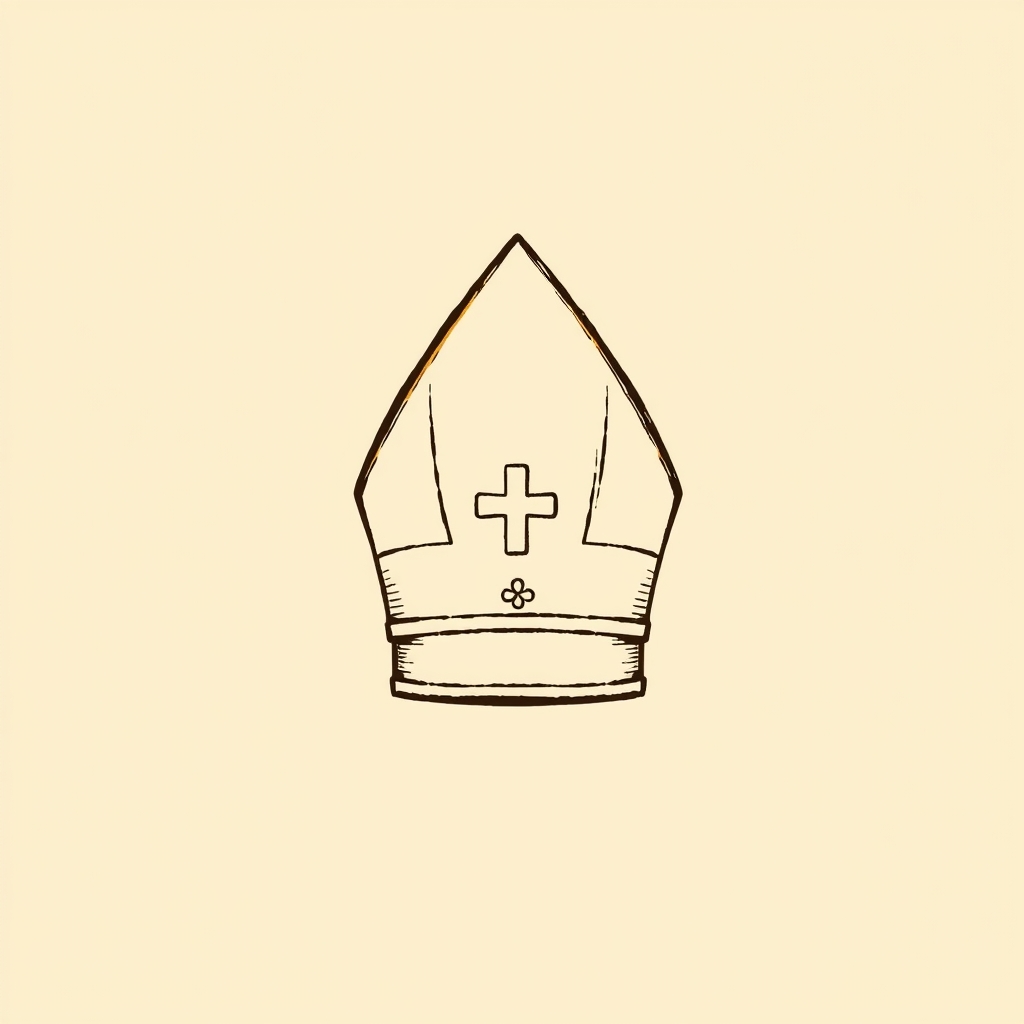


Entities
Narrative network
The names, places, and concepts most present in the entry, weighted by centrality in the text.
The supernatural in their life
The miracles of Saint Bertrand of Comminges
Frequently asked questions about Saint Bertrand of Comminges
Who was Saint Bertrand of Comminges?
A former soldier who became Archdeacon of Toulouse and then Bishop of Comminges in the 12th century, Bertrand rebuilt his cathedral and governed his diocese for fifty years. Renowned for his charity and numerous miracles, he was canonized by Alexander III. His cult is marked by the privilege of the 'Grand Pardon' instituted by Clement V.
What is Saint Bertrand of Comminges the patron saint of?
Patronage of Saint Bertrand of Comminges: Comminges and L'Isle-Jourdain.
What is Saint Bertrand of Comminges invoked for?
Saint Bertrand of Comminges is invoked for: healing of the sick, protection against field sterility and deliverance of prisoners.
How is Saint Bertrand of Comminges depicted in Christian art?
In iconography, Saint Bertrand of Comminges is recognizable by: pastoral staff (crozier), mitre, gold pastoral ring and ebony wood reliquary.
What miracles are attributed to Saint Bertrand of Comminges?
5 miracles are attributed to this saint, notably: Sign / wonder, Multiplication / provision, Vision / apparition and Protection / deliverance.
Which saints were contemporaries of Saint Bertrand of Comminges?
Contemporaries include: Saint Norbert of Magdeburg, Saint Bernard of Clairvaux, Saint Stephen of Hungary and Saint Arthaud of Belley.
When did Saint Bertrand of Comminges die?
Saint Bertrand of Comminges died around 1130.
What are the other names of Saint Bertrand of Comminges?
Other forms of the name: Bertchram.
Annexes & related entities
Structured data for exploration: events, miracles, quotes, places, attributes, patronages, and important entities cited in the text.
Key Events
- Canon then archdeacon of the Church of Toulouse
- Election to the episcopal see of Comminges
- Episcopal consecration in Auch by Bernard de Montaut
- Reconstruction of the Comminges Cathedral and foundation of a cloister
- Participation in the Council of Bordeaux (1093) and Poitiers (1100)
- Miraculous deliverance of Sancius-Parra of Olcia in Spain
Quotes
-
Give them back to me, and I will pay you before you die.
Words of Saint Bertrand to Sancius