
The twenty-fifth Archbishop of Paris in the 7th century, Saint Céraune distinguished himself by his learning and piety. He devoted a large part of his episcopate to collecting the Acts of the Martyrs to preserve them. He participated in the great councils of his time under the reign of Clotaire II.
Contemporaries

Figures and markers around the normalized period for this entry.
Guided reading
5 reading sections
SAINT CÉRAUNE OR CÉRAN,
Episcopacy and Virtues
Successor to Simplicius, Ceraunus distinguishes himself by his learning and virtue, seeking to imitate the bishops of the apostolic age.
Saint Ceraunus or Cera n succeeded Bishop Simpliciu s. In his person, the Church of Par is had a prelate worthy of the first centuries of Christianity, and in whom learning went hand in hand with virtue. He first applied himself to being thoroughly instructed, from the very sources, in all the dogmas of religion; and, when he had received the fullness of the priesthood, he made it a capital duty to work at imitating through his actions the holiest bishops of the apostolic times. One of the principal fruits of his knowledge and piety was to collect the Acts of the Martyrs, in order to preserve them in his Church as precious monuments of their constancy and faith. To this end, he addr essed himself to a cleric of Langres, named Warnahaire, to obtain those of some Saints. Warnahaire sent them to him with the following letter: "You do not cease to walk in the footsteps and to equal the merit of the most illustrious bishops by all your conduct in the priesthood, where you seek no other splendor than that which religion gives. You have already made yourself skilled in the holy letters, and, to crown your glory, you wish to collect in the city of Paris the Acts of the Martyrs; in which you are comparable to Sain t Eusebius of Caesarea. Excuse my lack of ability: I would praise you better if I had more eloquence; but you will at least know my obedience. I send you, as you have ordered me, the Acts of the three twins of Langres (Speusippus, Eleus ippus, and Meleusippus), and those of Saint Desid erius, marty r and bishop of this city." This is all that we know precisely about Saint Ceraunus. His zeal for collecting the histories of the Saints well deserved, however, that his own should have been preserved for us. It is nevertheless undoubted that he attended the Council which met on October 18, 614, by the ord er of King Clot aire II, in the church of Saint-Pierre and Saint-Paul, in Paris, where seventy-nine bishops from all the provinces of the Gauls that he had newly reunited under his dominion were present. Perhaps Saint Ceraunus also attended the Council that, two years later, Clotaire convoked in one of his royal houses, at Bon neuil (apud Bonagilum), i n the territory of Meaux. His death can be fixed between the years 618 and 621. He was buried on September 27, the day his feast is celebrated in the diocese, and his body was deposited in the underground chapel of the church of Saint-Pierre and Saint-Paul, to the left of th e tomb of Saint Genevieve. His translation took place on November 16, 1628; b ut, during th e Revolution, his relics, for fear of profanation, were burned along with others that were kept in the church of Sainte-Genevieve. Pious hands collected the ashes; and, when peace was restored to the Church of France, they were deposited in the parish chur ch of Saint-Leu and Saint-Gilles, where they ar e preserved today.
Hagiographic work
The bishop dedicated himself to collecting the Acts of the Martyrs, notably through correspondence with the cleric Warnahaire of Langres.
Dom Rivet , Literary History of France; Gallia Christiana nova .
Conciliar Activity
Ceraunus participated in the Council of Paris in 614 under Clotaire II and possibly in the Council of Bonneuil in 616.
Saint Ceraunus or Ceran succeeded Bishop Simplicius. In his person, the Church of Paris had a prelate worthy of the first centuries of Christianity, in whom learning walked hand in hand with virtue. He first applied himself to being thoroughly instructed, at the very sources, in all the dogmas of religion; and, when he had received the fullness of the priesthood, he made it a capital duty to work to imitate through his actions the holiest bishops of the apostolic times. One of the principal fruits of his knowledge and piety was to collect the Acts of the Martyrs, in order to preserve them in his Church as precious monuments of their constancy and faith. To this end, he addressed himself to a cleric of Langres, named Warnahaire, to obtain those of some Saints. Warnahaire sent them to him with the following letter: "You do not cease to walk in the footsteps and equal the merit of the most illustrious bishops by your entire conduct in the priesthood, where you seek no other brilliance than that which religion gives. You have already made yourself skilled in the holy letters, and, to crown your glory, you wish to collect in the city of Paris the Acts of the Martyrs; in which you are comparable to Saint Eusebius of Caesarea. Excuse my lack of capacity: I would praise you better if I had more eloquence; but you will at least know my obedience. I send you, as you have ordered me, the Acts of the three twins of Langres (Speusippus, Eleusippus, and Meleusippus), and those of Saint Desiderius, martyr and bishop of this city." This is all that we know precisely about Saint Ceraunus. His zeal for collecting the histories of the Saints deserved, however, that his own be preserved for us. It is nevertheless undoubted that he attended the Council which met on October 18, 614, by the order of King Clotaire II, in the church of Saint-Pierre and Saint-Paul, in Paris, where seventy-nine bishops from all the provinces of the Gauls that he had newly reunited under his dominion were present. Perhaps Saint Ceraunus also attended the Council that, two years later, Clotaire convened in one of his royal houses, at Bonneuil (apud Bonagilum), in the territory of Meaux. His death can be fixed between the years 618 and 621. He was buried on September 27, the day his feast is celebrated in the diocese, and his body was deposited in the underground chapel of the church of Saint-Pierre and Saint-Paul, to the left of the tomb of Saint Genevieve. His translation took place on November 16, 1628; but, during the Revolution, his relics, for fear of profanation, were burned with others that were kept in the church of Sainte-Genevieve. Pious hands collected the ashes; and, when peace was restored to the Church of France, they were deposited in the parish church of Saint-Leu and Saint-Gilles, where they are preserved today.
Death and fate of the relics
Died around 618-621, he was buried near Saint Genevieve; his relics, saved from the Revolution, rest at Saint-Leu and Saint-Gilles.
Saint Ceraunus or Ceran succeeded Bishop Simplicius. In his person, the Church of Paris had a prelate worthy of the first centuries of Christianity, and in whom learning went hand in hand with virtue. He first applied himself to being thoroughly instructed, at the very sources, in all the dogmas of religion; and, when he had received the fullness of the priesthood, he made it a capital duty to work to imitate through his actions the holiest bishops of apostolic times. One of the principal fruits of his knowledge and piety was to collect the Acts of the Martyrs, in order to preserve them in his Church as precious monuments of their constancy and faith. To this end, he addressed himself to a cleric of Langres, named Warnahaire, to obtain those of some Saints. Warnahaire sent them to him with the following letter: "You never cease to walk in the footsteps and equal the merit of the most illustrious bishops through all your conduct in the priesthood, where you seek no other brilliance than that which religion gives. You have already made yourself skilled in the holy letters, and, to crown your glory, you wish to collect in the city of Paris the Acts of the Martyrs; in which you are comparable to Saint Eusebius of Caesarea. Excuse my lack of ability: I would praise you better if I had more eloquence; but you will at least know my obedience. I send you, as you have ordered me, the Acts of the three twins of Langres (Speusippus, Eleusippus, and Meleusippus), and those of Saint Desiderius, martyr and bishop of this city." This is all that we know precisely about Saint Ceraunus. His zeal for collecting the histories of the Saints certainly deserved that his own be preserved for us. It is nevertheless undoubted that he attended the Council which met on October 18, 614, by the order of King Clotaire II, in the church of Saint-Pierre and Saint-Paul, in Paris, where seventy-nine bishops from all the provinces of the Gauls that he had newly reunited under his dominion were present. Perhaps Saint Ceraunus also attended the Council that, two years later, Clotaire convened in one of his royal houses, at Bonneuil (apud Bonagilum), in the territory of Meaux. His death can be fixed between the years 618 and 621. He was buried on September 27, the day his feast is celebrated in the diocese, and his body was deposited in the underground chapel of the church of Saint-Pierre and Saint-Paul, to the left of the tomb of Saint Genevieve. His translation took place on November 16, 1628; but, during the Revolution, his relics, for fear of desecration, were burned with others that were kept in the church of Sainte-Geneviève. Pious hands collected the ashes; and, when peace was restored to the Church of France, they were deposited in the parish church of Saint-Leu and Saint-Gilles, where they are preserved today.
Historical sources
The information is based on the Histoire littéraire de la France by Dom Rivet and the Gallia Christiana.
Dom Rivet, Histoire littéraire de la France; Gallia Christiana nova.
Iconography
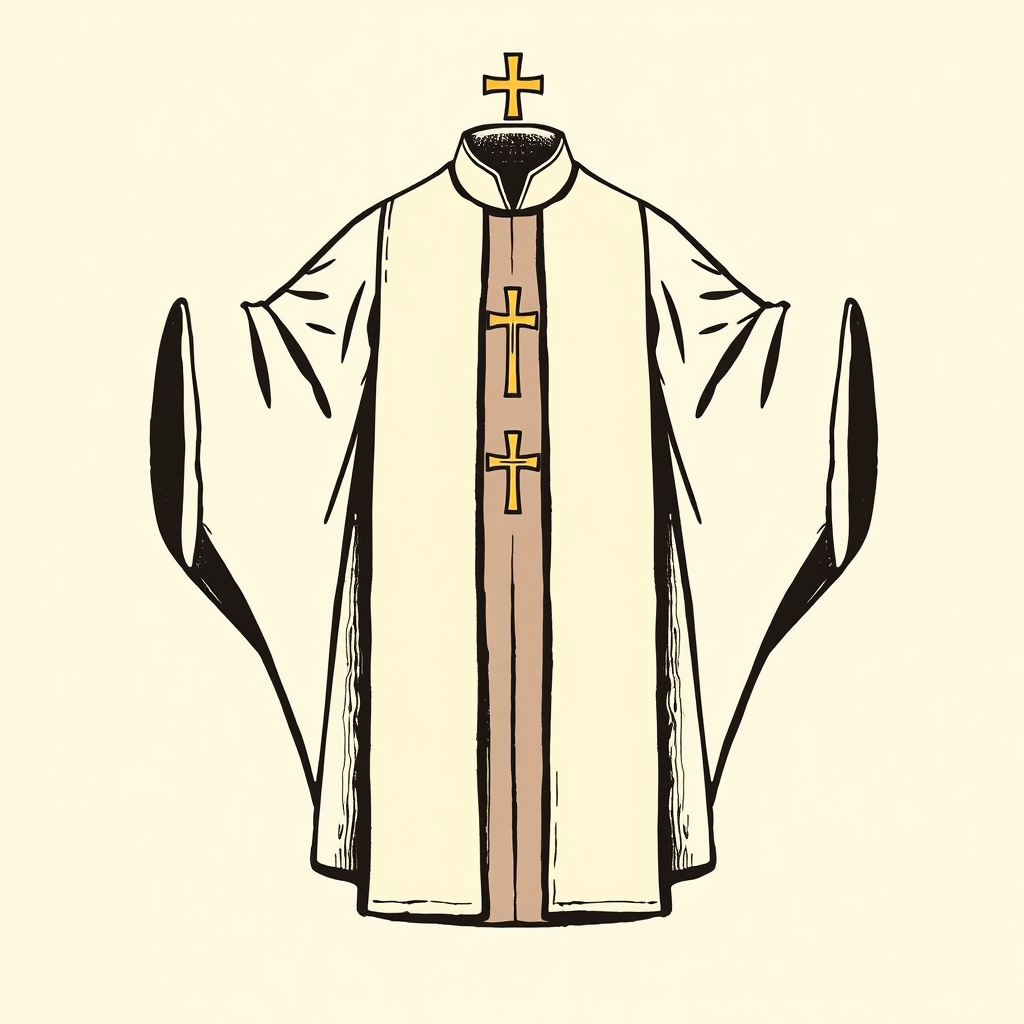
Signs and attributes

Entities
Narrative network
The names, places, and concepts most present in the entry, weighted by centrality in the text.
Frequently asked questions about Saint Ceraunus (Ceran)
Who was Saint Ceraunus (Ceran)?
The twenty-fifth Archbishop of Paris in the 7th century, Saint Céraune distinguished himself by his learning and piety. He devoted a large part of his episcopate to collecting the Acts of the Martyrs to preserve them. He participated in the great councils of his time under the reign of Clotaire II.
What is Saint Ceraunus (Ceran) the patron saint of?
Patronage of Saint Ceraunus (Ceran): Diocese of Paris.
How is Saint Ceraunus (Ceran) depicted in Christian art?
In iconography, Saint Ceraunus (Ceran) is recognizable by: episcopal vestments and books or manuscripts (Acts of the Martyrs).
How did Saint Ceraunus (Ceran) die?
Saint Ceraunus (Ceran) suffered martyrdom for the Christian faith (7th century).
Which saints were contemporaries of Saint Ceraunus (Ceran)?
Contemporaries include: Saint Priest (Prix), Saint Gregory the Great (Pope and Doctor of the Church), Saint Die (Didier, Deodat) and Saint Augustine of Canterbury.
What are the other names of Saint Ceraunus (Ceran)?
Other forms of the name: Céran and Céranne.
Annexes & related entities
Structured data for exploration: events, miracles, quotes, places, attributes, patronages, and important entities cited in the text.
Key Events
- Succession to Bishop Simplicius
- Collection of the Acts of the Martyrs with the help of Warnahaire
- Participation in the Council of Paris on October 18, 614
- Possible participation in the Council of Bonneuil around 616
- Translation of relics on November 16, 1628
- Partial destruction of relics by fire during the French Revolution
Quotes
-
You never cease to follow in the footsteps and equal the merit of the most illustrious bishops through your entire conduct in the priesthood
Letter of Warnahaire