
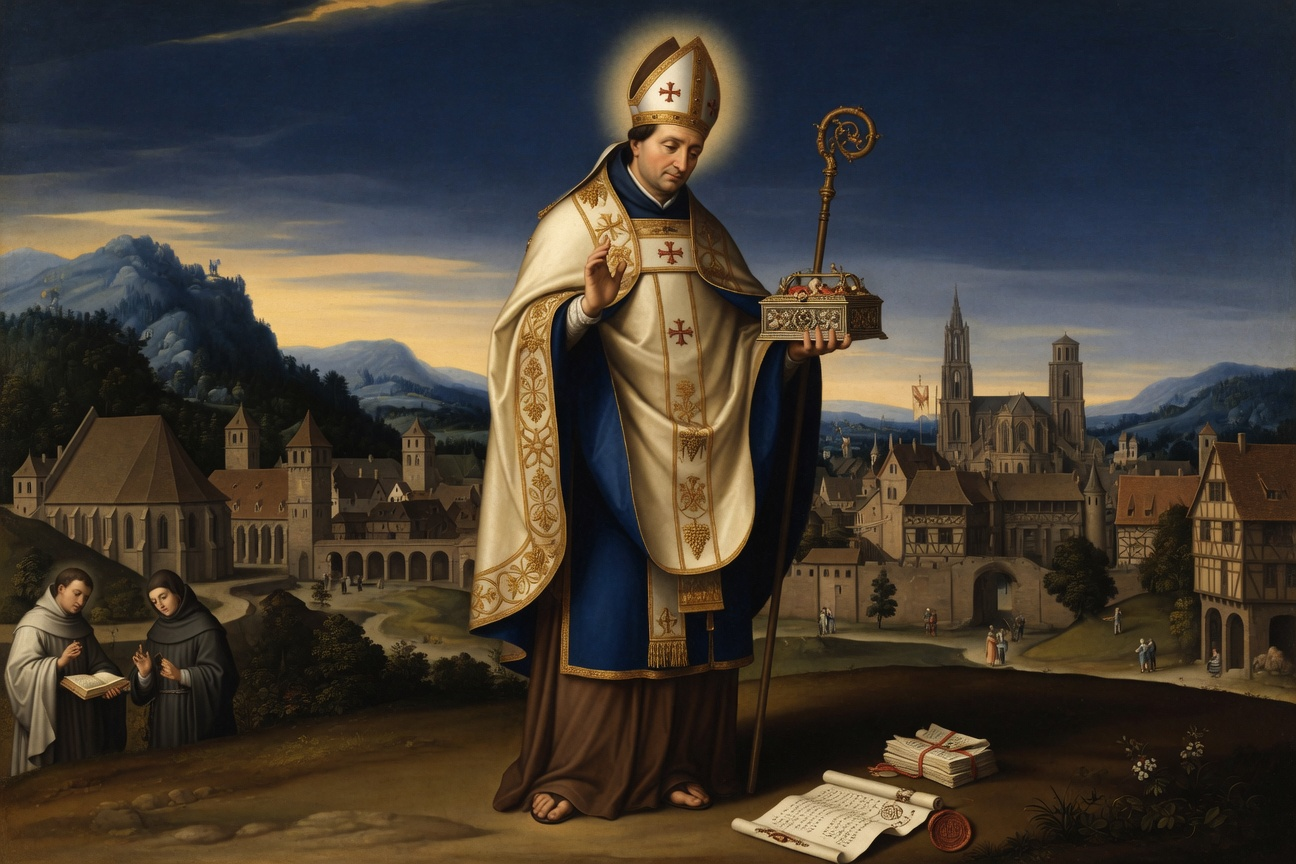
Blessed Remi of Strasbourg
Nephew of Saint Odile and Bishop of Strasbourg in the 8th century, Remi was a close associate of Charlemagne and a great founder of monasteries, notably that of Eschau. He brought the relics of Saint Sophia and her daughters back from Rome. His will of 778, bequeathing his property to the Virgin Mary, remains a notable historical document.
Contemporaries

Figures and markers around the normalized period for this entry.
Guided reading
5 reading sections
BLESSED REMI, BISHOP OF STRASBOURG (783).
Origins and monastic formation
Remi, coming from the high Alsatian nobility and nephew of Saint Odile, was trained at the Abbey of Munster, of which he later became abbot.
The Blessed Remi, B ishop of Strasbourg, nephew of Sa int Odile, w as the son of Count Hugues and grandson of Adalric, Duke of Alsace. He was raised in the Abbey of Munster, in the Val-Saint-Grégoire, four leagues from Colmar, and took over the government of this monastery after Agnald, a pious and learned man.
Episcopate and journey to Rome
Having become Bishop of Strasbourg in 776, he benefited from the support of Charlemagne and brought back from Rome the relics of Saint Sophia and her daughters.
In 776, he succeeded his cousin Heddon to the see of Strasbourg, the founder of a school that would later become so flourishing. He enjoyed the favor of Charl emagne, and dedicated his considerable wealth to the service of religion and the relief of the poor. He made a pilgrimage to Rome, where he was very well received by Pope Adrian I, who g ave him the rel ics of Saint Sophia and her thre e daughters, Saint Faith, Saint Hope, and Saint Charity, who had suffered martyrdom under the Emperor Hadrian.
Foundations and donations
He founded the monastery of Eschau and received the donation of the monastery of Werd, while multiplying religious establishments in Alsace and Switzerland.
Upon his return, he placed their bodies in the monastery of canonesses of Esc hau, founded by him on an island formed at the confluence of the Rhine and the Ill. The year following his journey to Rome, Remi received a flattering testimony of the esteem and confidence that the Church of Strasbourg inspired at that time. A regio nal bishop of Switzerland, named Rapert, established the monastery of Werd, on an island in the Aar, and donated it to the cathedral of Strasbourg. Among the other monasteries he founded, those of Schonenwerd, in Switzerland, and Eschau, where he had his tomb built, are cited.
Testament and spiritual legacy
In 778, he drafted a remarkable testament designating the Virgin Mary as his universal heir, a document co-signed by numerous witnesses.
In the year 778, he made his testament, by which he instituted the blessed Virgin Mary as his universal heir, beseeching her to watch over the fulfillment of his last wishes. This testament, which is a curious monument of jurisprudence during the era of the second race of our kings, is signed by five bishops and forty-two witnesses of both sexes.
Death and recognition of the cult
Died in 783, his cult was later officially authorized by Pope Leo IX for the abbey of Munster.
Blessed Remi died on March 29, 783, and on May 18 of the same year his body was carried to Eschau. It does not appear that any cult was ever rendered to him in his diocese; but Pope Sain t Leo IX, who was of the same family, authorized the celebration of his feast for the abbey of Munster, where he continued to be honored as blessed until the destruction of that abbey.
*Dictionnaire de Petin.*
Iconography
Signs and attributes
Entities
Narrative network
The names, places, and concepts most present in the entry, weighted by centrality in the text.
Frequently asked questions about Blessed Remi of Strasbourg
Who was Blessed Remi of Strasbourg?
Nephew of Saint Odile and Bishop of Strasbourg in the 8th century, Remi was a close associate of Charlemagne and a great founder of monasteries, notably that of Eschau. He brought the relics of Saint Sophia and her daughters back from Rome. His will of 778, bequeathing his property to the Virgin Mary, remains a notable historical document.
What is Blessed Remi of Strasbourg the patron saint of?
Patronage of Blessed Remi of Strasbourg: Munster Abbey.
How is Blessed Remi of Strasbourg depicted in Christian art?
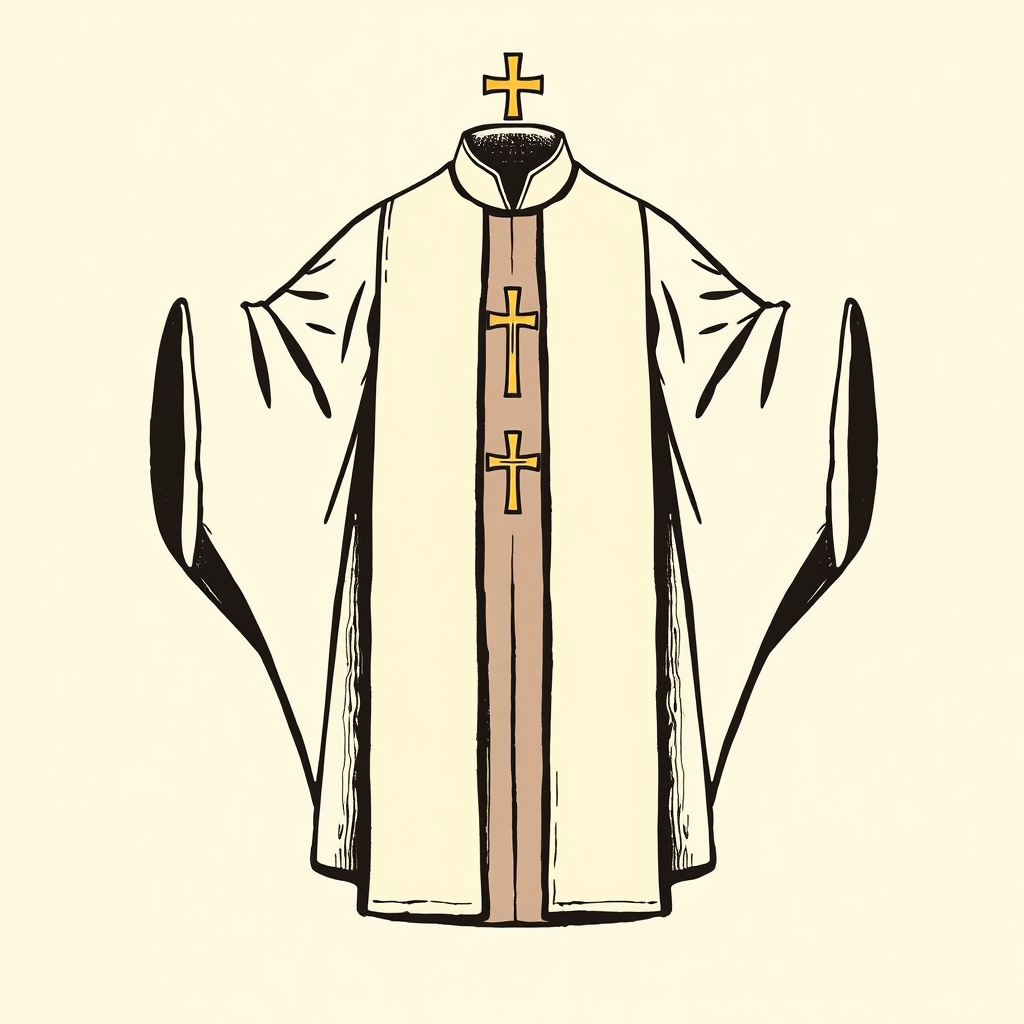
In iconography, Blessed Remi of Strasbourg is recognizable by: episcopal vestments and relics of Saint Sophia.
Which saints were contemporaries of Blessed Remi of Strasbourg?
Contemporaries include: Saint Hidulph of Trier, Saint Ghislain (Guillain), Saint Lambert (Landebert) and Saint Amand of Maastricht.
When did Blessed Remi of Strasbourg die?
Blessed Remi of Strasbourg died around 783.
What are the other names of Blessed Remi of Strasbourg?
Other forms of the name: Remigius.
Who are the relatives of Blessed Remi of Strasbourg?
Relatives of Blessed Remi of Strasbourg: Sainte Odile (aunt), Hugues (father), Adalric (grandfather), Heddon (cousin) and Saint Léon IX (parent).
Annexes & related entities
Structured data for exploration: events, miracles, quotes, places, attributes, patronages, and important entities cited in the text.
Key Events
- Education at Munster Abbey
- Government of Munster Abbey after Agnald
- Accession to the see of Strasbourg in 776
- Pilgrimage to Rome and meeting with Pope Adrian I
- Foundation of the monastery of Eschau
- Drafting of his will in 778, naming the Virgin Mary as universal heir
- Translation of his relics to Eschau on May 18, 783