
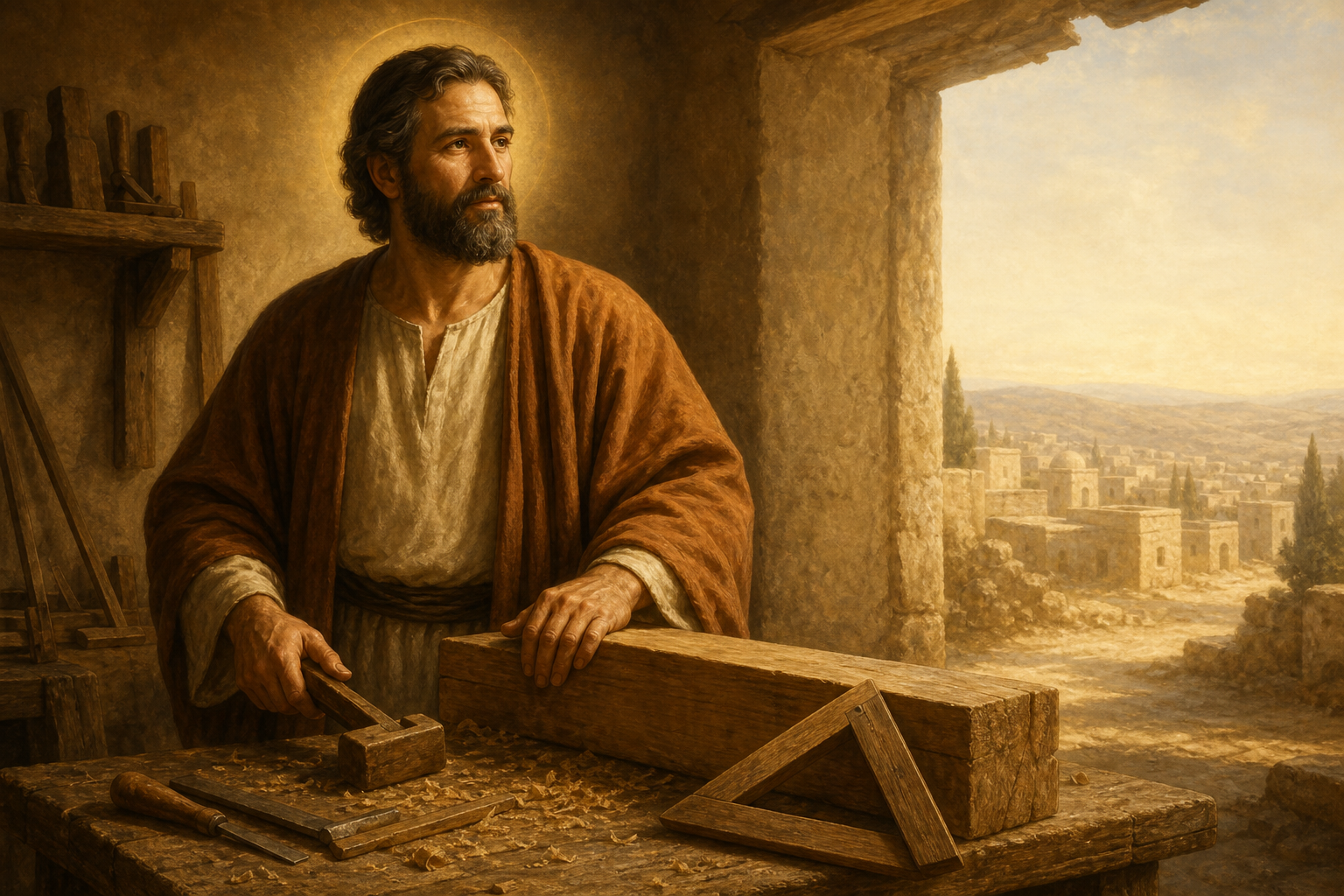
Saint Joseph
Saint Joseph, foster father of the Savior and spouse of Mary, saw his devotion develop gradually from the East to the West. Long remaining discreet by providential prudence, he was declared Patron of the Universal Church by Pius IX in 1870. His principal feast is fixed on March 19.
Contemporaries

Figures and markers around the normalized period for this entry.
Guided reading
6 reading sections
DEVOTION TO SAINT JOSEPH.
The silence of the first centuries
Theological explanation regarding the initial discretion of the cult of Saint Joseph, aimed at avoiding any confusion with pagan idols before the strengthening of the faith.
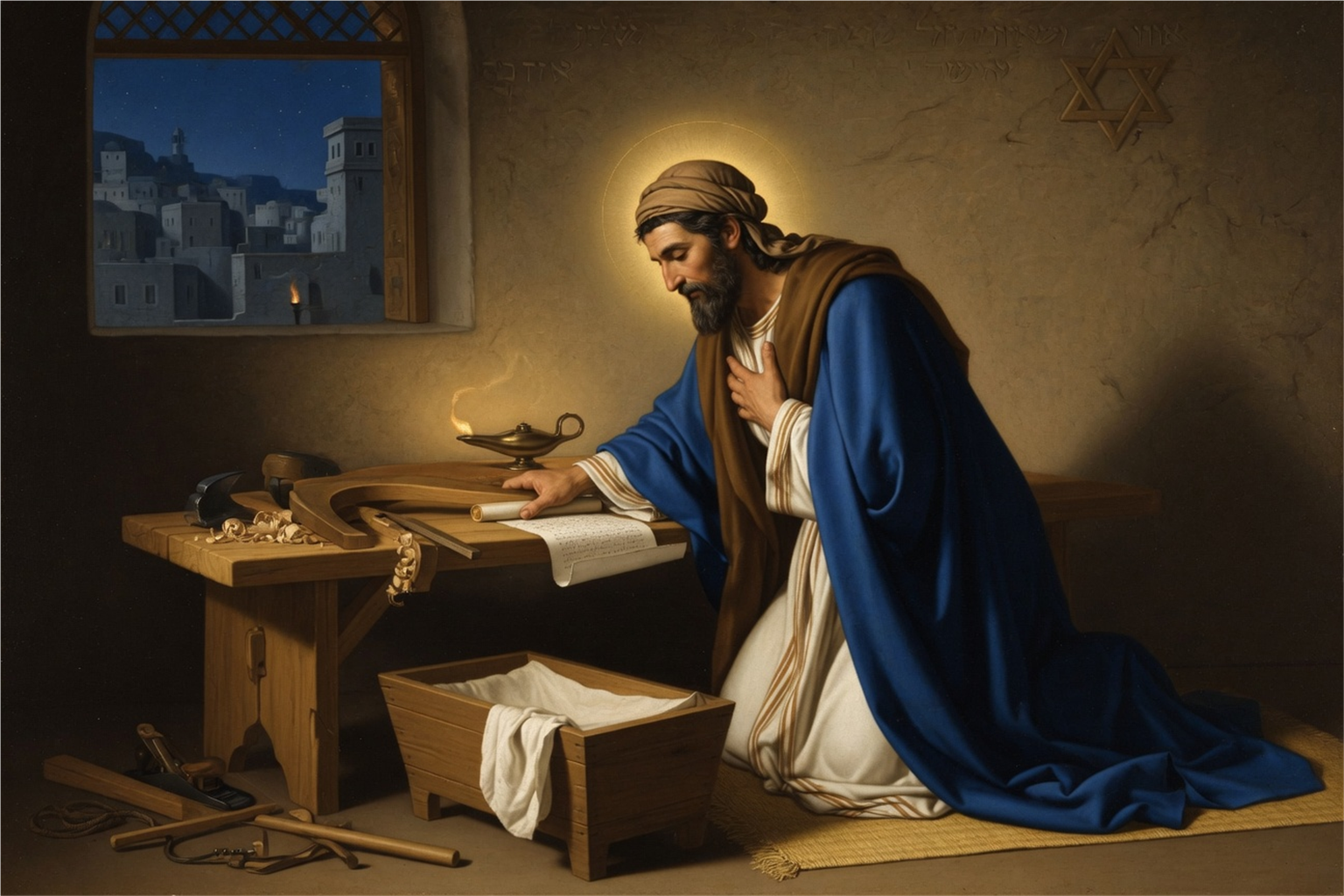
Why, one might ask, did this great Saint, raised by the Holy Spirit to such high destinies, not receive in Christian society, from the very first days of the Church, all the honors that seem due to him by so many titles? It is not impossible, no doubt, to lift here a corner of the veil that has for so long hidden from view the clear sight of providential designs. In certain respects, the cult of Saint Joseph is like that of the Blesse d Virgin. Be cause of the low ideas of men at th e first epoch of evangelical preaching, where divine honors were prostituted to a crowd of infamous idols, Providence willed that the honors legitimately due to Mary and Joseph should remain suspended for some time. This abstraction, however, was not to last forever. The enlightened Christian conscience would finally have recourse to our natural protectors, the most powerful ones near Jesus Christ. Prudence was to give way to the perfectly regulated piety of Christians.
First traces in the East
Evocation of the first celebrations in the Greek Church and mention of Saint Joseph in primitive martyrologies such as that of Eusebius of Caesarea.
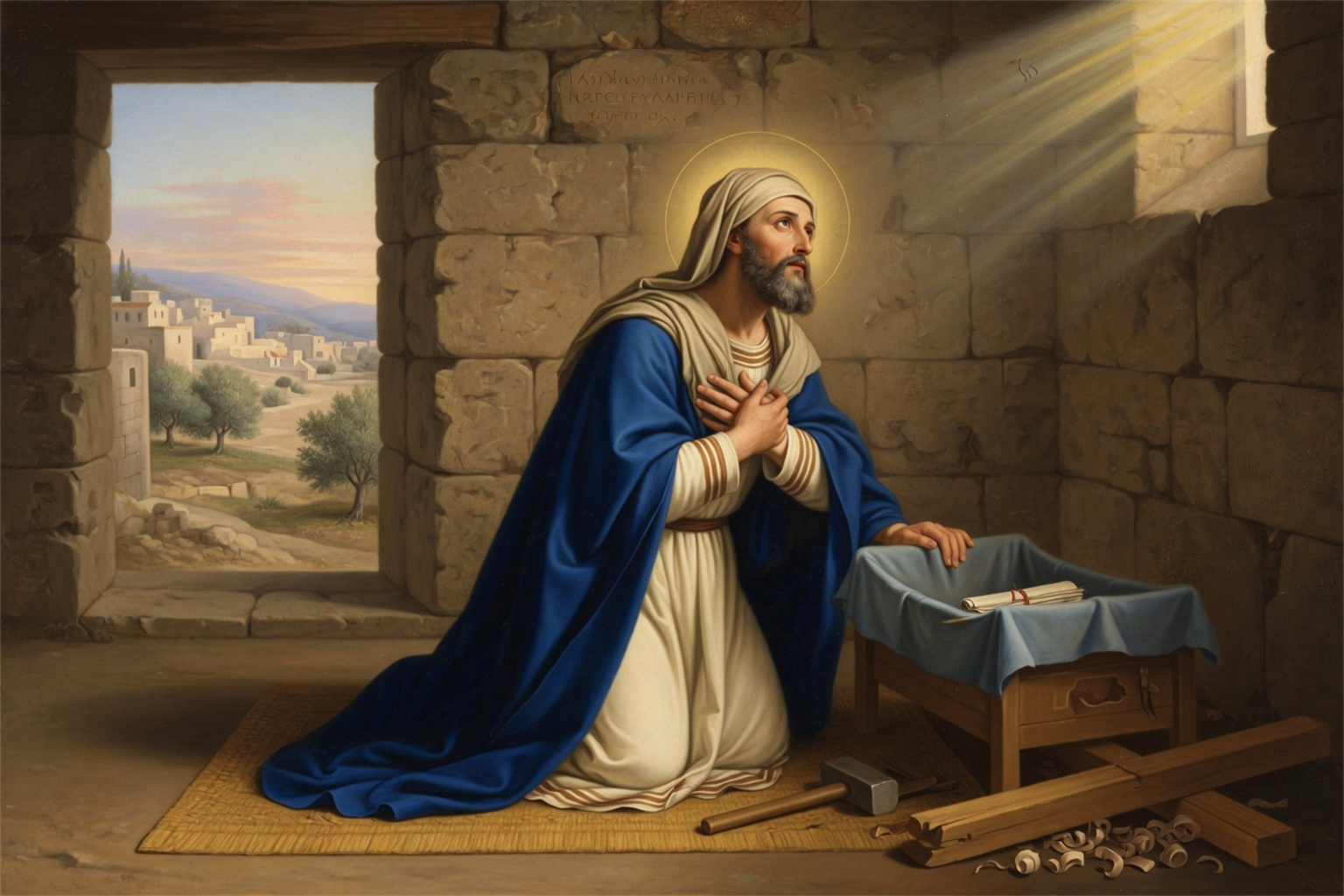
The Greek Church appears to have been the first to render public worship to Saint Joseph, albeit in a general and rather ill-defined manner. On the Sunday preceding Christmas, it celebrated the feast of the ancestors of Jesus Christ and the righteous of the Old Law. Among them, Saint Joseph, foster-father of the Savior, occupies the principal place. The following text by Eusebius, Bishop of Caesarea, which is regarded as an abbreviation of the primitive martyrology of Saint Jerome, may be considered the echo of the general b elief. " In Bethlehem," he says, "feast or commemoration of Saint Joseph, foster-father of the Lord." In Bethleem sancti Joseph nutritoris Domini.
On July 20, the Orientals, from the highest antiquity, celebrate a feast of Saint Joseph; but the Bollandists rightly think that this concerns the feast of Saint Joseph Barsabbas or the Just, although they place the death of the spouse of the Blessed Virgin on this date according to uncertain traditions.
Development of the Cult in the West
The determining role of the mendicant orders and medieval theologians in the spread of devotion to Saint Joseph following the Crusades.
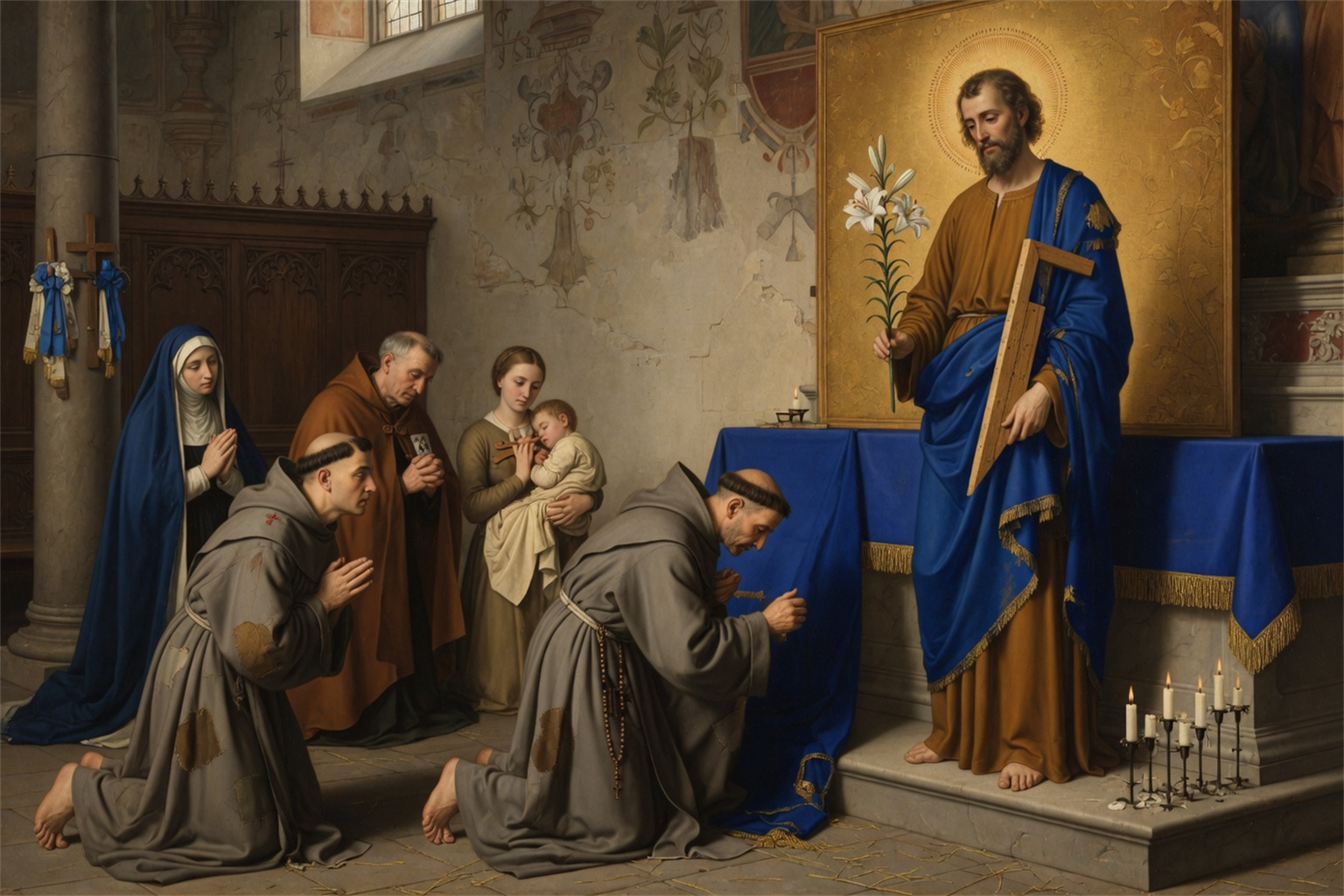
Among the Latins, the name of Saint Joseph was inserted into the oldest martyrologies after those of Usuard and Ado. Early on, his feast was fixed for March 19. The Carmelites, say the most famous hagiographers, were especially distinguished by their devotion to Saint Joseph, which grew in the West, especially following the Crusades. The Franciscans and Dominicans spread it eagerly on all sides through their pious preaching, not separating the homage due to this great Patriarch from that which fervent Christians must render to Mary, Mother of God. Towards the middle of the 13th century, Albert the Great, of the Order of Saint Dominic, delivered a panegyric of Saint Joseph, which remains famous, and which breathes the sentiments of the tenderest piety. Later, Jean Gerson and Pierre d'Ailly delivered speeches on the same subject that had a considerable impact and exerted great influence. Finally, Sixtus IV, who had embraced the rule of the Cordeliers, pope from 1471 to 1484, instituted or renewed the feast of Saint Joseph in the breviary. The Roman breviary of 1490 lists this feast only as a simple degree; that of Pope Innocent VIII indicates it as a double. From the beginning of the 15th century, several churches in France had adopted this feast and celebrated it with solemnity. Germany did not delay in imitating this example. Cardinal Ximenes introduced it into his church of Toledo. Pius V, in reforming the Roman breviary after the Council of Trent, decreed that the office of Saint Joseph would be that of Confessors not Bishops, with the lessons of the second nocturn taken from Saint Bernard I, as we recite it today. In 1621, Gregory XV made this feast a holy day of obligation; in 1642, Urban VIII renewed this obligation; but this law was never in force in France. In our day, a remarkable movement of piety and zeal has manifested itself in the Church for the increase of the cult of Saint Joseph. Following numerous and repeated requests from the faithful of all countries, many bishops and theologians, gathered in Rome for the Vatican Council, asked the Sovereign Pontiff that Saint Joseph be declared Patron of the Universal Church, and that his feast be raised to the degree of double of the first class. Pius IX solemnly granted both requests by a decree of the Congregation of R ites d ated December 8, 1879.
Institutionalization by the Papacy
A succession of papal decrees, from Sixtus IV to Pius IX, elevating the feast of Saint Joseph and declaring him Patron of the Universal Church.
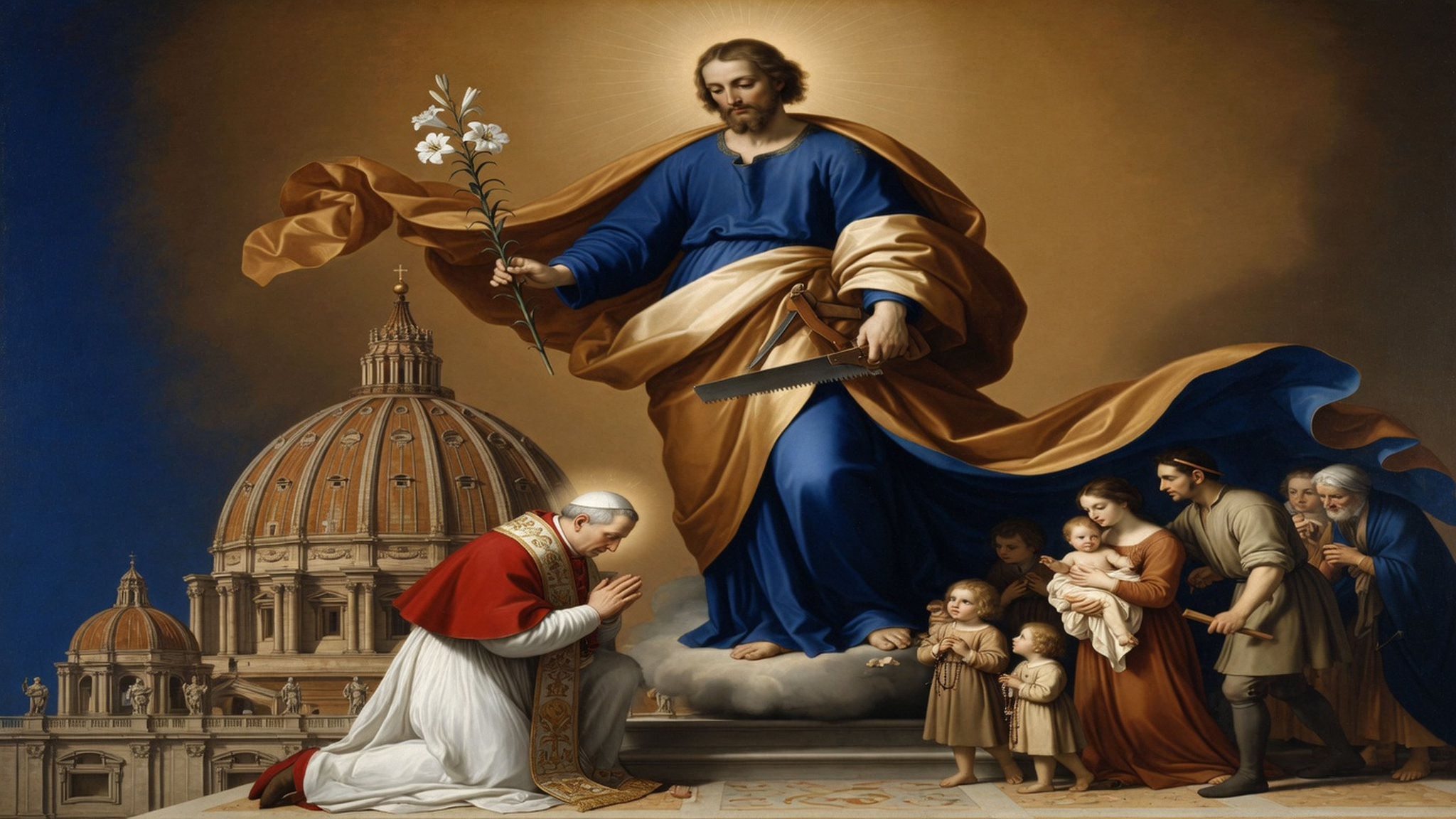
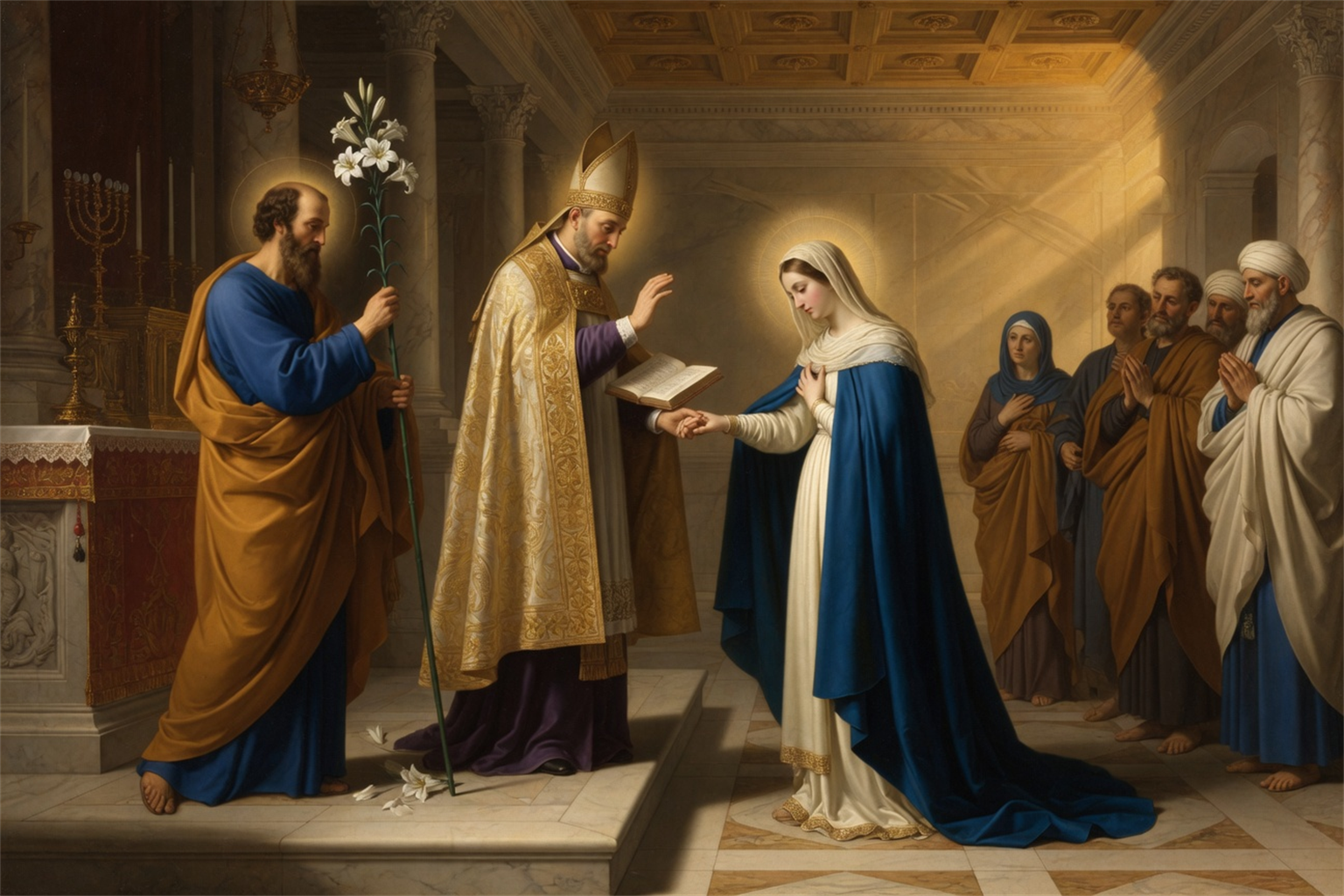
Besides this feast of March 19, there are two others that are equally dear to the faithful: the feast of the Patronage of Saint Joseph, fixed on the third Sunday after Pentecost by the Congregation of Rites in 1680, and the feast of the Betrothal or Marriage of Saint Joseph, the origin of which is recounted by Benedict XIV in his Treatise on Feasts. A canon of Chartres, who died in the 15th century, requested in his will that the Chapter, on the anniversary of his death, should hold a solemn memorial of Saint Joseph, knowing that the honors rendered to this great Saint redound to the glory of the Blessed Virgin; Jean Gerson, doctor and chancellor of the University of Paris, known for his particular devotion to Saint Joseph, proposed to fulfill the intentions of the deceased canon by the institution of the feast of the Betrothal or Marriage of the Blessed Virgin with Saint Joseph; at the same time, he composed the office for it. This feast does not appear to have been celebrated at that time outside of the church of Chartres or the neighboring regions. In the 17th century, Paul III permitted, by a special concession, the Friars Minor and the sisters of the same Order to celebrate a feast under the same title. Pierre Doré, of the Order of Preachers, composed the office, which was approved by the Sovereign Pontiff. Finally, Benedict XIII, by an indult of August 22, 1725, permitted all the churches of the Ecclesiastical States and some others to recite this office under the major double rite, with a special memorial of Saint Joseph. Let us not omit to add that the name of Saint Joseph is invoked in the litanies of all the Saints approved by the Church.
Feasts of the Patronage and the Betrothal
Details on the origin of specific feasts such as the Betrothal of the Virgin, promoted by Jean Gerson and the chapter of Chartres.
It would be too long to mention here the numerous confraternities erected in honor of Saint Joseph. On March 19, the Bollandists speak of them at some length. They have also preserved for us quite ample details on the favors obtained from God through his intercession.
Confraternities and historical references
Mention of Roman confraternities and presentation of the main source for this account, the work of Abbé Bourassé.
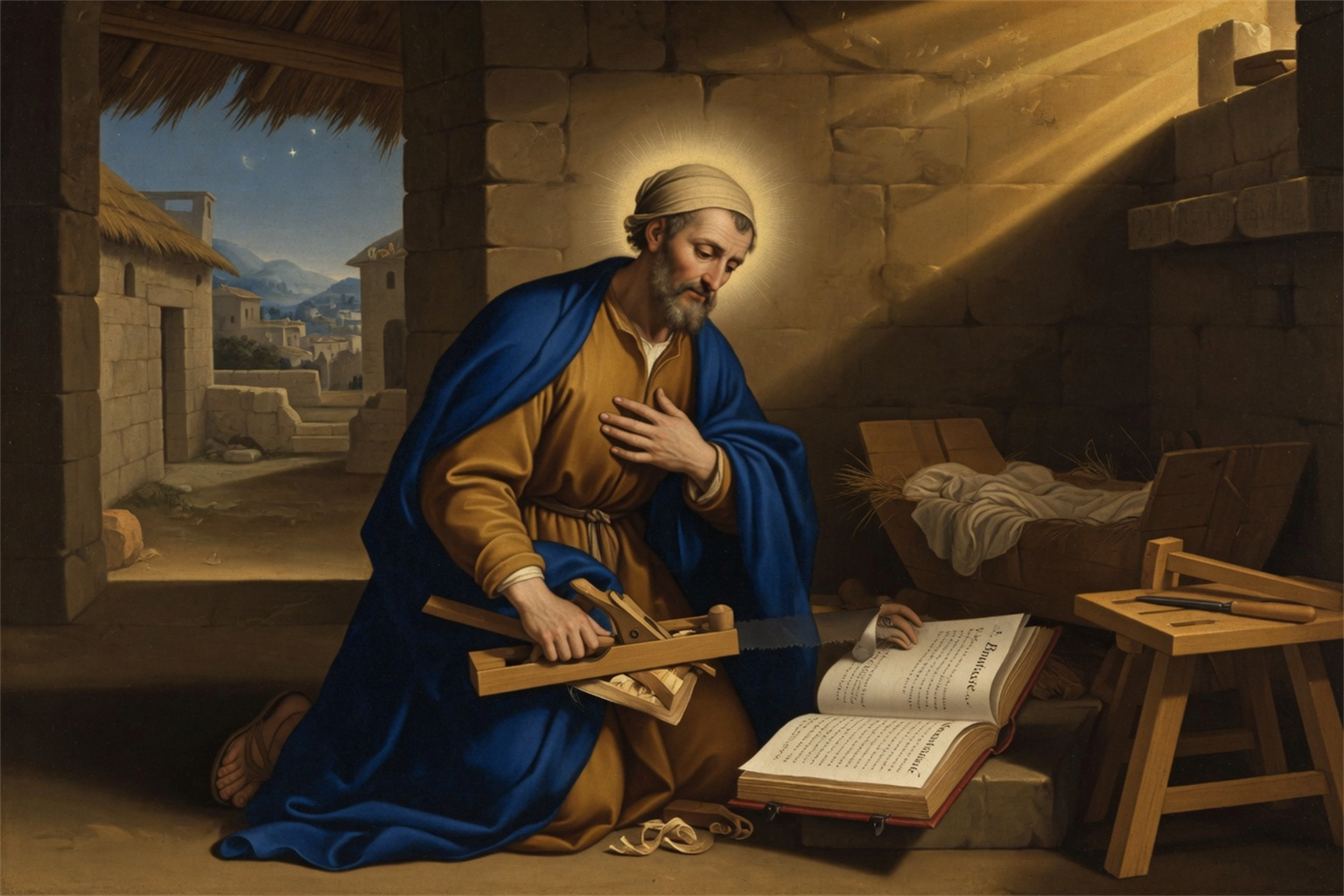
Since the time when Pope Clement X raised the feast of Saint Joseph to the rank of a major solemnity and gave it a proper office, the devotion of the faithful grew extraordinarily. Rome dedic ated churches to him and created confraternities under his patronage; all the countries of Italy wished to imitate the Eternal City. The first confraternity appears to have been that of Saint-Joseph-aux-Prisons, according to Ottavio Panciroli, founded in 1539 by all the Roman workers who work with wood.
To reconstruct this life of Saint Joseph, we have abridged the remarkable history of the last and most glorious of the patriarchs, by Abbé J. J. Bourassé, canon o f the metropolitan church of Tours, in-8°, 1872.
Iconography
Signs and attributes

Entities
Narrative network
The names, places, and concepts most present in the entry, weighted by centrality in the text.
Frequently asked questions about Saint Joseph
Who was Saint Joseph?
Saint Joseph, foster father of the Savior and spouse of Mary, saw his devotion develop gradually from the East to the West. Long remaining discreet by providential prudence, he was declared Patron of the Universal Church by Pius IX in 1870. His principal feast is fixed on March 19.
What is Saint Joseph the patron saint of?
Patronage of Saint Joseph: Universal Church, Woodworkers and Saint Joseph of the Prisons.
What is Saint Joseph invoked for?
Saint Joseph is invoked for: protection of the Church and powerful intercession with Jesus Christ.
How is Saint Joseph depicted in Christian art?
In iconography, Saint Joseph is recognizable by: carpenter's tools (implied by the woodworkers' guild).
Which saints were contemporaries of Saint Joseph?
Contemporaries include: Saint Peregrinus of Auxerre, Ana de Jesús, Venerable Anne of Jesus and Saint Philip Neri.
When did Saint Joseph die?
Saint Joseph died around 1484.
What are the other names of Saint Joseph?
Other forms of the name: Joseph nutritoris Domini and Joseph Barsabbas.
Who are the relatives of Saint Joseph?
Relatives of Saint Joseph: Sainte Vierge (spouse) and Jésus-Christ (foster child).
Annexes & related entities
Structured data for exploration: events, miracles, quotes, places, attributes, patronages, and important entities cited in the text.
Key Events
- Early celebration by the Greek Church on the Sunday before Christmas
- Insertion of the name into the martyrologies of Usuard and Ado
- Development of the cult in the West by the Carmelites after the Crusades
- Institution of the feast in the breviary by Sixtus IV (1471-1484)
- Declared Patron of the Universal Church by Pius IX on December 8, 1870
Quotes
-
In Bethleem sancti Joseph nutritoris Domini
Eusebius of Caesarea