
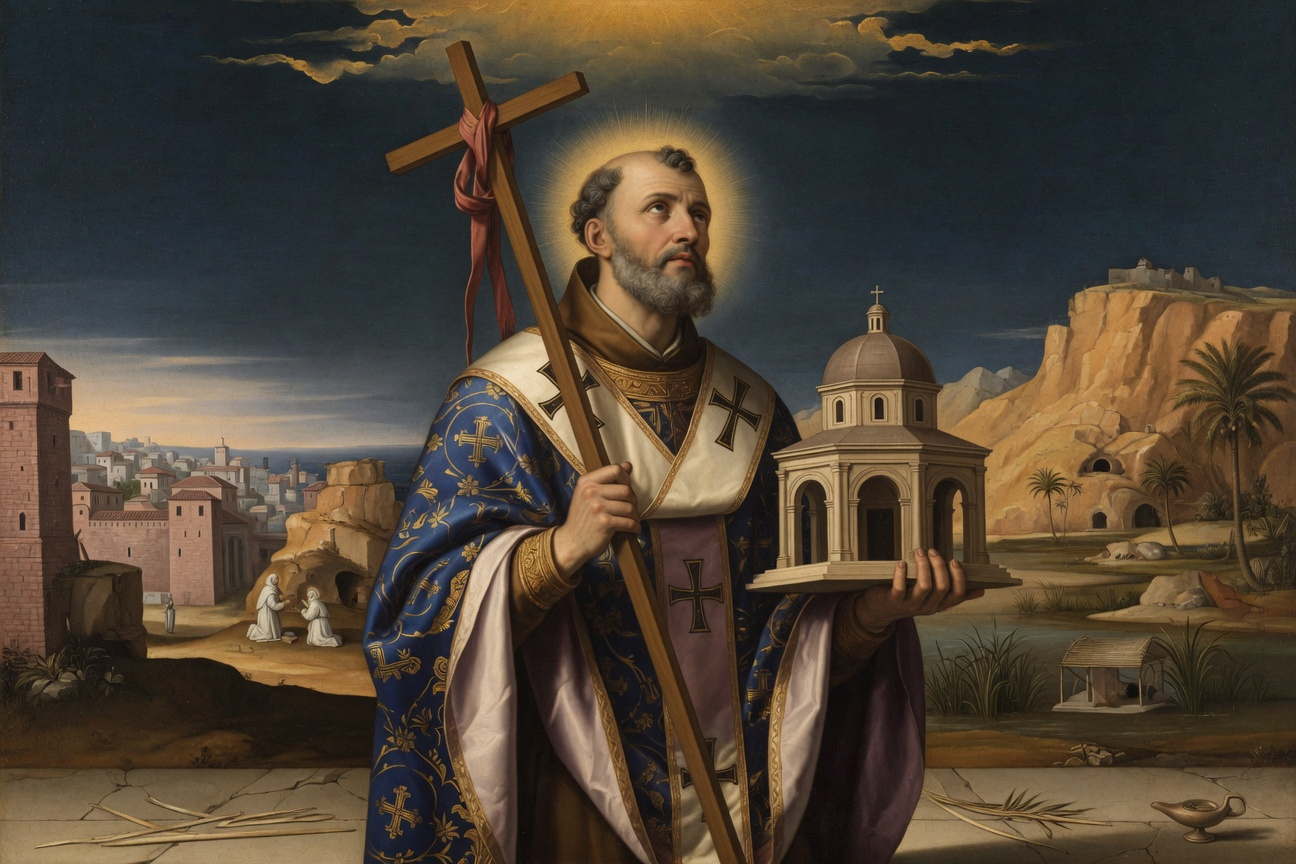
Born in Thessalonica, Porphyrius became Bishop of Gaza after a life of asceticism in Egypt and Palestine. He fought with determination against idolatry, obtaining from Emperor Arcadius the destruction of pagan temples to build a Christian church in their place. He is recognized for his numerous miracles and his pastoral zeal until his death in 420.
Contemporaries

Figures and markers around the normalized period for this entry.
Guided reading
8 reading sections
SAINT PORPHYRIUS, BISHOP OF GAZA
AND SAINT IRENE, VIRGIN
Youth and Ascetic Life
Born in Thessalonica, Porphyry embraced the monastic life in Egypt and then in the Holy Land before being miraculously healed at Calvary.
Saint Porphyry was born in Thessalonica in the year of Our Lord 353, to very wealthy and virtuous parents, who took great care to raise him in piety, in the fear of God, and in both divine and human sciences. At the age of twenty-five, divine love caused him to abandon all the riches of the earth, to leave his country and his parents to embrace the religious life at the monastery of Scetis, in Egypt. He remained there for five years, at the end of which he visited the holy places of Jerusalem, then retired to a cave near the Jordan, where he spent another five years with such discomfort, due to the harshness of the place, that he fell into a great illness: which forced him to be carried to Jerusalem. However weakened he was, he did not cease to visit the holy places every day; and he despised the pain he suffered so strongly that one would have said that another was enduring it, and not him: the trust he had in God placed him above all pain.
As he had not been able to share his inheritance with his brothers, because of their youth, he had not yet fulfilled the precept of the Gospel to sell all his goods and distribute them to the poor: he therefore resolved to accomplish it. To this end, he sent to Thessalonica a young man named Mark, with whom he had become acqua inte d, and who was later his faithful disciple, so that he might proceed with this division: the Saint's share amounted to the sum of four thousand four hundred gold crowns, which he brought back to him along with a quantity of precious furniture.
Mark was very surprised, upon his return, to find Porphyry in very good health, and without any appearance of having been ill; having asked him the cause, the Saint replied that he had been miraculously healed on Calvary, where he had dragged himself with great difficulty, so weak was he; there, Jesus Christ, attached to the cross, had appeared to him in an ecstasy and had placed a cross upon his shoulders; after which he had felt no more pain. The account of this wonder so touched the heart of this young man that he placed himself in the service of Porphyry to benefit from the examples of his virtues: and it is to him that we owe the life of this great servant of God.
Ordination and accession to the episcopate
After distributing his possessions, he became a priest in Jerusalem and then Bishop of Gaza, a city dominated by idolatry.
The considerable treasures that had been brought to him did not remain long in his hands, for he distributed them all to the poor of Jerusalem and other neighboring cities, and to the monasteries that were in need, without reserving anything for himself; thus he was himself obliged, in order to earn his living, in imitation of the Apostle to the Gentiles, to practice the trade of a leather-dresser. A at the age of forty, Prayle, Patriarch of Jerusalem, ordained him priest, and entrusted him with the keeping of the adorable wood of the Savior's cr oss. Three years later, he was made Bishop of Gaza, in Palestine, by John, Archbishop of Caesarea, metropolitan of the province, a holy man, to whom the clergy and the people had entrusted this election, because they had not been able to agree (the ecclesiastics proposing one, and the laymen another). Thus, instead of thinking only of expiating his own sins, as he himself said, he found himself engaged in working for the expiation of those of others. As soon as he was consecrated, he went to Gaza, where the idolaters, with whom this city was entirely filled, regarded him as the greatest enemy of their gods.
Conflict with the idolaters and meeting with Irene
Fleeing persecution, Porphyrius meets the young Irene whom he converts, while facing the hostility of the pagans of Gaza.
One day, having had to leave his episcopal house to escape the fury of the idolaters, he took refuge with one of his priests in a small house inhabited by a poor woman and her little daughter. The latter was named Irene; she was fourteen years old. Recognizing the bishop, the young girl, who happened to be alone at that moment, threw herself at his feet and venerated him. The bishop asked her the names of her parents. 'I have neither father nor mother anymore,' replied Irene; 'I only have an old grandmother whom I support with myself through my work.' 'Are you a Christian, my child?' 'No, but I desire to become one.' 'How inclined this people is to good,' exclaimed the holy bishop; 'if only the enemy did not place obstacles in the way! But God will be the master.' Then he asked the child to lend them a place on the terrace of the house to rest, and to tell no one that they were there. Irene placed a mat on the terrace and gave them what little she possessed, bread and olives. The holy bishop, considering the good heart with which this young girl offered them what had cost her painful labor, began to shed tears and told her that she would become a servant of the good God. The child went down to her grandmother and the two fugitives fell asleep; it was summer. When the tumult had subsided, they withdrew secretly to the church, then returned to the episcopal residence which the pagan populace had pillaged and where they had left one of the bishop's servants dead.
The miracle of the rain and the appeal to the emperor
Porphyry obtains rain through prayer and seeks the help of John Chrysostom to obtain from the emperor the destruction of the pagan temples.
However, heaven was to intervene in favor of the Christian cause: a great drought reigned at that time in Palestine; the pagans naturally attributed it to the bishop's sorcery. Jupiter, they said, had indeed predicted that the arrival of Porphyry would be the signal for a great number of evils. They sacrificed uselessly to their idols to obtain rain from them; but the Saint, after having held public prayers in several churches with his small company of Christians, to which he led them in procession, caused a great abundance of it to fall from the sky, as the prophet Elijah had done in the past: many pagans, touched by this miracle, converted to the Christian religion; and, in order to stop the fury and obstinacy of the others, he wrote to Saint John Chrysostom, in Constantinople, to beg him to ask the Emperor Arcadius for the destruction of the temples of the false gods in Gaza. Porphyry had taken this matter so much to heart that he had fallen ill; but the joy he felt upon learning that the blessed patriarch had obtained from the prince what he desired with such ardor restored his health. Indeed, some time later, an officer named Hilary arrived in Gaza with an edict from the emperor to overthrow the idols and close the temples of the false gods. Nevertheless, the latter, having allowed himself to be won over by a large sum of money, allowed the statue of Jupiter to be worshipped in secret.
Porphyry, seeing the hardening of these infidels, who did not cease to commit new outrages against the Christians every day, was so afflicted by it that he resolved to leave his bishopric and went to Caesarea to ask the archbishop to allow him to do so; but the latter revived the courage of the good prelate, and both agreed to go together to Constantinople to obtain from the emperor the total ruin of the temples of these idolaters. They were strengthened in this good design by the blessed Procopius, an anchorite in Rhodes, who had received a revelation that they would succee d, and that the Empre ss Eudoxia would happily give birth to a son if she granted them what they asked. The day after their arrival, they went to the imperial audience; and as soon as this princess saw them, she greeted them first, asked for their blessing, gave them money for their journey herself, and promised to assist them with all her power. Saint John Chrysostom, although he was in disfavor with the emperor through the artifices of Eudoxia, who wanted to take revenge because he had reproached her for having seized property that did not belong to her, did not fail to serve them through the intermediary of Amantius, his friend, who was in great favor with this princess.
The Imperial Audience in Constantinople
Thanks to Empress Eudoxia and the birth of the future Theodosius II, the bishops obtain an edict for the destruction of the temples of Gaza.
Arcadius had great difficulty in granting what the holy bishops requested, because he drew very large tributes from the idolaters of Gaza; he consented only to having their temples closed and depriving them of all offices, in order to compel them thereby to convert. However, the Empress having given birth to a son, according to the assurance that the holy prelates had given her, following the holy anchorite, she thought of the following expedient to win over the Emperor. She had a petition drawn up, containing what Saint Porphyrius requested, and told the Saint to give it, after the baptism ceremony of the young prince, who was named Theodosius like his gr andfathe r, to the lord of the court who would carry him, and whom she had instructed on what he should do: The latter received it, opened it, and having called for silence, read some of it, then folded it back, made the child bow his head, and then said in a loud voice: "His Imperial Majesty orders that everything in this petition be executed." When the young prince had been carried back to the palace, the Empress, taking advantage of the occasion, told the Emperor that she foresaw a happy future for her child: "Let us know," she added, "what this petition contains, so that it may be entirely executed." The Emperor, having heard it read, said: "This request is a bit troublesome; but it would be even more troublesome to refuse it, since it is the first favor our son has granted." — "Not only that he has granted," replied the Empress, "but that he has granted while clothed in his robe of innocence, and which was obtained only for a subject of piety and by holy prelates." Thus the Emperor could not refuse to ratify the petition, and committed its execution to a man named Cynegi us, a man of great virtue and zealous for the faith.
Destruction of the idols and construction of the Eudoxiana
Upon returning to Gaza, the pagan temples are destroyed and a monumental church, the Eudoxiana, is built on the ruins of the temple of Jupiter.
The holy prelates, extremely satisfied and laden with the considerable gifts bestowed upon them by Arcadius and Eudoxia, embarked to return to their dioceses, and they arrived in twelve days at Majuma, which is but a league from Gaza, after, however, having avoided a furious storm, which ceased as soon as the pilot, an Arian by religion, had abjured his errors through the exhortations of the Saint, following the advice given to him in a dream by the blessed Procopius, that anchorite of whom we have spoken. The Christians advanced to meet them with the cross and singing hymns. When they entered Gaza, a statue of Venus, which was of marble, that the pagans and particularly the women held in great veneration, fell to the ground in the presence of the cross, broke into a thousand pieces, and some of the fragments broke the head of one idolater and wounded another who had previously mocked them: which was the cause of the conversion of many of these infidels. There were only ten days that the Saint had arrived in Gaza, when Cinegius arrived there with a great number of soldiers, to execute the orders of the emperor. He therefore completely overturned the temples of the Sun, of Venus, of Apollo, of Jupiter, and of the other false gods, and burned an infinity of idols and superstitious books. A wonder is recounted that happened when they wanted to destroy the temple of Jupiter: a child of seven years, inspired by God, speaking in languages he had never learned, gave the way to burn the doors, which were of bronze, and which the priests of this false god had so well barricaded from within, with large stones, that one could not open them. The Empress Eudoxia had given the Saint a large sum of money to build a church in the shape of a cross in place of this temple. It was named Eudoxiana, and it was so superb that people came from all sides t o see it; it was even said that no other, at that time, equaled it in size and beauty.
Miracles and final conversions
The saint performs several miracles, including the rescue of children who had fallen into a well, and watches over the religious vocation of Irene.
While all the people, that is to say men and women, the elderly and children, worked with extreme activity to lay the foundations, these words were often heard: "Jesus Christ has conquered." A strange accident also occurred, but one which subsequently caused the mercy of God and the virtue of the holy prelate to shine forth all the more. Three children of six or seven years of age fell into an extremely deep well. Immediately the Saint prostrated himself on the ground for an hour before all the people, and offered his prayer to God, while others were lowered into the well. An admirable thing! These three children were found sitting on a stone, without having received the slightest harm, and, to make this miracle even more famous, they all three had a cross of equal size, and red as the most beautiful vermilion, perfectly well imprinted: one on the forehead, the other on the shoulder, and the third on the hand. Since we are on the subject of the miracles performed by our Saint, we shall also say that he delivered a noble woman, who had been in labor for seven days, on the condition that she would become a Christian; and that he struck dumb a Manichaean woman who had wished to dispute against him to support her errors.
However, Porphyry had not forgotten Irene, his little benefactress. When the emperor had restored order to the city, he sent for her through his priest. Irene came in the company of one of her aunts: when she was in the presence of the bishop, she threw herself at his knees, begging him to grant her baptism. The bishop raised her up, gave her some money to help her in her poverty, and sent her away, promising not to forget her. He took care to have her instructed, as well as her grandmother and her aunt, and baptized all three of them. When they had laid aside their baptismal robes, Saint Porphyry called Irene again and asked her if she was not thinking of settling down; that in that case he would provide her with a dowry and a Christian husband. "But, holy Father," said the new Christian, "you have already given me a Spouse, and you would not want me to accept another." "And what spouse, my daughter?" "The Savior of my soul, the Spouse of virgins." The good prelate began to weep with joy. He therefore sent her back to her house, recommending that she lead a life worthy of the vocation she wished to choose. Some time later, her grandmother having died, the holy bishop entrusted the young virgin to the care of the deaconess Manaris. A great number of young girls, drawn by her example, embraced the glorious state of virginity. Irene died in her baptismal innocence around the year 490.
Death and hagiographic legacy
Porphyry died in 420 after an episcopate marked by asceticism and pastoral zeal, his life being recorded by his disciple Mark.
But let us return to Saint Porphyry, who had preceded Irene to heaven many years before. It is impossible to express the zeal with which this zealous pastor worked to establish the faith in his diocese, whether by confirming the faithful in the truth of the Gospel, by bringing heretics back to the bosom of the Church, or by converting idolaters to the Christian religion; the holiness of his life was a powerful means to accomplish such a great undertaking: the radiance of his virtues was capable of winning everyone over. He was extremely affable, gentle, humble, sincere, and charitable towards the poor, loving them with all his heart and assisting them in all their needs; and he had so mortified his passions that he had arrived at a kind of insensibility. He lived only on brown bread and vegetables, eating only after sunset, except on feast days; on those days he ate at noon, and, besides vegetables, he used oil and cheese, and took a little wine mixed with much water, because he suffered from his stomach; and he lived in this manner throughout his entire life. Finally, after having endured numerous outrages from the idolaters during the twenty-four years he governed the church of Gaza, with all the virtue one could desire in a true pastor, he rendered his soul to God on February 26, in the year of Our Lord 420.
The Roman Martyrology and the Menologion of the Greeks make honorable mention of Saint Porphyry. Mark, his disciple, who was an eyewitness to all his act ions , wrote his life, of which we have made this summary. It can be seen at greater length in Surius and in the Bollandists, on February 26.
Iconography
Signs and attributes

Entities
Narrative network
The names, places, and concepts most present in the entry, weighted by centrality in the text.
The supernatural in their life
The miracles of Saint Porphyrius of Gaza
Frequently asked questions about Saint Porphyrius of Gaza
Who was Saint Porphyrius of Gaza?
Born in Thessalonica, Porphyrius became Bishop of Gaza after a life of asceticism in Egypt and Palestine. He fought with determination against idolatry, obtaining from Emperor Arcadius the destruction of pagan temples to build a Christian church in their place. He is recognized for his numerous miracles and his pastoral zeal until his death in 420.
What is Saint Porphyrius of Gaza the patron saint of?
Patronage of Saint Porphyrius of Gaza: Gaza.
How is Saint Porphyrius of Gaza depicted in Christian art?
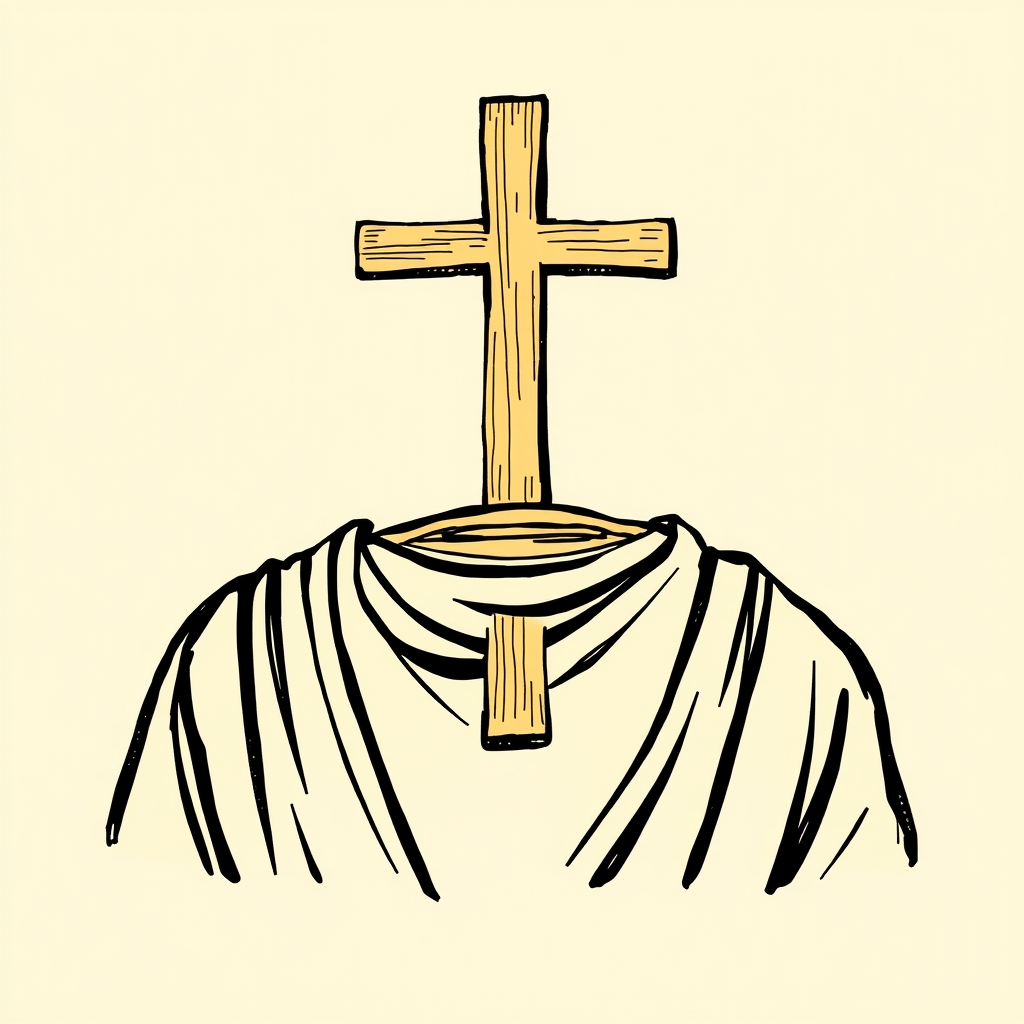
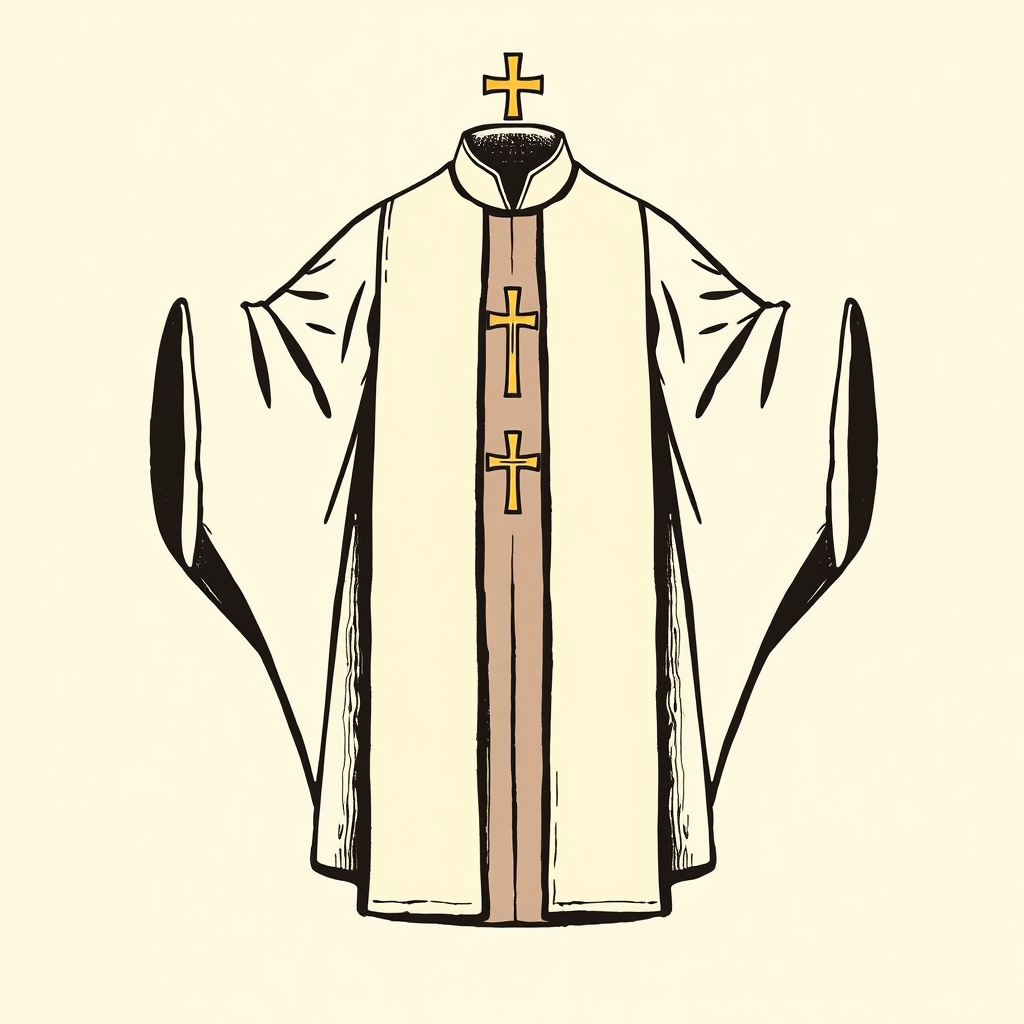
In iconography, Saint Porphyrius of Gaza is recognizable by: cross on the shoulder, episcopal vestments and church model.
What miracles are attributed to Saint Porphyrius of Gaza?
5 miracles are attributed to this saint, notably: Healing, Vision / apparition, Mastery of the elements and Sign / wonder.
Which saints were contemporaries of Saint Porphyrius of Gaza?
Contemporaries include: Saint Basil the Great (Archbishop of Caesarea), Saint Ambrose of Milan, Saint Januarius of Naples and Saint Victricius of Rouen.
When did Saint Porphyrius of Gaza die?
Saint Porphyrius of Gaza died around 420.
Annexes & related entities
Structured data for exploration: events, miracles, quotes, places, attributes, patronages, and important entities cited in the text.
Key Events
- Born in Thessaloniki in 353
- Retreat at the monastery of Scetis in Egypt at age 25
- Hermit life near the Jordan
- Miraculous healing at Calvary in Jerusalem
- Priestly ordination by Patriarch Prayle at age 40
- Election and consecration as Bishop of Gaza
- Journey to Constantinople to obtain the destruction of pagan temples
- Destruction of the temple of Jupiter and construction of the Eudoxian church
Quotes
-
Jesus Christ has conquered
Popular acclamations during the founding of the church