
Blessed William of Brabant
Born in Brabant, William initially led a life of wandering before responding to an angelic vision calling him to penance in Morlanwez. Having become a hermit and then a priest under the aegis of the Bishop of Cambrai, he founded the Abbey of Marie d'Olive. He died in 1240 after a life dedicated to preaching and spiritual direction.
Contemporaries

Figures and markers around the normalized period for this entry.
Guided reading
5 reading sections
BLESSED WILLIAM OF BRABANT
Youth and wanderings
Born in Brabant, William received a good education but fell into a life of debauchery and vagrancy in France, fleeing his family to escape his responsibilities.
Blessed William was born in Brabant to a n hones t family, and received a good education from his parents; but the frivolity of youth and a certain petulance of character prevented him from profiting from it as he should have. Thus, when he reached his adolescent years, and his passions began to develop within him, the salutary restraint of religion was powerless to contain his ardor and direct it toward the good. The young man, despite the remonstrances and reproaches addressed to him, gave himself over without restraint to his disordered passions. His parents, believing they could find a way to bring him back to the good by having him learn a trade, placed him with a local baker; but William soon left his father's house, and under the pretext of studying French, which was not spoken in his country, he came to France to lead a wandering and disorderly life.
First conversion and angelic vision
After a monastic failure with the Premonstratensians of Laon, William receives in a dream the command from an angel to withdraw as a hermit to the Potter's Field, in Morlanwez.
Misery and hunger soon made this new prodigal son return to himself, as he also remembered the happy days he had spent with his family, and the wise counsels he had received there, the forgetting of which was the sole cause of his misfortunes. This thought pursuing him incessantly, he resolved to go and present himself in a monastery, where he might reconcile himself with God and quietly exercise his profession. He was then in the Thiérache , near th e town of Vervins, and it was at some distance from this place that he encountered a monastery of Premons tratensian s in the diocese of Laon. The tempter did not delay in attacking William in this solitude and inspiring him with disgust for it. The unfortunate young man, instead of confiding to some wise and experienced guide the thoughts that the spirit of darkness raised in his soul, let himself go little by little to its guilty solicitations, and fell back into the faults he was beginning to expiate in this holy house where everything drew him toward God. Soon, this stay even became odious to him, and leaving it like a fugitive, he returned once again to the world to continue his wandering and libertine life there. But God, who had designs of mercy for this stray soul, pursued it incessantly with the goad of remorse. He wished to bring this great sinner back to penance, and to show the world once more what His grace can do in the most rebellious and weakest hearts. One night, therefore, during his sleep, William believed he saw an angel who appeared to him and told him, in the name of God, that he must change his life, do penance for his sins, and go to live in a desert. "It is in the hamlet of Morlanwez, at t he place called the Potter's Field, on the borders of Hainaut and Brabant, that he must transport himself; it is there that he will find a suitable place, belonging to a noble man by the name of Eustache ."
Eremitic Life at Morlanwez
William settled in Morlanwez with the help of the lord Eustace, practicing rigorous asceticism and receiving spiritual counsel from John, a canon of Oignies.
William, then leaving the house where he was staying, went immediately to the place that the Lord had just designated for him. On his way, he asked men who pointed out to him the hamlet of Morlanwez and the house where the pastor lived: it was indeed to him that the penitent wanted to present himself first. The minister of the Lord was almost frightened to see before him this man still girded with his weapons and of a strange and almost ferocious appearance. But his thoughts soon changed when he saw William throw himself at his knees, bursting into tears, and asking him, in the name of Jesus Christ, to receive the confession of his crimes and to grant him forgiveness for them. A few moments later, the new penitent, his conscience purified and his soul restored to peace, rose to communicate to the priest the design that God had inspired in him, and to implore the help of his counsel.
Arrived in the place that Providence had indicated to him, the blessed William, with the help of some virtuous men, and especially of Eustace, lord of the place, began to build a small hut in which he could retire. The woodcutters and shepherds of the surroundings looked at him with a curiosity mixed with astonishment: some took him for a madman or a hypocrite, others for a great servant of God. The extraordinary penances he imposed on himself, the practices that his humility had led him to adopt to expiate his past wanderings, could give rise to these diverse judgments. The testimony of a wise and prudent man soon came to manifest with certainty the virtue of the holy penitent of Brabant. John, doctor of theology, dean of the basil ica of Saint-Lambert in Li ège, and then a regular canon at the monastery of Oignies, near Namur, having heard of William, came to visit him in order to know well what spirit animated him and why he adopted certain quite extraordinary practices of penance. He spoke with him about spiritual things in which he found him very well-versed. He urged him no longer to crawl on his feet and hands as he had sometimes done before, and the hermit, having yielded to the advice and counsel of the enlightened man who spoke to him, gave, by this docile obedience, a new proof of the purity of his intentions.
Temptations and the Study of the Scriptures
Supported by Bertha after the death of Eustace, he alternated between working the land, studying the Scriptures, and heroic struggles against carnal temptations.
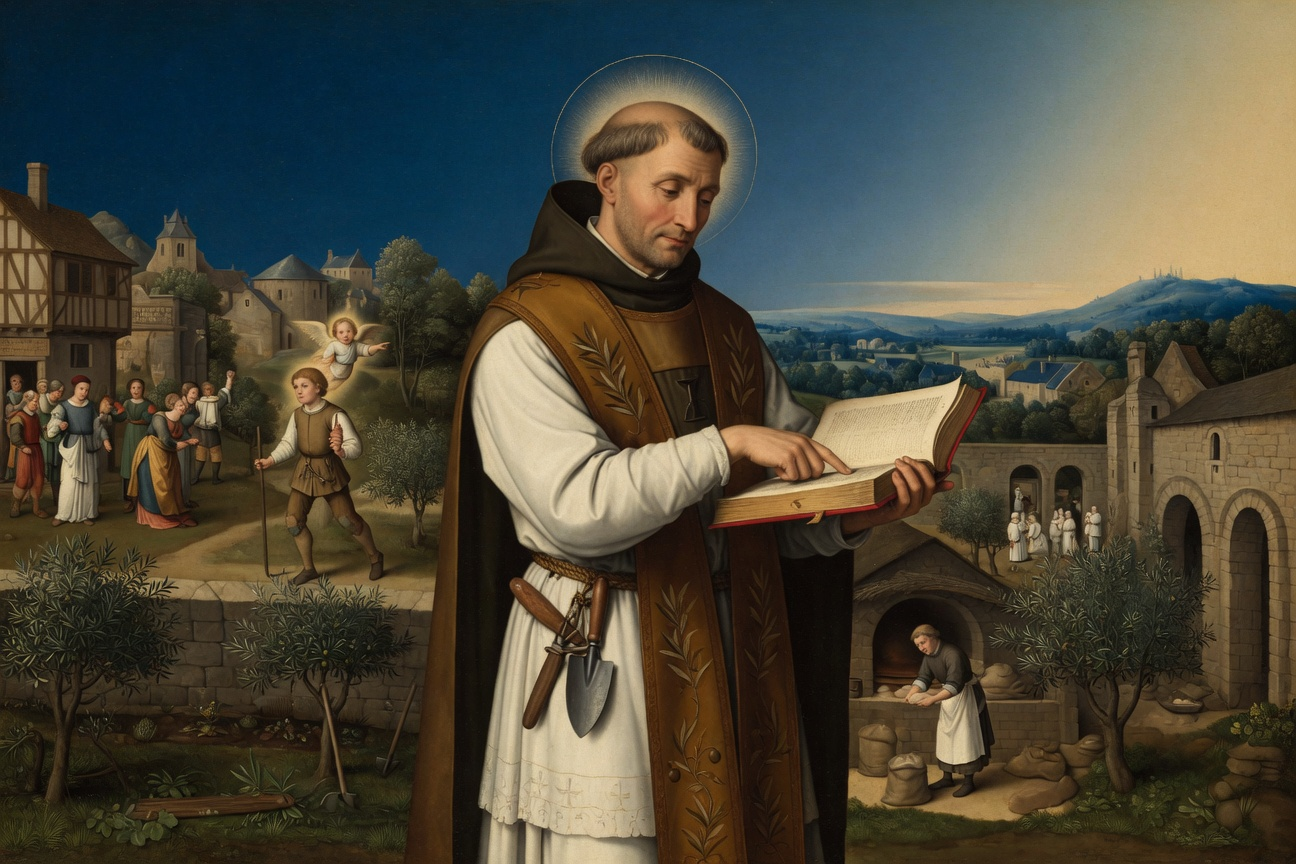
At the same time, the noble and virtuous Eustace came to die, and Be rtha, his wife, who shared his sentiments of piety, continued toward the servant of God all the good services he had received until then. She procured for him a small plot of land which he cleared with care to extract the things necessary for life. God, at the same time, inspired in William the thought of studying the Holy Scriptures, to draw from them the sentiments that sustain devotion in souls. He tasted in this reading ineffable sweetness; thus it was not rare to encounter him in his garden, a gardening tool in one hand and a sacred book in the other.
The brilliant virtue of the pious hermit often attracted to him men who came to ask for his counsel and to be edified by his examples. Bertha, seeing this gathering of the faithful, had a small church built in this place for the convenience of travelers and the inhabitants of the region. However, the Lord, in order to keep his worthy servant in a continual distrust of himself, and to exercise his virtue more and more, permitted very often that he be subjected to all sorts of temptations. The evil spirit constantly laid traps for him, and even appeared to him sometimes in the forms most capable of troubling him. But the pious anchorite drove him away, as Saint Anthony once did in the deserts of the Thebaid, by the sign of the cross, a nd the invoca tion of the holy name of Jesus, in whom he placed all his trust. One even saw him on several occasions, to overcome the temptations of the flesh, throw himself into the cold and icy waters of a neighboring pond, and emerge afterward with his clothes all soaked. In this state, he would go to the church to beseech the Lord, while striking his breast, to forgive him his past sins, and to grant him the grace to never fall into them again in the future.
Priesthood and foundation of the Abbey of Olive
Ordained a priest by the Bishop of Cambrai, he founded the Abbey of Mary of Olive for nuns, before passing away in 1240 after a life of preaching.
These trials, quite ordinary in the life of great penitents, were soon followed by sweet and ineffable consolations. William even had several visions, in one of which the Lord made it known to him that He was calling him to the priesthood. The Blessed one was then a deacon, though it is not known at what time in his life he had received this order and those that preceded it. To conform to the will of heaven, which his ecclesiastical superiors recognized as he did, he received the priesthood from the hands of Jo hn of Béthune, Bishop of Cambrai. Upon returning to his solitude, he began to preach with strength and unction to the inhabitants of the region and to all those who came to visit him.
The man of God, soon understanding what an advantage a monastery would be in the region, resolved to found one himself. With this design, he went to Fontenelles, near Valenciennes, where the daughters of the lord of Aulnoy, Jeanne and Agnes, had established, a short time before, an abbey that enjoyed a great reputation for regularity. Edified by the spectacle that presented itself to his eyes, he asked that some of the nuns of this community come to begin leading the regular life in the monastery he had prepared. The proposal was accepted with joy, but the extreme poverty of the place, and the lack of the most indispensable things, did not allow it to continue then. It was only a few years later that seven nuns, called from the monastery of Moustier, near Namur, came to inhabit the new abbey which was consecrated to the Blessed Virgin, under the name of the blessed Mary of Olive. The rest of the life of the venerable William was entirely employed in the works of the sacred ministry. He preached the word of God with an accent that deeply touched souls, and led them to repentance for their faults and to the practice of virtues. His vigilance and solicitude for the holy daughters gathered in the monastery of Olive were no less great, and he provided them with both spiritual and temporal aid. It was in the midst of these acts of charity and priestly zeal that the Lord called him to Himself, in the year 1240, in the sixty-sixth year of his age.
Vie des Saints de Cambrai et d'Arras, by Abbé Destombes.
Iconography
Signs and attributes


Entities
Narrative network
The names, places, and concepts most present in the entry, weighted by centrality in the text.
The supernatural in their life
The miracles of Blessed William of Brabant
Frequently asked questions about Blessed William of Brabant
Who was Blessed William of Brabant?
Born in Brabant, William initially led a life of wandering before responding to an angelic vision calling him to penance in Morlanwez. Having become a hermit and then a priest under the aegis of the Bishop of Cambrai, he founded the Abbey of Marie d'Olive. He died in 1240 after a life dedicated to preaching and spiritual direction.
What is Blessed William of Brabant the patron saint of?
Patronage of Blessed William of Brabant: Olive Abbey.
How is Blessed William of Brabant depicted in Christian art?
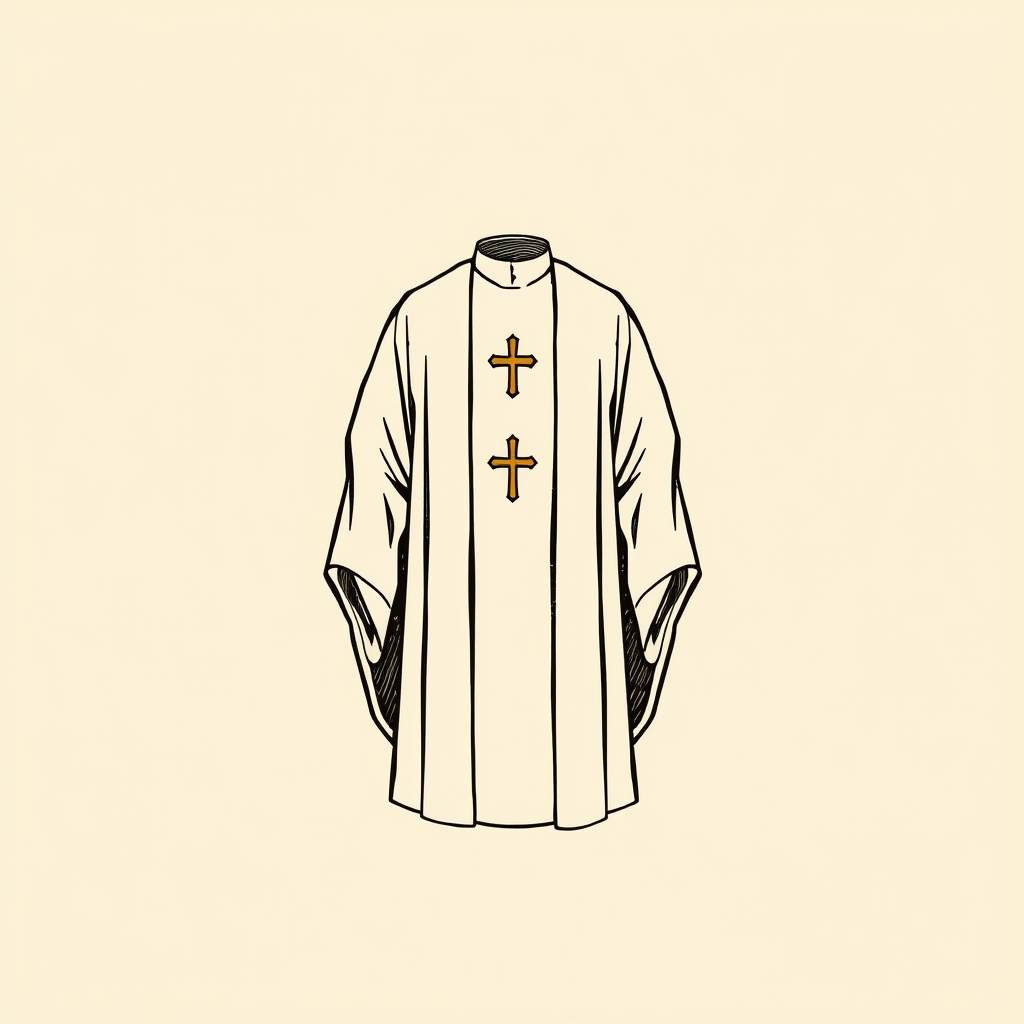
In iconography, Blessed William of Brabant is recognizable by: gardening tool, sacred book and priestly vestments.
What miracles are attributed to Blessed William of Brabant?
2 miracles are attributed to this saint, notably: Vision / apparition.
Which saints were contemporaries of Blessed William of Brabant?
Contemporaries include: Saint Anthony of Padua (Ferdinand), Saint Arthaud of Belley, Saint Thomas Aquinas and Saint Bernard of Clairvaux.
When did Blessed William of Brabant die?
Blessed William of Brabant died around 1240.
Annexes & related entities
Structured data for exploration: events, miracles, quotes, places, attributes, patronages, and important entities cited in the text.
Key Events
- Dissipated youth and departure for France
- Apprenticeship with a baker
- Brief stay with the Premonstratensians of the diocese of Laon
- Vision of an angel commanding penance in the hamlet of Morlanwez
- Hermit life at the Potter's Field
- Priestly ordination by John of Béthune
- Foundation of the Abbey of Blessed Mary of Olive
Quotes
-
Beatus vir qui in via peccatorum non steterit.
Psalms (cited in introduction)