
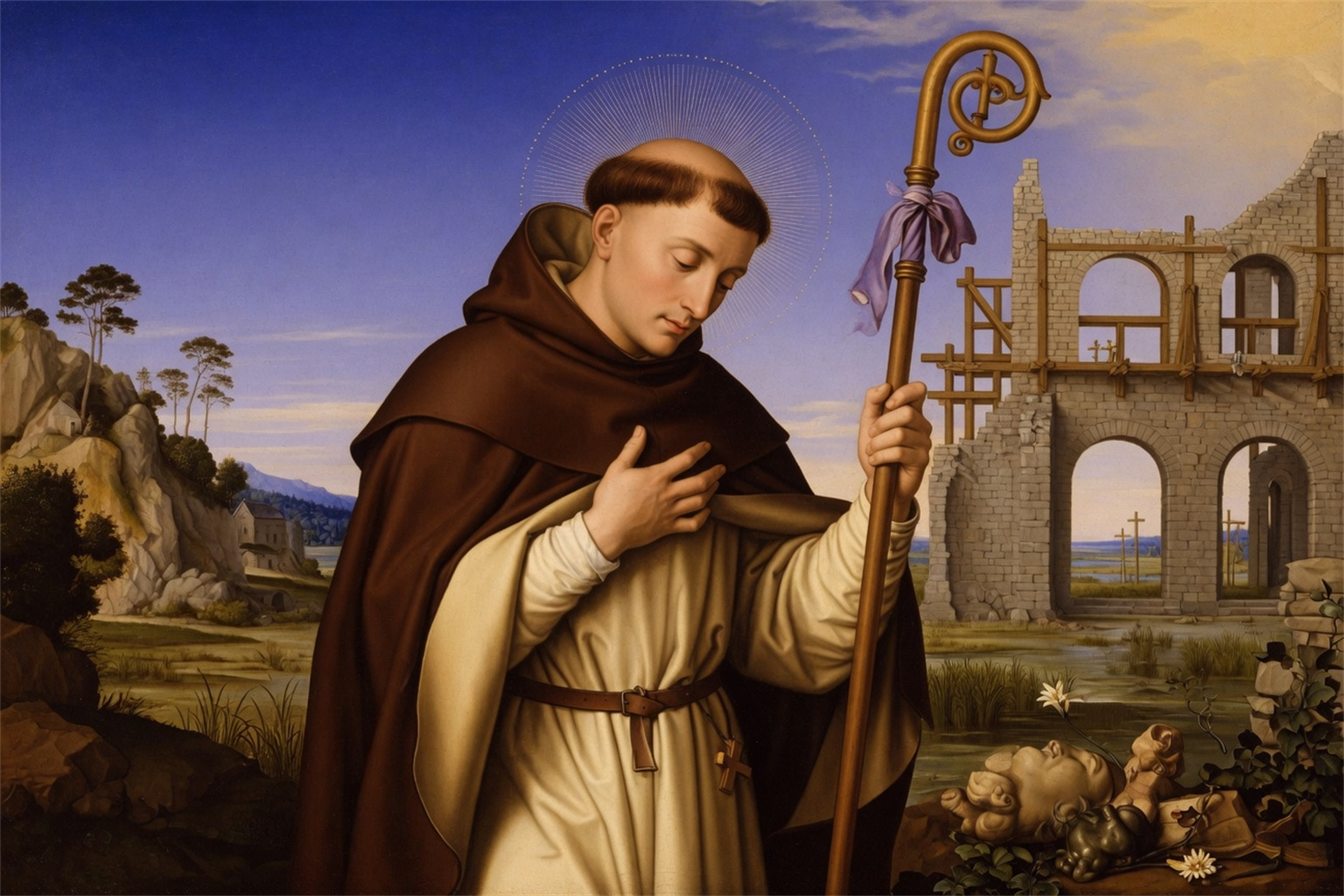
Originally from the Dauphiné and miraculously cured of paralysis by Saint Valery, Blimond became his disciple and successor as head of the Abbey of Leuconaus. After an exile in Bobbio, he returned to Picardy to rebuild his monastery and complete the evangelization of the region by destroying the last remnants of idolatry.
Contemporaries

Figures and markers around the normalized period for this entry.
Guided reading
7 reading sections
SAINT BLIMOND,
SECOND ABBOT OF SAINT-VALERY
Origins and miraculous healing
Originally from the Dauphiné and born paralyzed, young Blimond is taken by his parents to Picardy to be healed by Saint Valery.
End of the 6th century-650. — Popes: Saint Gregory the Great; Saint Martin I. — Kings of France: Clotaire II; Clovis II.
*Quantus qui non sibi, sed Deo vivit.* *How great is he who lives not for himself, but for God!* *Hymn of the Sailors from the office of Saint Blimond.*
Saints are not always destined by heaven for the sanctification of the places where they are born. Saint Blimond (Bl ithmundus), s o revered in the Vimeux region of Picardy, was originally from the Dauphiné. He was born in a castle located along the Isère river, to parents equally illustrious for their nobility and their great wealth. But, as the rich and powerful of the century are no more exempt from the misfortunes of nature than the poor and the needy, our Saint was afflicted, from his childhood, with such a strange contraction of the nerves that he became paralyzed and completely impotent, to the point of being unable to stand, or even lift his head to look at the sky. His parents, extremely distressed by such a grievous accident, employed all human remedies to try to deliver him from it; but finally, after having done so uselessly for several years, they looked only to God for the healing of their son. And as the news had spread throughout France of the great miracles that Saint Valery, abbot of a monastery at Leuconaux, near the mouth of the Somme, today Saint-Valery-sur-Somme, in Picardy, was performing on all kinds of sick people, they resolved to take their poor cripple there themselves. Circa 614.
Indeed, they were not frustrated in their hope; for having presented young Blimond to this holy religious, they begged him with tears to have pity on their affliction, and to obtain from God, through the fervor of his prayers, the healing of their dear child. The holy abbot, whose heart was filled with charity, could not refuse the request that these illustrious afflicted ones made of him. He therefore immediately began to pray, took the young man, and after having laid his hands on all his crippled limbs, he restored him to perfect health.
According to a tradition, which is too scholarly to have ever been popular, says Abbot Corblet, it was from that day that our Saint, who was called Gogus, would have left his family name to take the surname of Blithmundu s, wh ich would mean *the healed impotent one*.
Vocation and abbatial election
Healed, Blimond dedicated himself to God under the guidance of Saint Valery and eventually succeeded him as abbot in 622.
Whatever may be the case regarding this hybrid etymology, Blimond, believing he could never sufficiently acknowledge the signal favor he had been the object of, other than by consecrating to the service of the altars that same health he had just miraculously received, resolved to become a religious under the wise guidance of Saint Valery, so that, through the beautiful instructions of such a great man, he might preserve his soul from spiritual maladies, just as he had been delivered, through the merits of the same saint, from such a strange bodily infirmity; his parents, whatever tenderness they may have had for him, being unable to oppose such a pious design, willingly left him in the hands of his benefactor, and according to an ancient tradition fixed their residence at Gouy, near Saigneville. They established, in a neighboring plain, five farmhouses which soon gave birth to a village later called by the name of Saint-Blimond. The grateful disciple made such progress in the school of Saint Valery that he became the example of the monastery. This is why it is not surprising if, after the death of the abbot, Blimond was elected by the votes of all the religious to succeed him. 622.
Exile in Bobbio and return to France
Fleeing Scandinavian pirates, Blimond took refuge at the Abbey of Bobbio with Saint Attala before returning to restore his ruined monastery.
However, he could not govern this holy community for long; for, from the following year, Scandinavian pirates came to devastate our maritime regions; the religious were forced to abandon Picardy, where the armies were causing the greatest disorder, and to go and ask for temporary hospitality from other, less exposed abbeys. Thus, the holy abbot, seeing that his monastery was entirely dispersing without being able to provide a remedy, resolved to take refuge himself in that of Bobbio, in the Milanese region; he undoubtedly decided on this choice by presuming a favorable welcome from Abbot Attala, who had been a disci ple of Sain t Columbanus, at the same time as Saint Valery, at the Abbey of Luxeuil. He was certain, moreover , to meet compatriots there; for Burgundians flocked to this community, as well as Irish, Frankish, Italian, and Lombard monks. Saint Attala, who was then governing this house, received him with great charity, delighted to possess such a servant of God, and persuaded that the virtues of this Saint would contribute not a little to increasing the fervor of his religious. Blimond, having spent a few years in this place in the exercises of rigorous penance, believed he should return to France, where he learned that the troubles had ceased. He communicated his plan to Abbot Attala; the holy old man, unable to resolve to deprive himself of a person with whom he had contracted a close friendship, and whose merit was perfectly known to him, strove to delay this painful departure; but one day as he was going to the church, leaning on the arm of Blimond, he saw Saint Valery appear, all radiant with glory, and found himself so relieved of his infirmities that he believed himself transported through the air toward the place where he was going. The gratitude he felt for Saint Valery did not allow him to oppose Blimond's project any longer; but God did not take away from him the consolation he so greatly desired, of feeling his eyes closed by the holy abbot of Leuconaus. A few days later, Attala, seeing his end approaching, had himself transported out of his cell to venerate the cross that sanctified its entrance. There, in the presence of Blimond, who never left him, he saw the sky open to let him glimpse the place he was to occupy there the following day. Saint Attala died on March 10 of the year 627. Blimond, after having rendered him the honors of burial, left immediately for Picardy; he found there only a monastery in ruins; it was only with difficulty that he could recognize, all covered with brambles and thistles, the tomb of Saint Valery. Near there he built a cell to spend the rest of his life in solitude. However, he could not prevent the fame of his miracles, his austerities, and his virtues from soon attracting numerous disciples to him, and most of the former monks of Leuconaus returned to place themselves under the direction of their former abbot.
Reconstruction and royal support
Thanks to the favors of Clotaire II and Dagobert I, Blimond built a vast abbey and received the domain of Routiauville.
A new monastery was needed. "Saint Blimond obtained from Ki ng Clotaire II, around the year 628, permission to build a vast abbey and to erect a church under the invocation of Saint Valery. These constructions were two kilometers away from the village of Saint-Blimond, on the current road to Lanchères. The elders of the region still remember this location named the Plaine d'Argent, situated near a wood that was cleared around 1852. These constructions were destroyed in the 10th century by the ravages of the Normans; Hugh Capet had this abbey rebuilt at the place where the circumvallations of what is called, today, in Saint-Valery, the City, are dug.
Dagobert I , in the yea r 636, granted Blimond the domain of Routiauville.
Struggle against idolatry
Blimond acted as an apostle in Picardy, destroying idols and converting local populations to Christianity.
After having firmly established regular discipline in his cloister, he began with truly apostolic zeal to work for the ruin of idolatry, which still infested some places in Picardy; assisted by his disciples, who spread throughout the province for the execution of such a generous design, he finished exterminating the remainder of the idols, overturned their altars, and converted those who still worshipped them by making them know Jesus Christ as the true God and Redeemer; it was to the point that we can, with justice, consider him an apostle of this country, since it was through his care that the worship of false gods was entirely banished from it.
Death and posterity of the relics
After a life of austerity, Blimond died in 650; his relics were the subject of several translations and official recognitions until the 19th century.
He continued in his new duties the austere life he had undertaken upon leaving Bobbio; in his extreme mortification, he drank only water and ate only after sunset; he allowed himself only five hours of sleep on branches spread out in his cell. With unlimited trust in God, he would reply, when reproached for giving too much to the poor, that the more one strips oneself in their favor, the more one has the right to count on the generosity of Providence.
Saint Blimond happily ended his days with a death precious before God, on January 3, 650, after having had the consolation of seeing the construction of his monastery and his church completed. He was buried, it is said, in the chapel of Saint-Valery, which was later replaced by the sanctuary that one sees today not far from the enclosure of the former abbey. His relics, preserved to this day, were verified in 1651, and transferred in 1791 to the village of Saint-Blimond, where they were recognized in 1856 by Mgr Boudinet. The parish church of Saint-Valery, as well as Notre-Dame d'Amiens, possess some bones of Saint Blimond.
The memory of this Saint, as we have already said, is very famous in the Vimeux region.
Saint Blimond is the patron of the village of the same name and the third titular of the parish church of Saint-Valery. The abbey of Saint-Valery celebrated under the double rite, on January 3, the deposition of Saint Valery, and on August 31 the elevation of his body. The monastery of Corbie dedicated a single feast to him, on February 28. The breviaries of M. de la Motte and Mgr Mioland contain the simple office of Saint Blimond, on November 26. There is no mention of him in the current proper of the diocese of Amiens. The patronal feast is celebrated, for Saint Blimond and Saint Valery, on the Sunday following August 31.
Sources and historiography
The life of Saint Blimond is documented by various martyrologies, the Bollandists, and the works of Benedictines such as Mabillon.
The Benedictine Martyrology makes a very honorable mention of him, as do the Martyrologies of Bucelin, of Hugues Ménard who wrote his life, of Du Saussay, etc.
Bollandus speaks of him in the first volume of January, and the Rev. Fathers Do m Luc d'Achéri an d Dom Jean Mabillon have given us very learned notices of him in the second century of the Saints of the Order of Saint Benedict.
Bollandus inserted on January 3rd a very short *Life of Saint Blimond*, by an anonymous monk; Mr. Ch. Barthélémy published the translation of it in his *Annales Angiologiques*, vol. VIII. Some information on Saint Blimond can be found in the *Acts of Saint Valery*, written by the monk Rabubert (Mabillon, *Act. SS. sec. II*, p. 16), and in those of Saint Attala, Abbot of Bobbio, written by the monk Jonas (*Ibid.*, p. 126).
H. Arthur Demarey possesses a manuscript life of Saint Blimond, which he had the kindness to lend us. It is a completely modern and more than mediocre amplification of the passages of the *Acts of Saint Valery* which concern his disciple.
(Abbé CORBLET.)
Iconography
Signs and attributes
Entities
Narrative network
The names, places, and concepts most present in the entry, weighted by centrality in the text.
The supernatural in their life
The miracles of Saint Blimond (Blithmundus)
Frequently asked questions about Saint Blimond (Blithmundus)
Who was Saint Blimond (Blithmundus)?
Originally from the Dauphiné and miraculously cured of paralysis by Saint Valery, Blimond became his disciple and successor as head of the Abbey of Leuconaus. After an exile in Bobbio, he returned to Picardy to rebuild his monastery and complete the evangelization of the region by destroying the last remnants of idolatry.
What is Saint Blimond (Blithmundus) the patron saint of?
Patronage of Saint Blimond (Blithmundus): Saint-Blimond, Vimeux and Saint-Valery-sur-Somme.
How is Saint Blimond (Blithmundus) depicted in Christian art?
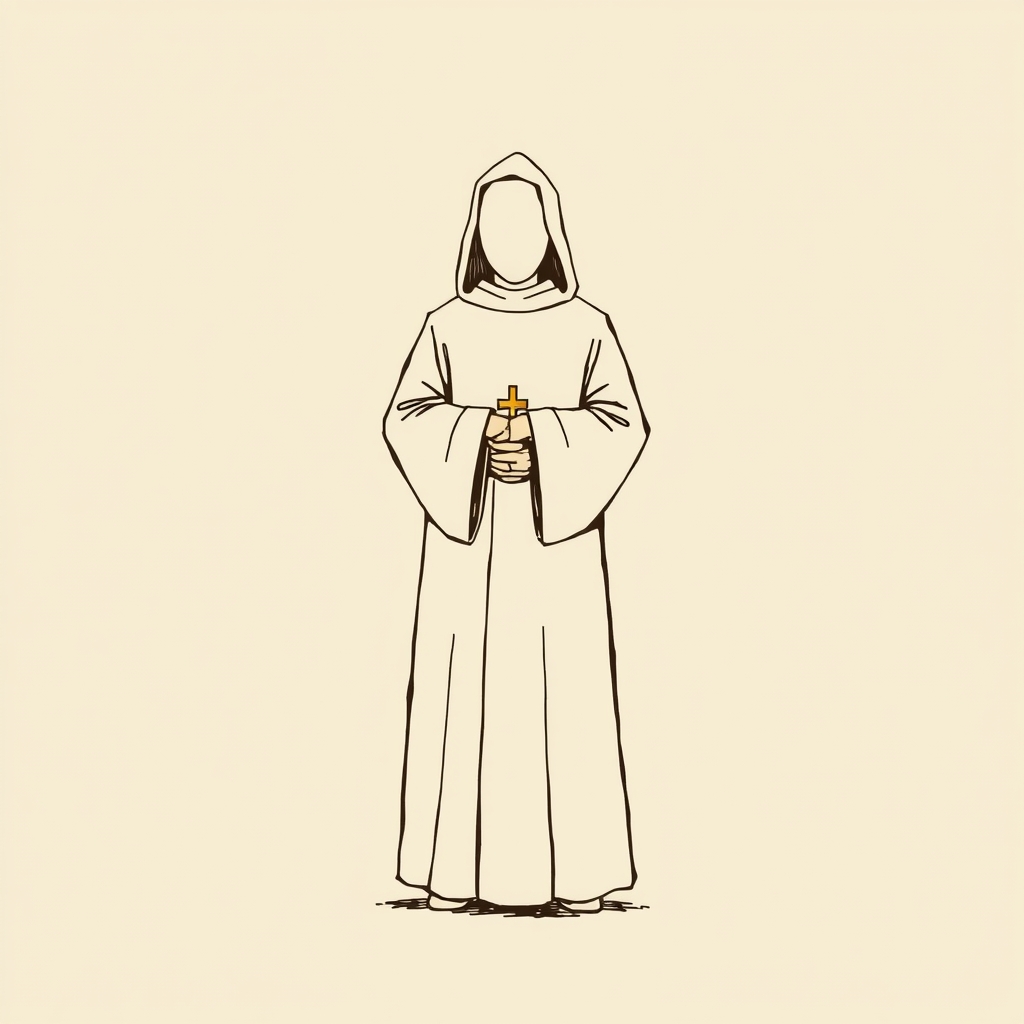
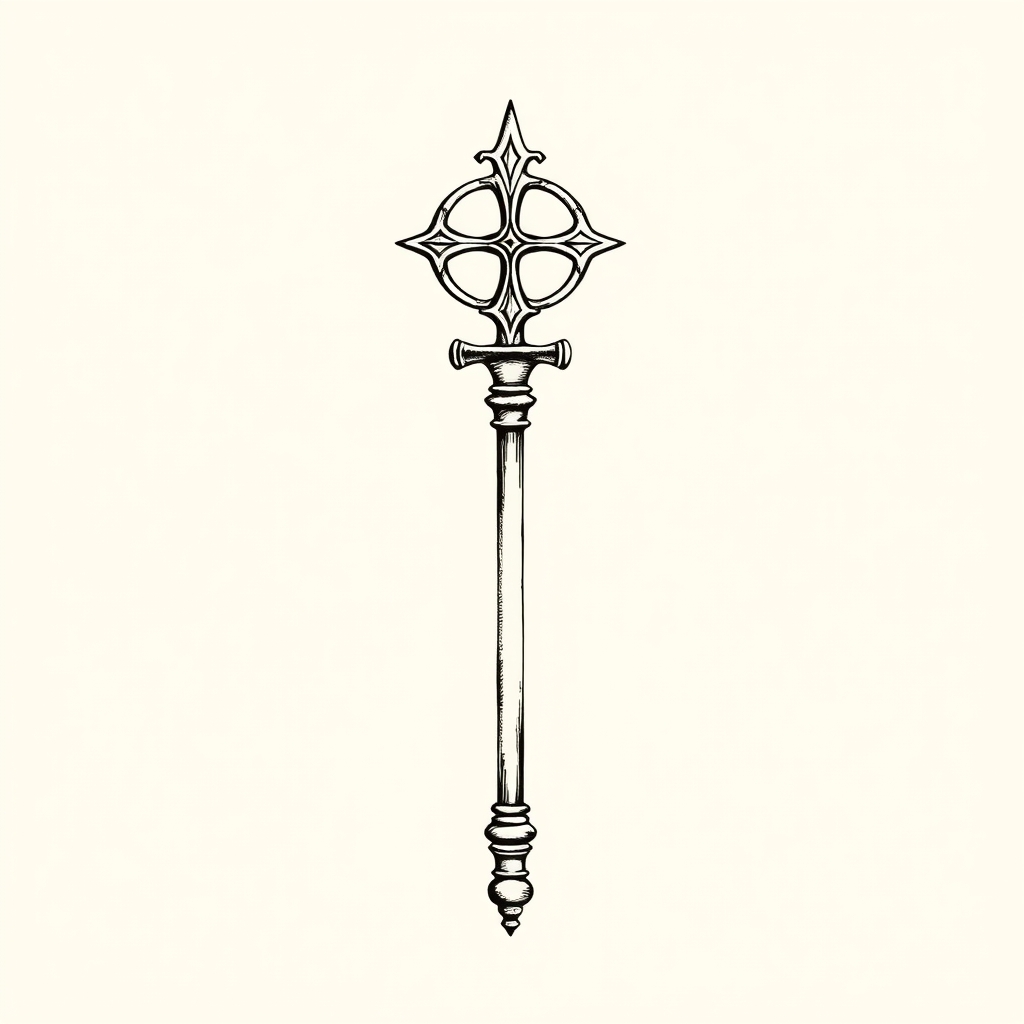
In iconography, Saint Blimond (Blithmundus) is recognizable by: monk's habit and abbot's crosier.
What miracles are attributed to Saint Blimond (Blithmundus)?
2 miracles are attributed to this saint, notably: Healing and Vision / apparition.
Which saints were contemporaries of Saint Blimond (Blithmundus)?
Contemporaries include: Saint Priest (Prix), Saint Gregory the Great (Pope and Doctor of the Church), Saint Die (Didier, Deodat) and Saint Augustine of Canterbury.
When did Saint Blimond (Blithmundus) die?
Saint Blimond (Blithmundus) died around 700.
What are the other names of Saint Blimond (Blithmundus)?
Other forms of the name: Blithmundus, Gogus and Bimond.
Who are the relatives of Saint Blimond (Blithmundus)?
Relatives of Saint Blimond (Blithmundus): Parents nobles du Dauphiné (parents).
Annexes & related entities
Structured data for exploration: events, miracles, quotes, places, attributes, patronages, and important entities cited in the text.
Key Events
- Miraculous healing of his paralysis by Saint Valery around 614
- Entered religious life at the Abbey of Leuconay
- Election as second abbot of Saint-Valery in 622
- Exile to the Abbey of Bobbio following the Scandinavian pirate invasions in 623
- Return to Picardy after the death of Saint Attala in 627
- Reconstruction of the monastery with the support of Clotaire II around 628
- Evangelization and destruction of idols in Picardy
Quotes
-
Quantus qui non sibi, sed Deo vivit.
Hymn of the Sailors from the Office of Saint Blimond