
Reverend Father Muard
A 19th-century Burgundian priest, Jean-Baptiste Muard was an apostle of diocesan missions before founding the monastery of La Pierre-qui-Vire. Marked by a life of extreme poverty and mortification inspired by Saint Benedict, he created a community combining contemplative prayer and preaching. He died in 1854 after dedicating his life to the salvation of souls and the restoration of rigorous monastic life.
Contemporaries

Figures and markers around the normalized period for this entry.
Guided reading
8 reading sections
THE REVEREND FATHER MUARD,
Origins and priestly vocation
Born in 1809 in Burgundy into a modest family and began ecclesiastical studies in Auxerre and Sens despite parental opposition.
The Reverend Father Marie-Jean-Baptiste Mu ard, successively parish priest of Joux-la-Ville and Saint-Martin d'Avallon, founder of the Society of the Fathers of Saint-Edme at Pontigny, and of the monastery of the Benedictines of the Sacred Heart of Jesus and the Immaculate Heart of Mary at L a Pierre-qui-Vire, was born on April 24, 1809, in the poorest house of one of the most modest villages in Burgundy, at Vir eaux, in the diocese of Sens. His inclination for solitude, silence, and recollection manifested itself from childhood; his soul, deeply and as if naturally religious, drew him away from the games and noisy futilities of youth; he already delighted in conversing with God. Nourished by the irreligious prejudices of the time, his parents fought this nascent piety with all their power, but without being able to overcome it. Jean-Baptiste's virtue resisted all seductions and all violence. The persecutions served only to strengthen and increase it. The parents had to yield, and the child began his studies with Mr. Rolley, a neighboring parish priest, who had known how to distinguish this elite soul. When this worthy ecclesiastic presented his student to the minor seminary of Auxerre (1828), he said: "It is a child, still very small, that I bring you today, and yet he is already a great Saint." At the minor as well as the major seminary (1830), he was a subject of edification for all who surrounded him. His charity, inflaming more and more, quickly arrived at that ardor which makes Apostles and Saints. Such was he when he left the major seminary of Sens, marked with the indelible character of a priest of Jesus Christ (1834).
Parochial Ministry and Missionary Zeal
Pastoral successes in Joux-la-Ville and Avallon, marked by an ardent desire for foreign missions, ultimately reoriented toward diocesan missions.
Appointed parish priest of Joux-la-Ville, a difficult parish that had been reserved for him for that very reason, he left it completely changed and the most religious in the diocese. Three years sufficed for this admirable transformation. This regenerated parish cherished its pastor. For his part, M. Muard had the tenderest attachment to his flock. But the desire for foreign missions did not leave him. A request he made to this effect was not granted by the Archbishop; the prelate, instead of letting him go to the savages, sent him to the town of Avallon; he became parish priest of Saint-Martin d'Avallon. His reputation had preceded him in this town. He was received there with great demonstrations of joy. He made numerous conversions in a short time: his admirable kindness helped him above all. "I think he did well to leave Avallon," a priest later said, "for he was so loved that he would have ended up doing a disservice to the good God." Despite everything, the zeal for missions was always at the bottom of his heart. He said: "If I saw, on one side, heaven open and God calling me to come and take my place in that happy abode, and, on the other, I recognized the possibility of flying to the foreign missions, of winning souls for Jesus Christ and then dying a martyr, I would say to God: *Souls, Lord, souls first, and heaven afterwards*." Despairing of obtaining authorization for the foreign missions, he thought of the diocesan missions. He soon had the certainty that it was in that direction that God was calling him; for the divine will declared itself clearly enough that, in this regard, not the slightest doubt remained for him. From that moment, his entreaties to the Archbishop became more intense than ever. And the prelate finally replied to him: "Oh! priest, how great is your zeal! Go and do as God inspires you."
The Society of the Fathers of Saint Edme
After a study trip to Lyon and Rome, the foundation of the missionary society at the Abbey of Pontigny under the patronage of Saint Edme.
The project for an institution of diocesan missions had for some time been settled in the mind of the man of God. Lyon already possessed several establishments whose goal was analogous to the one he proposed to found. The success with which he had preached several missions did not prevent him from going to that city to study what was practiced there. One of his friends accompanied him; admitted among the Marist Fathers, they conducted several missions in the vicinity of Lyon, at Rive-de-Gier, at La Fouillouse, at Roussillon, at Ferrières; everywhere Father Muard was astonished by the numerous conversions that the grace of God operated through him. Who could launch into a great enterprise, having as its goal the salvation of souls, without having his mission blessed by him to whom Saint Peter left as an inheritance the title of 'prince of missionaries?' Thus, Father Muard did not hesitate to make the journey to Rome, after having obtained permission from his archbishop. Upon his return, the Society of the Fathers of Saint Edme was founded for diocesan missions; the ancient Abbey of Pontigny emerged from its ruins to shelter the new Congregation.
Here is how Father Muard explains the character and indicates the goal of the Society: 'The goal proposed by the auxiliary priests of the diocese of Sens is to work for the glory of God and the salvation of one's neighbor through preaching. They form a society under the patronage of the Sacred Hearts of Jesus and Mary, under the invocation of Saint Edme and Saint Francis Xavier, and under the high direction of the Archbishop of Sens. It shall be one in its goal, for all members must propose the same end, have the same views, employ the same means, teach the same doctrine, and hold to the same rule of conduct.'
'In a century where religion mourns so many defections, the auxiliary priests must hold to the holy Catholic, Apostolic, and Roman Church from the depths of their bowels, receive with sovereign respect its divine teachings, and carry in their hearts a profound veneration, a religious love, and an absolute devotion for the Sovereign Pontiff, the common father of all churches, for the first pastor of this diocese, and for all those who govern the Church of God.'
The vision of a new order
On April 25, 1845, Father Muard received the vision of a religious society combining contemplative life, preaching, and manual labor in absolute poverty.
Begun in these unhappy times, when there was as it were an overflowing of impiety throughout France, the missions of Father Muard and his companions were nonetheless fruitful. The most important took place in the parishes of Sermizelles, Island, Asnières, and Frênes. Everywhere, Father Muard won over a great number of souls through the ardor of his prayer and the violence of his mortification. When this first work, whose first fruits were already so consoling, was completed, God himself inspired his servant with the idea and the entire plan for a bolder and greater foundation. It was nothing less than a great Order, similar to those of Christian antiquity.
"On the anniversary of his baptism, April 25, 1845, the feast of Saint Mark, a Friday, he was returning from Venonze, where he had been to celebrate Holy Mass and hold the procession, when all of a sudden he had a distinct view of a fully formed project for a religious society which was shown to him as necessary, in the century in which we live, to accomplish some good. His soul was in a completely passive state; he did not reason, he saw, he felt, and the imagination had no part in it. He saw a society composed of three kinds of persons who must follow a way of life similar, in terms of mortification, to that of the Trappists; some would devote themselves more particularly to prayer, to the contemplative life; others, to study and preaching; the last, as Brothers, to manual labor. He saw that their life must be a life of victims and continuous immolations, that they would have to do penance for their own iniquities and for the sins of others, and recall men to mortification and virtue by their examples even more than by their words. To attain this goal, they would need to practice the most absolute poverty, renouncing everything they might possess in the world before definitively committing themselves to this society, contenting themselves with the absolute necessity and following, regarding poverty, the evangelical counsels, much as Saint Francis of Assisi understood it; dedicating to good works all the surplus beyond the strict necessity. They would give to chastity the most exact modesty as a guardian and would observe the most absolute obedience, binding themselves to the practice of these virtues by the great vows of religion. It would also be necessary to establish themselves in a poor and solitary place, to keep an almost absolute silence, to appear to the world only when the good of souls required it, and to lead in the century the same life as in the desert. This society would compensate Our Lord for the outrages He receives from sinners, and especially from those persons who are specially consecrated to Him."
This view, which was almost instantaneous, made an extraordinary impression on him; it seemed to him that the good God was asking him to consecrate himself to this way of life, and to take the first steps for the establishment of this society. Grave and mature reflections made him see that this institution and this way of life, perfectly in keeping with the needs of our era, would be very suitable for appeasing the justice of God, who is irritated against men, and a means of obtaining more surely the conversion of sinners. He felt that it was appropriate to oppose the supreme pride of our century with the deepest humility; to the insatiable passion for riches, the most absolute poverty; and to the sensualism that places sovereign happiness in the satisfaction of the senses, the mortification of the flesh. He also felt that, in this century that does not pray, men of prayer were no less necessary than preachers. He finally recognized that, in the current state of society, new religious houses that wished to establish themselves could no longer count on the charity of the faithful, a charity whose sources are drying up every day, and that they would be under the obligation to provide for their own maintenance; that consequently, lay brothers, who would support the community through their work, were becoming necessary; that, furthermore, it would be saving from an almost certain shipwreck men exposed to being lost in the world.
Roman approval and Subiaco
Journey to Rome in 1848, Benedictine novitiate at Subiaco, and meeting with Pope Pius IX at Gaeta who approved the project.
Once the will of God was known, nothing remained but to execute it. Fr. Muard did not hesitate for a moment. Two retreats he made, one at the rectory of Piffonds, the other at the Trappe of Septfonds, further strengthened his resolution. Convinced that nothing lasting in religion is done without the participation of Rome, on September 22, 1848, he set out for the capital of the Christian world. Two traveling companions left with him. One was a young priest who had recently left the seminary, who would be called Fr. Benoît; the other was a layman who had left his parents, his country, and his wheelwright's workshop to follow Fr. Muard, under the name of Brother François. The future Order was represented in the three branches that were to constitute it. They went up to Notre-Dame de Fourvières, then to Notre-Dame de la Garde, in Marseille, to place their enterprise under the powerful protection of the Blessed Virgin.
The abbot of the monastery of Saint-Benoît in Rome, to whom our pilgrims asked for asylum, designated the hermitage of Subiaco for them. The timing could not have been better. Our new Benedictines were going to try their hand at the Rule of Saint Benedict, in the very place where the great Saint had begun his religious life, a place that witnessed his great struggles and miraculous victories.
Fr. Muard and his two companions led in their solitude the life that Saint Benedict had led there.
Here is how Fr. Muard speaks of it himself in a letter: "We rise at three o'clock in the morning; our bed never holds us back, on the contrary, we always leave it with pleasure; for, being made of boards and one or two blankets, when one has rested for six and a half hours, one has had enough. We go at ten minutes past three to recite Matins in the chapel; after Matins, mental prayer, Prime, and the community Mass. Immediately after Mass, we recite Sext and return to work until half-past eleven. We go back to the chapel, where we say None, then we make the particular examen. At noon, we sit down to eat; dinner is reduced to the simplest necessity: soup and a dish of vegetables seasoned only with a little salt, for we abstain from oil and butter, and even more so from fatty foods.
"But, you will say to me, this diet is not bearable. — You are mistaken; it is delicious, and we find more pleasure in eating our vegetables with salt than people of the world do around the most delicately served tables. But I must hide nothing from you, which is that we have a cook who makes everything excellent: this cook is hunger. We fast every day; in the evening, we have a collation with a fruit or with the leftovers of the vegetables from dinner, which we eat cold. — And with all that, how are you doing? — Wonderfully, we have never felt so well, we are astonished ourselves. To complete what concerns our way of life, I must tell you that we keep a perpetual silence among ourselves; we do not even speak during recreation, we only do so when there is a necessity. — What a sad life you must lead, you will say to me? — Not at all, we have never been happier. Oh! how good it is to be where the good God wants you; how at peace one is when one does His will! Our dear solitude is for us a true paradise, and we can well say that we are now spending the happiest days of our lives. I am no longer surprised to see the ancient solitaries all clinging to their deserts, fleeing the company of men with such care after having once tasted the sweetness of solitude."
After a year spent thus in the desert of Saint-Benoît, the time came to pay a visit to the Sovereign Pontiff, Pius IX, then exiled in Gaeta, and then to return to France. Fr. Muard had a long interview with the Holy Father. He says a few words about it in one of h is letters: "The Sovereign Pontiff," he says, "did me the honor of granting me an audience at Gaeta. After having heard with marked kindness the presentation of my project, he approved of it strongly, and told me that this was indeed the way to work effectively for the conversion of souls; that one must oppose the contrary to the contrary: these are his own terms; that he offered the most ardent prayers for the success of our work, and that as soon as it was established, we should come to an understanding with the Archbishop of Sens, and that he would grant all the approvals we could desire. The Holy Father recently renewed the same promises to the Rev. Fr. Abbot of Saint-Benoît, who wrote to me some time ago that the Pope seemed to take a very particular interest in this nascent work. What shows his good dispositions regarding our society is that he has just founded an analogous one in Rome for foreign missions."
Establishment at La Pierre-qui-Vire
Settlement in the forest of Saint-Léger in 1850 after surviving cholera thanks to a vow to Our Lady of La Salette.
Upon returning to France, Father Muard sought the deepest solitude, the most silent desert in the entire diocese of Sens; he arrived at La Pierre-qui-Vire , in the forest of Saint-Léger, where there is a spring that never runs dry and which bears the name of Saint Mary. The place pleased him for its arid nature and wild appearance. The Marquis de Chastellan, the owner of this new Thebaid, ceded, or rather lent, the land necessary for the projected establishment. The new Benedictines carried the practice of poverty to the point of not even owning the site of their house. While the necessary apartments were being built, Father Muard, having learned that cholera was wreaking hav oc in t he neighboring lands of Avalon, ran to bring them aid. The epidemic was raging with frightful intensity; he left in the hope of gathering the palm of the martyrdom of charity. He went to Sainte-Colombe, from there to Mussanguis, then to Tonnerre, where death was multiplying its victims in a terrifying manner; everywhere he spared neither vigils nor fatigue to lavish upon these unfortunate people the care of the soul and body. But he was himself struck by the terrible scourge and fell a victim to his zeal. In an instant he was at the gates of the tomb. What a trial! However, his confidence was not shaken for an instant; he invoked Our Lady of La Salette: "My good Mother," he said to her, "if you heal me, I promise to go and thank you on the mountain of La Salette." He was healed. Immediately, he went to complete a final novitiate at the Trappist monastery of Aiguebelle, fulfilled his vow to Our Lady of La Salette, and then gave himself entirely to the foundation of his monastery, his great project and the capital work of his life.
On May 15, 1850, the new Benedictines went to La Pierre-qui-Vire, five in number. The house being far from finished, the religious set to work with the laborers. At the same time that they were moving stones for the construction of the material house, Father Muard worked tirelessly on the spiritual edifice.
The Rule and Asceticism
Adoption of the Rule of Saint Benedict with strict modifications regarding abstinence, silence, and radical poverty.
The Rule he adopted was that of Saint B enedict, wit h some modifications required by the difference in times and climates. "We wish," says Fr. Muard in his introduction, "we wish to embrace the life of the ancient religious, a humble, poor, and mortified life; now, the Rule of Saint Benedict presents it to us in its perfection.
"We want preachers to evangelize the poor; it is this Rule which, for more than four centuries, gave the Church missionaries who converted England and all of northern Europe, and effected countless conversions in the rest of the world.
"We want men specially destined for prayer and study; it is this Rule which formed the greatest number of contemplatives and scholars of the Middle Ages.
"We want Brothers for manual labor: it enters into admirable details for everything concerning the work and direction of the Brothers.
"Here," he adds further on, "are the main modifications that we believed we had to make to certain articles. The Rule prescribes, from September 14th until Easter, a single meal per day, without a collation. We thought that such a long and rigorous fast would be difficult to observe in our regions during the winter, because of the severity of the season, and also because the missionaries would be unable to adhere to it amidst the fatigues of their ministry; so that it was better to mitigate this fast by adding a fairly substantial collation in the evening, in order to make it practicable for all, with the exception, however, of ecclesiastical fasts, where one would conform to the Rule.
"But, to compensate for this softening, we believed we had to make abstinence a little stricter, and we established that one will be content with pure water for drink, and all kinds of vegetables, garden plants, and fruits for food.
"We take the admirable chapter on poverty literally for the members of the Society, but we add to it the most absolute poverty for the Society itself, which must possess no funds, not even the land on which it will possess only the furniture, books, tools, and instruments of work necessary for the Brothers and the product of the work of its members.
"The community must take from the product of the work only what is strictly necessary for its maintenance, regarding the rest as money consecrated to God and employing it in good works."
Among the reasons that determined him to this abstinence, to this absolute poverty, Fr. Muard counts the will of God, which was manifested to him in a manner so formal and so clear that he cannot doubt it.
The fundamental points of Fr. Muard's constitutions can be reduced to eight: zeal for the salvation of souls, as the goal toward which all the efforts of the Benedictines of the Sacred Heart must tend; poverty, mortification, humility, obedience, and the love of work; finally, union with God and fraternal charity.
Let us give an even more complete idea of Fr. Muard's foundation through the picture of a day at Sainte-Marie de la Pierre-qui-Vire. At three o'clock, Fr. Muard, who yields the privilege of his ministry to no one, rings the monastery bell himself. At this signal, all the awakened Brothers hasten to the foot of the altars, where they already find Fr. Muard prostrate in the presence of God.
Soon all the voices of the community rise in the silence of solitude and night. It is the Holy Spirit that they invoke first, Veni Creator. It is then the Sacred Heart of Jesus that is adored, the holy ark of the nascent community. These prayers are followed by the first hours of the divine office, Matins and Lauds, public prayers addressed in the name of and in the interest of the universal Church, to the God who is the creator, redeemer, and sanctifier of the great human family. The Rev. Fr. Muard attached the highest importance to this holy exercise, which is one of the principal ends of the religious spirit.
These prayers, alternately recited on both sides of the choir, are followed by the most complete silence: the candles are extinguished, and by the light of the lamp, you see these men in the most respectful posture, kneeling or standing, adoring God even more deeply: the meditation begins, and it will last no less than an hour.
Another exercise arrives, probably the most painful to human nature, it is the chapter of faults. There, the religious come one after the other to make, in the presence of their superior and their brothers, the public confession of the failings they have committed against the Rule. They even accuse one another, and the guilty receive on their knees the penance they have deserved.
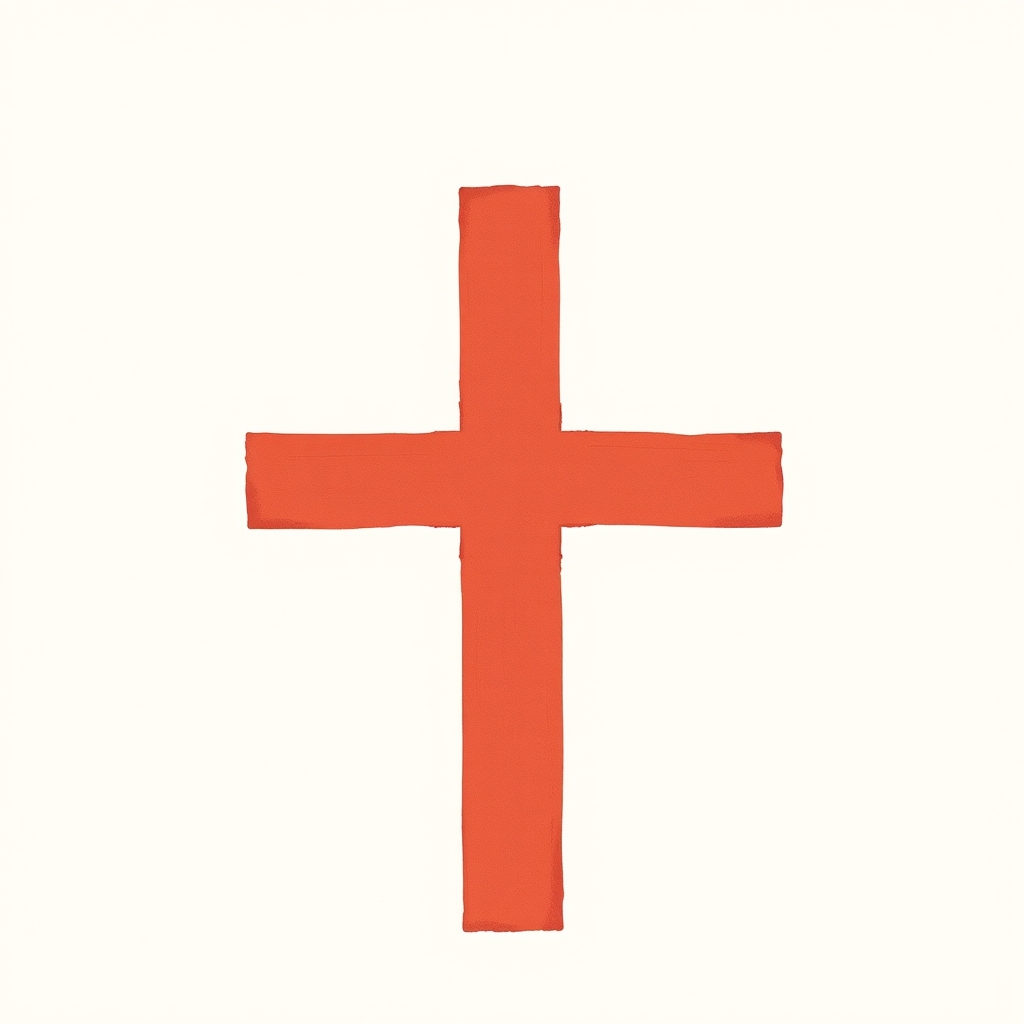
Hardly is this exercise finished when the religious return to their cell to put everything in order. Fr. Muard, like another, makes his bed, sweeps his room. Poverty, it is true, has shortened the task. Three or four boards placed on two trestles, covered with a cloth and a few blankets, with a straw bolster, that is the bed; no armchair other than a wooden stool without a back; then a few boards in the form of a bookcase against the wall, a small chest, a white wood table, and a candlestick form all the furnishings. As for the ornaments, they are: a large red cross, without a Christ, and a few pious images, without frames, applied to the wall.
On Friday, each of the religious unites his voluntary expiations with those of his good Master, all covered with the wounds of the flagellation, from the soles of his feet to the top of his head. At the sound of a small bell that the venerable superior has just rung, each of the religious strikes his bare shoulders with redoubled blows.
At six o'clock work begins, work of the mind, work of the body. Even those among the religious who devote themselves to study handle the pickaxe and the spade every day, so much does Fr. Muard have esteem for manual labor. After four hours of assiduous work, the religious go to the chapel to hear Holy Mass, after which work begins again. It is thus that work and prayer, barely interrupted by the very short moments of rest and recreation, follow one another from morning to evening in this holy dwelling.
Final years and passing
Death of Father Muard on June 19, 1854, at the age of 45, after receiving a supernatural announcement of his approaching end.
The Benedictines maintained all the severity of their Rule, even during missions. During the years 1851, 1852, 1853, and 1854, that is to say until the death of the Rev. Fr. Muard, frequent missions took place in various parishes of the diocese of Sens and even outside this diocese. Success always crowned them; moreover, there was at La Pierre-qui-Vire a continuous mission for the many faithful who came from all the neighboring hamlets.
The final years of the Rev. Fr. Muard were thus spent in penance and preaching. On Trinity Sunday, June 11, 1854, at six o'clock in the morning, while kneeling before a statue of the Blessed Virgin at the monastery of Sainte-Colombe-lès-Sens, he received an extraordinary grace: his death was announced to him as very near; and nine days later, on June 19 in the year of grace 1854, at the age of forty-five years, one month, and twenty-five days, the Rev. Fr. Marie-Jean-Baptiste du Cœur de Jésus breathed his last.
This biography was composed based on a History of the Rev. Fr. Muard, by Abbé Brullée.
Iconography
Signs and attributes

Entities
Narrative network
The names, places, and concepts most present in the entry, weighted by centrality in the text.
The supernatural in their life
The miracles of Reverend Father Muard
Frequently asked questions about Reverend Father Muard
Who was Reverend Father Muard?
A 19th-century Burgundian priest, Jean-Baptiste Muard was an apostle of diocesan missions before founding the monastery of La Pierre-qui-Vire. Marked by a life of extreme poverty and mortification inspired by Saint Benedict, he created a community combining contemplative prayer and preaching. He died in 1854 after dedicating his life to the salvation of souls and the restoration of rigorous monastic life.
What is Reverend Father Muard the patron saint of?
Patronage of Reverend Father Muard: Fathers of Saint-Edme and Benedictines of La Pierre-qui-Vire.
What is Reverend Father Muard invoked for?
Reverend Father Muard is invoked for: diocesan missions and contemplative and penitent life.
How is Reverend Father Muard depicted in Christian art?
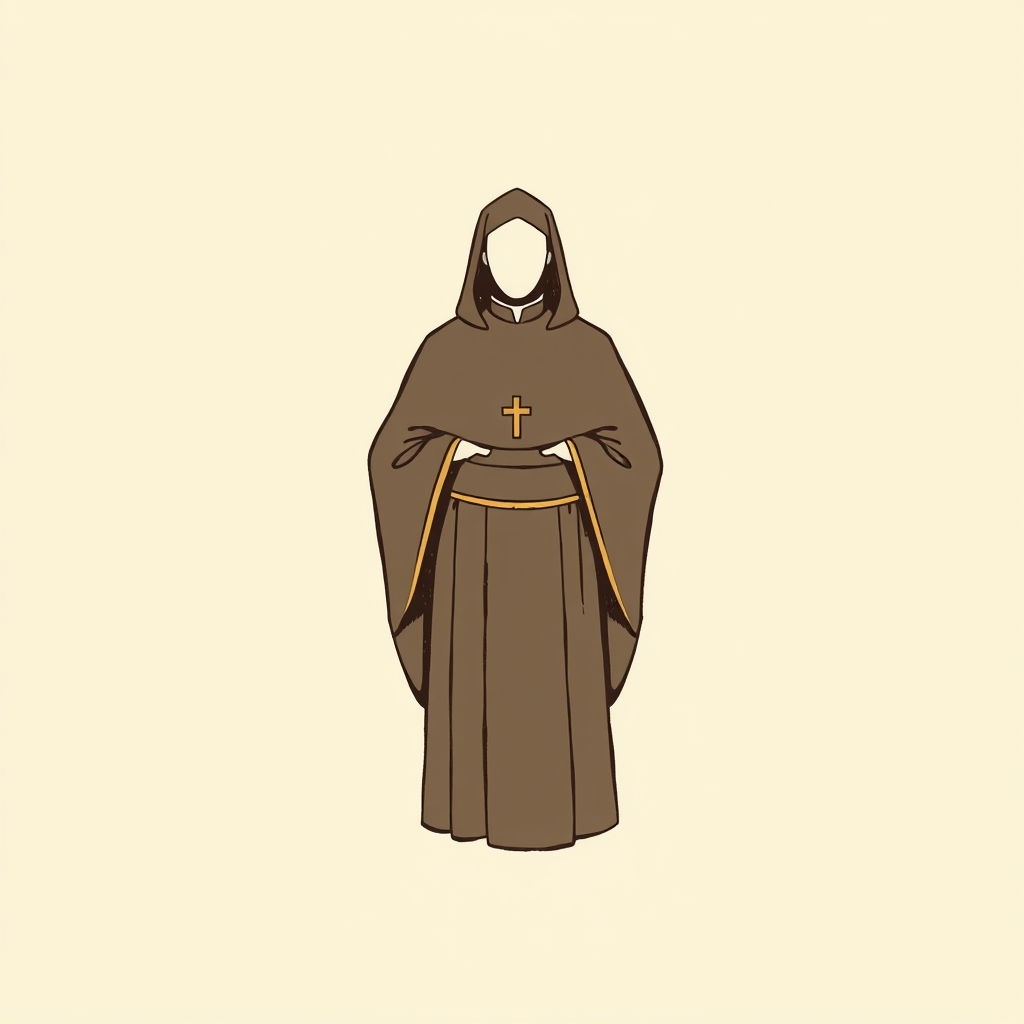
In iconography, Reverend Father Muard is recognizable by: Benedictine habit, large red cross without Christ and monastery bell.
What miracles are attributed to Reverend Father Muard?
3 miracles are attributed to this saint, notably: Healing, Vision / apparition and Prophecy / infused knowledge.
Which saints were contemporaries of Reverend Father Muard?
Contemporaries include: Jesús María Echavarría Aguirre, Pauline of the Agonizing Heart of Jesus, Saint Mary Frances of the Five Wounds of Jesus and Narcisa de Jesús.
When did Reverend Father Muard die?
Reverend Father Muard died around 1854.
What are the other names of Reverend Father Muard?
Other forms of the name: Marie-Jean-Baptiste du Cœur de Jésus and Jean-Baptiste Muard.
Annexes & related entities
Structured data for exploration: events, miracles, quotes, places, attributes, patronages, and important entities cited in the text.
Key Events
- Born in Vireaux on April 24, 1809
- Entered the minor seminary of Auxerre in 1828
- Priestly ordination in 1834
- Parish priest of Joux-la-Ville then of Saint-Martin d'Avallon
- Journey to Rome and foundation of the Society of the Fathers of Saint-Edme in Pontigny
- Mystical vision of a new religious order on April 25, 1845
- Stay at the Subiaco hermitage in 1848
- Audience with Pope Pius IX in Gaeta
- Foundation of the Pierre-qui-Vire monastery in 1850
- Died on June 19, 1854, after a supernatural announcement
Quotes
-
Souls, Lord, souls first, and heaven afterwards
Source text -
One must oppose contraries with contraries
Pius IX cited by Fr. Muard