
Saint Sylvester I
A 4th-century pope, Sylvester I is famous for having baptized Emperor Constantine, ending three centuries of persecution. Under his pontificate, the councils of Arles and Nicaea were held, laying the foundations for Christian discipline and dogma. He is considered the liberator of the Church and the builder of the first great Roman basilicas.
Contemporaries

Figures and markers around the normalized period for this entry.
Guided reading
9 reading sections
SAINT SYLVESTER, POPE AND CONFESSOR
The Liberator of the Church
Saint Sylvester is celebrated as the pontiff who brought freedom to the Roman Church by converting Emperor Constantine, putting an end to three centuries of persecution.
*In verbis suis monstra placavit.*
At the energetic voice of this illustrious pontiff, idolatry, Judaism, and the hideous procession of all nascent errors were shamefully stirred in the shadows.
Exell., xiv, 2.
If the Roman Church is indebted to the Apostle Saint Peter for its establishment and foundation, we may say that it is indebted to Saint Sylvester f or its freedom. It was a slave and had been groaning for more than three hundred years under the tyranny of idolatrous princes who allowed neither the head to exercise his authority, nor the members to have the necessary relations with him and among themselves to fulfill all the duties of Christianity; but this great Pope having drawn Constantine t o Jesus Ch rist and having submitted him to the amiable yoke of the Gospel, this Church, from the slave that it was, became free; from a servant, a mistress; from miserable, glorious and triumphant; and it began to reign over those crowned heads who, previously, held it in chains and servitude. It is therefore with reason that it considers this heavenly man as its liberator and that it renders him particular honors, as to the one who made it victorious over its most formidable enemies.
Youth and early trials
Born in Rome and trained by the priest Girinus, Sylvester distinguished himself by his hospitality toward pilgrims and his courage in the face of the prefect Tarquinius Perpenna after the burial of Saint Timothy.
Sylvester was Roman by birth and the son of Rufinus. He was instructed in piety by a holy priest named Girinus, and he profited so well from his instructions that, from his earliest youth, he was seen to be endowed with all Christian virtues. He received with joy into his house the faithful strangers who came on pilgrimage to the tombs of the holy Apostles; he washed their feet, gave them food, and provided them with everything they needed. Among others, he received Saint Timothy, a martyr, who had come from Antioch to Rome to honor the rel ics of the Martyrs, and after having worked there for the conversion of the infidels through the power of the word of God, he merited by a happy death to be joined to the number of those whose great credit with God had drawn him to that city. Saint Sylvester took his body and buried it with all the honor that the persecution of the pagans would allow him. Tarquinius Perpe nna, prefect of the city of Rome, having been informed of this, imagined that the goods of Timothy, which he believed to be great, had remained in the hands of this charitable man, and, as he wanted to have them, he had him seized and thrown into prison. But it was not for long; for, the very next day, according to the prediction of the Saint, this prefect, while eating fish, swallowed a bone that choked him; his death brought freedom to the holy prisoner.
Accession to the Pontificate
Ordained a priest by Saint Marcellinus, he succeeded Saint Miltiades in 314. Despite the protection of Constantine, he had to temporarily withdraw to Mount Soracte in the face of pagan magistrates.
At the age of thirty, he was ordained a priest of the Roman Church by Pope Saint Marcellinus, for which reason Saint Augustine called him a priest of Saint Marcellinus; as, in this rank which gave him the opportunity to exercise his zeal and charity, he distinguished himself marvelously among those who composed this venerable clergy, he soon drew upon himself the persecution of the Donatists. After the death of Saint Miltiades, he was raised to the Apostolic See, which he filled most worthily for nearly twenty-two years. This was on February 21, 314, under the empire of Constantine the Great. This prince had already defeated the tyrant Maxentius by the virtue of the cross which had appeared to him with this inscription: "In this sign you shall conquer," and, having entered Rome in triumph, he had highly declared himself the protector of the Christian religion. However, the Acts of Saint Sylvester, approved by a great number of authors, both Greek and Latin, testify that the Christians did not cease to be persecuted in this capital of the world, whether because Constantine had cooled toward them, as many have written, or because, while he was occupied with the great wars against Maximin and Licinius, his colleagues, the pagan magistrates abused his absence to torment them. Thus this holy Pope, in order to preserve himself for his flock, saw himself obliged to leave Rome secretl y and to withdraw to Mount Soracte, known as Saint-Sylvestre, which was about seven leagues away.
The conversion and baptism of the emperor
Afflicted with leprosy, Constantine receives a vision of the apostles Peter and Paul ordering him to seek Sylvester. The pope baptizes him, which leads to his miraculous healing.
But, according to the same Acts, the emperor, after having triumphed, through the defeat and death of these two sworn enemies of his glory and of Christianity, was struck with a leprosy that physicians call elephantiasis. Perhaps he had contracted it in Egypt, where Pliny says it was quite common and did not spare even kings, although it was to the great detriment of their people, because, to be cured, they would have a bath of human blood prepared that cost many children their lives. Constantia, daughter of this prince, also suffered from this malady, but she was cured by the merits of Saint Agnes. As for him, he had recourse to the ordinary remedy; he had a great number of children taken so that a bath of their blood could be prepared for him. This act was about to be carried out when, touched by compassion on one hand for the innocence of these children, and on the other by the complaints and groans of their mothers, he resolved to die from the violence of his malady rather than use such an inhumane remedy. He therefore had these children returned to their mothers, with money to help them return home.
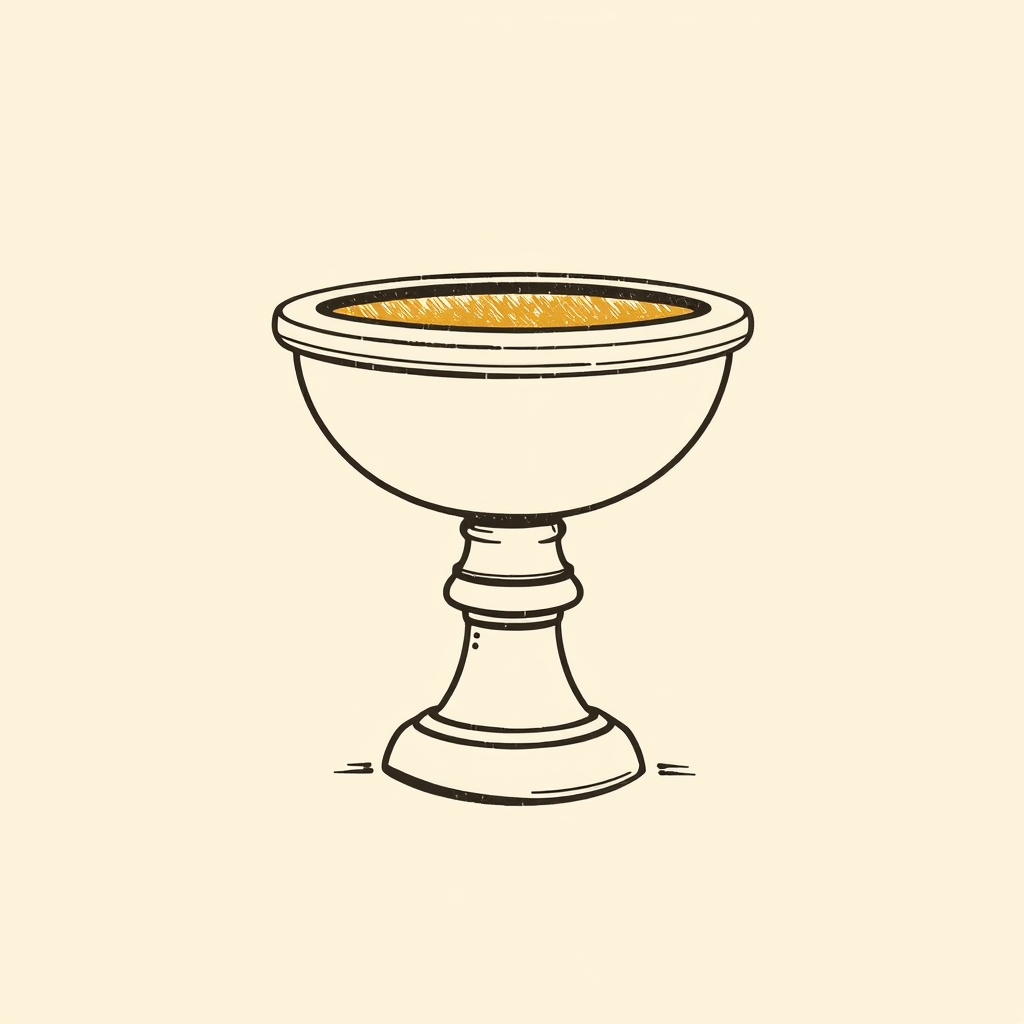
The following night, the blessed Apostles appeared to him and, after having testified how much this act of clemency had been pleasing to God, they told him to send for the sovereign Pontiff of the Christians, named Sylvester, on Mount Soracte, and that he would teach him another bath much more salutary than the one the physicians had proposed, since, by his means, he would be cured at the same time of the leprosy of the body and that of the soul. Constanti ne obeyed this command, and having summoned Sylvester, who believed he was being called to be put to death, he declared to him the vision and the order he had received from heaven. The Saint immediately judged that these divine men who had appeared to him were Sai nt Peter a nd Saint Paul, and he showed him their images; Constantine confessed that they perfectly resembled the Saints he had seen. A great change then took place in the soul of this prince. He wished to be perfectly instructed in the mysteries of Christianity and to enter the ranks of the catechumens, and, after a few days of catechism, according to the regulations of the Church, he was plunged into the sacred waters of Baptism, which, by virtue of the blood of Jesus Christ, erase sins and give the soul the life of grace. After this benefit, he received another that he desired, the healing of his leprosy. He emerged from the font with flesh as clean as that of a child, and he experienced that, although this Sacrament is not established to restore health to the body, it can nevertheless do so when God wishes to use it as an instrument to operate this miraculous effect.
Foundations and triumph of the faith
Constantine, advised by Sylvester, had the great Roman basilicas erected and pagan temples destroyed. The Pope also triumphed over the Jews during a public dispute.
It is impossible to express the esteem, affection, and gratitude that Constantine subsequently held for Saint Sylvester, and the good he did for the Church through his counsel and prayer. The Acts of this blessed Pontiff report that his illustrious neophyte, during the eight days he wore the white garment after his baptism, made very holy ordinances for the establishment and glory of the Christian religion. At the end of this time, he began the construction of the famous basilicas of Saint Savio r, or Saint John Lat eran, and of Saint Peter and Saint Paul. He also, subsequently, had the temples of the false gods torn down, their statues broken, and Christian churches built on all sides, to which he gave gold and silver vessels and ornaments of precious fabric, with large revenues for the maintenance of the ecclesiastics who would serve them. This is what can be seen in the life of Saint Helena and in the discourses on the feasts of the Invention of the Holy Cross and the dedication of the churches of Saint Savior and Saint Peter.
One thing that greatly confirmed him in the religion he had embraced was the signal victory that Saint Sylvester won in his presence in a discussion against the Jews and pagans, who accused him of imprudence and even impiety for having abandoned the religion of his fathers to worship a crucified man. Sylvester fought them with such strength and showed the truth of Christianity so solidly that they remained silent and unable to reply, especially since he confirmed his doctrine with great miracles and supernatural healings, to which, with all their subtlety and malice, they could oppose nothing.
Historical debate on the baptism
The author contrasts the Acts of Saint Sylvester with the writings of Eusebius of Caesarea concerning the place and date of Constantine's baptism, favoring the Roman tradition.
Many learned people believe that these Acts of Saint Sylvester are supposititious and defer rather to what Eusebius of Caesarea says, i n book IV of the Life of Constantine the Great, ch. LXII and LXIII, that it was only at the end of his life, and in the suburb of Nicomedia, that he became a catechumen and received the sacrament of spiritual regeneration. This sentiment is supported by the authority of Saint Ambrose, in the funeral oration of Theodosius, of Saint Jerome, in his Chronicle (if, however, a foreign hand has not made this addition there), of Socrates, of Theodoret, of Sozomen, and of Gelasius of Cyzicus in their histories, of Cassiodorus in his, called Tripartite, and of some other more modern writers. The letter of the orthodox bishops of the Council of Rimini to the Emperor Constantius is also cited. However, there are so many Greek and Latin authors who subscribe to the baptism of Constantine in Rome, and to the Acts of Saint Sylvester, although it is admitted that they have been corrupted in some points, such as Saint Gregory of Tours, Saint Venantius Fortunatus, Anastasius the Librarian, Hincmar, Theophanes, Simeon Metaphrastes, and Nicephorus Callistus, besides the popes Gelasius I, in a council of Rome of seventy bishops, where such an exact discernment was made of the legitimate Acts of the first centuries from those that were supposititious, Adrian I, in his Epistle to Constantine and Irene, which was read in the seventh council, and Nicholas I, in a letter to the Emperor Michael, where he names Saint Sylvester Magni Constantini baptizatorem,
"He who baptized Constantine the Great," that it is difficult not to put faith in it.
Cardinal Baronius, in the year 324 of his Annals and in his Notes on the Martyrology, claims that all those who placed the baptism of Constantine at Nicomedia, and who pushed it back until the end of his life, only followed Eusebius of Caesarea; and that this historian, whom Saint Jerome calls the standard-bearer of the Arians, invented this fable to make it believed that Constantine had been baptized by Eusebius, bishop of Nicomedia, the principal abettor of Arianism. The learned, nevertheless, find little appearance in this, since, the baptism of Constantine not having been able to be secret, if Eusebius had placed it in another place and at another time than it was done, his fiction would have immediately been recognized as a pure imposture, and he would have done nothing other than discredit himself. Father Morin, of the Oratory, in his History of the Deliverance of the Church, by Constantine the Great, after having seriously examined the reasons for the two opinions, leaves the matter undecided and places it among those difficulties of which one cannot have certain knowledge. In this doubt, if one wishes to decide, it is safer to follow what the Church proposes to us in the Lessons of the feast of our Saint; this is what we adopt, not as indubitable, but as probable and supported by sufficient authority.
The Great Councils and Discipline
The pontificate was marked by the Councils of Arles and Nicaea. Sylvester had Arianism condemned there and defined the consubstantiality of the Word through his legates.
During the Pontificate of this great Pope, several Councils were held, both for the defense of the faith against heretics and for the restoration and perfection of ecclesiastical discipline. One of the principal ones was that of Arles, where the bishops of Gaul, Italy, Spain, Africa, and Great Britain were present. It was ordered there that the feast of Easter would be celebrated on the same day for everyone, the Sunday after the fourteenth day of the March moon. The reiteration of baptism observed by the Africans was condemned there. The cause of Saint Caecilian, Bishop of Carthage, was decided there, and he was recognized as innocent of the crimes of which the Donatists accused him. Very equitable laws were also made there against the schismatics. The Fathers of this Council wrote a letter to Saint Sylvester, where, after having expressed to him the joy they would have had if they had been honored by his presence, which the affairs of his See had prevented, they gave him an account of what they had done in their assembly.
The first general Council of the whole Church, which is that of Nicaea, was also celebrated in his time. The subject of its ass embly was the heresy of Arius, which, far from being extinguished by the numerous particular Councils convened for this purpose, spread so much in the East that the whole Church was nearly set ablaze by it. It was necessary to prevent this evil, and no better remedy was found than to unite the principal bishops of the whole Christian world, so that they might define together what they had learned through apostolic tradition regarding the divinity of Jesus Christ. This Council was held only by the authority of Saint Sylvester, and he presided over it through his legates, who were the great Hosius, Bishop of Cordoba in Spain; the priests Vitus, or Victor, and Vincent, members of the Roman clergy. In this Council, the consubstantiality of the Word, and consequently of Jesus Christ with his Father, was defined, and the second Symbol of the Church was composed there, which, with the additions made to it at the Council of Constantinople, is the one we sing at Mass.
Emperor Constantine attended and gave rare examples of humility, modesty, patience, and zeal for the faith and the Christian religion, and the bishops, for their part, paid him great honors, receiving him into the midst of their assembly; this is one of the strongest proofs used by Cardinal Baronius to show that he was already baptized. After the condemnation of Arius and the establishment of the faith, the Council wrote to Saint Sylvester to ask him for the confirmation of its decrees; and this holy Pope, having assembled another Council in Rome for this purpose, confirmed them with these words: "We confirm with our mouth in conformity all that was established in the city of Nicaea, in Bithynia, by the three hundred and eighteen blessed bishops, for the support of the holy mother, the Catholic and Apostolic Church, and we anathematize all those who shall undertake to destroy the definition of this great and holy Council, made in the presence of the most pious and venerable prince Constantine Augustus."
Liturgical decrees and end of life
Sylvester established rules regarding chrism, liturgical vestments, and Sunday rest. He died in 335 after governing the Church with charity for more than twenty years.
This blessed Pontiff did, besides this, several things worthy of eternal memory. Among others, he had a church built in the field of one of his priests, named Equitius, near the baths of Trajan, still called the title of Equitius.
He baptized Saint Roma na, daughter o f Calpurnius, prefect of Rome, who, having consecrated her virginity to Jesus Christ, and having retired into the deserts near Tivoli, performed great miracles there and led a life more angelic than human. Her feast is celebrated on February 23. Several decrees are also attributed to the holy Pope, some of which only renew or confirm what was already in use in the Church: 1st, that the Chrism be consecrated only by the bishop alone: this was the practice of the first centuries, which there is no doubt came from the ordinance of the Apostles; 2nd, that in Baptism the priest anoint the top of the head of the baptized person: this is a ceremony that was observed even before the 4th century; 3rd, that deacons use dalmatics at the altar; 4th, that the Body of Our Lord be consecrated only on linen veils, and not on cotton or silk, to represent the linen shrouds in which this holy Body was wrapped after his death; 5th, that a layman should not have the boldness to act as an accuser against a cleric, and that a cleric should not be judged by a secular judge; 6th, that the days of the week, except for Sunday and Saturday, be called ferias, to make it known to ecclesiastics that they should detach themselves from all temporal cares and apply themselves only to the service of God. This was already done before Saint Sylvester.
He marked the time of the interstices that had to be kept in the reception of Orders. In seven ordinations that he held in the month of December, he created forty-two priests, thirty-seven deacons, and seventy-five bishops. To this heavenly prudence, with which he governed the Church, he joined an admirable piety and a singular charity towards the poor. He took care of the virgins consecrated to God, and had the things necessary for life provided to them. He also took care that ecclesiastics had enough to subsist honestly, and that those who had large incomes shared them with those who were in need.
Finally, after a Pontificate of twenty-one years, ten months and twelve days, he passed from this mortal life to go and enjoy in heaven that which will never end; this was in 335. His body was buried on the Via Salaria, in the cemetery of Priscilla, one league from Rome. His relics rest under the altar of the church of Saint-Sylvestre in Capite. On the day of his feast, his head is exposed above the tabernacle, in a silver reliquary.
Iconographic representations
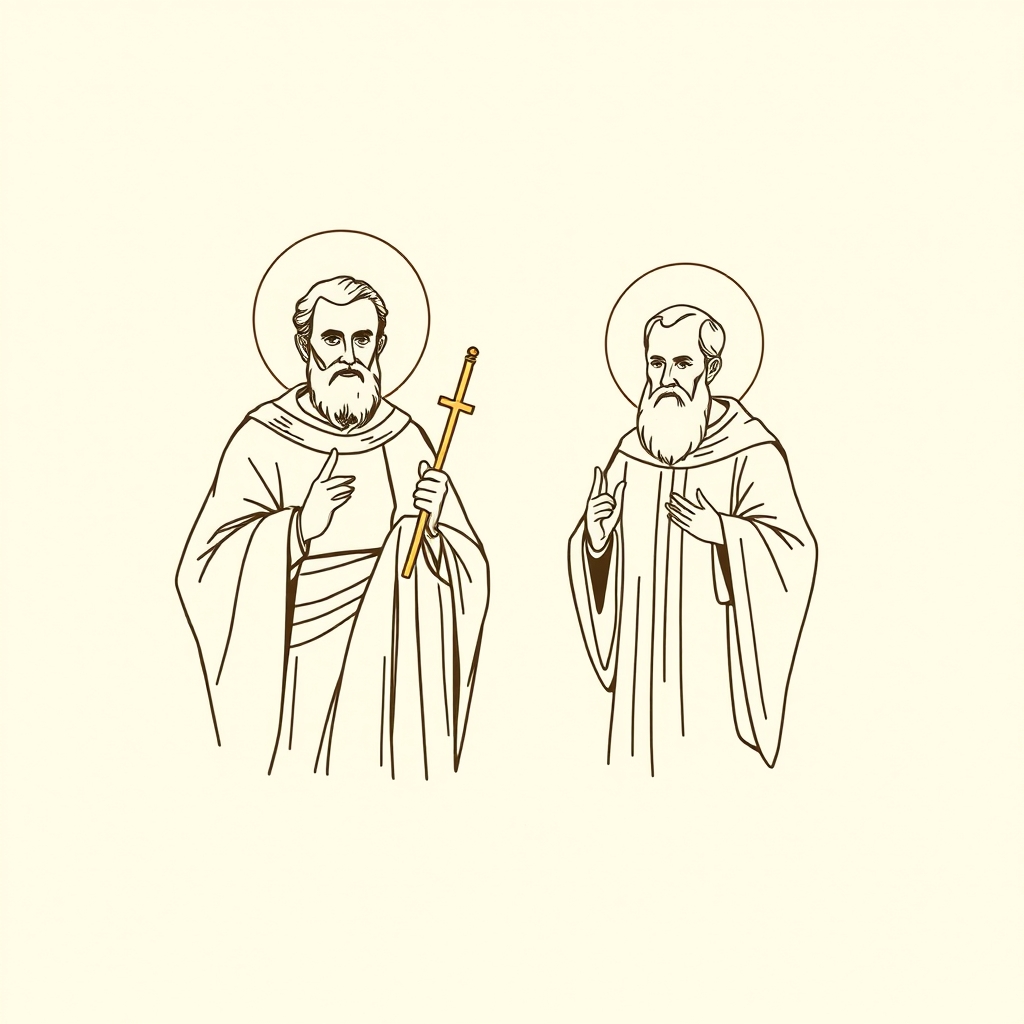
The saint is traditionally depicted baptizing Constantine, binding the mouth of a dragon, or holding a cross, symbolizing his miracles and his historical role.
He is depicted: 1° placing the body of Saint Peter in the catacombs, at the place named the confession of Saint Peter; to his left one notices a warrior who could well be Constantine; 2° standing, holding a closed book and blessing; 3° baptizing Constantine; 4° binding the mouth of a dragon placed in the middle of flames: behind the Pope, three cardinals; two angels hold his cope; 5° kneeling, seeing an angel holding a cross surrounded by branches. This cross undoubtedly alludes to the invention of the True Cross found during his pontificate through the care of Saint Helena.
We have reviewed and completed this account by Father Gtry with the History of the Church, by Abbé Darru.
Iconography
Signs and attributes



Entities
Narrative network
The names, places, and concepts most present in the entry, weighted by centrality in the text.
The supernatural in their life
The miracles of Saint Sylvester I
Frequently asked questions about Saint Sylvester I
Who was Saint Sylvester I?
A 4th-century pope, Sylvester I is famous for having baptized Emperor Constantine, ending three centuries of persecution. Under his pontificate, the councils of Arles and Nicaea were held, laying the foundations for Christian discipline and dogma. He is considered the liberator of the Church and the builder of the first great Roman basilicas.
What is Saint Sylvester I the patron saint of?
Patronage of Saint Sylvester I: Roman Church (liberator).
How is Saint Sylvester I depicted in Christian art?
In iconography, Saint Sylvester I is recognizable by: closed book, bound dragon, tiara, images of Saint Peter and Saint Paul and baptismal font.
What miracles are attributed to Saint Sylvester I?
3 miracles are attributed to this saint, notably: Healing, Conversion and Sign / wonder.
Which saints were contemporaries of Saint Sylvester I?
Contemporaries include: Saint Blaise, Saint Hilary of Poitiers, Saint Basil the Great (Archbishop of Caesarea) and Saint Baudilus.
When did Saint Sylvester I die?
Saint Sylvester I died around 400.
What are the other names of Saint Sylvester I?
Other forms of the name: Sylvestre and Silvestro.
Who are the relatives of Saint Sylvester I?
Relatives of Saint Sylvester I: Rufin (father).
Annexes & related entities
Structured data for exploration: events, miracles, quotes, places, attributes, patronages, and important entities cited in the text.
Key Events
- Elevation to the Apostolic See on February 21, 314
- Retreat to Mount Soracte during the persecution
- Miraculous healing and baptism of Emperor Constantine
- Presided by legates at the Council of Nicaea in 325
- Consecration of the Basilicas of Saint John Lateran and Saint Peter
Quotes
-
In verbis suis monstra placavit.
Ecclesiasticus, xiv, 2 (cited as epigraph) -
We confirm with our own mouth, in conformity, everything that was established in the city of Nicaea
Decree of confirmation of the Council of Nicaea