
Saint Ado of Vienne
Born into nobility in 799, Ado was a monk at Ferrières before becoming Archbishop of Vienne in 860. A great traveler and scholar, he composed a famous Martyrology and a Universal Chronicle while reforming ecclesiastical discipline. He died in 875, leaving the image of a charitable, rigorous prelate who was close to the popes.
Contemporaries

Figures and markers around the normalized period for this entry.
Guided reading
7 reading sections
SAINT ADO, ARCHBISHOP OF VIENNE
Youth and monastic formation
Born in 799 into a noble family, Adon was educated at the Abbey of Ferrières under the direction of Lupus Servatus, where he distinguished himself by his piety and his learning.
Charity rises marvelously to the highest actions when it knows how to descend mercifully to the humblest needs of one's neighbor. Saint Gregory the Great.
Saint Adon, from a nob le and ill ustrious family, was born in 799, and was raised from his earliest years in the Benedictine Abbey of Ferrières, in the diocese of Sens, under the discipline of the famous Lupus S ervatus, ab bot. He also took the religious habit there, and became one of the most significant members, both for his learning and for his regular observance. He guarded his chastity with perpetual vigilance, and by attaching himself to the conversation of the elders, he became like them a model of virtue and consummate prudence.
Peregrinations and scholarly labors
After a difficult period at the monastery of Pruym, Ado undertook pilgrimages to Rome and Jerusalem, staying for a long time in Italy for his hagiographic research.
After a few years, he moved to the monastery of Pruym, in Germany, of which Marcuard, formerly a monk of Ferrières, was abbot; but as his brethren were continually causing him distress, due to the secret jealousy they had conceived of his great merits, he undertook, with the permission of his superiors, journeys to Jerusalem and Rome. For this purpose, he took on the habit of a pilgrim and fulfilled his devotions with all possible fervor. In Rome, where he remained for more than four years, he made himself known to all persons of science and piety. While returning to France, he stopped for some time in Ravenna, and there copied a book that a monk lent him; this book served him later in composing his Martyrology, as he stat es in his preface.
Accession to the See of Vienne
Supported by Saint Remigius of Lyon, Ado was elected Archbishop of Vienne in 860 despite the opposition of a local count, thanks to the justification provided by his former abbot.
While passing through Lyon, he was favorably received by Saint Remigius, who was its archbishop, and this prelate, having recognized in a conversation that he was both learned and virtuous, retained him in his diocese after having obtained permission from his abbot, while nevertheless giving him for his retirement, when he wished to live more solitarily, the church of Saint-Romain, near Vienne. His kindnesses toward Ado did not end there; for Agilmar, archbishop of that see, having died in 860, he worked to place him in his stead, and he had no difficulty in succeeding, because the clergy and the people, along with Abbon, Bishop of Grenoble, desired it. A count of the region, named Bernard, opposed it, because the enemies of our Saint spread the rumor that he had left his monastery without per mission; bu t Lupus Servatus, his former abbot, justified him against such a dark slander through letter cxxii which he wrote to that count.
Relations with the Papacy
Adon maintained a close correspondence with Pope Nicholas I, dealing with theological questions and affairs of state such as the divorce of King Lothair.
As soon as our Saint was on the episcopal throne, he wrote to Pope Nicholas I, making in his letter, according to custom, his profession of faith. His Holiness replied to him and sent him the Pallium, as a mark of his archiepiscopal dignity. In this response, he expressed his surprise that, in his profession of faith, he had mentioned only four general councils, whereas there had already been six. But the Saint had done so in reference to what Saint Gregory the Great said, that he honored the four councils as the four Gospels. Adon subsequently had a holy exchange of letters with this great Pope, and he wrote to him often regarding important matters, both of the Church and of the State. There remains to us a fragment of an apostolic rescript concerning the matter of the divorce of King Lothair, in wh ich Pope Nic holas calls him his most holy brother.
Pastoral Action and Charity
The archbishop dedicated himself to the penance of his people, to hospitality toward the poor, and to the construction of religious edifices inspired by the holy places.
The care he took to stir his people to penance led him to build, at the entrance of his cathedral church, a chapel modeled after the sepulcher of Our Lord. Before the door of this chapel, he consecrated an altar under the name of Mary the Sinner, Peter guilty of denial, and the good thief who confessed. The sick who went there to offer their prayers and invoke these illustrious penitents received great relief from their ailments and often returned in health. He practiced hospitality toward strangers, and his charity for the poor was so great that he wished the door of his palace to be always open to them, even during his meals, so that he might say with Job: "My house has been open to strangers, and I have been the father of the poor." Although he occupied himself during the day with many labors in the duties of his office, he rested almost not at all at night; for, after granting very little time to the needs of nature, he spent the rest in prayer or in composing holy books.
Reforms and ecclesiastical discipline
He worked for the restoration of monastic discipline, the regularity of the divine offices, and the protection of the poor against the powerful.
As regular observance had slackened in the monasteries, he worked to restore it, and among the fine regulations he made for this subject, he prescribed the manner of chanting the divine Offices day and night, of which he himself gave the example. He also took particular care that the ecclesiastics of his diocese, upon whom the salvation of the people depends, should live in accordance with the holiness of their state, and that they should discharge their ministry with all the decency due to the Divine Majesty. He vigorously opposed the rich and the powerful of the age who undertook anything against the poor. But as much as he was severe towards those who resisted his pastoral exhortations, so much did he have sweetness and tenderness for those who wished to profit from them.
Literary Heritage and End of Life
A prolific author of a Chronicle and a famous Martyrology, Ado died in 875 and was buried in the church of Saint-Pierre in Vienne.
As he did not wish to be useful only by his word to the people of his century, but also to those of centuries to come, he left us in writing very precious monuments of his doctrine, among others a Chronicle, from the beginning of the world until his time; a Treatise on the feasts of the Apostles and the Saints who were their disciples or their successors, or who lived near their times; a Martyrology which he calls Li tanies, and in particular the Live s of Saint Desiderius, Archbishop of Vienne and martyr, and of Saint Theuderic, Abbot of Vienne. He died after these glorious labors, on December 16, 875, at the age of sixty-six, and he was buried with his predecessors in the church of Saint-Pierre, outside the city, which passed from the Benedictines to secular Canons.
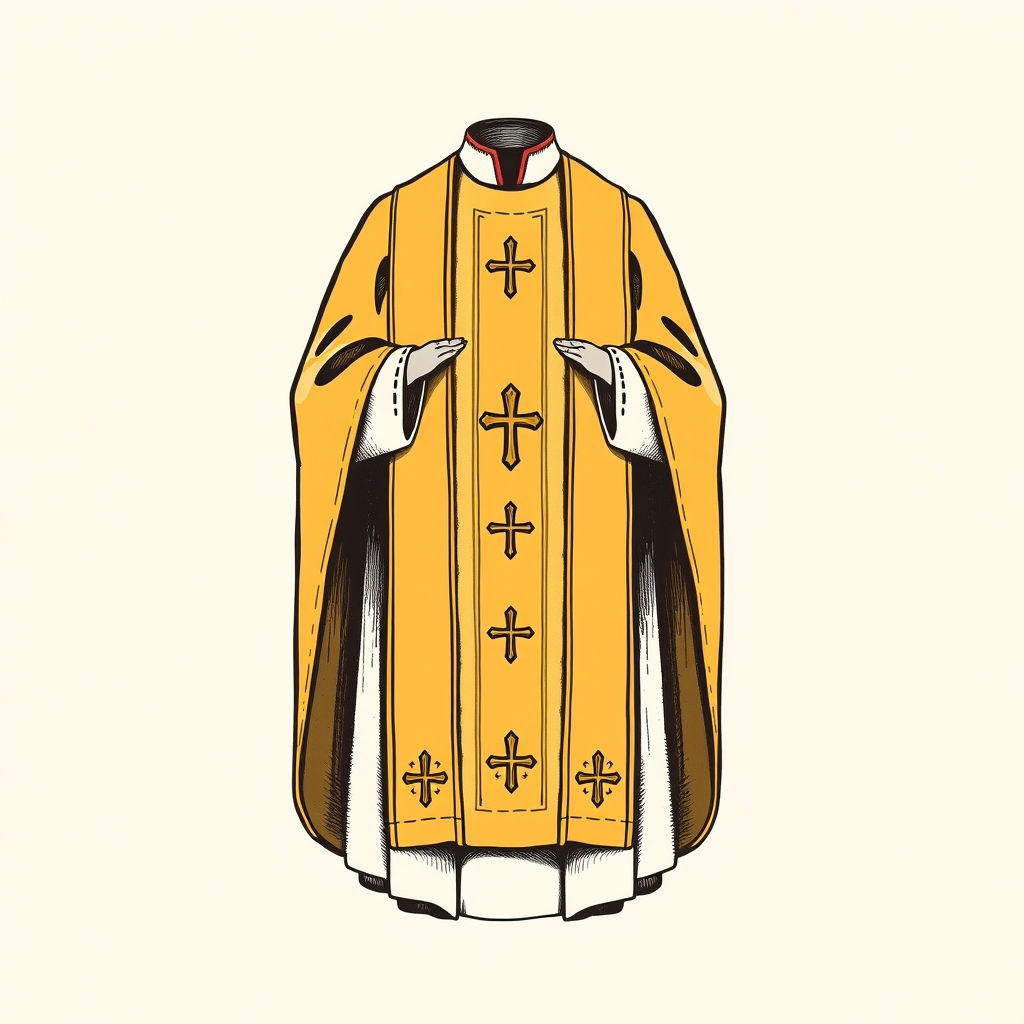
Saint Ado is represented: 1st studying the Holy Scripture in the middle of a library; 2nd holding a book in his hand or writing.
Taken from his Life, by Mabillon . — Cf. Dom Cellier.
Iconography
Signs and attributes



Entities
Narrative network
The names, places, and concepts most present in the entry, weighted by centrality in the text.
The supernatural in their life
The miracles of Saint Ado of Vienne
Frequently asked questions about Saint Ado of Vienne
Who was Saint Ado of Vienne?
Born into nobility in 799, Ado was a monk at Ferrières before becoming Archbishop of Vienne in 860. A great traveler and scholar, he composed a famous Martyrology and a Universal Chronicle while reforming ecclesiastical discipline. He died in 875, leaving the image of a charitable, rigorous prelate who was close to the popes.
What is Saint Ado of Vienne the patron saint of?
Patronage of Saint Ado of Vienne: Vienne (Isère).
What is Saint Ado of Vienne invoked for?
Saint Ado of Vienne is invoked for: healing of the sick (via his penitents' chapel).
How is Saint Ado of Vienne depicted in Christian art?
In iconography, Saint Ado of Vienne is recognizable by: book, library, writing and archiepiscopal vestments.
How did Saint Ado of Vienne die?
Saint Ado of Vienne suffered martyrdom for the Christian faith (9th century).
What miracles are attributed to Saint Ado of Vienne?
1 miracle are attributed to this saint, notably: Healing.
Which saints were contemporaries of Saint Ado of Vienne?
Contemporaries include: Saint Ansgar (Apostle of the North), Saint Bernard of Menthon (Apostle of the Alps), Saint Rumold (Rombaud) and Saint Zachary, Pope.
What are the other names of Saint Ado of Vienne?
Other forms of the name: Ado.
Annexes & related entities
Structured data for exploration: events, miracles, quotes, places, attributes, patronages, and important entities cited in the text.
Key Events
- Born in 799 into a noble family
- Education and religious profession at the Abbey of Ferrières
- Stay at the monastery of Pruym in Germany
- Pilgrimage to Jerusalem and a four-year stay in Rome
- Copy of a manuscript in Ravenna for his future Martyrology
- Election to the Archbishopric of Vienne in 860
- Reception of the Pallium from Pope Nicholas I
- Mediation in the divorce case of King Lothair
- Restoration of monastic discipline and writing of historical works
Quotes
-
My house has been open to strangers, and I have been the father of the poor
Job (cited by Adon)