
Saint Aubert of Cambrai
Bishop of Cambrai and Arras in the 7th century, Saint Aubert was an influential pastor close to King Dagobert I. He played a major role in the expansion of monasticism in Gallia Belgica, guiding great figures such as Saint Landelin, Saint Waltrude, and Saint Ghislain. He is traditionally honored as the patron saint of bakers.
Contemporaries

Figures and markers around the normalized period for this entry.
Guided reading
8 reading sections
SAINT AUBERT, BISHOP OF CAMBRAI AND ARRAS
Introduction and early years
Saint Aubert is presented as a major bishop of Northern France, although his exact origins remain unknown.
The episcopate of Saint Aub ert is one of the finest presented by the history of the dioces es of C ambrai and Arras; it incontestably places this pontiff in the rank of the great bishops who shone in the 8th century in the north of the land of the Franks. By his position and his character, he was in contact with illustrious personages and prudently used their ministry to extend the faith in the vast regions entrusted to his pastoral solicitude.
The early years of Saint Aubert are unknown. It is not even known who his parents were, nor in what country he was born. If one is to believe certain authors, it was in the village of Haucourt, or at least in a place quite close to Cambrai. From his youth, he distinguished himself by a modest gravity and a precocious wisdom that won him all hearts. His soul, an enemy of dissimulation, opened itself to all beautiful sentiments and received with a holy avidity the blessings and graces of heaven. Early on, these virtuous inclinations opened to him the doors of the sanctuary, where it appeared manifest that God was calling him. One was promptly convinced of this when one saw the young cleric, barely admitted to the tonsure, walking with fervor in the paths of perfection. A few years later, he was judged worthy of being promoted to the priesthood, and the church of Cambrai saw with happiness ascend to the altar the one whom God destined to govern it soon with wisdom.
Election and Royal Relations
Elected bishop in 633, he maintained close ties with King Dagobert I, who richly endowed the church of Cambrai.
Indeed, Aldebert or Ablebert having died, the votes of the clergy and the people fell upon the humble Aubert, to whom this honor and office inspired the deepest fears. Had he consulted the desires of his heart, he would have retired into some solitude to devote his life there to prayer and the meditation of heavenly things; but he had to yield and accept, with the burden of the episcopate, the pains and fatigues that are its inseparable condition. It was on March 21 of the year 633 that Saint Aubert received the holy anointing at the hands of Leudegise, metropolitan of Reims, assisted by Athole of Laon, and by Saint Achaire of Tournai and Noyon. The grace of ordination seemed to increase even more in him the desire he had to walk in the footsteps of Jesus Christ: thus, in a short time, his reputation for wisdom, knowledge, and virtue spread everywhere. From the most distant cities, people came to hear some of his discourses or to ask him for advice; and the church of Cambrai contemplated, with legitimate pride, this spectacle which made its glory and attested to its happiness. The King of the Franks himself, Dagobert I, visited Saint Aubert in his episcopal city, and was as touched as he was satisfied by the wise words he heard coming from his mouth. More than once he returned with lords of his court, to receive the advice, the exhortations, and perhaps the paternal reproaches of the pious bishop. Saint Aubert then spoke to him "of the vigilance, of the solicitude that he should bring to the administration of his kingdom. He reminded him of the happiness that God reserves for those who have lived well on earth, the terrible judgment that will follow death, and the sweet hopes of eternity that we must maintain in our souls." Dagobert, charmed to hear him, felt his joy increase even more when he saw the venerable pontiff raise his hands toward heaven to call down upon his royal head the blessings of the Lord. As much to satisfy his pious liberality as to give Saint Aubert a testimony of his affection and gratitude, he donated to the church of Notre-Dame a villa from the royal domain, called Onnaing. He later added Quaroube, a village located a few leagues from Valenciennes.
In the midst of these honors that his virtue attracted to him, the worthy bishop, always full of humility, faithfully returned to God the homage that he knew was due to Him alone. Nothing could ever turn him away from these sentiments, neither the respect with which Dagobert surrounded him, nor the office and dignity with which he was invested, nor the admirable works and miracles that he performed. One day, even as the people, struck by a prodigy accomplished before their eyes, burst into transports and cries of joy, he strove, with a touching simplicity, to calm them, never ceasing to repeat that it was not to him, but to the power of God alone that these wonders should be attributed.
The mentorship of Saint Landelin
Aubert guides the young Landelin, mourns his temporary straying, and accompanies him in his conversion and monastic foundations.
Through his works and virtues, Saint Aubert had made himself extremely dear to his diocesans, and all loved to be near him to enjoy his conversations. The most powerful families entrusted their children to him, so that he might inspire in them, along with a taste for knowledge, the love of God and the practice of good. Among these children, one cites in particular th e young Landelin, born in the village of Vaulx, near Bapaume, whom the Saint had held himself at the baptismal font. The young adolescent grew up in the chaste fear of the Lord, under the eyes of Saint Aubert, who neglected nothing to develop the seeds of virtue in his heart. For some time he could hope that success would crown his desires; but one day, Landelin, through imprudence, lent an ear to perfidious words, which cast him into the path of vice. Saint Aubert wept for a long time for this prodigal child who had abandoned him. He addressed the most fervent prayers to heaven so that grace might touch his heart and bring him back to God. His wishes were granted; he had the consolation of receiving into his arms this much-loved son, whom remorse for crime and fear of the judgments of God were calling back to virtue. The life of Landelin, who later became a great Saint, teaches us how the wise pontiff knew how to turn the misfortune of his wanderings to the spiritual advantage of his disciple and of religion. Three journeys to Rome undertaken in a spirit of penance, four famous monasteries founded on the banks of the Sambre, numerous missionaries emerging from these retreats to evangelize the peoples of the neighboring regions, virtues that became the admiration of the whole country—such are the works that marked the return to God of the spiritual son of Saint Aubert.
Monastic expansion and encounters
The bishop welcomes Saint Ghislain and consecrates several monasteries, influencing figures such as Saint Vincent and Saint Waltrude.
To this consolation succeeded that which was caused by the vi sit of Saint Ghislain of Athens, whom a voice from heaven had called to these places, where he also contributed much to spreading the faith and propagating religious life. Arriving in a place called Ursidongus, where the city that bears his name has since formed, Saint Ghislain laid the foundations of a monastery there, intending to go immediately to pay his respects to the bishop of the place. But Saint Aubert had already been warned by some people, whose zeal did not appear pure in his eyes. At the very least, he took advantage of the report they gave him to teach them a lesson in charity and simplicity. As they announced to him that a stranger, who had come, it was said, from a distant country, was establishing himself in his diocese; that perhaps he was a false apostle, capable of seducing and deceiving the faith of the faithful, the holy bishop said to them with his usual kindness: "It is not for you to judge a man who is not known in this way, and you must not dwell on these thoughts before having tested whether they come from God." At the same time, he sent a trusted man to ask Saint Ghislain to come and meet him in Cambrai. The pontiff spoke with him and did not take long to conceive a deep respect and religious affection for the virtuous stranger. He even promised that he would go to bless his church as soon as it was completed. Indeed, at the ap pointed tim e, he went there with Saint Amand, his venerable friend, and both consecrated this new house of prayer, in the midst of a multitude of spectators. In the crowd appeared Mauger, since so well known under the name of Saint Vincent. This lord was so touched by the exhortations that the two holy bishops addressed to the crowd after the ceremony that he resolved from then on to leave the world to devote himself to the service of God. Indeed, some time later, he went to Cambrai to confer on this important matter with Saint Aubert and received the tonsure from his hands; after which he retired to a monastery that he had bu ilt on the hi ll of Hautmont.
Saint Waltrude, his wife, imitated his example. She asked the holy bishop for the veil, then went to live in a humble dwelling at Château-Lieu, where the city of Mons stands today. This was not the last consolation that this noble family g ave to th e church: Aldegonde, sister of Saint Waltrude, learning one day that Saint Amand and Saint Aubert were with other servants of God in the abbey of Hautmont, went there in great haste and begged them with tears to allow her to embrace, like her sister, the religious life. The two pontiffs, after questioning her with care, acceded to her request and gave her the veil of virgins. Shortly after, she founded, in a deserted and wild place on the banks of the Sambre, a monastery around which the city of Maubeuge arose.
Consecrations and missions
Aubert multiplied the consecrations of churches (Marchiennes, Maroilles) and supported Irish missionaries in Hainaut.
Thus, the venerable Aubert saw religion prosper, and Christian institutions multiply in his two dioceses, where all these communities became means of sanctification for the peoples. He also had the consolation of consecrating the church of the monastery of Marchiennes, where Saint Rictrude had retired with her daughters after the tragic death of her husband Adalbaud; that of Maroilles, which Saint Humbert built upon his return from his second journey to Rome; and, in all likelihood, that of Notre-Dame de Condé, where Saint Wasnon, having come from Scotland, proclaimed the word of God. Furthermore, he greatly favored these colonies of Irish apostles, who traversed the vast dioceses of the north, evangelizing the peoples everywhere, and often founding oratories, churches, or monasteries, even in the most remote lands of Hainaut and Brabant.
Veneration of relics
He organized the translation of the remains of Saint Vaast to Arras after a vision and assisted Saint Eligius with that of Saint Fursey.
But at the same time that he sought, through all the holy industries of his zeal, to form new Saints for heaven, Saint Aubert also watched over honoring the relics of those who already enjoyed glory, and whose mortal remains were preserved on earth. It would seem that God Himself, on several occasions, was pleased to satisfy these desires of the holy bishop. One night when he was in Arras, where he went at ce rtain times to settle the affairs of that church, while his disciples were taking their rest, he rose, according to his custom, and began to pray until dawn. His prayer was not yet finished when, leaving his dwelling, he went to the ramparts of the city, as if to breathe the pure morning air. There a thought suddenly seized his mind. "He asked himself why the blessed Vaast, enclosed for so long in a humble sepulcher, did not receive on earth the hono r tha t was due to him, while in heaven he was already a participant in the joys of the celestial Jerusalem, where he shone like a star in the firmament." He immediately began to examine in what place he would have this holy body transported, to render it the homage it deserved. His mind was filled with these thoughts when, at sunrise, with his face turned toward the East, he saw, beyond the small river called the Crinchon, a man all shining with light. A rod in his hand, he was measuring the site of a church; like the angel that Ezekiel, in a prophetic vision, perceived measuring the temple of Jerusalem. At this sight, Saint Aubert understood that the will of God was that the body of Saint Vaast be transferred to this place. He hastened to notify his venerable colleague Saint Omer, and invited him to the ceremony he was preparing for the translation of these relics. Despite his great age and his infirmities, the holy bishop of Thérouanne went eagerly to Saint Aubert, and congratulated him on the happy thought that heaven had given him. An immense crowd gathered that day in the city of Arras. When everything was arranged, the sepulcher was opened, and to the singing of hymns and canticles, the precious deposit was removed from this place with the deepest respect. Some fairly considerable parts were left there, however, so that this basilica, where Saint Vaast had so often celebrated the divine mysteries and instructed his people, would not be entirely deprived of his presence. At a given signal, they set off, and the procession headed toward the place indicated by the angel of the Lord.
Saint Aubert had another occasion to satisfy his piety toward the Saints, during the translation of the body of Saint Fursey, abbot of the monastery of Lagny, into the church of Péronne, which had been built by Erchinoald, mayor of the palace. Saint Eligius, in whose diocese this city was located, asked him to assist him in the accomplishment of this pious ministry. T he two hol y pontiffs edified one another during the days they spent under the same roof, conversing together about the things of God and the Church: then, after giving each other the fraternal kiss, they parted to see each other again a little later in heaven.
End of life and patronage
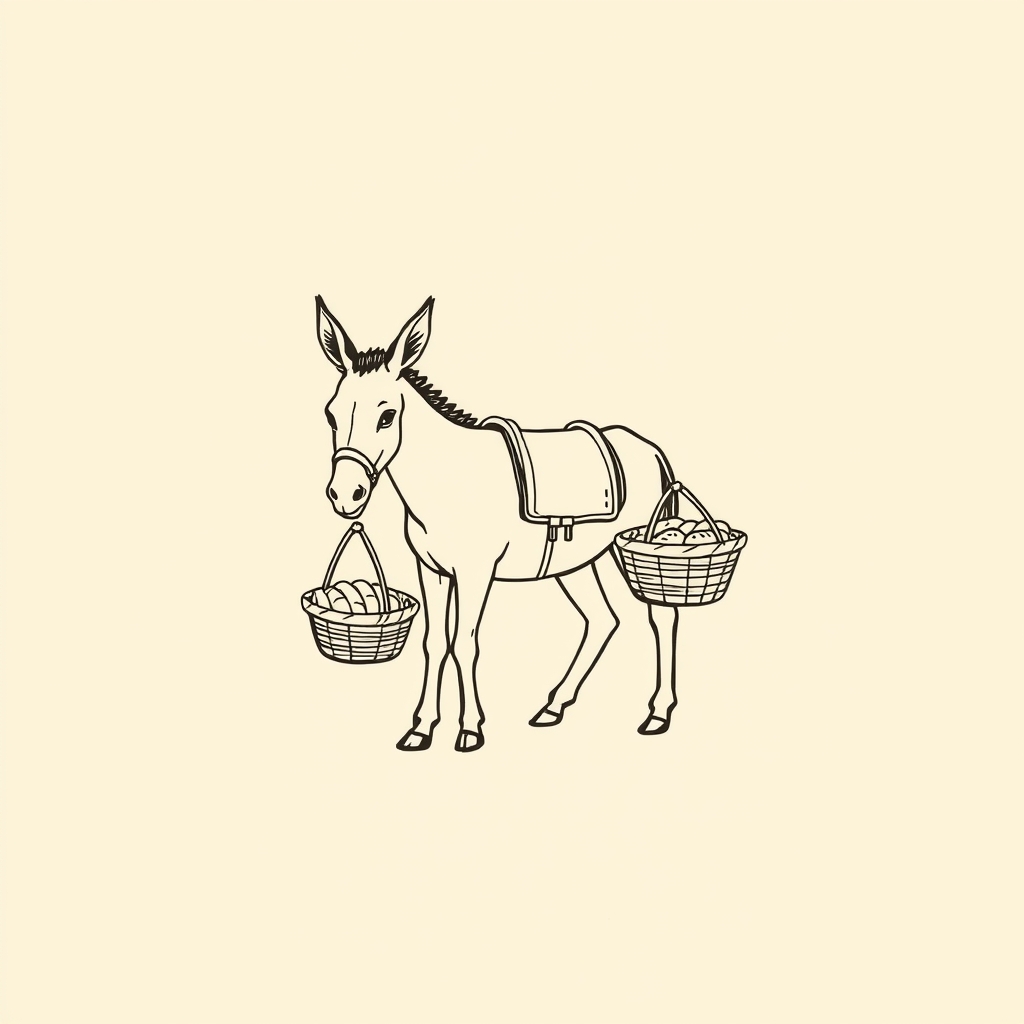
Aubert died around 669. He is traditionally depicted with a donkey and became the patron saint of bakers.
No other remarkable event is found in the life of Saint Aubert before the day of his death, about which we have no details. It must have occurred around the year 669.
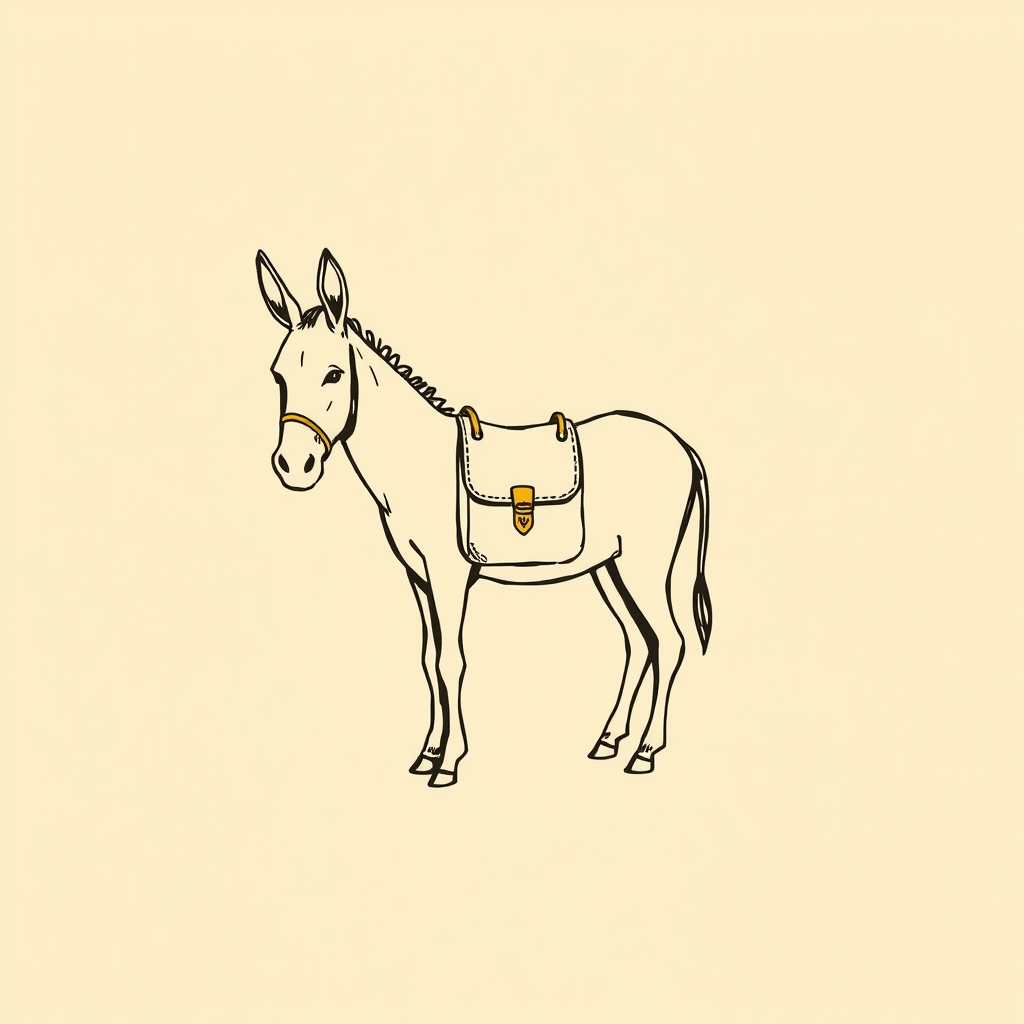
Saint Aubert is depicted with a donkey near him, loaded with two baskets filled with bread, and wearing a purse around its neck intended to receive the payment for the delivery. This is because Saint Aubert is honored, though we do not suspect why, as the patron saint of bakers in Belgium and the French Netherlands.
Translations and posthumous influence
His relics were moved to protect them from the Normans, then shared with Magdeburg under Emperor Otto the Great.
[APPENDIX: CULT AND RELICS.]
It is believed that the body of Saint Aubert was buried in the church of Saint-Pierre, then located outside the city, and now enclosed within its walls. He rested there until the time of Bodilon, his fourteenth successor. This prelate, seeing the horrible ravages that the Normans were inflicting on the country, and noting moreover with sorrow that the venerable Bishop Aubert was no longer receiving the homage he deserved, transported his body to his cathedral church of Sainte-Marie in the year 888, the third year of his episcopate.
When Emper or Otto the Gr eat, son of Henry the Fowler, ascended the imperial throne and sought to repair the evils of past wars, he founded several new bishoprics in Germany, among others that of Magdeburg, on the bor ders of the land of the Saxons and the Slavs. These peoples were then converting in great numbers to the voice of the missionaries who were preaching the Gospel there. In order to enrich these churches with the relics of Saints, whose virtues, recalled to the faithful, would make a salutary impression on their minds, he requested them from several prelates, and notably from the venerable Fulbert of Cambrai. Otto had wished to obtain, for his city of Magdeburg, which he particularly favored, the bodies of Saint Géry and Saint Aubert; but, despite all the favors that the emperor had granted to the city of Cambrai, Fulbert did not believe he could accede to his desires. To satisfy him in some measure, however, and to give him a proof of goodwill, the pontiff, after having sought the counsel of some prudent ecclesiastics, exhumed the body of Saint Thierry, one of his predecessors, and that of another Saint whose name is not known. He sent them to Emperor Otto the Great, adding a portion of the body of Saint Aubert, who thus became at once the defender and patron of the cities of Cambrai and Magdeburg.
Shortly after, Herluin thought to repair the church of Saint-Pierre, in which Saint Aubert had been buried; but death prevented him when he had barely begun. Gerard I completed his work: he consecrated this church on October 1, 1615, and replaced the body of Saint Aubert in the place of his burial.
Fulbert of Chartres, in concluding his Life of Saint Aubert, says that, in his time, miracles were performed through his intercession. Balderic reports the same thing, and Molanus adds that they were especially numerous in 1637, during a space of forty days.
Vies des Saints de Cambrai et d'Arras, by M. l'abbé Dectombea.
Iconography
Signs and attributes
Entities
Narrative network
The names, places, and concepts most present in the entry, weighted by centrality in the text.
The supernatural in their life
The miracles of Saint Aubert of Cambrai
Frequently asked questions about Saint Aubert of Cambrai
Who was Saint Aubert of Cambrai?
Bishop of Cambrai and Arras in the 7th century, Saint Aubert was an influential pastor close to King Dagobert I. He played a major role in the expansion of monasticism in Gallia Belgica, guiding great figures such as Saint Landelin, Saint Waltrude, and Saint Ghislain. He is traditionally honored as the patron saint of bakers.
What is Saint Aubert of Cambrai the patron saint of?
Patronage of Saint Aubert of Cambrai: bakers (Belgium and Northern France), Cambrai and Magdeburg.
How is Saint Aubert of Cambrai depicted in Christian art?
In iconography, Saint Aubert of Cambrai is recognizable by: donkey carrying two baskets of bread and purse around the donkey's neck.
What miracles are attributed to Saint Aubert of Cambrai?
2 miracles are attributed to this saint, notably: Vision / apparition and Sign / wonder.
Which saints were contemporaries of Saint Aubert of Cambrai?
Contemporaries include: Saint Priest (Prix), Saint Gregory the Great (Pope and Doctor of the Church), Saint Die (Didier, Deodat) and Saint Augustine of Canterbury.
When did Saint Aubert of Cambrai die?
Saint Aubert of Cambrai died around 700.
What are the other names of Saint Aubert of Cambrai?
Other forms of the name: Aubertus.
Annexes & related entities
Structured data for exploration: events, miracles, quotes, places, attributes, patronages, and important entities cited in the text.
Key Events
- Episcopal consecration on March 21, 633 by Leudegise
- Visit of King Dagobert I to Cambrai
- Baptism of Saint Landelin
- Consecration of the Abbey of Saint Ghislain with Saint Amand
- Translation of the relics of Saint Vaast to Arras
- Assisted Saint Eligius with the translation of Saint Fursey
Quotes
-
It is not for you to judge a man who is not known in this way, and you must not dwell on these thoughts before having tested whether they come from God
Words addressed to those who criticized Saint Ghislain