
Saint Lena or Natalena
The ninth daughter of the governor Frédélas of Pamiers in the 4th century, Natalène escaped infanticide thanks to a providential intervention. Having become a Christian, she refused the advances of a lieutenant and was eventually martyred by her own father. Legend recounts that she carried her severed head to the place of her burial.
Contemporaries

Figures and markers around the normalized period for this entry.
Guided reading
6 reading sections
SAINT LÈNE OR NATALÈNE, VIRGIN AND MARTYR
Birth and miraculous rescue
The ninth daughter of Governor Frédélas, Natalène is condemned to death by her disappointed father, but saved from the waters of the Ariège by a providential messenger.
IN THE DIOCESE OF PAM IERS (4th century). Natalène was the ninth child of Frédéla s, governor of the city that would later bear the name of Pamiers. At the birth of this child, her father flew into a great rage, for he had long desired to have a son, and Natalène was the ninth daughter he had obtained from his marriage; carried away by his anger, he ordered that this little creature be throw n into the Ariège. But God had great designs for her: three luminous crosses were seen to appear over her cradle; and, while preparations were being made to execute the father's cruel orders, a man, sent by Providence (an ancient tradition says it was Saint Martin), saved the child and ga ve her to a nurse, who raised her carefully in the Christian religion. Natalène became a very virtuous girl, and it is believed that she consecrated her life to God early on through a vow of virginity. Associated with other holy maidens, who practiced the evangelical counsels as she did, she took particular care of the poor and the sick in the city's hospital.
Life of virtue and service
Raised secretly in the Christian faith, she consecrated her virginity to God and devoted herself to the care of the poor and the sick in a hospital.
It was here that God caused her virtue to shine forth. Alydanus, lieutenant-general to Frédélas, having seen her several times in this house, admired her beauty and became enamored of her; from then on he employed all his efforts to make her fall into crime, but the Saint thwarted all his plans. Irritated, he denounced her to the governor as a zealous Christian; she was immediately thrown into a dungeon and dragged like a criminal through the streets of the city before being led bef ore the tribunal of Frédélas. When she appeared before him, the governor addressed this question to her: "From what family are you?" — "I am the daughter of the governor," she replied; "you are my father." Frédélas was as if struck by lightning at this answer. Natalène then told him her whole story from the day her father had vowed her to death. At this unexpected revelation, Frédélas, stifling the voice of nature within him, accused her of lying and said to her: "You wish to be my daughter, you say; you shall be so on the condition that you renounce your religion." — "That is what I will never do," replied Natalène, "for I wish to remain a Christian." She was immediately condemned to death, and t he executioners le d her to the banks of the Ariège, where they cut off her head. God glorified her martyrdom with a great miracle: scarcely had her head rolled to the ground than she took it in her hands, to the great astonishment of the spectators, descended along the shore, re-entered the city by the Sainte-Bélène gate, and walked to the Place du Camp, where she rendered her soul to God. It is believed that the fountain of Sainte-Natalène, which still flows near the Saint-Jean cemetery, gushed forth miraculously at the contact of her head. The Saint was buried in the very place she seemed to have chosen for her sepulcher; a modest oratory was later raised to her, whi ch today forms part of the church of Notre-Dame du Camp.
Trial and martyrdom
Denounced by Alydanus, she reveals her identity to her father during her trial before being beheaded for refusing to abjure her faith.
Her relics were later transferred to Blesle (today in the diocese of Saint-Flour). Her feast was celebrated there on November 5, and that of the invention of her relics on the 19th of the same month. In the diocese of Pamiers, her feast was formerly celebrated on November 10; today it is observed on the 12th of that month.
Cephalophory and burial
After her beheading, the saint carries her head to the Place du Camp; a miraculous fountain springs up in her path.
Pamiers possesses two bones of the Saint, while Blesle lost everything during the Revolution. It is to Saint Natalena in large part that Pamiers owes the beautiful title of holy city, which was once given to it. Saint Natalena and Sai nt Antoninus (September 2) are the two great protectors of Pamiers; this is why, no doubt, it was believed among the people that they were siblings.
Cult and relics
Her relics are shared between Pamiers and Blesle, making her a major protector of the city of Pamiers alongside Saint Antonin.
We owe this notice to the extreme kindness of Father Antoine Ricard of Marseille.
Sources
The biographical notice is attributed to the research of Abbé Antoine Ricard of Marseille.
We owe this notice to the extreme kindness of Abbé Antoine Ricard of Marseille.
Iconography
Signs and attributes


Entities
Narrative network
The names, places, and concepts most present in the entry, weighted by centrality in the text.
The supernatural in their life
The miracles of Saint Lena or Natalena
Frequently asked questions about Saint Lena or Natalena
Who was Saint Lena or Natalena?
The ninth daughter of the governor Frédélas of Pamiers in the 4th century, Natalène escaped infanticide thanks to a providential intervention. Having become a Christian, she refused the advances of a lieutenant and was eventually martyred by her own father. Legend recounts that she carried her severed head to the place of her burial.
What is Saint Lena or Natalena the patron saint of?
Patronage of Saint Lena or Natalena: Pamiers.
How is Saint Lena or Natalena depicted in Christian art?
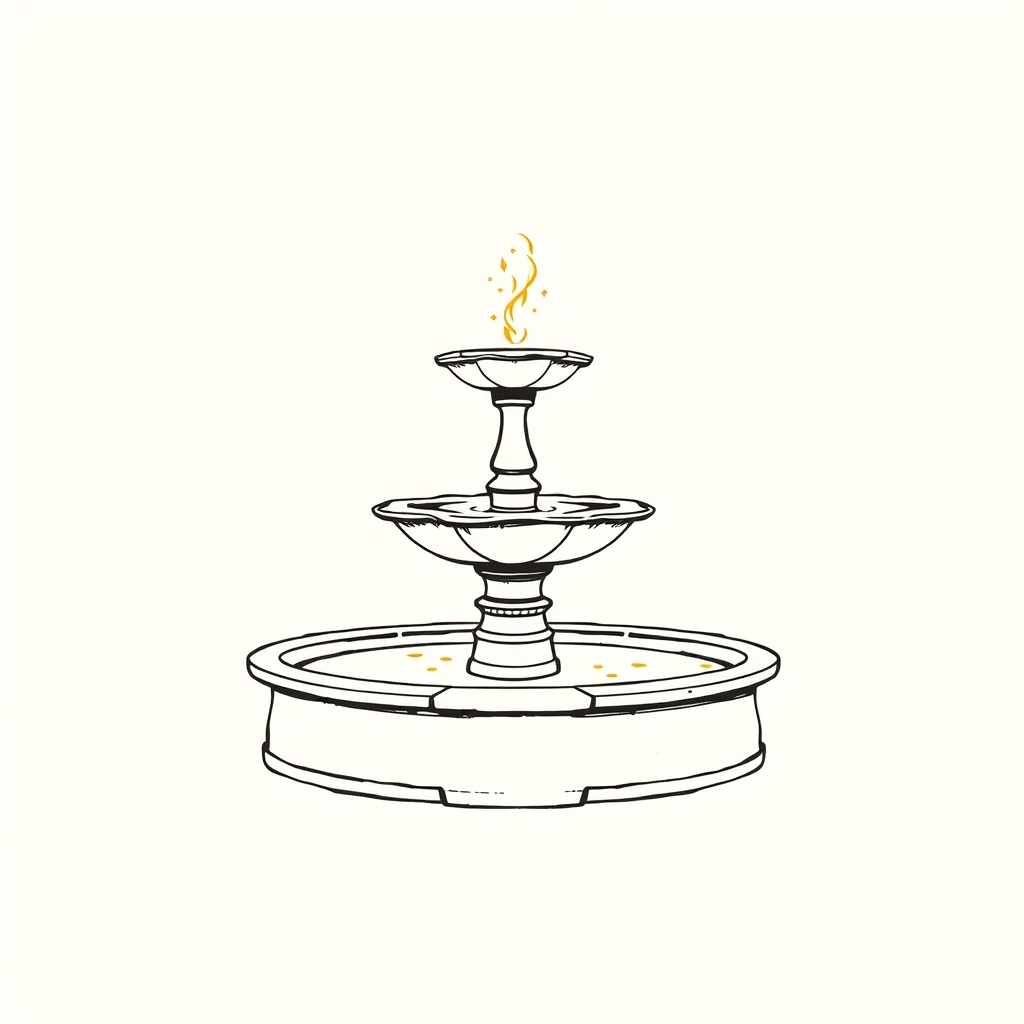
In iconography, Saint Lena or Natalena is recognizable by: head carried in hands, three luminous crosses and fountain.
How did Saint Lena or Natalena die?
Saint Lena or Natalena suffered martyrdom for the Christian faith (4th century).
What miracles are attributed to Saint Lena or Natalena?
3 miracles are attributed to this saint, notably: Vision / apparition, Sign / wonder and Mastery of the elements.
Which saints were contemporaries of Saint Lena or Natalena?
Contemporaries include: Saint Blaise, Saint Hilary of Poitiers, Saint Basil the Great (Archbishop of Caesarea) and Saint Baudilus.
What are the other names of Saint Lena or Natalena?
Other forms of the name: Lène and Bélène.
Who are the relatives of Saint Lena or Natalena?
Relatives of Saint Lena or Natalena: Frédélas (father) and Saint Antonin (brother (according to popular tradition)).
Annexes & related entities
Structured data for exploration: events, miracles, quotes, places, attributes, patronages, and important entities cited in the text.
Key Events
- Condemned by her father to be thrown into the Ariège river at birth
- Saved by a providential man (identified as Saint Martin)
- Consecration to God and service to the poor at the Pamiers hospital
- Denounced by Alydanus after refusing his advances
- Dramatic recognition before her father Frédélas during her trial
- Beheading on the banks of the Ariège
- Cephalophoric walk to the Place du Camp
Quotes
-
I am the governor's daughter; you are my father.
The saint's response to Frédélas