
A young soldier of the Marmarite legion in the 4th century, Theodore was martyred at Amasea for his Christian faith and for setting fire to a temple of Cybele. After surviving hunger through an angelic visitation, he died burned at the stake in 304. His cult, very famous in the East, spread to the West after the Crusades.
Contemporaries

Figures and markers around the normalized period for this entry.
Guided reading
7 reading sections
SAINT THEODORE TIRO, OR THE RECRUIT,
Introduction and context
Theodore, nicknamed Tiro or the Amasean, is a soldier of the Marmarite legion garrisoned in Amasea, where he openly affirms his Christian faith.
This Martyr is one of the most famous in all the East, and the Greeks have given him so much praise and built so many churches in his honor that it is fitting that we make known the greatness of his merit. He is usually called Tiro, which means "new soldier," to distinguish him from another Theodore, an old soldier, whose Acts we provided on February 7th. He is also called the Amasean, because of the c ity of Amasea (today Amasya, a city in Asiatic Turkey, in the pashalik of Sivas), where he endured martyrdom. As he was part of the Marmarite legion, he was sent to ga rrison in that city. The persecution against Christians there was very great, and, as he did not hide his religion at all, and on the contrary freely declared himself a servant of Jesus Christ, he was soon seized and presented to his captain. This barbarian put various questions to him, to which the Saint always replied with marvelous wisdom and vigor. It was clearly seen by this that he was hardly disposed to change his resolution. Nevertheless, because he was young, brave, well-built, and of a very pleasant demeanor, he was only threatened and left at liberty.
Burning of the temple and arrest
To manifest his zeal, Theodore set fire to a temple dedicated to Cybele. He was arrested by the judge Publius and condemned to die of hunger.
Theodore used this advantage to strengthen the other confessors and to animate them for martyrdom; and, wishing to signal his zeal and the hatred he bore toward idolatry through some action that would cast trouble and confusion among the pagans, he set fire to a temple dedicated to Cybele, whom these poor blind people called the Mother of the gods. He did not hide himself for this, nor did he deny his action; but, having been arrested, he frankly confessed that he was the author of this fire, and that he had done it to prevent the sacrileges that were committed every day in this place of abomination. The judge of the place, named Publ ius, to ok cognizance of the fact, and, being unable to persuade Theodore to condemn this attack, to express regret for it, and to make amends by adoring the divinities of the empire, he had him whipped very cruelly and then locked in a dungeon, with orders to give him nothing to eat, but to let him die of hunger.
Miraculous visions in prison
While imprisoned, the saint receives a visit from Christ and the angels, which terrifies his guards but does not convert his judges.
At night, Our Lord visited him, consoled him, and assured him that He would feed him Himself, without him having any need for corruptible food. This visit gave him such joy that he began to sing the praises of his sovereign Lord; and, at that very moment, the angels appeared in his prison, dressed in white robes to sing hymns of joy with him. The jailers and the guards themselves saw this spectacle. Publius, who had condemned him, saw it too; but neither the one nor the other converted; they only gave him an ounce of bread and a vessel of water every day, more to prolong his martyrdom than to prevent his death; but the Saint, to whom Our Lord had promised to be his provider Himself, refused these offerings.
Tortures and martyrdom
After refusing to renounce his faith despite the tortures, Theodore is condemned to be burned alive and dies in the flames.
He was therefore taken from the dungeon, great promises were made to him, and he was strongly urged to condescend to the wishes of the emperors; he was even told that if he would only feign the slightest submission, they would be satisfied, and would then let him live in freedom. He generously mocked all these impious proposals, and protested that they would never draw from him a single word or a single gesture against the fidelity he owed to his sovereign Lord. This response caused him to be whipped and his whole body to be torn with iron hooks; after which, to weary his patience, they burned his sides with burning torches. Finally, Publius, no longer able to endure the praises he gave to Jesus Christ in the greatest rigor of his torments, condemned him to be burned alive. The executioners pulled wood from the public baths that were in the vicinity, and, having bound the generous Confessor of the faith, they lit a great fire around him. Then Theodore armed himself with the sign of the cross, and, full of faith, hope, and pure love for his God, he rendered his beautiful soul to Him, laden with merits and triumphs. The Christians saw him ascend to heaven like a ray of fire and light.
Burial and hagiographical confusion
Eusebia transports his body to Euchaita. History notes a frequent confusion with another Saint Theodore, known as the General.
A very pious woman, named Euse bia, ha ving obtained the body of the holy Martyr, embalmed it, wrapped it in a very white shroud, and carried it to Euch aita, an episcopal city dependent on the metropolis of Amasea, where she buried it in her own house. This is also the pla ce where Saint Theodore the General was buried: which is why, according to the r emark of Cardinal Baronius, one often confuses the two, and attributes to the one of the month of February what belongs to the one of the month of November. It is especially since the Crusades that his cult has spread in the West.
Iconography and patronage
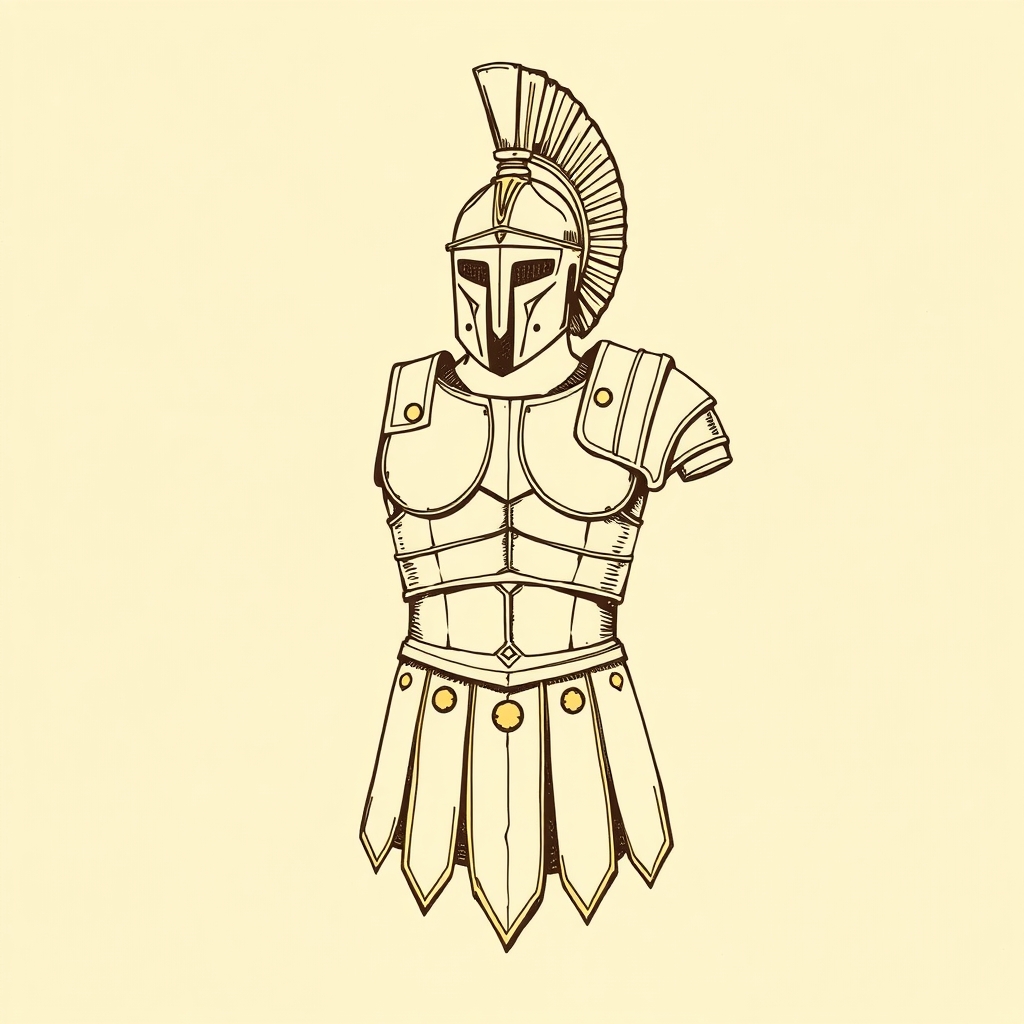
The saint is depicted as a soldier or with a torch. He is the patron saint of Brindisi and is invoked against storms.
He is depicted: 1° in the armor of Diocletian's soldiers: a stained-glass window in Chartres Cathedral reproduces this characteristic; 2° burned alive by order of the persecutors, to punish him for having set fire to a temple of idols; 3° mounted on a white horse; 4° crowned with thorns: it is said that he endured this torture before that of the fire; 5° holding a leaded whip in his hand, because it is said he underwent this torture, although he only expired in the flames; 6° with a torch in his hand, because he set fire to a pagan temple.
He is the pa tron sa int of Brindisi and Coulang es-les-Nevers (Nièvre). He is invoked against storms.
Bibliographic sources
The account is based on the works of Father Giry and Father Cahier.
Fat her Giry supplemented with the Characteristics of the Saints by Father Cahier.
Iconography
Signs and attributes





Entities
Narrative network
The names, places, and concepts most present in the entry, weighted by centrality in the text.
The supernatural in their life
The miracles of Saint Theodore Tiro (the Recruit)
Frequently asked questions about Saint Theodore Tiro (the Recruit)
Who was Saint Theodore Tiro (the Recruit)?
A young soldier of the Marmarite legion in the 4th century, Theodore was martyred at Amasea for his Christian faith and for setting fire to a temple of Cybele. After surviving hunger through an angelic visitation, he died burned at the stake in 304. His cult, very famous in the East, spread to the West after the Crusades.
What is Saint Theodore Tiro (the Recruit) the patron saint of?
Patronage of Saint Theodore Tiro (the Recruit): Brindisi and Coulanges-les-Nevers.
What is Saint Theodore Tiro (the Recruit) invoked for?
Saint Theodore Tiro (the Recruit) is invoked for: protection against thunderstorms.
How is Saint Theodore Tiro (the Recruit) depicted in Christian art?
In iconography, Saint Theodore Tiro (the Recruit) is recognizable by: Roman soldier armor, pyre, white horse, crown of thorns, leaded whip and torch.
How did Saint Theodore Tiro (the Recruit) die?
Saint Theodore Tiro (the Recruit) suffered martyrdom for the Christian faith (4th century).
What miracles are attributed to Saint Theodore Tiro (the Recruit)?
3 miracles are attributed to this saint, notably: Vision / apparition and Multiplication / provision.
Which saints were contemporaries of Saint Theodore Tiro (the Recruit)?
Contemporaries include: Saint Blaise, Saint Hilary of Poitiers, Saint Basil the Great (Archbishop of Caesarea) and Saint Baudilus.
What are the other names of Saint Theodore Tiro (the Recruit)?
Other forms of the name: Le Conscrit, Tiro and L'Amaséen.
Annexes & related entities
Structured data for exploration: events, miracles, quotes, places, attributes, patronages, and important entities cited in the text.
Key Events
- Incorporation into the Marmarite legion
- Garrisoned at Amasea and public profession of faith
- Burning of the Temple of Cybele
- Imprisonment and heavenly vision
- Torture by iron hooks and torches
- Martyrdom by fire
Quotes
-
Tiro (new recruit)
etymology cited in the text