
Saint Germain of Montfort
RELIGIOUS OF THE ORDER OF SAINT BENEDICT, IN THE DIOCESE OF ANNECY
Born in Belgium in the 10th century, Germain was the tutor of Saint Bernard of Menthon before becoming a Benedictine monk at Savigny and then at Talloires. He spent the last forty years of his life as a hermit in a cave overlooking Lake Annecy. His relics, preserved during the French Revolution, are the object of great devotion in Savoy.
Contemporaries

Figures and markers around the normalized period for this entry.
Guided reading
7 reading sections
SAINT GERMAIN OF MONTFORT,
RELIGIOUS OF THE ORDER OF SAINT BENEDICT, IN THE DIOCESE OF ANNECY
Origins and youth in Belgium
Germain was born at the beginning of the 10th century in Montfort, near Malines, into a pious and wealthy family. From his childhood, he manifested an early devotion, serving the Bishop of Malines and practicing charity towards the poor.
Saint Germain was born in Belgium, in a small town in the vicinity of Malines called Montfort, to a family as distinguished by the brilliance of its piety as by the importance of its fortune. The names of his parents have not come down to us; it is only known that he had an only brother named Rodolphe. We do not know the precise date of his birth; but documents worthy of belief trace it back to the beginning of the 10th century, around the year 906.
Favored from the first years of his life with the rarest blessings and having received from heaven, to shape his youth, virtuous and zealous parents whose every care was to form his young heart to the love of God and the practice of Christian virtues, and whose examples and lessons continually led him toward the good; the young Germain made rapid progress in the ways of salvation, and he gave, from his most tender childhood, unequivocal signs of his future holiness.
Thus we read in a legend taken from the archives of the monastery of Talloires, as in several lives of Saint Bernard of Menthon, of whom he was the tutor, that having barely reach ed the age of reason, he already had taste and attraction only for prayer, the glory of God, and the sanctification of his soul; that he carefully avoided games and other amusements of young age, and that, while his companions thought only of and occupied themselves with the pleasures and diversions of childhood, he often moved away from the paternal home to go and pour out the sentiments and affections of his heart before his God in the churches, where he sometimes spent entire days in adoration and prayer.
Already then he loved to speak only of the things of God, and his most ordinary conversation was in heaven and for the things of heaven. He also had a very great respect for the practices and ceremonies of the Church; and, as soon as he had emerged from early childhood, he often went to Malines to have the happiness of serving the bishop during the holy sacrifice of the Mass. One can better imagine than describe the sentiments of devotion and fervor that animated this soul full of faith in this holy action, and how, by the fervor he brought to serving at the altar, he prepared himself from then on, and perhaps without yet foreseeing it, to ascend the altar himself one day with that devotion which earned him, subsequently, so many favors and graces.
His virtuous parents, who desired above all the glory of God and the salvation of their son, were very far from opposing such holy dispositions; on the contrary, they blessed the Lord for his early virtues and employed all their care to strengthen and increase them. The Bishop of Malines, for his part, touched by the modesty, the recollection, and the other qualities of this young child whom he often saw at church and who served him Mass with a piety so unusual for that age, had taken a particular affection for him and often gave him small gifts to encourage him and show him his esteem. But little Germain, who undoubtedly appreciated the full value of these gifts from a bishop, nevertheless kept nothing for himself; he knew that one cannot love God without also loving one's neighbor, and he immediately hastened to give them to the poor, just as he did with what he received from the hand of his parents. It is thus that he already united in himself, to a very perfect degree, the two fundamental virtues of Christianity, those upon which all others depend and which contain the whole law: the love of God and the love of neighbor.
Studies in Paris and the education of Saint Bernard
After brilliant studies in Paris, Germain became a priest and was chosen as tutor to the young Bernard of Menthon in Savoy. He accompanied his pupil to the University of Paris to complete his education while protecting his virtue.
Having reached a somewhat more advanced age, and probably after having learned the first elements of the sciences in his father's house, Germain was sent to Paris with Rodolphe, his only brother, where he remained for several years, during which he pursued distinguished studies and became the object of admiration for all his fellow students. In the midst of the disorders and scandals that this great capital always offered to youth and which so often caused shameful shipwrecks to even the most solid virtue, our young student knew how to protect himself against all dangers through prayer, vigilance, the avoidance of occasions, the reading of good books, the meditation of our eternal destinies, the mortification of the senses, and fasting; he made progress there as rapid in the sanctification of his soul as in the acquisition of human sciences, and finished his courses as praised for his rare piety as he was admired for his talents and his knowledge. From his entry into this famous school, one had especially noticed in him a great contempt for creatures, a complete self-abnegation, and an ardent zeal for the good of the Church, which, according to the Fathers of the Church, is the most certain mark of predestination, as well as a tender devotion to the most holy Virgin; a devotion that he maintained all his life and which later earned him several apparitions of this august Virgin.
After having finished his studies with such brilliant success and such exemplary piety, and having been invested with the sacred character of the priesthood, Germain, who had no other views than to follow in everything the will of his God, prayed to Him earnestly to make known His designs for him. He was heard, and here is how: in one of the oldest and most illustrious families of Savoy, at the castle of Menthon, situated on a pleasant hillside on the eastern shore of Lake Annecy, the Lord had granted a son to virtuou s parents. It was Bernard of Menthon. From his childhood, he showed the happiest dispositions for the sciences and especially for the virtues. He had then reached the age of seven, and the baron, his father, thought of giving him a tutor.
But, as the interests of piety and religion were always placed in the first rank in this illustrious house of Menthon, where it has always been believed that religion is the first foundation of true nobility, Richard wanted above all a man who excelled in the practice of Christian virtues and whose examples and lessons would lead his son to good at the same time that he would instruct him in human sciences; for he knew that nothing is more pernicious to youth than the examples of bad teachers, and that, therefore, parents should have nothing more at heart than to choose good masters to direct the education of their children. These motives and a secret design of God made him ask for our Germain, a man as rare for the perfection of his virtues as for that of his talents; a priest as well-versed in the sciences of the earth as in those of heaven. Germain looked upon the offer made to him as a grace coming from heaven and a mark of the will of God, and, without hesitation, he hastened to arrive at the castle to give himself entirely to the noble function that Providence was entrusting to him. He was then about twenty-five years old. The sole desire to obey God, to procure His glory, to contribute to the sanctification of the young Bernard, and to work for his own salvation, had led Germain to the castle of Menthon. It is to all this that he will apply himself without respite.
As he had meditated many times on these words of the Holy Spirit: "God resists the proud; but He gives His abundant grace to the humble," his first care, as soon as he arrived, was to strengthen himself in this precious virtue, humility. And, to protect himself against the lures of self-love and pride to which he saw himself exposed in the midst of the honors and abundance with which he was surrounded, he did here what he had already done in his father's house and during all his courses in Paris: he prayed with assiduity, he fasted with rigor, he devoted himself with fervor to the exercises of Christian piety, and above all, he worked with zeal to form the mind and heart of his young pupil. From his entry into the castle, he considered the young Bernard as a precious plant that he had a mission from heaven to cultivate, as an innocent heart that he must lead to God and form to piety even more than to science.
Under the wise guidance of Germain, his holy tutor, the young Bernard had made such rapid progress in the sciences at Menthon that, according to the historians of his life, he arrived in a short time at a degree of instruction where others only arrive after long years. Thus his parents, seeing that he could no longer acquire anything in his province, resolved to send him early to Paris to finish making him such as they desired.
They would not, however, forget what religion prescribed to them regarding the soul of their son; this is why they again appointed our virtuous Germain to the guardianship of his innocence and begged him to be willing to accompany him to Paris and to continue there to cultivate this rich fund of nature and grace, as he had done with such success in their castle. Germain promised it with happiness. They both left for this great city, accompanied by a governor and two servants. Saint Bernard was then fourteen years old, and Saint Germain, about thirty-two. Roland Viot, historian and provost of the Great Saint Bernard, around the year 1614, assures that they entered the famous university built a hundred years earlier by Charlemagne. It is therefore the same university where Saint Germain had already made, a few years earlier, such admirable progress in the sciences and in the virtues.
During the stay they made there, Germain did not lose sight of his holy pupil for a moment; in everything and everywhere he showed himself truly the guardian angel of this child of blessing. Through his care, his exhortations, and his advice, Bernard soon distinguished himself in the study of philosophy, law, and theology, but he made himself even more remarkable for his horror of sin and his ardor for his own sanctification. At the sight of the disorders and the frightful ravages that vice caused among this prodigious gathering of students attracted from all parts to this school already so famous, his pure and innocent heart was often alarmed and revolted; but Germain was always there to put his soul out of reach of the seductions. He protected him against all dangers through prayer, the meditation of holy things, the avoidance of occasions, and the frequentation of the Sacraments; he did not let him lose sight of the thought of the presence of God, and often, during the day, he raised his soul above the things of the earth through holy considerations, all ablaze with divine love.
Entry into the Order of Saint Benedict
Germain and his brother Rodolphe renounce their possessions to enter the monastery of Savigny. Germain is subsequently sent to Talloires to restore and lead a Benedictine community there.
Bernard and Germain having been recalled to the castle of Menthon, Germain stayed there for a short time, after which he went immediat ely to Ta lloires, half a league away, where some cenobites were already living un der the Rule of Saint Benedict. He was accompanied there, says the author of the *Héros des Alpes*, by a good number of the young baron's officers. Now, one may well presume that it was the examples and exhortations of Germain that had determined them to this more perfect life; for the zeal of the Saints for the glory of God and the perfection of souls never tires. Having heard the regularity and celebrity of the abbot and monks of Savigny, in th e dioce se of Lyon, upon which the community of Talloires depended, praised and lauded, he felt animated by an ardent desire to enter this holy house, where the Rule of Saint Benedict was practiced with all the fervor of the early days, and where each religious was, so to speak, a Saint. It is thus that the Saints always aspire to that which is most perfect and most apt to make them advance by great strides on the road of perfection and salvation.
Nevertheless, as he no longer wished to occupy himself with anything but God and the things of heaven, he took care, before putting his project into execution, to rid himself of everything that could still draw his mind and thoughts toward the earth. This is why, applying to himself these words of the divine Master: "If you wish to be perfect, sell what you have, give the price to the poor, and follow me," he went immediately to his brother Rodolphe, to whom he shared his design. Rodolphe, himself penetrated with great sentiments of piety and a great zeal for the glory of God and his own sanctification, determined with joy to imitate him. These two brothers therefore sold everything they possessed and gave the price to the poor.
After this sublime act of charity and disinterestedness, Germain and his brother left at once for the monastery of Savigny. They were received there by Abbot Joire, a man equally remarkable for his learning and his virtues. It was there that they made their vows and committed themselves to follow irrevocably the Rule of Saint Benedict in all its rigor.
Saint Germain had been for some time in this illustrious monastery of Savigny, which he edified by his virtues, when his superiors, who had noticed in him as much capacity for affairs as zeal for the glory of God and his own sanctification, sent him back to Talloires to strengthen the small community of Benedictines that existed there under the dependence of Savigny, and which had been founded, it is believed, in the time of Charlemagne. They associated his brother Rodolphe and some other cenobites with him to help him in this enterprise, and soon they had built a monastery there with a church and founded everything necessary for the maintenance of the religious.
But the external and, so to speak, material cares that Germain was forced to give to the construction of these buildings did not hinder the spiritual advancement of his soul; for not only did he bring and offer to God all his pains and labors, but he also followed all the exercises of the community with a fervor worthy of the ancient cenobites. His fidelity and his ever-growing ardor astonished and singularly edified even the most regular and holy religious of that house. Everyone strove in emulation to imitate him and to model themselves, after his examples, on the spirit of the holy patriarch of Monte Cassino; for at that time one did not yet have to lament that disastrous laxity which was introduced later into some of the members of this monastery of Talloires.
Pilgrimage to the Holy Land and Priorate
After a three-year pilgrimage to Jerusalem from which he brought back relics, Germain was elected prior of Talloires. He led the community with great ascetic rigor and profound humility.
Having thus fully responded to the designs that had been proposed in sending him to Talloires, Germain, who believed he had never done enough for the glory of God and his own salvation, returned to Savigny and obtained from the superior general permission to visit the principal places of devotion and especially the Holy Land.
However, to procure for them more merit and glory, the Lord sometimes tests His Saints and allows that, in the very midst of their most excellent exercises, they be crossed and overwhelmed by grave tribulations. This is what the legends give us cause to remark again in our glorious Saint Germain; for they add that, during his pious pilgrimages, he had much to suffer.
After about three years, Germain, whom his pilgrimages and long sufferings had filled more and more with the spirit of God and inflamed with the desire for heaven, returned to Talloires, bringing with him from Jerusalem several precious relics which h e deposit ed in the monastery church, and which were preserved there until the French Revolution, the time when they were burned, at least in great number, under the chestnut trees in front of the convent.
It is not known for sure whether it was before or after this pilgrimage to the Holy Land that Germain was elected prior of the community of Talloires, which he had already so greatly edified as a simple religious; but we know, from the inscription in the grotto, that he was already so in the year 989, and nothing prevents us from believing that he was so earlier. Obedience to his superiors and the fear of resisting the will of God meant that, despite his great humility and his extreme aversion to honors, he nevertheless submitted to the dignity to which he was called. This is a new career for our Saint, and a new theater for his zeal and his virtues.
Full of distrust of himself and confidence in God, Saint Germain knew that all his strength was in the Lord, and that, without His help, it would be impossible for him to lead well the community at the head of which divine Providence had just placed him. This is why his greatest care, as soon as he was named prior, and during all the rest of his life, was to have recourse to heaven, through fervent prayers, in order to obtain for the religious he was to lead, and of whom he became in some sort the father, the spirit of docility, of obedience, and of all virtues; and for himself, the lights, the prudence, the firmness, and the other qualities necessary in a good superior. Then, knowing that prayer alone does not suffice for those who are charged with leading others, but that lessons must also be joined to the example of a holy and perfectly regular life, he strove to become more and more an accomplished model of all virtues and a living image of religious perfection.
By his examples, even more than by his precepts, he did not cease to excite each of his religious to love his cell, to flee idleness, to keep silence, to strengthen himself in the love of work, of fasting, of vigils, of prayer, and of continuous meditation; to practice fraternal charity and reciprocal support; to love holy poverty and detachment from earthly things; to possess nothing of one's own, following the prescriptions of the Rule; to carry his spirit and his heart continually toward God and to do nothing except with the intention of pleasing Him; in a word, in everything and everywhere, he showed himself a very gentle father, a very perfect master, and a very zealous superior.
Following such impulses, one soon saw the convent of Talloires, where the Rule, it is true, had not yet been despised, take on a completely new ardor for piety, give the world the example of the most austere virtues, and advance with astonishing rapidity in the paths of the highest perfection. There was everywhere the most perfect order, the most complete regularity. Each of the religious worked there in emulation for his spiritual advancement; everything there exhaled the good odor of the most admirable virtues.
Retreat in the Cave of Talloires
Germain retired for forty years to an isolated cave overlooking Lake Annecy to devote himself to contemplation. Several miracles, including imprints carved into the stone, are associated with this period of his life.
About a quarter of a league above Talloires, in the rock that serves as the base for the high mountain of La Tournette and over a deep precipice, lies a solitary cave carved by the hand of time. It is located a few steps below the rectory and the church of Saint-Germain; it is enclosed on all sides by the rock into which it is set, except to the south where one sees a wall of recent date; but one may suppose that a fallen block of the same rock once completed its enclosure. In this cave, the most complete silence reigns; nothing external can distract even the most distracted man. It is truly a place for meditation and prayer. Even before arriving there, everything prepares the mind and heart for great thoughts and holy affections. The path that leads to it, the brushwood it traverses, the roughness of the rock it skirts and which sometimes hangs threateningly overhead; the abyss at one's feet, the sound of the water falling to the bottom in a foaming cascade; the ravishing view of the beautiful Lake Annecy, the plains and hillsides that neighbor it; the aspect of this crowd of mountains as picturesque as they are varied that bound its basin; all this forms something at once imposing and grandiose, which raises the spectator above the earth, forces him in a way to adore and love the author and creator of so many wonders, and to ask him with fervor for the help of his all-powerful arm.
As soon as Saint Germain had seen this place so suitable for the recollection of the spirit and the holy ardors of the heart, he resolved to end his days there. He knew, moreover, that solitude is, as Saint Gregory of Nazianzus says, the mother of the soul's divine transports toward heaven, or, as Saint John Chrysostom speaks, the foster sister of the most excellent virtues. This is why, according to what the legends teach us, he asked for and obtained permission to retire there, in order to occupy himself more particularly with his salvation, and to better prepare himself there for the great journey of his eternity.
It was around the year 960 that this new Paul or Anthony began to come and hide in the flanks of the rock suspended over the abyss of which we have just spoken. The legends tell us that he remained there for forty years, until the moment of his death.
He would climb up there every morning at the break of day, after having attended the night office and celebrated the Holy Mass at the convent of Talloires. Then he would remain there the entire day, buried, so to speak, alive in this hollow, separated from all human commerce and having to deal only with God alone. There, nothing earthly, nothing human occupied his mind. His entire life, from morning until evening, was spent in prayer, orison, meditation on eternal virtues, the contemplation of divine things, and the exercises of the most austere penance. He fasted there every day with rigor and took only a little food in the evening, at sunset, the time at which he would descend back to Talloires to attend the night office and climb back up the next day, after having fortified himself with the bread of angels at the holy altar.
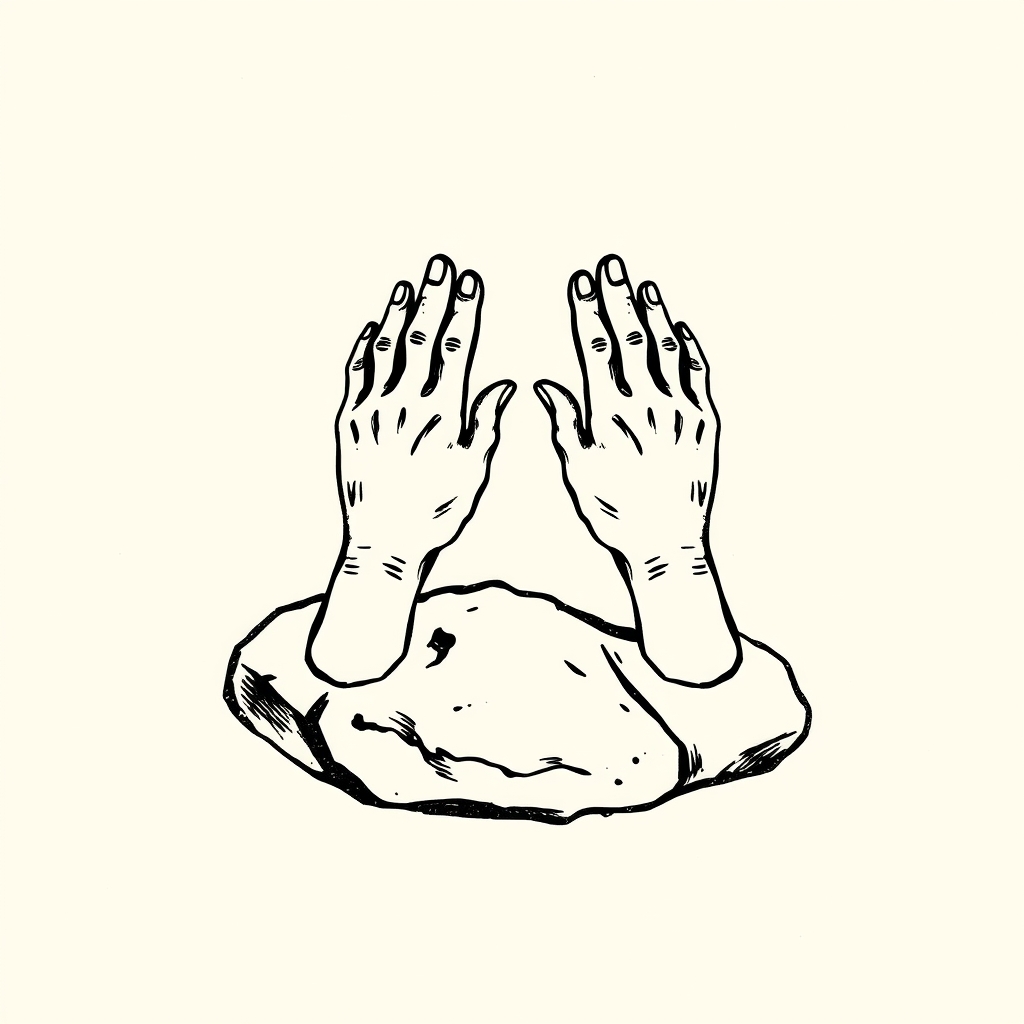
A universal tradition in the region recounts that, having arrived a little below the path that leads to the cave, and a few steps above the place named the Monk's Leap, our Saint would kneel every day on a flat stone, or kind of rock, placed next to and level with the path, to make a holy preparation for his day's exercises. It is added that, to better fix his thoughts, he would trace on the stone with his finger a small cross that he would kiss at the beginning and at the end of his prayer, and that the cross as well as the imprint of his knees and hands remained there and still remain engraved. The hands are closed and the joints of the fingers quite distinct.
To perpetuate the memory of this prodigy, a small oratory had been built on the very spot, which unfortunately is falling into ruin; and, although the stone has been exposed for a very long time, the vestiges of the cross, the knees, and the hands are still perfectly drawn there, and attract the veneration of a great number of the faithful.
After having finished his preparatory prayer at this spot, Saint Germain would enter his cave to devote himself there each day with more ardor to his holy exercises, and would not leave it until the evening, at sunset. One day, and this detail deserves to be cited because of the number and uniformity of the testimonies that report it, as well as the monuments that confirm it, one day, we say, some unhappy individuals, driven by motives unknown, resolved to prevent our Saint from going to his hermitage. They placed themselves for this purpose at the entrance of the path that leads to it, and stubbornly refused him passage. The man of God, who has placed all his trust in the Lord, is not disconcerted; but, without saying another word, he goes further, climbs onto the rock that forms the cave, says a prayer, advances to the edge of the abyss, and, inspired and supported by Him whom he serves, he lets himself fall and finds himself without any harm at the entrance of his retreat, despite the obstacles of his persecutors. The vestiges of his two feet have remained engraved and perfectly drawn on the stone, according to a very large number of people who have seen them, and who have especially admired the perfectly regular and distinct toes. But unfortunately, these vestiges were hidden not long ago, at the time when the small plateau above the cave was converted into a garden.
According to another tradition very widespread and almost universal in Talloires and the surroundings, we also learn that, being at the end of his life and hardly able to walk anymore, as a result of his mortifications and the weight of his years, he nevertheless attended the conventual evening office in Talloires exactly, and that often he was transported there and returned by miracle. It is added that, more than once, to be sure of it, people spied on him and actually saw him in his cave in the rock until the precise moment when the office was rung, and that at that instant he disappeared and was the first in the monastery church.
These traits certainly have nothing impossible about them; we cite them, however, not to try to make them a certainty, but only because of the large number of people truly worthy of belief who uniformly assure having heard them told many, many times by their parents, who also certified having learned them from their ancestors, and so on.
Spiritual direction and end of life
He provided spiritual direction to the parents of Bernard of Menthon before ending his days in a cell near his oratory. He died around the year 1000 after having visions of the Virgin and Saint Benedict.
While Germain was thus sanctifying himself in his retreat through the practice of the most admirable and heroic virtues, the Baron and Baroness of Menthon, who had not yet ceased to mourn their only son, found him again at the summit of Mont-Joux, today the Great Saint Bernard. The astonishing holiness of this beloved child had made such a strong impression on the hearts of the two noble elders that, upon their return, they reformed their entire household and wished to work only for heaven, and to think of nothing else but their eternity; too happy to have a Saint in their family, they strove only to imitate his virtues. To better succeed in this, they recalled from his solitude Germain, formerly their son's tutor; for they appreciated at that moment better than ever the high virtues of this holy priest, seeing those he had been able to inspire in their dear child. Then they begged him to be henceforth their confessor and director in the ways of salvation, and to consider them in the future only as souls seeking to go to heaven through his care and counsel.
Saint Germain, far from recalling what had happened in the past regarding himself, accepted this task with great pleasure; for he saw in it new Saints to form, new souls to lead to God. He therefore returned to their castle. Scarcely had he arrived when the divine fire that consumed him had already passed entirely into the hearts of his noble penitents; and from that moment, one saw in this ancient manor only the marks of the most perfect and eminent piety, so much so that one would have taken it for a monastery rather than a fortress.
After the death of the Baron and Baroness of Menthon, Germain returned to his dear solitude and used the legacy he had received to build a cell and an oratory or chapel, a few steps above his cave, in the very place where the presbytery and the parish church of Saint-Germain are currently located. From then on, he did not descend as often to Talloires due to his advanced age, and perhaps also to better separate himself from all commerce with men and have no other relations than with God alone; but he spent the night in his cell, and he celebrated the Holy Mass in the chapel he had just had built. During the day, he continued to withdraw into his cave, where he occupied himself solely with God and his eternity, which he saw approaching, and where he lived as if his soul were already in heaven and his body in the tomb.
He enjoyed there, in a way, the foretastes of the delights of paradise, and the legends assure us that he was favored there with several apparitions of the Most Holy Virgin, Saint Martin of Tours, and Saint Benedict, for whom he had a very great devotion all his life.
Finally, after having spent about forty years in this solitude, our holy anchorite, who was no longer made for the earth, fell asleep gently in the Lord, around the year 1000. It is certain that he died in his cell and not in the cave.
History of the relics and the cult
Venerated as early as 1014, his relics were translated by Saint Francis de Sales in 1621. Hidden during the French Revolution by the faithful, they were rediscovered and installed in the church of Talloires in the 19th century.
## CULT AND RELICS.
His body was buried in the chapel he had built on the rock, which from then on bore the name of the Priory or Hermitage of Saint-Germain. The precise location of his tomb is found approximately in the middle of the current church, a little more, however, on the eastern side, between the chapel of the Blessed Virgin and the pulpit.
Already, during his lifetime, the brilliance of his holiness had spread far and wide; but immediately after his death, God made his name so famous and his tomb so glorious through the various miracles that occurred there, that he was publicly venerated and canonized by the faithful as early as the year 1014. From then on, a crowd of pious pilgrims, coming from all lands, and seeking a remedy for their physical sufferings or their moral sorrows, have not ceased to flock to his tomb almost every day of the year, but especially on the Mondays of Easter and Pentecost, and on the day of the Commemoration of All Saints.
The grotto itself, which the man of God had sanctified for so long by his fervent prayers, his holy meditations, his burning conversations with God, in a word, by all the exercises of the highest and most heroic holiness, has remained no less famous than his tomb. God was also pleased to pour out His graces there from the beginning; and even today, there are few pilgrims to Saint-Germain who do not wish to go and pray in this venerated place. In the middle of this grotto is a small niche carved into the rock and formerly grilled; it now contains a small wooden statue in front of which a board has been placed as an altar. The piety of the faithful finds a way to embellish this poor niche and statue a little. There are garlands of moss, natural or artificial flowers, small vases of varying value, small embroidered cloths that cover the board; crowns placed on the head of the statue; rosaries placed on its arms, images arranged with art all around. There are even sometimes people who, in their simple but touching devotion, and without worrying about what will become of their offering, place coins on the arms or in the hands of the statue; God sees it; the Saint sees it; that is enough for them. It has never been heard that anything has been stolen from there.
As we have already said, the sacred bones of Saint Germain rested, until 1621, in a tomb placed in the middle of the chapel of the hermitage of Saint-Germain, where they were constantly in great veneration among the faithful, and where numerous miracles occurred. But on October 25, 1621, Saint Francis de Sales, unable to bear that such precious relics should remain hidden in the tomb an y longer, went to the h ermitage with Jean-François de Sales, Bishop of Châlons, his brother and coadjutor, performed their solemn translation, and exposed them to public veneration. The holy body was placed in a new and well-ornamented reliquary that was placed under the altar.
His tomb, although henceforth stripped of its precious bones, did not cease to be in great veneration. To preserve the memory of the place it had occupied, a kind of coffin (or *terre*, as the local people say) had been built above it, around which the devout pilgrims loved to pray. Many even detached some fragments with their knives, which they kept as precious relics. From time immemorial, the religious of Talloires had maintained a prior at the hermitage to serve the chapel and foster the devotion of the Christians; but from then on, he very often could no longer suffice for the prodigious influx of the faithful, and on several occasions of the year, it was necessary to add some of the Fathers of the abbey to assist him.
At the Revolution, the religious of Talloires, like all priests and nobles, were forced to emigrate. The chapel of Saint-Germain did not escape profanations and was even partially devastated. But God saved the holy relics from the fury of the men with sacrilegious and impious hands who dominated at that time, and who came several times to look for them in their asylum to defile and destroy them. The high altar in which they had been exposed until then had even been demolished. No one knew what had become of them; but the Lord, who watched over this holy deposit, knew how to discover it according to His designs.
One day, an inhabitant of Talloires, Nicolas Grillon, was working with some others to detach the cut stone from a window and a door. His work finished, he had the thought of going to pick at the wall behind the place of the high altar whi ch had already disappeared. Soon he perceived at the bottom of a cavity, which seemed made on purpose, something that he pulled out. It was a box or casket entirely varnished in black. Above were these words: *Osse beati Germani*: "Bones of Saint Germain". He opened the box, a little dust escaped from it; then he really saw human bones. Transported with joy, he closed this box with care, called his companions on whom he believed he could count; they took the box and carried it with much respect into the oven of the priory, from where it was removed shortly after by Nicolas Grillon and Louis Adam; they took it down secretly to Talloires, to the house of one of them, who kept it with care until 1826, the time when he handed it over to the parish priest of Talloires.
However, republican vandalism, while devastating the chapel of our Saint, moving his sacred remains, and dispersing the marks of the gratitude of the faithful, had been able neither to harm his credit nor to weaken the confidence that one had in him. Thus, the gathering of Christians continued to take place even when everything was demolished and one could barely find a few vestiges that recalled the memory of the man of God. Even then, one went to the ruined chapel; one prayed there with faith in the midst of the grass, brambles, and thorns that grew there. Peace being finally restored to the church, the faithful from all the surrounding areas demanded with loud cries that the relics of Saint Germain be again exposed to their veneration.
Mgr Claude-François de Thiollaz, after a wise delay and a host of precautions that prudence prescribed to him in such a circumstance, finally acceded to the wishes of so many fervent Christians. The authenticity of the relics having been recognized, the great bishop resolved to solemnly expose these holy remains to public veneration. That is why he had a beautiful chapel prepared and decorated at his own expense in the church of Talloires, opposite the chapel of the Rosary, and fixed the date for the ceremony of the translation for October 23 of the year 1831. In the midst of an extraordinary multitude of faithful from Annecy and the surroundings who had rushed to attend this religious festival, the relics were placed in a new reliquary and deposited in the chapel where they remained exposed to public veneration until October 29, 1838, the time at which they were carried back by Mgr Rey, Bishop of Annecy, to the old chapel of Saint-Germain, which had just been erected into a church.
The venerated remains of the Saint remained until 1857 in the state in which Mgr Rey had placed them. At that time, the church and the walls that surrounded it were repaired, and a third entirely new altar was built to contain the holy relics from then on. This altar is placed opposite that of the Rosary, at the place occupied until then by the reliquary. One sees there the precious remains of Saint Germain, in a wax body artistically worked, and dressed in the costume of the ancient Benedictines of Talloires.
Formerly, the feast of Saint Germain was celebrated at the monastery of Talloires on October 28. It is now transferred to the following day, October 29, the day on which it is celebrated in the parish of Saint-Germain with all the pomp of a first-class feast.
He is generally invoked for all sorts of needs, but more particularly for bodily pains and infirmities, and for all the illnesses of children.
Excerpt from the Life of Saint Germain, Benedictine religious, by Abbé Pinget. — Cf. Notre-Dame de Savoie, by Abbé Grobel.
Iconography
Signs and attributes

Entities
Narrative network
The names, places, and concepts most present in the entry, weighted by centrality in the text.
The supernatural in their life
The miracles of Saint Germain of Montfort
Frequently asked questions about Saint Germain of Montfort
Who was Saint Germain of Montfort?
Born in Belgium in the 10th century, Germain was the tutor of Saint Bernard of Menthon before becoming a Benedictine monk at Savigny and then at Talloires. He spent the last forty years of his life as a hermit in a cave overlooking Lake Annecy. His relics, preserved during the French Revolution, are the object of great devotion in Savoy.
What is Saint Germain of Montfort the patron saint of?
Patronage of Saint Germain of Montfort: Talloires and Saint-Germain (parish).
What is Saint Germain of Montfort invoked for?
Saint Germain of Montfort is invoked for: bodily pain, bodily infirmities and children's illnesses.
How is Saint Germain of Montfort depicted in Christian art?
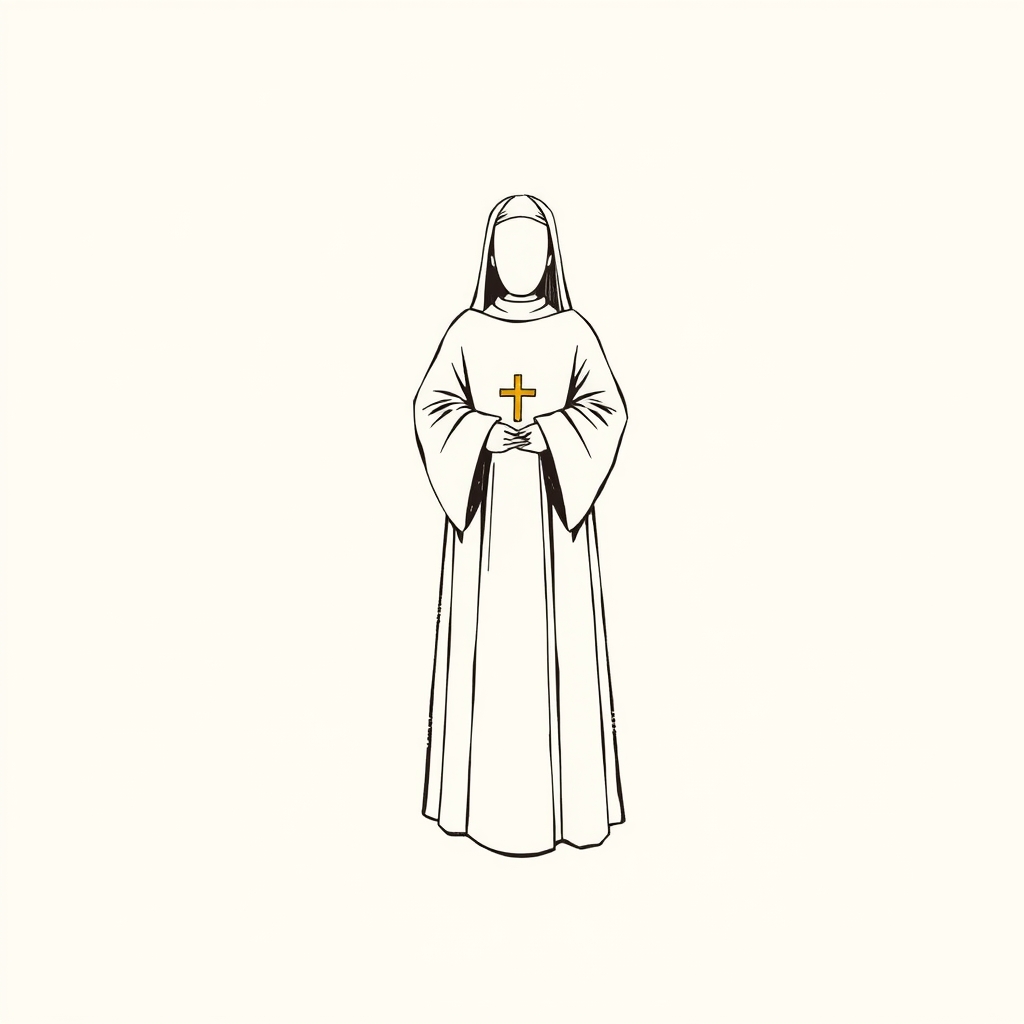
In iconography, Saint Germain of Montfort is recognizable by: Benedictine habit, cave and imprints of knees and hands on the rock.
What miracles are attributed to Saint Germain of Montfort?
4 miracles are attributed to this saint, notably: Sign / wonder, Levitation / bilocation and Vision / apparition.
Which saints were contemporaries of Saint Germain of Montfort?
Contemporaries include: Saint Bernard of Menthon (Apostle of the Alps), Saint Ansgar (Apostle of the North), Saint Stephen of Hungary and Saint Anselm of Canterbury.
When did Saint Germain of Montfort die?
Saint Germain of Montfort died around 1000.
What are the other names of Saint Germain of Montfort?
Other forms of the name: Germain de Montfort.
Who are the relatives of Saint Germain of Montfort?
Relatives of Saint Germain of Montfort: Rodolphe (brother).
Annexes & related entities
Structured data for exploration: events, miracles, quotes, places, attributes, patronages, and important entities cited in the text.
Key Events
- Born around 906 in Montfort
- Studies in Paris with his brother Rodolphe
- Ordained priest
- Tutor of Saint Bernard of Menthon
- Entered the monastery of Savigny
- Foundation of the monastery of Talloires
- Pilgrimage to the Holy Land
- Elected Prior of Talloires
- Forty-year retreat in a solitary cave
Quotes
-
My son, before all things, apply yourself to humility, which is the most perfect of virtues, so that you may merit a pinnacle of perfection.
Attributed to Saint Bessie the Great in the epigraph of his life