
A princess of Quercy in the 8th century, Spérie fled to the forest of Leyme to escape a forced marriage with her cousin Hélidius. After three months of eremitic life in an oak tree, she was found and beheaded by her spurned suitor. Legend recounts that she carried her head to the site of her burial, where a fountain sprang forth.
Contemporaries

Figures and markers around the normalized period for this entry.
Guided reading
7 reading sections
SAINT SPÉRIE, VIRGIN AND MARTYR,
PATRONESS OF SAINT-CÉRÉ, IN THE DIOCESE OF CAHORS
The flight to the desert
Spérie refuses marriage to dedicate herself to God, flees the family castle, and retires to the forest of Leyme, living in a hollow oak tree.
to answer, and ran to lock herself in her room, where, after giving herself over to sobs for some time, she made this prayer to God: 'Lord, who alone know the indissoluble bond that has forever united me to You, see the anxieties and perils that surround me on all sides, and be in this moment my refuge, my counsel, and my strength.' After this short but ardent prayer, she felt inspired to renew her vow and to retire into some solitude where she would offer in peace the perpetual holocaust of her heart.
Obedient to the voice of her spouse who called her to the desert, Spérie leaves behind h er ric h garments, those superb fineries to which her high station had until then condemned her, and which she had always viewed as the reef of her profound humility; she disguises herself as a peasant, so as not to be recognized, and, accompanied by a servant who carried some provisions, she secretly leaves the castle, diligently descends the rugged mountain of Saint-Sérène, crosses the Bave which bathes its foot, and enters the vast solitude of Leyme where, after wan dering for a few days, she fixed her retreat. It was in this horrible forest that the Spirit of God led the steps of the virgin where, having just left the gilded apartments of her ancestors, she took shelter in the trunk of an old oak tree which protected her from the inclemencies of the weather and served as a temple where she spent a great part of the nights watching and praying, and, during the short space of time that the Saint granted to sleep, she rested on a bed of moss and foliage that she had heaped up there. Accustomed to living splendidly and to conversing with persons of distinction, the young Spérie mortified her delicate body with rigorous fasts, and had, in this dark and silent forest, no other company than that of wild beasts, nor any other recreation than the singing of divine canticles embellished by the accents of a melodious voice to which the echoes of the solitude responded.
The faithful companion of her flight, after having carefully noted the tree and the surrounding places, returned to Saint-Sérène, from where she brought her, at appointed times, a portion of the food that was necessary for her, and only revealed after the death of the Saint the wonders of which she alone was a witness.
Temptations in the desert
The demon tempts Sperie by invoking her family duties and the risks of war, but she reaffirms her vow of virginity consecrated to Jesus Christ.
Amidst these austerities, the enemy of salvation, who multiplies attacks and redoubles their violence in proportion to the firmness and resistance opposed to him by the elect, came from time to time to trouble the imagination of the Virgin: sometimes he represented to her that her retreat into the desert was perhaps the effect of an illusion, that virginity was neither the best nor the safest path to salvation, because the Creator had commanded the first inhabitants of the earth to increase and multiply, that it was acting against His designs not to lend herself to the arranged ma rriage w ith Helidius, which would make her the mother of a numerous family that would be raised in the fear of the Lord, that she alone could never render Him as much glory as a numerous progeny, and that, if everyone kept celibacy, the earth would soon be reduced to solitude; at other times, he recalled to her memory all the deplorable circumstances of the last war ready to be rekindled if she persisted in her resolution; that she would be responsible for all the blood that was about to be shed, for all the fires and brigandage that could be committed, and that, even if she felt an attraction for celibacy, this particular taste should be sacrificed for the public good.
To all these suggestions of the evil spirit, the Saint opposed fervent prayers, invoking the sacred names of the divine persons and imprinting on her forehead the august sign of our redemption: "No," she would sometimes cry out, "I was not led into the desert by a spirit of error, since I only withdrew there to preserve this chastity that I have vowed to Jesus Christ, and, in pronouncing this vow, I only obeyed that sweet invitation that I seemed to hear since my childhood: 'My daughter, give me your heart.' Marriage is good and holy, no doubt, but the state to which He has deigned to call me is even more perfect and more pleasing to the Lord, since He compares it to the life led by the angels in heaven, and that, to honor it, He willed to be born of a virgin and to choose as His beloved a virgin apostle. In commanding our first parents to multiply, He did not therefore subject each of their descendants to the same law. I have irrevocably committed myself to love only You, my God, and You are my witness that, if I refuse the hand of Helidius, it is so as not to break the vow that I have made of my own free choice. Nothing in the world will henceforth be able to detach me from Your service to which I have consecrated myself entirely; yes, rather die than cast a profane look toward this world that I consider myself a thousand times happy to have abandoned." It is thus that the virgin Sperie lived in the desert from mid-July until the twelfth of October.
The pursuit of Clarus
Her brother Clarus searches for her in vain in several provinces before discovering her retreat in the forest thanks to a thirsty vassal.
However, C larus, after the hasty flight of his sister who had left without communicating her design to him, was in strange perplexity: he first thought that, enamored with some other young knight, she had fled to avoid the pursuits of Hélidius, for whom she had always shown aversion. To render then to his cousin the good offices he had promised him, Clarus traveled through the mountains of Auvergne, the districts of Quercy, Rouergue, and Limousin, vi siting all the towns and castles where he suspected Spérie might have taken refuge; but no one could give him any news of her, and everyone remained astonished by such an extraordinary departure. After three months of useless running about, Clarus returned home more sorrowful and agitated than ever, believing that she had perhaps taken her own life so as not to fall under the power of a man who until then had done so much harm to their family.
Some time later, in concert with Hélidius, he gathered all his vassals to explore with them the neighboring forests where he thought she had taken refuge. They had already covered two-thirds of the forest, and the sun had completed half its course, when one of them, pressed by thirst, encountered a rill where pure water flowed; wishing to quench his thirst at the very source, which he judged not to be far away, the scout began to follow the channel which led him to an oak of remarkable size; after he had quenched his thirst, continuing his task, he advanced his head toward the opening of the oak, and to his surprise! he saw Spérie on her knees, eyes to heaven, and praying so attentively that she did not notice him. He retraced his steps without having spoken to her and ran to bring the news to Clarus, who cried out with the accent of joy: "Spérie is found"; this cry, repeated from one to another, arrived in an instant to the ears of Hélidius, who was at the edge of the forest. The searches ceased immediately, and all the vassals, impatient to see again the daughter and sister of their lord, reunited with their leaders who, guided by the author of the discovery, went to the oak where they found the virgin still in prayer: she was so strangely disfigured by fasts and austerities, and the old clothes she wore so disguised her features, that they had some difficulty at first in recognizing her. Clarus begged her with tears to return to the paternal home and to give her hand to Hélidius, to set the seal of conjugal union upon their reconciliation.
The fraternal ultimatum
Clarus and Helidius attempt to convince Speria to return to marry; faced with her categorical refusal, they resort to death threats.
But Speria, motionless, did not let any sign of trouble or emotion escape, announcing by her demeanor the calm of her soul and the firmness of her resolution; then, with a face where serenity and sweetness reigned, she replied: "Dearest brother, if I had not long ago renounced the world, the reasons you allege against my retreat would be sufficient to engage me to return to your home, in order to lead the kind of life you propose to me; but having by a secret vow promised to have no other spouse than my Savior Jesus, I can no longer return to the commerce of the world which I have abandoned with just reason; for, as you know, virtue, constantly exposed to its contempt or to the torrent of its bad examples, runs the risk of shipwrecking there. Ah! if it were given to you to taste how sweet the solitary life I lead is, far from blaming its austerity, you would prefer it to all the noisy pleasures of the century.
"Cast your eyes on these beeches whose tops seem to touch the clouds, on these oaks, on these chestnut trees that extend their branches and sway their boughs laden with fruit; there the agile squirrels play, there thousands of birds sing the praises of the Creator and make the most pleasant concerts heard. Compare these living beings to those that painters have tried to represent in your salons; see these trees, these rocks, these fountains in reality, how much do they surpass those that artists have placed in your apartments; but what is more attractive here than all these magnificent spectacles is that I enjoy an interior rest, a tranquility of soul unknown to those who let themselves be carried away by the agitations and solicitudes of the century. Leave me then in peace, dear brother, in this solitude where I believe myself the happiest on earth."
Clarus, outraged to see his sister persis t in h er refusals which he believed were based on contrived motives, giving free rein to the indignation he had at first managed to contain in his heart, burst out in these terms: "I am not paying for the foolish daydreams of a deranged brain; your fate depends on my will; at your age, it is not for you to choose; I have done it for you, it only remains for you to obey; marriage with Helidius suits you, let that suffice; manifest your adherence here, or else resign yourself to suffering all the evils that my just anger may bring upon you, and, if the harshest treatments cannot overcome your stubbornness, I will no longer be for you that brother who loved you so tenderly; count on me being your executioner, and that with my own hand I will shed your blood to make you atone for all the sorrows you cause me."
"The blood that you threaten to shed," said Speria in a firm voice and with an assured face, "does not belong to me, it belongs to Jesus Christ to whom I have consecrated it; I would consider myself happy to shed it to the last drop, if it must procure his glory and show you how far the divine love with which this blood is all inflamed can carry; I know that a moment of affliction would procure for me an incomparable glory that will never have an end. If your anger can only be satiated by my death, abandon yourself to its brutal impulse, but know, wretch! that this moment of vengeance will cost you an eternity of torments."
At this response full of energy, the furious brother, more carried away than before, turns to Helidius: "Let us avenge," he said, "dear cousin, let us both avenge this injury which is common to us; I promised it to you and I will keep my word: my sister will be your wife willingly or by force; she is going to promise it to you, or else you will see her fall dead at my feet." — Helidius, alternately prey to bouts of love and rage, finally broke the silence: "You must resolve to give me satisfaction," he said, addressing Speria, "or else my love will turn into cruelty, and this head where you have conceived this contempt will be struck down; in two words: either you will be my wife, or you will be no one's." — "Yes," she replied, "I would be yours, Helidius, if I were to be the wife of a mortal man; but I cannot be and will never be allied to any but Jesus to whom I have given my heart and my life." Saying these words, she withdrew to the side, knelt down, raised her eyes to heaven, and made this prayer to God: "Lord, it is in you that I have hoped since my childhood, do not allow me to be confounded, but lend an attentive ear to my humble prayers; be my protector, my refuge and my strength, deliver me from the traps that the enemies of my salvation come to set for me; Lord, I commit my soul into your hands."
The martyrdom and the miracle
Hélidius beheads Spérie; the saint picks up her head and carries it to a fountain. The murderers are later executed by the Duke of Aquitaine.
Then Hélidius, driven by fury and despair, strode forward, took the Saint by the hair with one hand, and with the other dealt a heavy blow of his scimitar upon her head. Her innocent blood flowed in abundance; her body and her clothes were stained with it, the earth was watered by it, and it even splashed onto the murderers, who still had the ferocity to contemplate for a few moments the victim of their barbarity; but soon terror seized their souls, they fled through the forest, and went to hide in the mountains of Auvergne and Quercy, until, by order of Vaître, Duke of Aquitaine, they were arrested and punished with the ultimate penalty.
It is reported that the Saint picked up with both hands the head that had been separated from her torso, that she carried it from the place of her martyrdom to the fountain near which her body was buried and which has since retained the name of Saint Spérie's Fountain; today one can see this precious monument preserved for more than a thousand years with religious care in a crypt, under the floor of the parish church of Saint-Céré. The stream on the banks of which this atrocity was committed was long called the Stream of the Barbarians, in memory of this barbaric action.
Thus died Saint Spérie, aged about twenty years, in the year of Jesus Christ 760, on October 12, the day on which the office of the Saint has always been celebrated in the diocese ever since.
Development of the cult at Saint-Céré
A church was built on the site of the martyrdom, giving rise to a town named Sainte-Spérie, which later became Saint-Céré.
A fairly large painting placed in the nave of the church of Saint-Céré, near the altar of Saint James, depicts on one side the Virgin Mary in tears, standing at the feet of a large Christ, and on the other the torso of Saint Spérie, kneeling, holding her bloodied head in her right hand. She is also represented emerging from the forest, her head in her hand, on one of those old tapestries that cover the side walls of the choir. The old coat of arms of the churchwardens' pew, now framed in the new pew of the works, shows, in half-relief, the torso of Saint Spérie standing, holding her head between her hands.
[APPENDIX: CULT AND RELICS.]
Shortly after the death of Saint Spérie, whose body was buried near the fountain that has since borne her name, a chapel was built that enclosed the tomb and the fountain within its walls, in order to celebrate the day of her martyrdom there every year, and to satisfy the devotion of those who constantly traveled there to obtain, through her intercession, bodily health or the spiritual graces they might need.
The report of the wonders that occurred every day at Sainte-Spérie increased this gathering more and more, and, with the offerings that Christians deposited there, inns were built to house some of those who came to visit the Saint's tomb. The influx of pilgrims who were devoted to her, and whose number was always growing, led to the clearing of the land adjacent to the chapel to build houses there.
The chapel soon becoming insufficient to contain the numerous inhabitants of the village or the strangers, a large church was built on the same site in honor of and under the invocation of Saint Spérie. The church, with the village that depended on it, was subsequently ceded to the Benedictine monks of Carenuse; finally, industry and commerce gradually succeeding all these movements inspired by piety, and the quality of the land which cultivation made more fertile every day, gave growth to this town which retained the name of Sainte-Spérie until the 18th century and which it left after the castellany of Saint-Séréne or Saint-Seren, as i t was written in the Middle Ages, having passed to the House of Turenne, the castle ceased to be inhabited, the seat of justice was transferred to the town of Sainte-Spérie which was among its dependencies and always kept the name of the castellany of Saint-Seren; this denomination passed imperceptibly from judicial or notarial acts into the mouth of the public who soon forgot this transfer and became accustomed to giving the town the name it found in public acts, took from the town of Sainte-Spérie its true name to substitute for it that of the old castle which one even has some difficulty finding in the current way of writing Saint-Céré. It is thus that the Saint has showered with favors the town that owes its birth to her.
Translation and loss of the relics
The relics, taken by the English to Lesterps, were allegedly destroyed by the Calvinists during the siege of Poitiers in 1569.
For a very long time, the church of Sainte-Spérie has no longer possessed the relics of its patron saint. A fairly unanimous oral tradition and some manuscripts from the last few centuries, which cite no guarantor, state that the English took them when they were forced to evacuate the Quercy and that they left them in Spain. Be that as it may, it results from various documents: 1° That the relics of Saint Spérie Sérène existed at the monastery of Les terps, then in the diocese of Limoges, today Lesterps, diocese of Angoulême. The patron saint of Saint-Céré being the only one to have borne these names, and no other Saint bearing the name of Spérie or that of Sérène being found in the Roman Martyrology, it becomes almost certain that these relics were those of Saint Spérie of Saint-Séréne, daughter of Sérène; for, according to all the writings concerning this Saint, Spérie was her baptismal name and Sérène is used to designate her family name or the place from which she came. Moreover, it is constant that her family, the castle, and the seigneury bore the name of Saint-Serenus as long as the Acts were written in Latin, and that of Saint-Séren when they began to be written in French. It is therefore natural to think that these relics having been left at Lesterps by the English, instead of continuing to call them relics of Saint Spérie Sérène, people gradually became accustomed to calling them, by abbreviation, relics of Saint Sérène; 2° The English having been definitively driven out of the Quercy in 1451, it is likely in that year that the relics of Saint Spérie were taken from the parish of Saint-Céré and carried to the abbey of Lesterps; it was the almost direct route to go from the Quercy to England; 3° The city of Poitiers having been besieged by the Calvinists in 1569, it follows that the church of Lesterps and the relics it contained were burned at that time, and that unfortunately we can no longer keep the hope of finding them. We have extracted this biography from the Life of Saint Spérie, by Abbé Paramelle, and from unpubl ished Notes due to the kindness of the same author.
Iconography
Signs and attributes



Entities
Narrative network
The names, places, and concepts most present in the entry, weighted by centrality in the text.
The supernatural in their life
The miracles of Saint Speria (Serena)
Frequently asked questions about Saint Speria (Serena)
Who was Saint Speria (Serena)?
A princess of Quercy in the 8th century, Spérie fled to the forest of Leyme to escape a forced marriage with her cousin Hélidius. After three months of eremitic life in an oak tree, she was found and beheaded by her spurned suitor. Legend recounts that she carried her head to the site of her burial, where a fountain sprang forth.
What is Saint Speria (Serena) the patron saint of?
Patronage of Saint Speria (Serena): Saint-Céré.
What is Saint Speria (Serena) invoked for?
Saint Speria (Serena) is invoked for: bodily health and spiritual graces.
How is Saint Speria (Serena) depicted in Christian art?
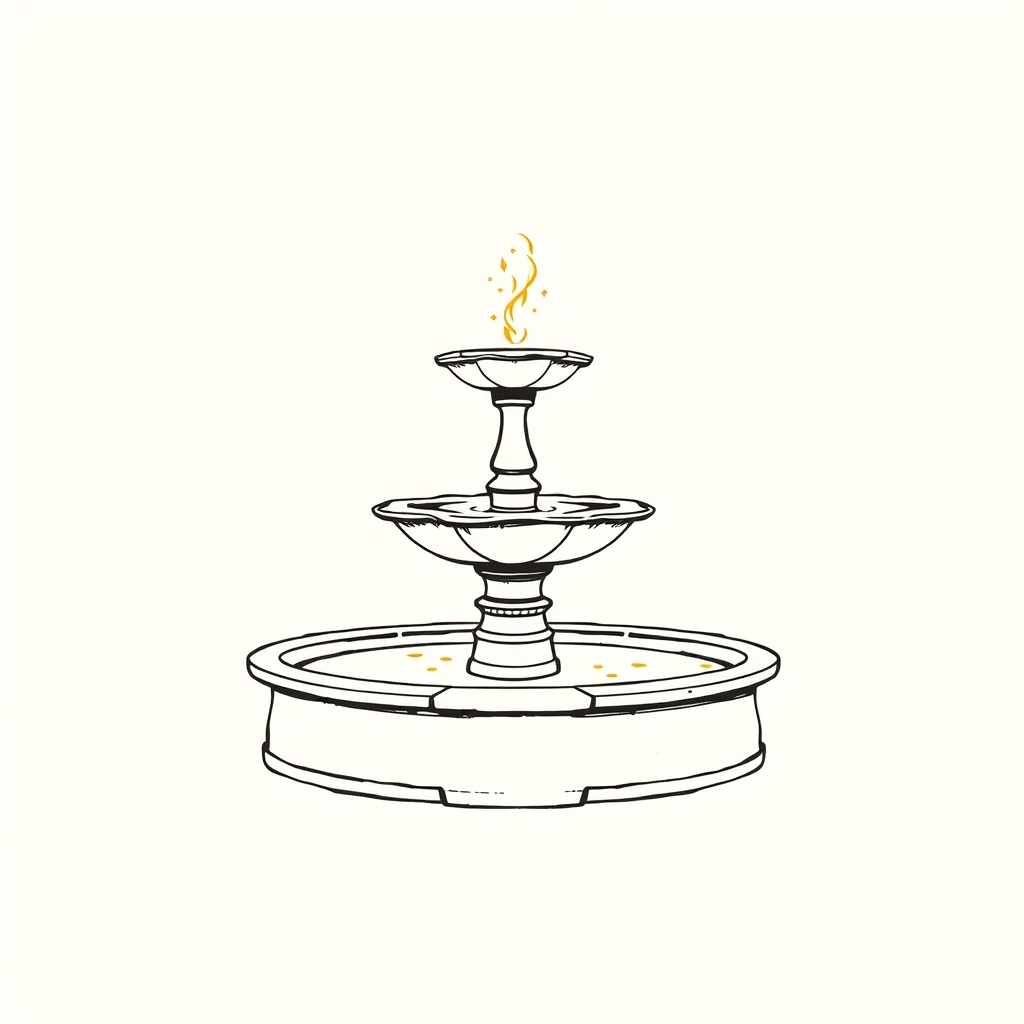
In iconography, Saint Speria (Serena) is recognizable by: bloodied head held in her hands, tree trunk (oak), fountain and peasant clothing.
How did Saint Speria (Serena) die?
Saint Speria (Serena) suffered martyrdom for the Christian faith (8th century).
What miracles are attributed to Saint Speria (Serena)?
2 miracles are attributed to this saint, notably: Sign / wonder.
Which saints were contemporaries of Saint Speria (Serena)?
Contemporaries include: Saint Hidulph of Trier, Saint Ghislain (Guillain), Saint Lambert (Landebert) and Saint Amand of Maastricht.
What are the other names of Saint Speria (Serena)?
Other forms of the name: Sérène and Sperie.
Who are the relatives of Saint Speria (Serena)?
Relatives of Saint Speria (Serena): Clarus (brother), Hélidius (cousin) and Sérène (father (assumed from name)).
Annexes & related entities
Structured data for exploration: events, miracles, quotes, places, attributes, patronages, and important entities cited in the text.
Key Events
- Secret vow of virginity from childhood
- Refusal of marriage to Helidius
- Fled the castle of Saint-Sérène disguised as a peasant woman
- Eremitic retreat in the trunk of an oak tree in the forest of Leyme
- Discovered by a vassal after three months of searching
- Martyred by beheading by Helidius
- Cephalophory: carries her head to a fountain
Quotes
-
The blood you threaten to shed is not mine; it belongs to Jesus Christ, to whom I have consecrated it.
Words attributed to the saint before her martyrdom