
Bishop of Verdun in the 8th century, Madalvé restored his diocese, which had been devastated by wars and usurpations. After a pilgrimage to Jerusalem, from which he brought back precious relics, he reformed the clergy and rebuilt his cathedral. He died in 777 during a pastoral visit, leaving the image of a zealous pastor and a great reformer of the common life.
Contemporaries

Figures and markers around the normalized period for this entry.
Guided reading
8 reading sections
SAINT MADALVÉ OR MAUVÉ
BISHOP OF VERDUN AND CONFESSOR
Youth and Vocation
Born in Verdun in the 8th century, Madalvé distinguished himself by his early piety, his vow of virginity, and his time at the court of Pepin of Herstal before entering the clergy of Saint-Vannes.
Madalvé was born at the beginning of the eighth century in the city of Ve rdun, to parents who were officers of the Church of that city, or who possessed lands belonging to it. They entrusted the education of their young son to very pious and learned masters, under whom he learned the first principles of religion and Christian piety, along with the sciences, in which he made wonderful progress in a short time. He was naturally inclined toward devotional exercises, and had a singular respect for holy places and for persons consecrated to God. His greatest pleasure was to serve them at the altar, to attend divine offices and other Christian instructions; and he had more taste for reading and studying the Holy Scriptures, and the books of the Church Fathers that provided an understanding of them, than for the human sciences, in which he had nonetheless excelled and surpassed his fellow students. Hugh of Flavigny says that he became very skilled in all the liberal arts, and made holy use of them to regulate his conduct and acquire true wisdom, which made him pleasing to God and men; that he then applied himself entirely to the study of the divine Scriptures, and that upon reading this maxim of the Apostle, "that one must live chastely to become the temple of the Holy Spirit," he resolved to embrace celibacy and to make a vow of virginity. This virtue, which he preserved throughout his life, was the principal ornament of the purity and innocence of his conduct; it was accompanied by a singular humility and modesty. He macerated his body and mortified his senses through abstinences and austerities, which helped him to become the master of his passions. His obedience toward his parents engaged him, against his inclination, to follow for some time the court of Pepin of Herstal, who praised his modesty and admired his wisdom at such an early age: but the caresses and pleasures of the world made little impression on his heart. He was more powerfully drawn by the grace that called him to a holier ministry, and he prepared himself for it through prayer and study, which he did not discontinue amidst the agitations of the court. Divine Providence provided him with an opportunity to withdraw from it; then Madalvé returned to Verdun and urgently requested to enter the community of the Clerics of the church of Saint-Vannes.
Abbot of Saint-Vannes
Having become abbot of Saint-Vannes, he restored the discipline and revenues of the community despite the usurpations of Count Anselin and political unrest.
The purity of his morals and his fervor in the exercises of piety soon made it known that he would arrive in a short time at a high perfection of the clerical state. He deprived himself of all secular company, living in a retreat even more exact than that which was prescribed by the Rule, and taking great precautions to prevent his senses and his passions from corrupting his soul. He was always attentive to repressing the desires of his flesh, and nourished his mind through the reading and meditation of Christian truths, occupying himself only with prayer, the study of the Holy Scriptures, and the other exercises of his community. He distributed his rich patrimony to the poor, procuring for them all the spiritual and temporal aid that his charity could devise, and the good odor of his very holy life having spread, not only in this city, but also throughout the whole province, and even to the court, it was requested that he be ordained a priest, although he had not reached the age prescribed by the holy Canons, and, shortly after, he was chosen to be provost or abbot of the clerics of the church of Saint-Vannes. This community was then like the seminary of this diocese where young clerics were trained in the exercises of their state and in the sciences taught there. The regulations that Saint Vannes, and several other bishops had established there, suffered from time to time some slackening during the troubles of the wars, which ruined a part of its revenues: the wisdom of Madalvé restored to this community its former luster, he greatly increased its temporal revenues, even while those of the cathedral were withering away due to the usurpations of Count Ansel in, and other officers of Charles Martel; and he re-established the ancient regularity there as much by his example and his edifying exactitude as by his touching discourses. At the same time, he made the studies he directed there flourish with such brilliance that one spoke of them in this city, in the province, and at court, only by praising his virtues and the wisdom of his government. This was what drew to him all the votes of the clergy and of good people to raise him to the episcopal seat, which had remained vacant for some years after the death of Agronius, because of the vexations of Count Anselin.
Accession to the Episcopate
Supported by Charles Martel, Madalvé was elected Bishop of Verdun around 735 to put an end to the exactions of Count Anselin and restore canonical order.
This Lord, after having usurped all the revenues of the bishopric, undertook to become its titular holder; he had himself ordained a priest in order to be elected bishop: but the clergy always resisted him vigorously, and informed Charles Martel of the sad situation in which the Church of Verdun then found itself. This prince, having come to Austrasia around the year 735, after having driven the Saracens from Aquitaine, charged Guérin the Lorrainer, governor and duke of Metz, to come to Verdun to repress the violence of Anselin, and to have the canonical election of a bishop proceed, declaring to him at the same time that Madalvé, who was of his blood, and who had been proposed to him for this prelacy, would be very agreeable to him. Guérin faithfully executed his commission, and Madalvé was canonically elected by the unanimous votes of all the clergy and the people of Verdun, who could only overcome his resistance by employing the authority of the bishops of the province. He was consecrated by the bishop of Metz, who exercised the function of metropolitan, the see of Trier being then occupied by a cleric named Milon, highly discredited by his dissipation and the bad use he made of the goods of the two metropolises of Trier and Reims, which he administered at the same time.
Restoration of the diocese
Faced with a Church devastated by wars, he exhorted the people to penance, repaired ruined buildings, and recalled the clergy to their duties.
The Church of Verdun was also at that time in a deplorable state; one saw everywhere only the remnants of the ravages of men of war: churches burned and defiled, clerics killed or driven out, and the small number who remained had fallen into laxity and neglected the divine office, seeking to subsist in secular employments. As soon as Saint Madalvé saw himself obliged to accept the pastoral charge of this desolate Church, he thought only of the means to restore it to its former splendor. He convened a general assembly of his clergy and his people in the cathedral, and gave them a touching speech to exhort them to penance, showing them the justice of the judgments of God, who had permitted the calamities they suffered, the profanation of holy places, the mistreatment of the ministers of the altars, because they had neglected the duties of religion, and had not faithfully observed his commandments. "Let us humble ourselves," he said, "before the Lord who strikes us. Only a sincere penance is capable of bending him." The holy pastor drew tears and compunction from his flock even more effectively by the humiliating marks of penance with which he clothed himself. He ordered a fast of several days and prayers in the churches. The people flocked there to confess, and to implore the mercy of God through the sighs of their contrite and humbled hearts. While this pious bishop worked for the reconciliation of his people, he was no less diligent in reforming the common disorders of the churches ruined or abandoned due to the vexations they had suffered, and the laxity and lukewarmness of the clerics who had ceased to serve them, to seek to subsist in secular employments. He began to recall those of the cathedral, and provided them with the things necessary for their food and maintenance, obliging them to perform the divine office with exactitude, day and night. He then did the same in the other churches of the city and the countryside; he provided for the needs of the priests charged with serving them, employing for these expenses the revenues of his patrimony and the oblations of pious persons, who helped him to repair most of these churches, ruined or burned by the enemies, or even by the soldiers of Charles Martel.
Royal relations and reforms
Close to Carloman and Pepin the Short, he obtained the restitution of Church lands and collaborated with Saint Chrodegang to reform the common life of the clergy.
Carloman, his son and successor in the government of Austrasia, had much esteem and affection for Saint Madalvé; he sought his counsel and granted him some sums of money to help him repair the ruined churches in his diocese, giving him hope for greater compensation when the affairs of the State would permit; but this prince, having finished the war against the Bavarians and the Saxons, whom he defeated, became a religious and handed over, in 747, the government of Austrasia to Pepin the Short, his brother, who was crown ed king of all the kingdoms of France, united into a single monarchy, in a general assembly of the States held at Soissons in 752. Saint Madalvé attended this assembly; the new king, who is the first of those of the second race of the kings of France, promised him to protect the Church of Verdun, and having come to this city around the year 755, with Pope Stephen III, he had him restore the lands usurped under Charles Martel, his father, and compensated it for the losses it had suffered by giving it the lordships of Varnoncourt, Wanau, and Rembercourt (Varnonci curtem, Vasnaum, Ramisbatum). The king granted at the same time several graces and immunities to the clergy and the people of Verdun, as much to recognize the important services he had received from the bishops Pepon and Volchise, as to honor the merits and the edifying piety of Madalvé, solely attached to Jesus Christ, very enlightened in all matters of religion, and always prepared to develop the difficulties that were proposed to him.
This very pious and vigilant bishop continually visited all the churches of his diocese: not only did he have all those that had been ruined repaired, he also had a great number of new ones built in all the places where there were none before; he adorned them as magnificently as he could and provided them with good evangelical workers. He regulated the divine office there, which he had celebrated decently, edifying the people there by his example, by his instructions, and by administering the sacraments to them, when his other necessary occupations permitted him. He was mainly applied to reforming the laxity of his clergy who had abandoned the common life, and to healing the wounds that the ravages of the men of war had caused to the discipline of his Church. After he had gathered the dispersed clerics, he provided for their food and their maintenance in their cloister, where he had them return, and ordered them to live canonically. The bond of a very close friendship between Saint Madalvé and Saint Chrodegang, who was ordained bishop of Metz in the year 743, makes one presum e that the latter composed the rule of common life for the clerics of his Church partly on the model of that which Saint Vannes had given to the clergy of Verdun, which Saint Paul, his successor, perfected, and which Saint Madalvé proportioned to the difficult time in which he brought it back into force, by obliging his clerics more particularly to the observance of the articles that concerned the purity of morals and the celebration of the divine office. They were not bound to the other exercises of the community except as far as they were judged necessary to maintain order, peace, and union there. The clergy of the cathedral of Verdun, charmed by the gentleness of their bishop, made no difficulty in submitting to these regulations; but most of the canons of Metz refused to receive that of Saint Chrodegang, who had added to it some practices taken from the rule of the monks. The community of the clerics of Saint-Vannes, which was governed by Saint Madalvé during the great troubles of the wars of Charles Martel, had not relaxed its ancient discipline, nor its fervor in the observance of its rule; it preserved it through the wisdom of its holy provost or abbot. Indeed, he loved it so tenderly that, even after he became bishop, he did not want to leave this charge, taking the same care for the instruction of the young clerics. However tiring these functions were, he did not cease the austerities or the exercises of penance that he was accustomed to perform in this community. He went there as often as he could, as much for his own sanctification as to animate, by his example and his discourses, the fervor of the young clerics. He considerably increased the amenities and the temporal revenues of this house. He gave it, in view of his burial, the land of Rarécourt (Raherei curtem) and several other funds from his patrimony, which are marked in the charters of the same church. The zeal of Saint Madalvé was not confined to his diocese; he also edified the people of Aquitaine by the holiness of his life and his doctrine during several journeys he made there to visit the abbey of Saint-Amant, near Rodez, and several neighboring lands, called Maderniacus and Pulliniacus, which belonged to the Church of Verdun.
Pilgrimage to the Holy Land
Around 757, he undertook a perilous journey to Jerusalem by way of Rome, bringing back precious relics, including those of Saint Mary Magdalene.
After the fire in his cathedral church, he took measures to restore it, and as soon as the repairs had begun, he resolved to depart for the Holy Land after having requested, as the Councils ordain, the permission of his metropolitan and his comprovincials, to whom he entrusted his diocese during his absence. The clergy and the people of Verdun did their utmost to dissuade their holy pastor from this perilous journey; but their prayers and tears could not delay its execution. Having departed around the year 757, he crossed the Alps and arrived in Rome, where he visited the tomb of the holy Apostles and the cemeteries of the martyrs. He continued his journey by way of Mount Gargano, where he stopped for a few days to satisfy his devotion: he spent the nights there in prayer in the church of Saint Michael; and, after having offered the holy sacrifice and given communion to all the pilgrims who accompanied him in great numbers, he embarked upon the sea: the sailors were edified by seeing the austerity of his fasts and his assiduity in prayer. A great storm having put the vessel in danger of perishing, they implored the holy bishop to invoke heaven, and at that very instant, calm was restored. He landed at Joppa, and after running great risks on the roads, he arrived in Jerusalem with his company. The patri arch gave hospitality to our holy bishop, rendering him all the honors that were his due, and presented him with several relics and a crystal chalice, which was a marvelous work, and which was still preserved in the treasury of the church of Verdun in the time of Bertaire. He visited with a lively faith all the holy places where the mysteries of our redemption were accomplished, watering the Holy Sepulcher with his tears, and adoring the risen Savior there. As soon as he had satisfied his devotion, he departed to return to his church, where he was received with incredible joy by his clergy and his people: he was very pleased with the diligence of the workmen, who had completed the construction of his cathedral church, and rewarded them with a large sum of money. He performed the dedication of this new church with all possible magnificence, placed in the main apse the relics he had brought from Jerusalem, and one of the two teeth of Saint Magdalene, which had been given to him at Ephesus, and placed the anci ent relics, which were in the crypt or underground chapel before the fire, on the right side of the altar of the Blessed Virgin. Saint Madalvé placed the other tooth and the hair of Saint Magdalene in the church he had caused to be built, and which he dedicated under the invocation of this Saint, in which he established a monastery of nuns, who subsisted for about two hundred years. The revenues of this monastery having been lost during the wars, and the church falling into ruins, it was rebuilt more beautifully and more spaciously in the year 1018 by the venerable Hermenfroy, archdeacon of the Woëvre, who founded there the college of the canons of Saint Magdalene. The same relics that Saint Madalvé deposited there at the first dedication of this church are still exposed there today every day on the high altar during the celebration of the canonical mass.
End of life and death
After having multiplied miracles and participated in the Council of Attigny, he died around 777 during the dedication of a church in Neuville.
The holiness of Saint Madalvé appeared with much greater brilliance after his journey to the Holy Land: he redoubled his fasts and the mortifications of his flesh, living like an angel in a mortal body, and making greater efforts to arrive at the perfection of a general detachment from all earthly things, and a continuous union with God. The ordinary exhortations he gave to his clergy and his people were filled with a new unction, with more vivid expressions, when he spoke of the mysteries of our redemption, and especially of the Passion of Jesus Christ. Far from seeking rest in an advanced age, he became more indefatigable in his work, and continued it with greater edification until his death. God also gave a new luster to his holiness, through the miraculous healings he performed, and through the deliverance of several people possessed by the demon. He was called, in 761, by King Pepin, to the dedication of the church of Gorze. His name is found among those of the bishops who subscribed to the Council of Attigny, held in 765. Saint Madalvé was attacked the same year by the illness from which he died during the last visit of his diocese; he had himself transported to the village of Neuville, which was not far awa y, to co nsecrate the church there: he knew, during the ceremony of this dedication, that God was calling him to another life. The joy that then appeared on his face marked that of his soul. Burning with the desire to be with Jesus Christ, he received Him as viaticum in this last sacrifice, and expired shortly after: it was the fourth day of October, around the year 777.
Cult and incorruption
His body was found intact on several occasions in the 9th century, attracting many pilgrims until the disappearance of his relics during the Revolution.
## CULT AND RELICS. The sweet odor of Saint Madalvé's life, and the signs that made it known after his death that his soul enjoyed the happiness of the Saints, immediately attracted to his tomb the veneration of the people, who were heard there through his merits. Bertaire and Hugues of Flavigny assure that this tomb having been discovered about forty years after the death of this Saint, his body was found there without any corruption, as if he had been alive: it was Bishop Austranne who made this first discovery. In the 9th century, Bérard, who governed this church in 870, having assembled his clergy and his people to raise this holy body from the earth, it was again found in the same state, appearing like that of a sleeping man, white, rosy, and without any stain or sign of death, giving off a pleasant odor, which restored health to several sick people and even sight to the blind. This body was transferred to a reliquary to be exposed to public veneration. The old church of Saint-Vannes, which kept this precious deposit, honored Saint Madalvé as the one among its patrons or guardians who enriched it the most through the great donations he made there during his life, and which he procured for it through his merits after his death. Mathieu, abbot of this monastery, had a new reliquary made in 1477, adorned with plates of gilded silver with figures representing the life and miracles of Saint Madalvé. This reliquary and the precious relics it contained disappeared during the Revolution. The church of Verdun celebrates the feast of Saint Madalvé on October 5. Excerpt from the History of Verdun, by Roussel, and from that of Abbé Clonet. — Cf. Acta Sanctorum, no October 4.
Iconography
Signs and attributes

Entities
Narrative network
The names, places, and concepts most present in the entry, weighted by centrality in the text.
The supernatural in their life
The miracles of Saint Madalve (Mauve)
Frequently asked questions about Saint Madalve (Mauve)
Who was Saint Madalve (Mauve)?
Bishop of Verdun in the 8th century, Madalvé restored his diocese, which had been devastated by wars and usurpations. After a pilgrimage to Jerusalem, from which he brought back precious relics, he reformed the clergy and rebuilt his cathedral. He died in 777 during a pastoral visit, leaving the image of a zealous pastor and a great reformer of the common life.
What is Saint Madalve (Mauve) the patron saint of?
Patronage of Saint Madalve (Mauve): Verdun and Saint-Vannes Abbey.
What is Saint Madalve (Mauve) invoked for?
Saint Madalve (Mauve) is invoked for: healing of the sick, recovery of sight and deliverance of the possessed.
How is Saint Madalve (Mauve) depicted in Christian art?
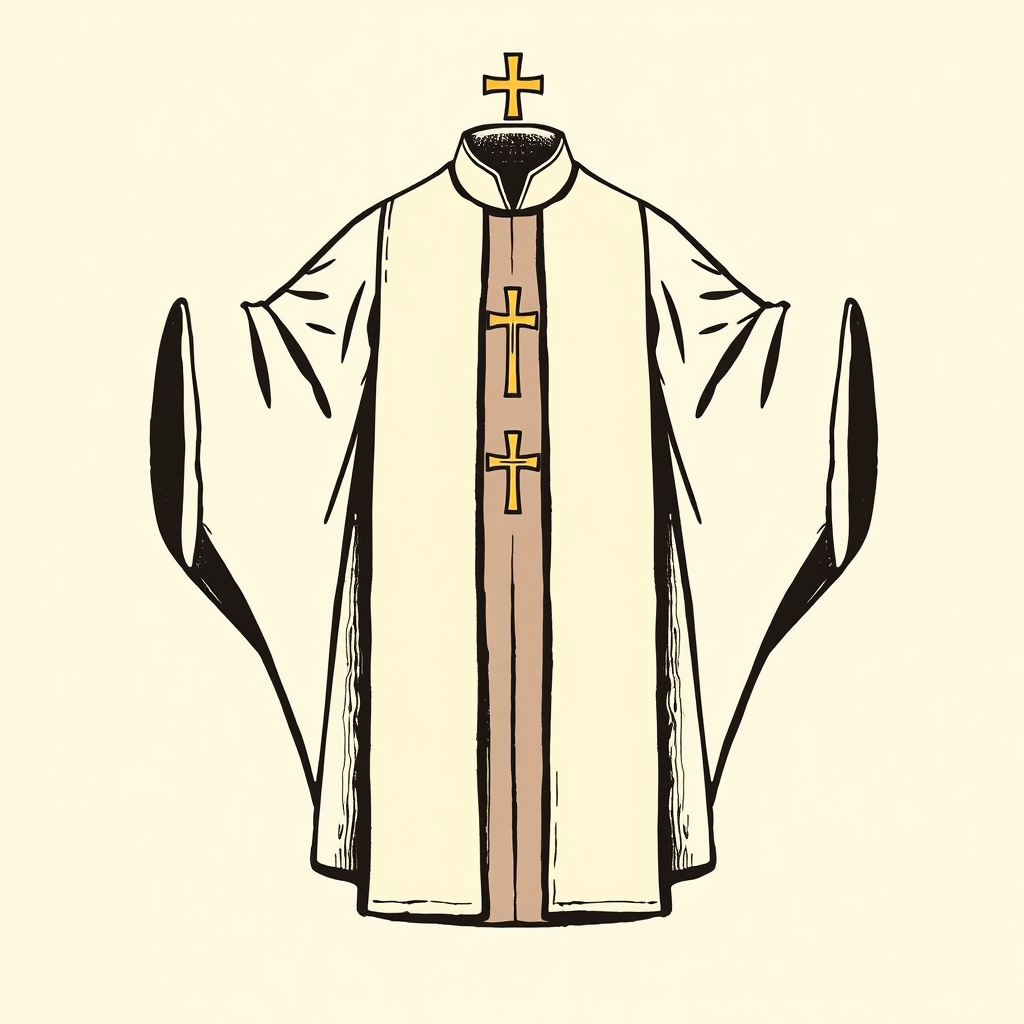
In iconography, Saint Madalve (Mauve) is recognizable by: episcopal vestments, crystal chalice and relics of Saint Mary Magdalene.
What miracles are attributed to Saint Madalve (Mauve)?
3 miracles are attributed to this saint, notably: Mastery of the elements, Healing and Incorruptibility.
Which saints were contemporaries of Saint Madalve (Mauve)?
Contemporaries include: Saint Hidulph of Trier, Saint Ghislain (Guillain), Saint Lambert (Landebert) and Saint Amand of Maastricht.
When did Saint Madalve (Mauve) die?
Saint Madalve (Mauve) died around 800.
What are the other names of Saint Madalve (Mauve)?
Other forms of the name: Mauvé and Madalveus.
Who are the relatives of Saint Madalve (Mauve)?
Relatives of Saint Madalve (Mauve): Charles Martel (parent (by blood)).
Annexes & related entities
Structured data for exploration: events, miracles, quotes, places, attributes, patronages, and important entities cited in the text.
Key Events
- Born in Verdun at the beginning of the 8th century
- Stay at the court of Pepin of Herstal
- Joined the community of the Clerics of Saint-Vannes
- Election to the episcopal see of Verdun around 735
- Attendance at the Assembly of Soissons in 752
- Journey to the Holy Land around 757
- Participation in the Council of Attigny in 765
- Died in the village of Neuville in 777
Quotes
-
Let us humble ourselves before the Lord who strikes us. Only a sincere penance is capable of swaying Him.
Speech at the Cathedral of Verdun