
Prince of the heavenly host, Saint Michael is the archangel who struck down Lucifer during the original rebellion. Protector of the Synagogue and later the Church, he has intervened many times in sacred history, notably at Monte Gargano in 493. He is invoked as the guardian of souls at the moment of judgment and as the patron of numerous professions and nations.
Contemporaries

Figures and markers around the normalized period for this entry.
Guided reading
9 reading sections
FEAST OF SAINT MICHAEL, ARCHANGEL,
AND OF ALL THE HOLY ANGELS
Origin of the feast and dedication
The feast commemorates the miraculous dedication of the church on Mount Gargano in 493, built without human intervention by the Archangel Michael.
Michael clarissima stella angelici ordinis.
Saint Clement of Alexandria.
If pride was the principle of the rebellion and the fall of Lucifer, humility made Saint Micha el the princ e of the heavenly militia and of the Christian militia. Abbot Martin, Panegyrics.
What gave occasion to this feast was the dedication of the church of Saint Michael, on Mount Garg ano (today Mount Santo-Angelo, in the Capitanata), which was done in the year 493, in a miraculous manner, by the ministry of this prince of the armies of God, just as the Church had also been built without men laying a hand upon it. However, as the office of this day is not that of the dedication of temples, but a particular office in honor of all the angels and especially of the same Saint Michael, we shall show what the Holy Scripture, the Councils, the Fathers, and the Masters of theology teach us concerning these heavenly intelligences and concerning some of them in particular.
Nature and faculties of the angels
Theological definition of angels as purely spiritual, immaterial substances, endowed with an intelligence and will superior to those of men.
That there are angels is a constant and indubitable truth, to which almost every page of Holy Scripture bears witness, as Pope Saint Gregory remarked very well in Homily XXXIV on the Gospels. It is true that the Sadducees among the Jews, and some heretics among the Christians, have had the temerity to deny it; but they could not do so without opposing the Old and New Testaments, and without renouncing Moses and the Gospel. We see in the Old Testament angels appearing to Abraham, to Jacob, to Joshua, to Gideon, to Manoah, to David, to the Maccabees, and almost generally to all the Prophets. In the New, Jesus Christ and Saint John are announced and heralded by angels, and the Apostles, as well as their divine Master, often speak of these sublime creatures. Ecclesiastical history, and especially the Lives of the Saints, provide us with an infinity of further testimonies to their existence, and, if it is a question of demons, who are angels depraved by sin, the actions of the possessed—many of which surpass all the forces of nature and must consequently come from a more penetrating and active cause, such as speaking unknown languages or discovering hidden or distant secrets—are also a certain and authentic proof. Finally, if there were no angels, the world would lack a kind of creature absolutely necessary for its perfection: which cannot be said, since it is the masterpiece of an infinitely powerful and perfect workman.
Regarding the nature of the angels, Tertullian, Origen, and some other Fathers of the first centuries believed that they were not entirely spiritual and immaterial, but that they had extremely subtle and refined bodies that entered into the composition of their substance. But the Council of Lateran, under Innocent III, rejected and proscribed this opinion when it said: "We firmly believe that there is only one true God, eternal and infinite, who, at the beginning of time, drew from nothing both creatures, the spiritual and the corporeal, the angelic and the worldly, and then formed between the two, human nature, composed of body and spirit"; for these words show us that angels have no mixture of body and that they are very pure forms, which sustain themselves without being able to be united to a subject. The name of spirit, which the sacred text ordinarily gives them, shows the same truth; since, by the word spirit, one properly understands a substance that has no body. Finally, the reason that proves the existence of angels also proves that they are immaterial, since they are only necessary for the perfection of the universe so that, just as there are purely corporeal natures and natures partly corporeal and partly spiritual, there may also be purely spiritual ones. It is true that these spirits have often appeared under sensible figures and principally under human figures, which gave rise to painters and sculptors, and even to Moses, by the order of God, to represent them to us as young men of unparalleled grace and beauty; but these bodies, under which they appear, were not living and animated. They were only aerial bodies that they formed for a short time, in order to accommodate themselves to the condition and reach of the persons to whom they were sent; they were not in these phantoms as the soul is in its body, giving it life and making it capable of vegetative and animal operations, but only as a workman is in his machine, which he uses to execute his designs and to accomplish the works of his art.
From this great principle of the immateriality of the angels, it must be inferred first that they are indivisible and have no limbs or parts; for only matter endowed with quantity can provide parts; now, since these sublime creatures have no matter, and consequently no quantity, it is clear that they are indivisible and are in no way composed of parts. They can therefore place themselves entirely, if one must speak thus, in a single point of space, and there is no space in the world so small that all the good angels or demons cannot be present there at the same time, without inconveniencing one another. Moreover, when they please to extend themselves to a large space, by operating there immediately by themselves, they are so entirely in the whole space that they are also entirely in each of its parts, just as our soul is entirely in our body, and entirely in each of its limbs and organs.
It must be concluded, in the second place, that angels are endowed with intelligence and capable of knowing all kinds of objects. For, according to the angelic doctrine of Saint Thomas, following Aristotle, only the dependence that a form has on matter can prevent it from being intellectual, from seeing itself, from contemplating itself, and from knowing everything that is outside of it; thus, the angels having no dependence on matter and being purely spiritual substances, it must necessarily be admitted that they are capable of all the funct ions of inte llectual life; also, God created them only for these functions, we mean to know Him, to love Him, to publish His greatness, to execute His orders, to govern this universe, and to watch over the conservation of the species and individuals it contains. The Latins call them mentes, that is to say, intelligences, and as living and subsisting thoughts.
Let us add, for a third conclusion, that the manner of knowing of the angels is much more noble and excellent than that of men; for experience shows us that the more a thing is freed from matter, the more its knowledge is pure, simple, perfect, subtle, elevated, and penetrating. Now, although men have a spiritual and immaterial soul, the body and matter nevertheless enter into their composition, and their soul depends on them in its knowledge: what could it know without the help, at least indirect, of the senses? The angels, on the contrary, as we have said, are entirely freed from matter, both for their being and for their operations; they therefore have a way of knowing far preferable to that of men. Indeed, whereas we need the presence and contact of external objects to know them, the angels have an innate knowledge of them; and if it is a question of some new and supernatural knowledge, they receive it immediately from God. To know each object in particular, we need a particular perception that marks its properties separately, whereas the angels have universal ideas that make them see clearly and distinctly a whole genus with its species and a whole species with its individuals. When we jump, so to speak, from one piece of knowledge to another, which we call reasoning and discoursing, the angels penetrate all at once and with a single glance into the depths of each thing and see the effects in their causes, the conclusions in their principles, and the properties of each being in the substance that is their source. If we sometimes know and sometimes cease to know, whether by sleep or by the mere inapplication of our mind, the angels are always applied, always in act, not that their knowledge and their operations are the same thing as their understanding, as in God, where there is no composition, but because there are objects that are so present to them, such as their own substance and God who is their author, that they cannot turn their gaze away for a single moment. Finally, when we easily forget what we have learned, the angels imprint the idea of what they have seen and known once so strongly that it can never be erased from their memory, although it is nevertheless in their power not to think of it actually, nothing forcing them to occupy themselves ceaselessly with all the things to which their science and intellectual light extend.
This spirituality of the angels also makes us know that they have a free and indifferent will to move toward objects by love or by aversion, according to the lights that their understanding provides them. For there is no being that does not have a slope or an inclination proportionate to its nature: the earth has its weight to descend, fire has its lightness to rise, plants have their natural desire to feed and propagate, animals have their appetite that makes them seek their good and flee their evil; now, the proper inclination of the spiritual and intelligent nature is the free will, by which, attaching itself invariably to the end, it moves with indifference to the various means that do not have a necessary connection with the end. It is therefore a constant truth that these angels have a free and indifferent will, capable of love or hatred, of all the affections, of all the virtues, and of all the vices that can befit the will. From which it also follows that at the time of their creation, and before they had determined themselves, they were capable of merit and demerit, of reward and punishment; as, indeed, some, by their submission, have merited an eternal reward, and the others, by their rebellion, have rendered themselves worthy of punishments that will never end. It must be noted that, notwithstanding this freedom, the will of the angels is not changing and irresolute like ours, because, as they know all at once what can make them love or hate an object, no new discoveries coming to them, they remain so strongly attached to their first choice that they never desist from it.
Finally, from the same principle of the spirituality of these sublime creatures, it follows necessarily that they are in no way subject to the passions and accidents of bodies, such as cold, heat, hunger, thirst, weariness, old age, diseases, and death. Their substance is always the same, their life suffers no change, they are no older now than they were six thousand years ago; their duration, which had a beginning, will never have an end; and, whereas we only obtain after a long succession of days and years the perfection that is due to our nature, they had, from the moment of their production, all the natural advantages of which their being was capable.
The Hierarchy of the Nine Choirs
Description of the three hierarchies and the nine angelic choirs, classified according to their proximity to God and their functions in governing the universe.
These great prerogatives clearly show that, by nature, they are in many ways more noble and more perfect than men; for the perfection of a thing is derived from its manner of being and acting; now, all that we have said shows that the manner of being and acting of these celestial intelligences is far superior to our own; one must therefore not doubt that they surpass us in excellence and perfection. This is also what the King-Prophet teaches us in Psalm VIII, when, speaking to God of the first man, or even of man in general, he says to Him: *Minuisti eum paulo minus ab angelis : gloria et honore coronasti eum, et constituisti eum super opera manuum tuarum*: "Although you have crowned man with glory and honor, and have made him the head of this visible and corporeal world, it must nevertheless be acknowledged, Lord, that you have placed him in a degree inferior to that of the angels." Jesus Christ teaches us the truth when, on the occasion of Saint John the Baptist, He asserts that the least in the kingdom of heaven, which many Doctors explain as the last of the blessed angels, surpasses in excellence the most perfect of all men. We have said, however, according to nature and natural properties: for it is constant that, by grace and the hypostatic union, man has been raised in Jesus Christ and in Mary infinitely above all the angels; and that many Saints, such as the holy Precursor, the Apostles, and the apostolic men, have attained, through their merits, to a greater glory than that of the angels of the lower orders.
There would be admirable things to say about the strength that God has given them, about their agility, the promptness of their movements, and the way in which they speak together to communicate their lights to one another; but these rich subjects, which require a long discussion, are more suitable for schools of theology than for a work where we seek only the edification of the faithful. Let us say only, in a word, that their strength is so great that there is no corporeal power that can resist them: it is they who make the immense worlds roll in space; a single one killed in one night one hundred and eighty thousand soldiers of the army of Sennacherib, to punish that prince for the blasphemies he had vomited against God. Their movement is so prompt that the learned Tertullian does not hesitate to assert that they are everywhere in a moment, and that heaven, earth, hell, and all the differences of these places are for them as but a single place. Finally, their conversations are so industrious that, without any word or external sign, they explain themselves and make themselves understood by one another by the sole formation and direction of their thoughts.
The Council of Lateran, which we have already cited, teaches us that they were created at the beginning of time, jointly with the corporeal world: *Ab initio temporis simul utramque ex nihilo condidit creaturam spiritualem et corporalem*; which gives us reason to believe that Moses included their creation; either under that of the heavens, by saying: "In the beginning God created the heavens and the earth"; or under that of light, by adding immediately after: "God said let there be light, and light was made." They were therefore not created from all eternity, as some philosophers have thought, nor at an unknown and indeterminate time before the creation of the world, according to the sentiment of Origen and several Greek Fathers, but at the first moment and at the point of the birth of all things.
It is certain that the number of angels is not infinite, since everything that is created must necessarily have limits; this is why Stephen II, Bishop of Paris, who lived in the year 1272, condemned the proposition of some theologians who said that "separated substances were actually infinite." But it must be admitted that this number is prodigious and beyond all human imagination. Daniel and Saint John, in his Apocalypse, speak of them only by the thousands. Job says that "this number is without number." Saint Dionysius, in his book on the *Celestial Hierarchy*, chap. IV, asserts that it surpasses that of all material things. The Angelic Doctor gives as a reason that the perfection of the universe requires that the most noble creatures surpass in quantity or number those that are inferior to them. Some theologians believe that the thought of Saint Dionysius is that there are more of them than there are individuals of all corporeal species; that is to say, more than there are stones, metals, grains, plants, and animals. But Saint Thomas limits his proposition to species alone, so that there are only more angels than there are differences of corporeal things. In this uncertainty, what we can think most likely is that there are more angels of the last order than there have ever been and ever will be men; because every man has his guardian angel, that this angel is usually taken only from the last order, and that the same angel is not, either successively or at the same time, the guardian of several men. Moreover, as these sacred orders are all the more numerous as they are more perfect and elevated, one can believe that there are more archangels than angels, more principalities than archangels, more powers than principalities, and so on for the other orders: which undoubtedly brings the number of these celestial Spirits to a quantity that we cannot comprehend.
But what is more admirable is that, according to the doctrine of Saint Thomas, in this great multitude of angels, there are not two that are of the same species and quality; but they all differ in nature and specific properties; just as if, in a meadow covered and enameled with flowers, each of these flowers were different in shape, color, and scent; or that in a royal crown, all sown and enriched with jewels, each precious stone had a particular eye, luster, figure, and beauty: thus, the angels are so arranged that, from the last to the first, there is a continuous increase of grace, beauty, and perfection. However, this number and variety are not without distinction and order; for we distinguish in the angels three great companies that we call hierarchies, that is to say, sacred principalities: the superior, the middle, and the inferior; and, in each hierarchy, we distinguish again three choirs, which make in all nine choirs, namely: in the first, the Seraphim, the Cherubim, and the Thrones; in the second, the Dominations, the Virtues, and the Powers; and, in the third, the Principalities, the Archangels, and the Angels. The hierarchies are distinguished according to the different applications of the three hierarchical acts which are to purify, to enlighten, and to perfect. For the angels of the first hierarchy are those who, not being purified, enlightened, and perfected by any other creature superior to them, but only by rays immediately emanating from God, have this prerogative to purify, enlighten, and perfect the lower angels. The angels of the second are those who receive these favors from the angels of the first and communicate them to those of the third. Finally, the angels of the third are those who are purified, enlightened, and perfected by the superior angels, but who do not produce these acts in the entire circumference of the angelic nature. To purify, enlighten, and perfect is to communicate a divine light which, by banishing the defect of knowledge, leads to the penetration of truth; so that these are not properly three acts, but a single act which has three relationships and three different functions, and the impression of this act is not contrary to the perfection of the angels; for although they all have admirable knowledge, there are nevertheless supernatural truths that are hidden from them and of which they need to be instructed, either immediately by God, or by the illumination of their superiors.
As for the three choirs of each hierarchy, they are distinguished according to the different relationships of these spirits, either to God, or to the general conduct of the world, or to the particular conduct of States, companies, and persons. In relation to God, those who excel in charity are called Seraphim, from the Hebrew word *seraph*, which means to set on fire, to burn, to consume. Those who excel in light and wisdom are called Cherubim, from the Hebrew word *cherub*, which Saint Jerome and Saint Augustine interpret as fullness of wisdom and science. Those who support by their strength the brilliance of the greatness and majesty of God are called Thrones, and sometimes *sedes Dei*, "the seats of the Almighty"; the throne is the place where the prince shows himself in all the splendor of his glory. In relation to the general conduct of the universe, those who distribute to the lower angels their functions and ministries are called Dominations, because it belongs to masters and sovereigns to declare to their subjects what tasks they must occupy themselves with. Those who execute the great actions that touch upon the universal government of the world and the Church, and who for this purpose perform extraordinary wonders and miracles, are called Virtues, because they participate in a particular way in the invincible strength and virtue of God. Those who maintain in creatures the order of divine Providence, and effectively prevent it from being disturbed by the efforts of demons and any other malignant cause, are called Powers, because it is an effect of great power to repress the fury of these malignant and artful spirits. Finally, in relation to the particular conduct of States, companies, and persons, those who preside over kingdoms, provinces, and dioceses are called Principalities, as having a more extensive and universal stewardship. Those who are sent by God in matters of greater importance, and who carry considerable messages, are called Archangels, a name which signifies the preeminence of their missions, and those who have the guardianship of each man in particular, to turn him from evil, to lead him to good, to defend him against his visible and invisible enemies, and to lead him on the path of salvation, are called Angels, by the appropriation made to them in particular of the name common to all celestial spirits. On which it must be remarked, with Pope Saint Gregory, that the name of angel does not signify their nature, which is to be pure spirits, freed from matter, capable of knowing and loving God; but only their employment and office, which is to be sent for the help of men or for the good of the whole universe.
The rebellion and the triumph of Michael
Account of the pride of Lucifer and his fall, countered by the humility and fidelity of Saint Michael, who became prince of the celestial militia.
We have so far spoken only of their natural state and the advantages that befit them by the right of their creation. We learn from Saint Augustine that their sovereign Author, in giving them the being of nature, also enriched them with the being of grace: *Simul in eis et creans naturam et largiens gratiam*. To which Saint Basil and Saint Damascene add that He gave them grace in proportion to their natural perfection, that is to say, He gave more grace to the most eminent, and less grace to those whose dignity and excellence were lesser. However, He did not yet give them eternal glory and beatitude, but placed them in a state of pilgrimage, and, having adorned them with supernatural virtues, which are the appanages of this state—we mean Faith, Hope, and Charity—He also conferred upon them the necessary aids to merit this beatitude. This state, nevertheless, was not to be long: a moment sufficed for them to render themselves worthy of this reward which was proposed to them, and a greater space would have been useless to them, since they are of a nature so penetrating and subsequently so attached to the choices they have made that they never depart from them.
It was in this moment that a great havoc and a terrible division took place in heaven. The prince and the most beautiful of all these spirits, he who had received a more perfect being and a more abundant grace; he who was obliged to be more grateful to the goodness and magnificence of his God, became so proud in the consideration of his perfections, and was so intoxicated with the love of his own excellence, that he no longer wished to depend on God for the consummation of his happiness, persuading himself that he was sufficient unto himself and that he could be happy without this submission. He made every effort to persuade the other Spirits of the same thing, and at the same time inspired in them rebellion against the Creator; and, indeed, there were many who attached themselves to him and followed his party. It is believed that their number reached up to a third, following these words of Saint John, in his *Apocalypse*, chapter XII: *Cauda ejus trahebat tertiam partem stellarum*: "His tail drew with it the third part of the stars." But the glorious Saint Michael, who was the second of t he seraphim, and who became the first through the apostasy of this rebel, resisted him with admirable strength and vigor, by opposing to him this powerful interrogation, which is contained in the meaning of his name: *Quis ut Deus?* "Who is then like unto God?" And his generous resistance fortified the rest of these celestial intelligences and maintained them in duty and obedience.
This victory was immediately followed by punishment and reward. Lucifer and his adherents were cast into hell, to be punished there eternally; and Saint Michael, with all the companies of the faithful angels, was raised to the intuitive vision of God, to eternal beatitude, and to the happy possession of the sovereign good. Thus, according to the word of Moses, in the first chapter of *Genesis*: "God divided the light from the darkness": *Divisit lucem a tenebris*; and, exiling the spirits of darkness, He filled the children of light with the splendors of His divinity.
Biblical Missions and Protection of the Church
Analysis of the role of Michael as protector of the Synagogue and then of the Church, intervening in numerous episodes of the Old and New Testaments.
It is these angels of light, distinguished by the grace of God and by their own fidelity from those whom Saint Paul calls Princes of darkness, whose victory, triumph, and happiness we celebrate today, and we do so with all the more justice, as we have received and receive every day from them inestimable favors and benefits. For, without speaking of those conferred upon us by our guardian angels, of whom we shall speak soon on their particular feast day, it is through the ministry of the angels that God preserves and governs this entire universe, that He makes the heavens turn, regulates the movement of the stars, manages and dispenses their influences, maintains the elements, causes the seasons to succeed one another invariably, gives fertility to the earth, to the sea, and to the animals that serve for our food, and turns away an infinity of evils with which the demons, our enemies, would overwhelm us if we were not under their protection. It is also by their ministry that He founds States, prevents their desolation and ruin, maintains subordination and justice therein, wards off war, famine, plague, and other scourges, and is filled with goods and riches. It is above all by their ministry that He leads His Church, communicates His truth and His strength to the sovereign Pontiffs, presides over general Councils and gives them His infallible assistance, regulates dioceses and particular churches, enlightens doctors, inspires bishops, fills preachers with zeal, supports religious Orders, purifies virgins; in a word, that He maintains the entire ecclesiastical hierarchy, which is an image of the angelic hierarchy. In this view, Saint Sophronius greets all the angels in these terms: "O blessed Spirits, heavenly Companions, invincible Battalions, immense multitude, army without number, height without equal, incomprehensible greatness, measureless subtlety, inconceivable agility, glory that cannot fall into the mind of man, virtue above all virtue, ministers of the sovereign Master of all things, you are eminently Winds, Rains, Mountains, Hills, Clouds, Torches, Princes, Captains, Deacons, Apostles, Preachers, Prophets, Evangelists, Interpreters of the holy Mysteries, Presidents, Guardians, Curators, Guides and Protectors. It is you who pass in a moment from one end of the world to the other; who fill with your substance the whole extent of the sky and the air; who do not leave any man without guarding and accompanying him; who are perpetually attentive to the command of your creator, and who execute at the appointed time all his wills. I beseech you, therefore, to assist me at the hour of my death and to regulate the balance of my judgment so well that you may mercifully lighten the scale of my crimes, which I have loaded and weighed down by all the actions of my life."
Holy Scripture often makes mention of seven particular angels who stand before the throne of the Majesty of God. Saint Raphael, in the book of Tobit, chap. XII, says of himself that he is one of these seven. Saint John, in his Apocalypse, speaks of them no less than eight times. These angels must undoubtedly be among the greatest. And, indeed, Saint Clement of Alexandria, in his Stromata, book VI, calls them: *Primogenitos Angelorum principes*: "The first princes of the heavenly hierarchy." They are therefore of the order of the Seraphim and even the most perfect and most eminent of that Order.
The same Saint John, in chapter VII of his Apocalypse, speaks of four angels who will have the charge, at the end of the world, of harming the earth and the sea. However, in all of Scripture, there are only three angels to whom particular names are given: Saint Michael, Saint Gabriel, and Saint Raphael. As for the names of Uriel, Salathiel, Jehudiel, and Barachiel, which some authors give to the other four of the seven of whom we have spoken, they are not accepted by the Church. We read in the Roman Council, held under Pope Zachary, that the heretics Albert and Clement were condemned and struck with anathema for having, among other things, made this prayer: "I beseech you, angel Uriel, angel Raguel, angel Jubiel, angel Michael, etc.," because, say the Fathers of this Council, except for the name of Michael, all the others are rather names of demons than names of good angels, and that Scripture and Apostolic Tradition recognize only three angels by their names, which are Saint Michael, Saint Gabriel, and Saint Raphael.
As for Saint Michael, we learn from Saint Dionysius the Areopagite, in his book on the Celestial Hierarchy, chap. IX, that he was the prince and protector of the Synagogue. Indeed, we have four famous testimonies of this in the sacred Text. The first is in the canonical Epistle of Saint Jude, where it is said that "Saint Michael disputed against the demon regarding the body of Moses." This is because the demon wanted to reveal it to the Israelites, in order to lead them to idolatry; and Saint Michael, on the contrary, who knew the inclination of this people to idolatry, stood firm to prevent it from being discovered. The second is in chap. X of Daniel, where this Prophet represents him as effectively supporting the interests of the Jews against the guardian angel of the kingdom of Persia. The third is in chap. XII of the same Prophet, where he assures us that Saint Michael will come at the time of the Antichrist to fight against hell in favor of the people who have been committed to him. Finally, the fourth is in chap. XII of the Apocalypse, where Saint John admirably describes his victories against the dragon and his adherents: which must not only be understood of the one he won in the heavens before the creation of man, but also of an infinity of others that he has won throughout the course of the centuries.
Other effects and very remarkable apparitions of this great prince of the armies of God are also attributed to him in the Old Testament. Pantaleon, deacon of the church of Constantinople, says that it was he who encouraged and instructed Adam, our first father, after his sin; held back the hand of Abraham, so as not to immolate his son Isaac; delivered the Israelites from the captivity of Egypt and led them on dry ground through the middle of the Red Sea; appeared to Joshua after the crossing of the Jordan, and made him master of Jericho, by the sudden and miraculous ruin of its towers and walls. Others add that it was he who brought, by the order of God, all the animals to Adam before his disobedience, to receive their names from his mouth; transported Enoch into the earthly paradise, to await there the end of the world and the time of the last judgment; preserved the ark of Noah after having filled it with animals of all kinds of species; wrestled with Jacob, blessed him, and preserved him from the snares of his brother Esau; gave the law to Moses on Mount Sinai; exterminated Korah, Dathan, and Abiram, for having murmured and risen against Moses; prevented the false prophet Balaam from cursing the people of God; showed himself to Gideon and animated him to fight against the Midianites; predicted to Manoah and his wife the birth of the strong Samson, their son; made David victorious over Goliath and delivered him from the persecution of Saul; struck the people with plague to punish an act of vanity of this prince; took up the prophet Elijah in a chariot of fire, to reserve him for the time of the consummation of the centuries; appeared in the midst of the three children in the furnace of Babylon; transported the prophet Habakkuk by the hair, with the dinner he had prepared for his reapers, to the lions' den, in order to feed there the prophet Daniel, whom the king of Persia had had locked up there; ordered Saint Gabriel to explain to the same Daniel the mystery of the perpetual sacrifice; preserved the purity of Judith in the camp of Holofernes, and made this illustrious widow victorious over such a formidable enemy; delivered the Jewish people from the captivity of Babylon; drove out of the temple with whips the sacrilegious Heliodorus, whom King Antiochus had sent there to remove the treasures; fortified the Maccabees in the great battles they had to sustain against various kings of Syria and Egypt; finally, who descended from time to time into the pool of Bethesda to make its waters salutary and give them the strength to heal the one who threw himself in first. Perhaps he did not do all these things immediately by himself; but this beautiful word from chap. XII of Daniel: *In tempore illo consurget Michael, princeps magnus qui stat pro filiis populi tui*: "At that time, shall arise Michael, that great prince, who supports the cause and the interests of the children of your people"; this word, we say, makes one believe that there is none of these actions over which he did not preside, and which was not done at least by his order.
If Saint Michael was the protector of the Synagogue, he is no less the protector of the Church of Jesus Christ, as Saint John Chrysostom establishes in the second Oration against the Jews, Saint Gregory in book XVII of his Morals, and he did not fail to declare it himself in his Apparitions, which we have reported at some length on May 8. Also, several authors hold that it was he who visited and consoled Our Lord in the garden of Olives; announced his resurrection to the holy women, and especially to Mary Magdalene; commanded Saint Philip, deacon, to approach the chariot of the Ethiopian eunuch, to catechize him, and then transported him to Azotus; appeared to Cornelius, the centurion, and ordered him to send for Saint Peter; delivered this great apostle from the prisons of Herod and returned him to the tears of the desolate Church; and appeared often to Saint John to reveal to him the mysteries of the Apocalypse. It is of him that the priest speaks at mass, when after the consecration he asks God that his sacrifice be represented before his divine Majesty by the hands of his holy angel. It is he himself whom the Church invokes at the death of the faithful, who receives their souls at the moment of their separation, who defends them at the judgment of God against the unjust accusations of the prince of darkness, and who carries them into the bosom of Abraham to enjoy there the delights of eternal life. Finally, we have in Ecclesiastical History so many miracles of this great prince, so many effects of his help and protection, so many vows made to merit his assistance, so many temples built in his honor at the place of his apparitions, and in thanksgiving for the favors obtained by his means, that one cannot in any way doubt that he is one of the universal causes of the goods that are conferred upon the Church and upon the whole human race.
The Archangels Gabriel and Raphael
Presentation of the two other archangels named by Scripture: Gabriel, messenger of the Incarnation, and Raphael, guide and healer of Tobit.
As fo r Saint Gabri el, his dignity is sufficiently apparent from the admirable commissions he received for the accomplishment of the mystery of the Incarnation. Cardinal Marc Viger even wished to prefer him to Saint Michael in his book entitled: *Decochordum Christianum*; but his proper rank is to be the second of the seraphim. Besides the messages that the Gospel attributes to him in formal terms, to Saint Zechariah and to the Blessed Virgin, it is believed that it was he who appeared three times to Saint Joseph: to announce to him the conception of Our Lord, to warn him to flee into Egypt, and to have him return to Palestine, just as long before he had appeared to Daniel to assure him that the Messiah would be born after seventy weeks of years. Some authors also believe that it was he who consoled Our Lord in the garden, although others attribute this great action to Saint Michael, as the most worthy and the first of all the angels.
Finally, as f or Saint Raph ael, we could add nothing to the things reported in the Book of Tobit, which are so full of admiration and sweetness that one cannot read them without shedding tears of devotion. Both of these two angels are invoked by the faithful: Saint Gabriel, as the strength of God, Saint Raphael, as the medicine of God; and many have received miraculous assistance through their intercession: such as Hubert, treasurer of a King of Poland, who was preserved from hell by Saint Gabriel, for whom he had an extreme devotion, and a bourgeois of Orléans, who was delivered from thieves while going to Saint James, in Galicia, by Saint Raphael, whose assistance he had implored.
Iconography and Patronage
Detail of the artistic attributes of angels (wings, scales, sword) and a list of the numerous trades and nations placed under the protection of Saint Michael.
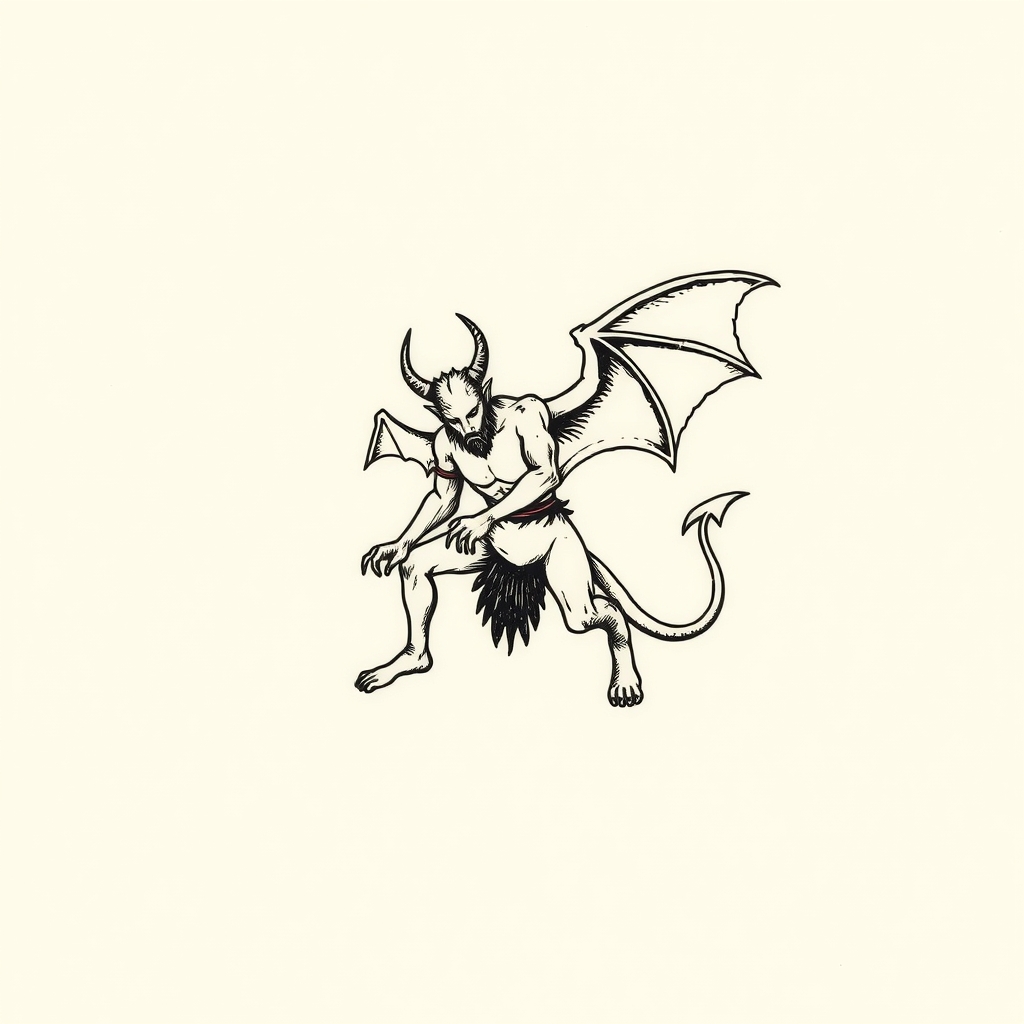
Angels do not appear to have been introduced into the composition of Christian paintings before the 4th century; they even appear very rarely with their specific attributes in the various monuments of subterranean Rome. — Here are the principal attributes that Christian art assigns to angels:
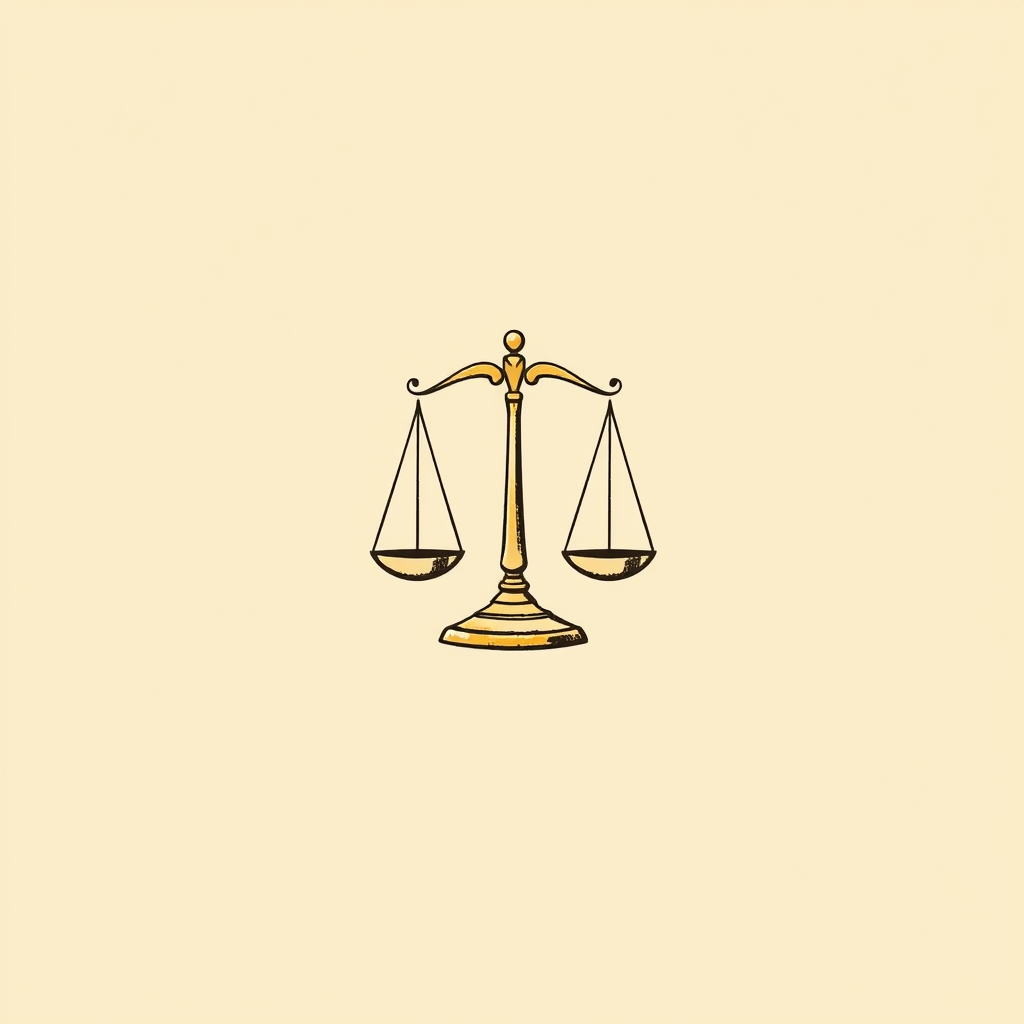
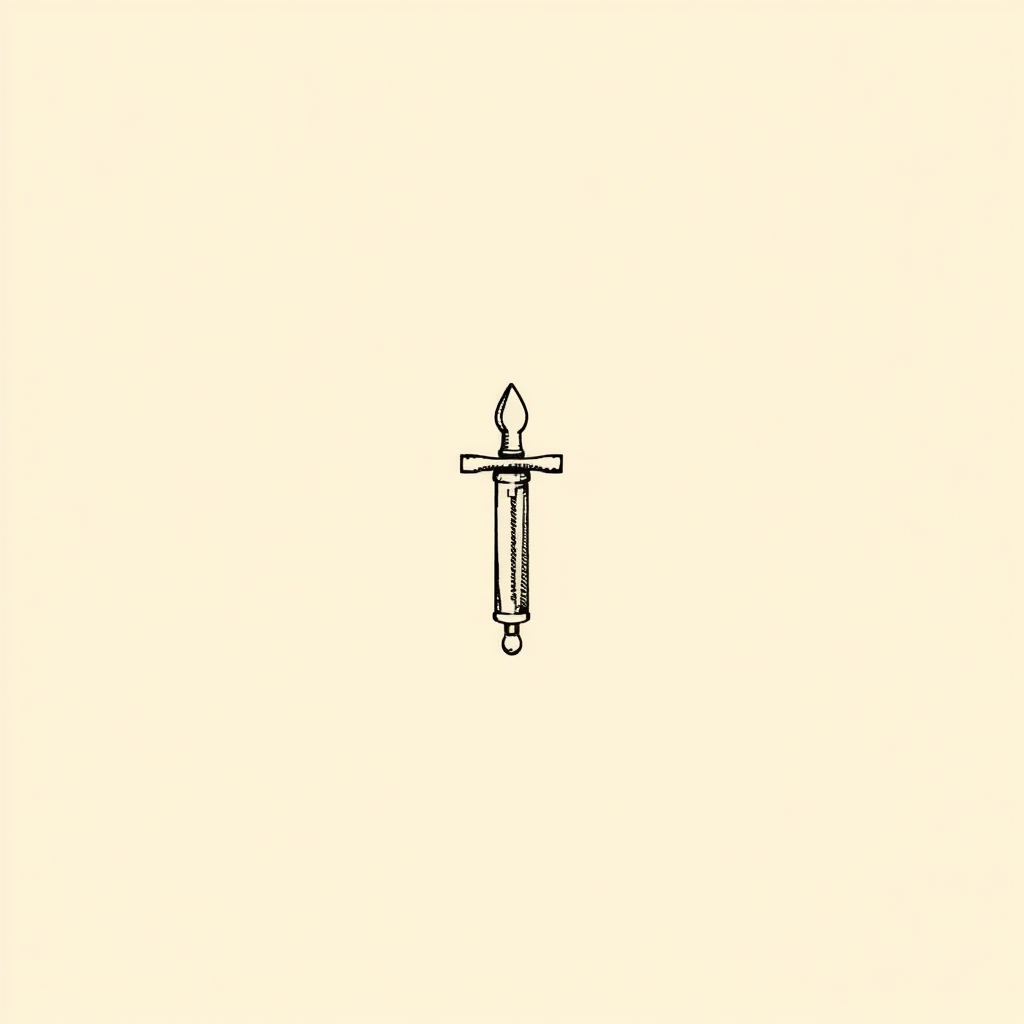
1st The human form, so that the faithful may understand how much these celestial intelligences are disposed to assist men and are always ready to execute the orders of God in our favor; — 2nd wings, for the same reasons; — 3rd a censer, because they offer our prayers to God, according to what is written in the Apocalypse: "And another angel came, and stood before the altar, having a golden censer; and there was given unto him much incense, that he should offer it with the prayers of all saints upon the golden altar which was before the throne of God"; — 4th youth, because it is required by both their immortality, which is nothing other than an eternal youth, and the nature of their functions, which they would seem less apt to fulfill if they were either children or old men; — 5th beauty, for such is the type provided to us by the Holy Scriptures; — 6th sometimes nudity, which, in fallen man, produces shame, but, in angels, is a mark of holiness, chastity, immortality, and innocence; — 7th military attributes: this is how the history of the Maccabees represents them to us: "A horseman appeared before them in white clothing, with golden arms, and brandishing his spear"; — 8th white garments, a sign of innocence and joy, and a priestly color; — 9th a belt, to show that they are ready to execute the orders entrusted to them; the belt is also the symbol of chastity; — 10th ornaments of precious stones, a symbol of the brilliance of their various virtues; — 11th sometimes enveloped in clouds, because their proper dwelling is in the heavens; — 12th bare feet: the ministers of God have ordinarily abstained from footwear, as we see by the example of Isaiah, Moses, and the Apostles. — Various instruments are assigned to angels that remind us, at times of the wrath of God of which they are the ministers, such as the sword; at times of His mercy of which they are the organs toward us, such as the attributes of the Passion; at times of the justice they exercise in His name, such as the scales. The trumpet awakens the idea of the Last Judgment, and the other musical instruments that of the holy delights of the celestial abode.
As for the Archangel Saint Michael in particular, he is seen represented: 1st trampling the demon; 2nd presenting scales to the infant Jesus: in the pans are the souls of the just; 3rd fighting the rebel angels; 4th standing on a revolted angel: on his breastplate are figured the sun, the moon, and stars; on his baldric is represented a Zodiac; he holds a palm and points in the sky to a Hebrew word which means: *Quis ut Deus?* 5th weighing the souls guilty of innocent blood; 6th appearing to a bishop who receives from the archangel the order to build a church on Mount Gargano; 7th holding in his hand a sort of *labarum*, as prince of the celestial militia, or a simple knight's sword, to recall his struggle with Lucifer.
Archangel Saint Michael is the patron of scale-makers, hosiers, hatters, fencing masters, bath-house keepers, wafer and waffle makers, haberdashers and grocers, measurers, painters, glaziers, gilders, and plasterers. He is also invoked for a happy death. The intimate reasons for these various patronages are quite difficult to penetrate: some are obvious; we leave to intuitive minds the task of grasping the others.
A great number of States, such as England, France, Spain, Bavaria, etc.; and cities, such as Benevento, Brussels, Le Puy, Madrid, etc., have placed themselves under the special protection of Saint Michael.
The Angelic Chaplet
History of the devotion of the Angelic Chaplet, revealed to a Carmelite nun and approved by Pope Pius IX in 1851.
## ANGELIC CHAPLET
According to a pious tradition, the Archangel Saint Michael declared to a religious person that he would be pleased to see a particular prayer used in his honor and in that of all the angels of heaven, and that he would reward those who practice this devotion with special favors in public needs, especially those of the Catholic Church: it then happened that a Carmelite of the monastery of Vetralla, in the diocese of Viterbo, who died in the odor of sanctity in the year 1751, took delight in this form of prayer, commonly called the Angelic Chaplet. At the request of the nuns of this monastery, His Holiness P ius IX , by a decree of the Sacred Congregation of Rites on August 8, 1851, granted the following indulgences:
1° Whoever recites this chaplet shall gain each time seven years and as many quarantines of indulgence.
2° Whoever carries this chaplet on their person or merely kisses, on any day whatsoever, the medal with the effigy of the holy Angels which is attached to it, shall gain an indulgence of one hundred days.
3° Those who recite this chaplet daily shall obtain a plenary indulgence, once a month, on the day on which, having confessed and received communion, they pray particularly for the exaltation of our holy mother the Church and for the preservation of the Sovereign Pontiff.
4° Those who perform the works previously enjoined shall gain a plenary indulgence on the feasts of the Apparition of Saint Michael (May 8), the Dedication of the holy Archangel (September 29), the Archangel Saint Gabriel (March 18), the Archangel Raphael (October 24), and the holy Guardian Angels (October 2).
To gain these indulgences, one must use a particular chaplet: it consists of nine Pater noster with three Ave Maria after each Pater noster, four other Pater noster at the end (the first to Saint Michael, the second to Saint Gabriel, the third to Saint Raphael, the fourth to our guardian angel), and the recitation of corresponding salutations with a particular Antiphon and final Prayer.
These chaplets must be blessed by the confessor *pro tempore* of the monastery of Vetralla, or by priests who have obtained the power to do so.
Saint Bouin, hermit of the Aube
Account of the ascetic life of Saint Bouin, a solitary near Troyes, who died in 570, and a history of the translation of his relics.
Mards and Maraye-en-Othe (Aube, arrondissement of Troyes, canton of Aix-en-Othe) appeared to him to be the place destined for him by divine Providence. He settled there and built himself a small chapel and a cell, at the edge of a fountain. It was there that, according to the profound words of Saint Gregory of Tours, he dwelt with himself, habitavit secum, that is to say, he joined the solitude of the soul to that of the body; he detached his heart from earthly things and concentrated himself entirely on the knowledge of God and of himself. Imposing absolute silence on all the faculties of his soul, he possessed it in continual recollection, purified his affections, and inflamed them through the contemplation of the sovereign good. How fervent were his aspirations toward heaven! "As the hart panteth," he often cried out with the Prophet, "after the water brooks, so panteth my soul after thee, O God!" With his heart constantly raised toward the Lord, he could have said again with Saint Paul: "Our conversation is in heaven." Thus, how he groaned when, after his ecstasies of love, he returned to himself and saw that he was still attached to the earth by the bonds of his body; when, reflecting on human fragility, he thought that holier and stronger men than he had fallen into sin! The mere shadow of a slight fault made him tremble, and he often thanked God for having called him to a life which, while not exempt from temptations and dangers, nevertheless allowed him to more easily thwart the artifices of the demon. But in order to ensure victory, he took up the infallible weapons indicated by Saint Paul: prayer, vigilance, and fasting. His bed was the bare earth; his food, bread, salt, and roots; his drink, the pure water of the fountain. And what of his other austerities? With what pitiless rigor he treated his body to submit it to the yoke of the spirit and triumph over his senses! Thus he reached a sublime degree of perfection and holiness, which, while making him a treasure of merits for heaven, attracted to him from here below the respect and veneration of the surrounding regions. He had not been able to hide himself so well that his retreat was not eventually discovered. People flocked to him as to a man of powerful credit with God, and this confidence was never disappointed. As his solitude was not far from dwellings, not a week passed that he did not receive visits from the villagers, who made it a point of honor to provide him with the necessary provisions. He never refused their offerings; but he reserved them to distribute to the poor, who, knowing his austere and charitable life, did not fail to address him as their nursing father. The work of his hands also became the material for his alms, and no unfortunate person ever left his hermitage without having obtained some relief for their misery. Our Saint took advantage of these visits to remind all those who approached him of their duties toward God, the sweetness of the yoke of Jesus Christ, the nothingness of earthly goods, and the necessity of acquiring those of heaven, the only true ones. His words produced the most salutary impression, and those who had heard him always departed with the desire to be better.
It was thus that Saint Bouin spent his long career in the exercise of the most beautiful virtues, and that, full of days and good wo rks, he fell asleep in the Lord on September 29, 570.
[APPENDIX: CULT AND RELICS. — PILGRIMAGE.]
The religious of the abbey of Saint-Martin-ès-Aires, in Troyes, took charge of the hermitage of Saint Bouin, and each year they celebrated his feast on September 28.
Deprived of the bodily presence of the Saint who had come to settle near their homes, the inhabitants of Saint-Mards did not for that reason lose the memory of his virtues. They even wished to possess some of his relics, and for this purpose addressed themselves to the Benedictine abbey of Montier-la-Celle (Cella Bohtini, in the diocese of Troyes), which kept them religiously. On October 2, 1779, Rem J. Cajet, guardian of the treasury of the conventual church of Montier-la-Celle, took from the shrine of the Saint a lower navicular ointment, with six other small bones, and gave them to M. Charles Decaire Mutel, parish priest of Saint-Mards, who exposed them for public veneration. The presence of these precious relics became from then on the occasion of pious demonstrations in honor of the Saint. Each year, on the day of his feast, the sacred bones were carried in procession from the parish church to the chapel built under the invocation of Saint Bouin, in the region that bears his name; and even the elderly remembered with emotion the extraordinary pomp displayed on these occasions, especially in the year 1788.
Even today, on Easter day, people go on pilgrimage to the fountain of Saint Bouin, and they invoke this great servant of God with confidence.
In 1793, some pious persons hid the relics of the holy solitary; and, after new inquiries, Mgr de Séguin des Hous proclaimed their authenticity on February 17, 1824.
Excerpt from the Life of the Saints of the diocese of Troyes, by the Abbé Defer.
Iconography
Signs and attributes



Entities
Narrative network
The names, places, and concepts most present in the entry, weighted by centrality in the text.
The supernatural in their life
The miracles of Saint Michael the Archangel
Frequently asked questions about Saint Michael the Archangel
Who was Saint Michael the Archangel?
Prince of the heavenly host, Saint Michael is the archangel who struck down Lucifer during the original rebellion. Protector of the Synagogue and later the Church, he has intervened many times in sacred history, notably at Monte Gargano in 493. He is invoked as the guardian of souls at the moment of judgment and as the patron of numerous professions and nations.
What is Saint Michael the Archangel the patron saint of?
Patronage of Saint Michael the Archangel: balance makers, hosiery makers, hatters, fencing masters, steam bath attendants, haberdashers, grocers and painters.
What is Saint Michael the Archangel invoked for?
Saint Michael the Archangel is invoked for: a happy death, protection against the devil and public needs of the Church.
How is Saint Michael the Archangel depicted in Christian art?
In iconography, Saint Michael the Archangel is recognizable by: trampling the demon, scales, cuirass with sun and moon, sword, labarum and wings.
What miracles are attributed to Saint Michael the Archangel?
3 miracles are attributed to this saint, notably: Sign / wonder and Protection / deliverance.
Which saints were contemporaries of Saint Michael the Archangel?
Contemporaries include: Saint Antide of Besançon, Saint Eugene of Carthage, Saint Nicaise of Reims and Saint Patrick (Patricius).
When did Saint Michael the Archangel die?
Saint Michael the Archangel died around 493.
What are the other names of Saint Michael the Archangel?
Other forms of the name: Michaël and Michel.
Annexes & related entities
Structured data for exploration: events, miracles, quotes, places, attributes, patronages, and important entities cited in the text.
Key Events
- Victory over Lucifer and the rebel angels during creation
- Apparition on Mount Gargano in 493
- Protection of the people of Israel in the Old Testament
- Battle against the dragon in the Apocalypse
- Announcement of the Resurrection to the holy women
Quotes
-
Quis ut Deus ?
Hebrew meaning of his name -
Michael, one of the chief princes
Daniel