
Saint Eugenia of Obernai
Born in Obernai in the 8th century, Eugenia joined her aunt Saint Odile at the monastery of Hohenbourg. Having become abbess, she distinguished herself by her heroic charity towards the poor and her life of mystical austerity. She died in 735, leaving behind a reputation for holiness confirmed by numerous miracles.
Contemporaries

Figures and markers around the normalized period for this entry.
Guided reading
8 reading sections
SAINT EUGENIA OF OBERNAI,
Youth and Early Virtues
From her childhood, Eugenia manifested exceptional piety and a natural inclination for virtue, seeking to imitate her mother's example.
Eugenia had received from heaven a tender and sensitive heart, and good inclinations toward virtue. A happy omen of an angelic life that was to be consumed entirely in the innocence and fervor of divine love, and which was like the first sketch of the holiness to which she was to rise later on. Early on, our Saint felt strongly drawn to the practice of all Christian virtues, and particularly those of which her pious mother gave her the example. And, seeing the ardor with which she followed her attraction, one might have believed that, smitten with a generous desire to rival her, Eugenia had formed the design of surpassing her.
Thus anticipated by grace, she spread around her the perfume of modesty and piety. All mothers envied her mother; children of her age found pleasure only with her; her angelic character and the amiable serenity spread upon her brow won the hearts of all who approached her, and, already in her complaisance, in her sweetness, shone that charity of which her life was to be a continual act. The joy of others was her pleasure, their sorrows made her tears flow. To all this, Eugenia added the most amiable bodily qualities. To the most modest demeanor and a noble gravity, she joined such sobriety in her words, such a touching simplicity in her manners, that her mere presence commanded respect; but a holy ignorance hid all these gifts from her and prevented her from having any vanity about them. It is that, to the beauty which captivates the hearts of men, she joined a treasure a thousand times more precious, piety, which procures the friendship of God.
Everything conspired to draw Eugenia toward the world: the nobility of her race, the great riches of her parents, the beauty and charms of her person, her premature reason, the angelic sweetness of her character, and the graces of her mind; but a divine inspiration made her appreciate all these advantages at their true value, and drew her toward things more solid and less perishable. Providence seemed to have showered her with all these gifts of nature only to make the triumph of grace more brilliant. Eugenia was born and grew up under the wing of God: her pure heart wished to taste only the delights of piety. Renouncing the frivolous amusements of childhood; compensating for the weakness of age with fervor, her soul flooded with grace, her intelligence enlightened by celestial light, anticipated the years, and young, still very young, her virtue shone with a truly divine brilliance: one guessed in her the beloved of the God of innocence. While others went to offer their incense to the idol of laughter and games, Eugenia secretly raised her pure hands toward the Creator, and made Him the sacrifice of her innocent lips. One saw her, from then on, seeking in retreat an asylum against dissipation, which is like the element of the first age. She rushed toward the Author of her being through the pious movements and inflamed desires of her heart. Her spirit, raised above the earth, had no more conversation than in heaven. Sometimes at the foot of the altars, penetrated by the presence and majesty of Him before whom the bowed cherubim cover themselves with their wings and are lost in respect, she made her vows rise to the foot of the throne of God with a profound recollection, a humble modesty, a grace all childlike. Sometimes, in a solitary and tranquil place, she meditated on the law of the Lord: all her happiness was to hear of God and the mysteries of our faith. One could not tire of admiring this angel of the earth so favored by God at such a tender age! One was delighted to find, in the midst of a seductive world, this flower of innocence and purity, this young soul, so beautiful in candor and divine love, who,
LIVES OF THE SAINTS. — VOLUME XL
without the help of any mortal, had risen to such high perfection.
Education and family
Daughter of Duke Adelbert and Gerlinde, she received a rigorous Christian education within the family castle.
Eugenia lived peaceful and pure days, shared between the care of her sanctification and the ordinary duties of life. A tender and submissive daughter, she had a lively and respectful love for her parents; Adel bert and Ger linde, f or their part, neglected neither prayers nor good works to draw upon their child the abundance of heavenly blessings. Every morning, the pious duchess led her into the castle chapel, and there, prostrate before the image of Jesus and Mary, she consecrated her to their service, and implored them to develop in her young heart all Christian virtues. As she saw her strength develop, she applied herself with more assiduity to making the language of piety heard in her ears. She habitually nourished her eyes with the sight of the most edifying objects, and her efforts, powerfully seconded by the interior unction of grace, obtained such prompt success that Gerlinde soon found herself in the necessity of moderating her daughter's fervor.
Vocation and entry into the monastery
Refusing the advantages of the world, Eugenia chose to enter the monastery of Hohenbourg under the direction of her aunt, Saint Odile.
As the impulses of grace grew day by day, Eugenia felt herself drawn more and more toward the highest practices of perfection. The interior attractions she felt for solitude, where God speaks so intimately to the hearts of those who love Him, increased each day; but unable to hide from herself the obstacles she would encounter while living in the world, she resolved to leave it. This word of the Gospel: "Everyone who has left houses or brothers or sisters or father or mother or children or fields, for my name's sake, will receive a hundredfold and will inherit eternal life," did not fall upon a cowardly heart. Decided to embrace the religious state, she chose the monastery of Hohenbourg, where Saint Odile, her aunt, had for some years been sett ing an examp le of virtue and causing holiness to flourish. This monastery was then known for its piety, not only throughout Alsace, but also in France and Germany; thus, Eugenia's par ents c ould only applaud the choice of their beloved daughter. Struck by the virtue that seemed imprinted on her face, and no doubt enlightened by God as to the hidden treasures of this heavenly soul, Saint Odile had read in her niece's heart all the innocence and candor it contained. She had recognized in her the precious seed of an even more glorious future. Guided by divine inspiration, she did not hesitate to admit her among the number of her virgins to consecrate her to God, despite her young years, despite the fears of weakness and inconstancy that her youth might have inspired.
The first sacrifice that our Saint wished to offer to the Lord was that of her young years. While still very young, she already said that she had promised God to consecrate her life to Him, to use for His glory alone the days He would allow her to spend on earth. She also said that she would like to live in voluntary poverty, so as to be able to more freely help the sick, protect the weak, and console the afflicted. And more than once, while she spoke thus, her voice became animated, her eyes shone with the purest joy; the faith that transported her soul was reflected on her brow; her eyes seemed to be illuminated by divine love; something supernatural betrayed itself in her and already announced a privileged creature, and one could not doubt that the words that came from her mouth came from the abundance of her heart. As she knew that this earth is no longer, through sin, anything but a valley of sadness, whose desolation is only softened and whose night is only brightened by the light and influence of virtue, and that the world, at whatever level one is placed, is no longer a place of enjoyment, but rather of combat and self-denial, she gave thanks to Heaven for having inspired in her the thought of leaving it and consecrating to God the first fruits of her life.
Religious Consecration
At the age of fifteen, she received the veil from the hands of the bishop during a solemn ceremony at Hohenbourg.
Saint Eugenia was approaching her fifteenth year: it was the age marked by Saint Odile for the public consecration of her niece to the Lord. The dawn of the beautiful day that was to witness it found the young virgin in prayer in a humble room of the monastery of Hohenbourg, where she had come the day before with her parents and several of her childhood friends. She poured out her heart before God, and sweet tears flowed from her eyes onto the floor where she lay prostrate. When the hour of the pious ceremony had come, Adelbert and Gerlinde called their daughter; she came, threw herself at their feet, and asked for their blessing. Then, after having received it, she rose and smiled at her companions, who had followed her to the heights of Hohenbourg to form a procession for her and to be edified by the spectacle of her piety and modesty. She entered the sanctuary, accompanied by her father, her mother, and her companions. The holy sacrifice began: the closer the moment approached when Eugenia was to give herself forever to the God her heart had chosen, the more her fervor and piety redoubled. After the celebration of the divine mysteries, the humble servant of Jesus Christ stepped forward; on her face shone a modesty and recollection that betrayed the sentiments with which her heart was penetrated. The bishop placed the white veil on her head, the emblem of chastity and eternal union with the divine Spouse of her soul. From that day until the last of her life, Eugenia no longer had a single thought, a single beat of her loving heart, that was not for God. Her entire life would be, so to speak, only a long but sweet sigh.
All of Eugenia's thoughts, all her movements, all her actions seem to have been concentrated in the desire to serve God and to merit heaven. All her days were marked with the double seal of innocence and piety. One never perceived in her that impetuosity of movement, that mobility of impressions, that lightness of conduct, the ordinary appanage of youth. One would have said, upon seeing her, that she belonged more to heaven than to earth, and a feeling of respect mingled with admiration when one saw that sweet face, upon leaving prayer, all illuminated with a supernatural clarity. Eugenia was of the small number of those souls whom sin never held under its empire. Thus, under the eyes of God and the angels, in silence and prayer, unknown to the world, she grew in wisdom and virtue as she advanced in age. Saint Eugenia had understood early on the unknown delights that one tastes in the service of God. Thus her heart, where the storm of passions had never rumbled, had nothing to prevent it from hearing the mysterious sounds of that divine voice which resounds in the sanctuary of the conscience.
Government and Asceticism
Succeeding Saint Odile as abbess, she led a life of extreme austerities and meditation on the Passion.
After the death of Saint Odile, which occurred some time lat er, Eug enia was designated to succeed her in the government of the monastery. Very different from those souls who willingly follow Jesus Christ on Tabor, but whom the manger and Calvary frighten and to whom the cross is repugnant, she sighed only for voluntary poverty and suffering. Initiated early into the mystery of that celestial science of which the cross is the adorable object, she felt within herself that only those are happy who love, suffer, and pray. She knew that poverty and suffering had been the cherished companions of Jesus throughout the course of His mortal life, and that the doctrine of this God-Man rests, in a way, on this fundamental maxim: There is no happiness here below except in suffering and spiritual poverty. Blessed are the poor in spirit! Blessed are those who suffer! Our Saint, whose heart had tasted this doctrine of the divine Master, at the same time that her spirit had penetrated its depth, drew with invincible energy from this source of living waters, this beverage of elite souls, never ceasing to desire with ardor this trait of resemblance to the Savior God. To this ardent love for God with which she was saintly inflamed, and which unceasingly renewed in her heart that fervor and admirable joy with which she had consecrated herself to the Lord from her young years, Saint Eugenia joined the most implacable hatred against herself.
Animated by the ardent desire to conform in everything to Jesus Christ, and making the mystery of the Passion the incessant object of her meditations, the holy abbess had understood that Jesus Christ, that spotless victim, inflamed with the greatest love for men, had traversed his mortal life in continuous privations and sufferings, from the manger to that supreme instant when he accomplished the mystery of our redemption. And Eugenia, in the midst of the ineffable sweetness of the graces with which He flooded her, ardent for suffering, living, so to speak, on austerities and penances, pursued the career with that joyful ardor which was not to abandon her until her last breath. Thus, one could say of her that she was like a living host sacrificed by penance. She nourished herself on the most insipid foods, often fasted on bread and water, took only a light sleep in haste on the bare ground, braved the most rigorous colds of winter, and mortified her senses to the point of refusing them the most innocent satisfactions. Such were the macerations she practiced even into the arms of death.
Never did a bodily nature draw closer to the pure essence of spirits. Her prayer rose in holy aspirations, in bursts of love; she trembled with gladness at it. Her prayer greeted, as on the morning of a beautiful day, the mystical sun that enlightened her, warmed her, flooded her. She was often, in her moments of ardent love, consoled and supported by ravishing ecstasies, by unspeakable delights. It was not only her spirit that rushed into the bosom of God; her body itself was drawn and as if absorbed by the soul. Her feet touched the ground only with regret, and the slightest memory of heaven, where her thoughts and desires were, raised her above the earth like a sigh of innocence and love. It was then that her soul understood, with a marvelous clarity, the vanity of all earthly things and the infinite love that is due only to God. One could say that the benefits of the Lord flowed upon Saint Eugenia with such profusion that she resembled those pure intelligences that are prostrate before the Eternal. She possessed God in such an intimate way that she sometimes seemed to be entirely filled with His essence.
Works of Charity
The abbess devoted herself entirely to the poor, the sick, and the orphans, multiplying acts of humility and relief.
Love for one's neighbor, as we have already said, had been noticeable in her from childhood; our Saint drew it, like all her other virtues, from the views of faith and love of God so fruitful in acts of perfection. Wherever she set her steps, she seemed accompanied by a procession of all the virtues. In her demeanor, in her words, and in all her works, there was something angelic that revealed the beauty of her soul. Although an abbess, she considered herself the humble servant of the monastery, the last of her nuns; her greatest happiness was to serve with her own hands these daughters unknown to the world, but in whom her faith perceived as many precious stones that were one day to adorn the diadem of the heavenly Spouse of virgins. Her eyes were always open to the poor and the unfortunate; these were for her the beloved of Jesus, and as such, they had a right to a particular love. Saint Eugenia remembered these words of the divine Master: "As often as you did it to one of these least of my brethren, you did it to me." With what zeal and solicitude, with what touching compassion she provided for the needs of the unfortunate! She opened her arms to all the wretched; her heart was like a port of refuge for all the shipwrecked; as their number grew, it seemed to expand. Eugenia was their support, their protectress, the mother of widows and orphans; a consoler of the afflicted, she clothed some and gave hospitality to travelers; no one had more charity than she in wiping away the tears of those who came to implore her help and in comforting them in their sufferings. If she met some unfortunate person near the monastery, she immediately helped him climb the arduous path that led to it, supporting him with her arms, and did not leave him until she had recommended him to the care of her nuns and ensured that he would lack nothing. On Holy Thursday, to imitate the humility of the Savior, she brought into the monastery a group of poor people whose feet she washed and kissed, and after this touching representation of the charity of Jesus Christ, she gave them clothing, served them at table, and did not dismiss them until she had lavished upon them all the services that charity inspires.
She had a tender compassion for the sick. No contagious disease could restrict the extent of her zeal: neither the frosts, nor the rains, nor the impetuous winds of autumn prevented her from rushing to the bedside of the most unfortunate to console and help them. In the asylum of Saint-Nicolas as in the cottage of the poor in the valley, everywhere she brought, with her alms, words of consolation and hope. Charity walked before her, and all the virtues whose brilliance she had thought to bury in the obscurity of solitude formed the most magnificent procession around her. All of Alsace blessed the name of Eugenia, while heaven, for its part, often rewarded with striking miracles the good works of this faithful servant of the poor of Jesus Christ, who seemed to have been placed on earth as the angel destined to wipe away all tears, to calm all sorrows! This charity toward one's neighbor, which was admired in Saint Eugenia, thus took its source in the ardent love for God that inflamed her soul and overflowed around her. To love everything for God was for her the holiest of duties; to love only God in every person and in everything was in her eyes the perfection of love. Thus, this divine love which, in the Saints, hardly appears ordinarily except at certain intervals and on certain occasions, constituted, so to speak, in Eugenia, a habitual and permanent state. It was discovered in her words, in her features, in all her actions. It was truly the natural element of her life.
Death and burial
Eugénie died on September 16, 735, surrounded by her community, and was buried next to Saint Odile.
For fifteen years, Saint Eugénie had been the abbess of the monastery of Hohenbourg, and she never ceased to be an edification to the community and to give the earth the spectacle of the most touching virtues. The moment was approaching when she would enjoy eternal happiness. Feeling her end was near, she redoubled her zeal in the exercise of the duties of religious life so much, attaching herself mainly to fulfilling each moment so well, that she did not let any pass without meriting before God through the labors of penance. It was little for her heart not to waste her day; she wanted to make it fuller, more lucrative for her soul. The odor of her holiness attracted many people to her every day to benefit from her pious instructions and examples, and all those who approached her venerated her as the angel of the earth. The love of God had so inflamed her heart that it made it melt night and day in tears, and when she prayed, it was with such ardor that those who were present stood in silence to listen to the words, all of fire, which came even more from her heart than from her mouth. In these moments, nothing could distract her. God was her life and her happiness. She lived only for Him, for His knowledge, for His intuition, for His enjoyment, and her fragile existence could almost no longer bear this immense weight of love. Eugénie had ascended to the highest perfection; she had clothed herself in Jesus Christ, and death alone, which for her was only a passage to the happiness of eternity, could set the final seal on her likeness and her union with the divine Spouse of her soul.
Although still young, she had worked, from the first days of her life, with such ardor and perseverance for her salvation that she was early a ripe fruit for heaven. In a few years, she had spent all her strength and life to reach God more quickly. Finally arrived the moment fixed by divine Providence to end such a beautiful life and reward such glorious actions. Eugénie had spent a night full of agony. The virgins of the Hohenbourg community were standing around their dying mother and weeping. The humble servant of God conversed with her nuns about the things of heaven, and spoke of them like an angel who would speak of his homeland. A holy joy shone in her gaze, and this moment which, for her sisters, was a moment of desolation and mourning, was for her the beginning of her glory and her happiness. She contemplated heaven, which seemed to her half-open to receive her, with all the ardor of a long hope that was touching the moment of being satisfied. One would have said that she was gathering all her efforts to leap in one bound into the heavenly homeland, so fervent were her desires, so perfect was her love. Finally, without giving any sign of death, nor heaving any sigh, her soul flew away into the heavenly homeland, after having left to the whole community the heritage of her example and her virtues; it was a Friday, the sixteenth day of September of the year 735.
The news of her death was a general mourning for all of Alsace. On all faces one saw deep sadness painted; everywhere one heard only groans; one would have said that every family had just been struck in its dearest affections. The poor especially spoke to each other only to exhale the common pain. And they flocked to the heights of Hohenbourg, to contemplate one last time the venerated features of their benefactress, to kiss those hands that had so often helped them. Saint Eugénie was buried next to Saint Odile, in the church of Saint-Jean-Baptiste.
Cult and vicissitudes of the relics
Her cult is marked by miracles and the rescue of her relics during the pillaging of 1622 and 1632.
## CULT AND RELICS.
Upon witnessing the miracles that, from the very first days, occurred at her coffin and in the chapel of Saint John the Baptist where she was buried, the faithful hastened to invoke her as a Saint. Her name is cited in the ancient litanies of the diocese of Strasbourg. In the prayer used for the blessing of the water carried away by pilgrims from the spring of Saint Odile, her name was invoked after those of the Holy Trinity and Saint Odile, and an ancient martyrology of the 8th century places the day of her death among the solemn feasts celebrated at that time in the diocese of Strasbourg, and principally at Obernai, where she was born. This cult was confirmed by papal bulls, episcopal mandates, and attested to by the constant devotion of the faithful of all centuries who visited her tomb.
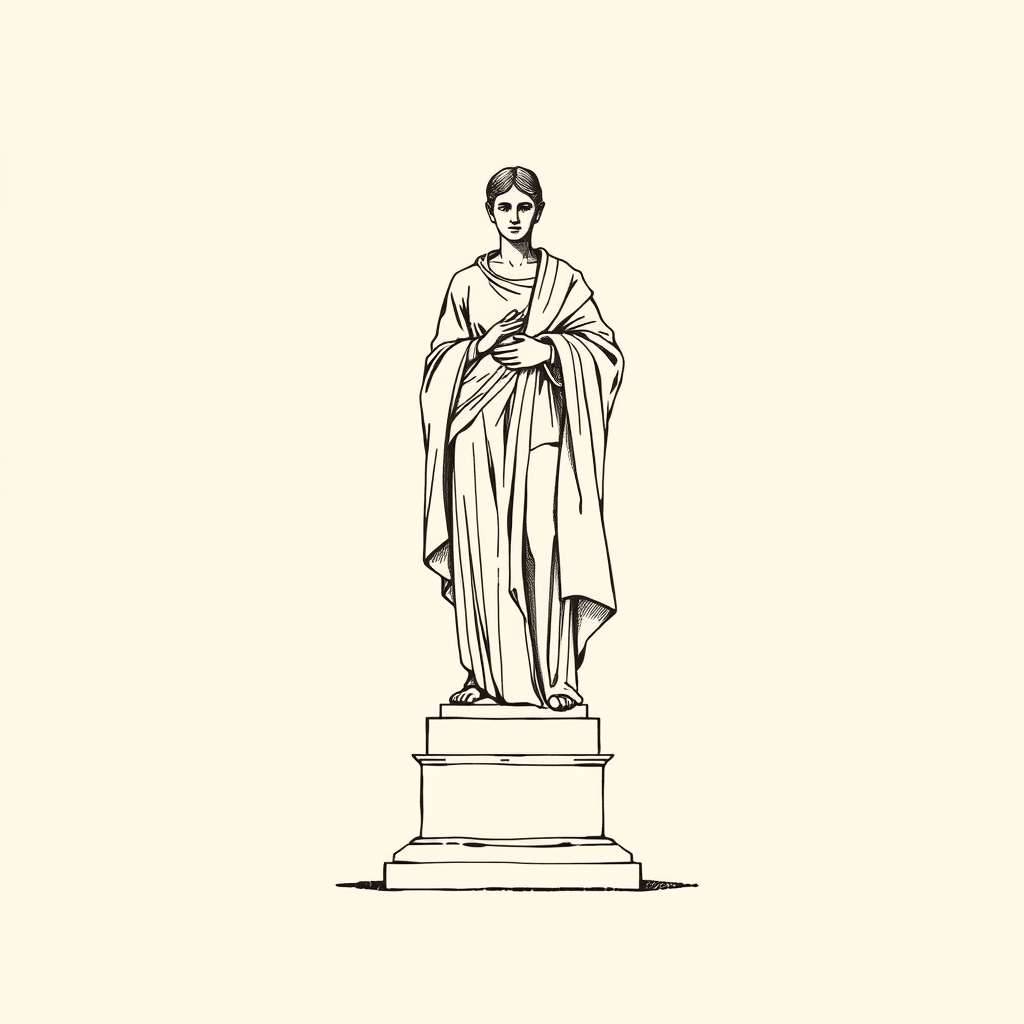
In 1622, the Count of Mansfeld, nicknamed the Attila of Christendom, set fire to the abbey of Hohenbourg, then rushed with his soldiers upon the t reasures of the sanctuary, and pillaged everything of value he found. Penetrating then into the chapel of Saint John the Baptist, the tomb of Saint Eugenia was first the object of his profanation; having been unable to open it, his soldiers broke it with blows from maces. They then removed the bones and the manuscript that contained the history of the Saint, to burn them on the burning ruins of the abbey. But a smell so strong suddenly spread, and a clashing of arms so piercing was heard, that the profaners, seized with terror, fled while abandoning the precious relics. Cardinal Leopold of Austria, then Bishop of Strasbourg, immediately had th e relics of Saint Eugenia b rought down to Obernai, where he kept them hidden for two years. Finally, on August 6, 1624, they were enclosed in a gilded reliquary and carried back in procession to Hohenbourg, amidst an immense gathering of people. They were deposited under the altar of the Chapel of Tears, which took the name of Saint Eugenia, except for some parts that were replaced under the small altar of the chapel of Saint John the Baptist, where the body had been originally buried. The parish church of Obernai obtained a bone from these relics, which was encased in a solid silver statue representing the Saint, and each year, on September 26, her feast was solemnly celebrated in this city, at the Kappelkirche, which, according to tradition, occupies the site of a chapel where Addrie, Saint Odile, and Saint Eugenia once came to pray.
The gilded reliquary that enclosed the relics of Saint Eugenia remained only a few years on the mountain of Hohenbourg. In 1632, the Swedes pillaged and burned Hohenbourg. In 1687, the monastery and the church were rebuilt. One can still see today the chapel of Saint Eugenia or of the Tears; under the altar dedicated to her are the debris of her tomb and all that could be gathered of her precious remains. The parish church of Willgotheim, a small village in Bas-Blön, possesses some fragments of the relics of Saint Eugenia. In t he monaster y founded near Abbeville by Saint Augilbert, there is mention of relics of Saint Eugenia enclosed in one of the altars of the church. One can still see some that are encased in an altar, near the great door, of the Basilica of Saint Matthias, in Trier.
Excerpt from the History of Saint Eugenia, by Father Joseph Alter, and from the Acta Sanctorum.
Iconography
Signs and attributes

Entities
Narrative network
The names, places, and concepts most present in the entry, weighted by centrality in the text.
The supernatural in their life
The miracles of Saint Eugenia of Obernai
Frequently asked questions about Saint Eugenia of Obernai
Who was Saint Eugenia of Obernai?
Born in Obernai in the 8th century, Eugenia joined her aunt Saint Odile at the monastery of Hohenbourg. Having become abbess, she distinguished herself by her heroic charity towards the poor and her life of mystical austerity. She died in 735, leaving behind a reputation for holiness confirmed by numerous miracles.
What is Saint Eugenia of Obernai the patron saint of?
Patronage of Saint Eugenia of Obernai: Obernai.
What is Saint Eugenia of Obernai invoked for?
Saint Eugenia of Obernai is invoked for: protection of the poor, consolation of the afflicted and care of the sick.
How is Saint Eugenia of Obernai depicted in Christian art?
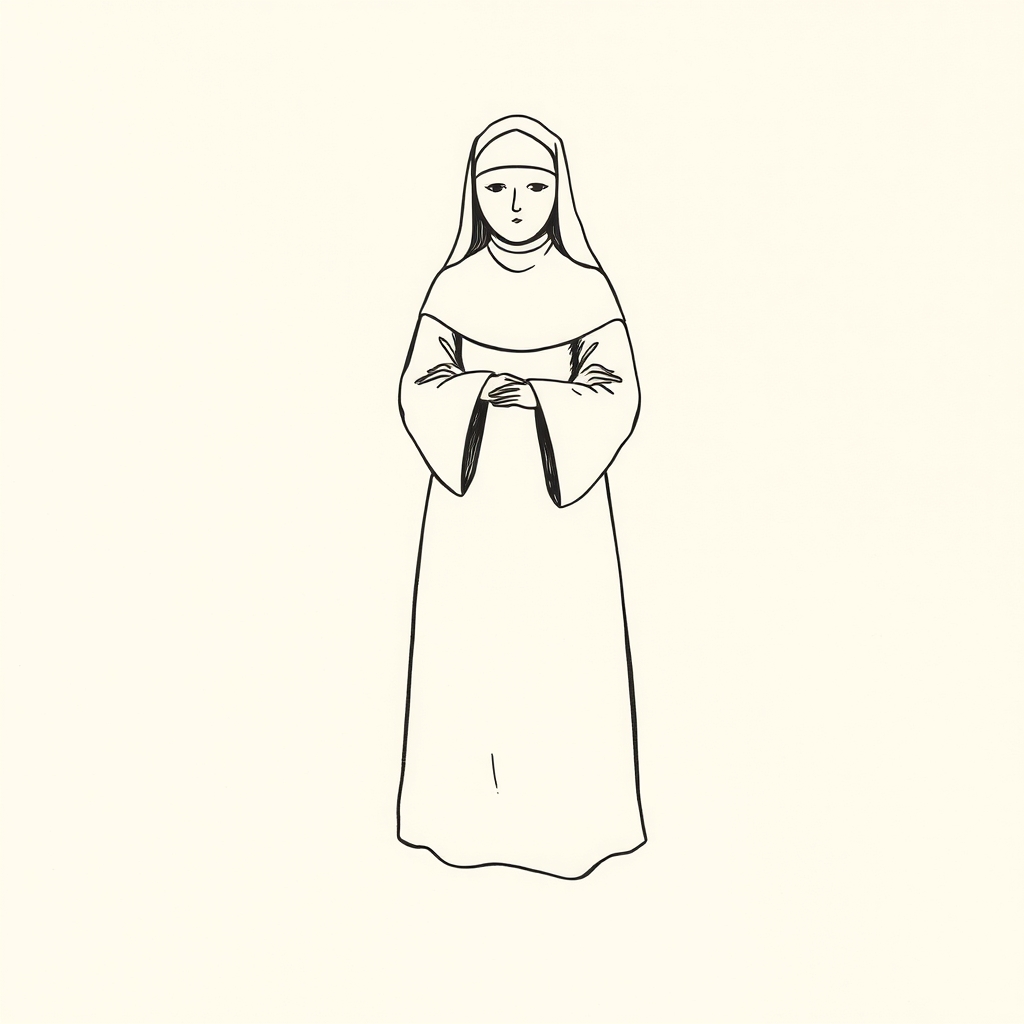
In iconography, Saint Eugenia of Obernai is recognizable by: white veil, solid silver statue (in Obernai) and abbess's habit.
What miracles are attributed to Saint Eugenia of Obernai?
2 miracles are attributed to this saint, notably: Sign / wonder and Healing.
Which saints were contemporaries of Saint Eugenia of Obernai?
Contemporaries include: Saint Hidulph of Trier, Saint Ghislain (Guillain), Saint Lambert (Landebert) and Saint Amand of Maastricht.
When did Saint Eugenia of Obernai die?
Saint Eugenia of Obernai died around 800.
What are the other names of Saint Eugenia of Obernai?
Other forms of the name: Eugénie d'Odernai.
Who are the relatives of Saint Eugenia of Obernai?
Relatives of Saint Eugenia of Obernai: Adelbert (father), Gerlinde (mother) and Sainte Odile (aunt).
Annexes & related entities
Structured data for exploration: events, miracles, quotes, places, attributes, patronages, and important entities cited in the text.
Key Events
- Born in Obernai
- Entered the monastery of Hohenbourg under the direction of her aunt Saint Odile
- Took the veil at the age of 15
- Succeeded Saint Odile as abbess of Hohenbourg
- Governed the monastery for 15 years
- Died in the odor of sanctity in 735
Quotes
-
Everyone who has left houses, or brothers, or sisters, or father, or mother... for my name's sake, will receive a hundredfold
Gospel (cited as inspiration)