
Blessed Louis Alleman
75TH ARCHBISHOP OF ARLES AND CARDINAL OF THE TITLE OF SANTA CECILIA
Louis Alleman was an illustrious prelate of the 15th century, Archbishop of Arles and Cardinal, involved at the forefront of the Council of Basel. After supporting the election of the antipope Felix V, he made amends, worked toward the end of the schism, and spent the rest of his life in deep penance and charity toward the poor. His holiness was confirmed by numerous miracles at his tomb in Arles.
Contemporaries

Figures and markers around the normalized period for this entry.
Guided reading
7 reading sections
BLESSED LOUIS ALLEMAN,
75TH ARCHBISHOP OF ARLES AND CARDINAL OF THE TITLE OF SANTA CECILIA
Formation and early honors
Louis Alleman distinguished himself by his piety and erudition in Valence before being recommended to Pope Martin V by his uncle, the Archbishop of Arles.
regularity, by his love for study and by his assiduity in the choir. Soon his rare merit and his high piety drew all eyes upon him, and caused him to be named primicerius of the church of Valence.
But so much enlightenment and virtue, joined to a devouring zeal for the salvation of souls, demanded a wider field and were to be employed in a more active and profitable manner for the Church of God. François de Conzié, his uncle, Archbishop of Arles and legate of Avignon, having given Pope Martin V the fullest details regarding the merit and knowledge of his nephew, and fame otherwise publishing admirable things about him, the Sovereign Pontiff raised him to the episcopal see of Maguelone, transferred some time later to Montpellier. The university of this city owed him the confirmation of its privileges, which he obtained from Pope Martin V in 1422. Since his promotion to the episcopate, Louis was almost never able to reside in his diocese; he administered it through vicars general whom he delegated for this purpose on March 8, 1419. Martin V had attached him to his person with the title of vice-chamberlain of the Roman Church, during a journey that François de Conzié, who held this dignity, made overseas. He therefore spent almost all this time in Florence, at the court of the Pope, who employed him in the most delicate affairs and entrusted him with negotiations that required great prudence and a sharp mind.
Ecclesiastical Ascension and Diplomacy
Appointed Bishop of Maguelone and then Archbishop of Arles, he became a key diplomat for the papacy in Florence and during the transfers of councils.
It would be difficult to encounter in history a man who rose with as much rapidity as Louis Alleman to the honors of the Church. The archbishopric of Arles having be come vacant in 1422, through the resignation of Jean de Brogni, who was appointed to the bishopric of Geneva, the voice of the clergy and the people called Louis Alleman to fill this seat. Martin V hastened to satisfy wishes so analogous to his own desire, and which he regarded as the expression of the will of Providence.
It had been decided at the Council of Constance that another would be held in Pavia five years later. Several prelates from France and Germany went to that city for this purpose at the beginning of the year 1423. But the plague having broken out there, the Pope resolved to transfer the council to Siena. He deputed Louis Alleman to this republic, as much to have the design of this translation approved by the principal men of the city as to watch over the safety and provisions of those who would come to the council. The opening took place on November 8 of the same year, and the assembly ended in the month of February of the following year (1424). The city of Basel in Switzerland was designated as the place where the council would assemble in seven years.
The Cardinalate and the Council of Basel
Created cardinal in 1426, he played a leading role at the Council of Basel, which unfortunately led to the schism and the election of the antipope Felix V.
The eminent positions entrusted to the Archbishop of Arles increasingly highlighted his erudition, the depth of his doctrine, as well as the holiness of his life, which he always maintained irreproachable, according to the recommendation that the Apostle Saint Paul makes to all bishops in the person of his dear Timothy. Thus, the Sovereign Pontiff wished to give him the most striking mark of his esteem by creating him cardinal, under the title of Saint Cecilia, on May 24, 1426. Louis III of Anjou, King of Naples and Sicily, Count of Provence, had conceived a great veneration for Louis Alleman; and as he desired nothing more than to find the opportunity to give him proof of it, he ratified all the concessions that had been made to the metropolis of Arles by the other princes his predecessors, and confirmed the privileges, immunities, and franchises that the archbishops of this Church possessed in Provence.
However, the time fixed for the Council of Basel arrived. Martin V, by his bull of February 1, 1431, entrusted the presidency to Julian Cesarini, Cardinal of Saint Angelo. A fairly large number of historians have even claimed that the Cardinal of Arles had been appointed by the Pope to assist the Cardinal of Saint Angelo as vice-president, and that such a judicious choice was universally approved, because Julian and Louis were regarded as the foremost men of the Church, as much for their virtues as for their skill; but this fact does not appear sufficiently proven. This council, where the most important interests of religion were to be addressed, tore Louis away for a long time from the care of his diocese and from the works which, until then, had absorbed all his moments and all his thoughts. He played the principal role in these debates which had a great and unfortunate resonance in the Church. Perhaps we must even admit that his presence and his cooperation were an occasion for deplorable troubles, while they should have been a source of peace for Christians. It is known that the Council of Basel resulted in the deposition of the legit imate Pope Eugene IV an d the intrusion onto the pontifical seat of the antipope Felix V.
Repentance and end of the schism
Realizing his error, Louis Alleman worked actively for the abdication of Felix V and obtained the pardon of Pope Nicholas V.
However, the Christian princes sought to restore peace by ending the schism through the abdication of Felix, which they worked to obtain. Let us admire here the hand of God who protects His Church! He who had been the occasion, it must be said the principal instigator of these troubles as a result of a deplorable error, did not delay in opening his eyes and detesting the unfortunately too active part he had taken in these dissensions. Louis Alleman had been the author of the nomination of the antipope Felix; but on the other hand we know, by the testimony of the most trustworthy writers, that he was also the first to beg him to end the schism by his abdication.
Louis announced by this means dispositions very different from those he had previously manifested, and this reparation began to bring hope to all Catholic hearts: it had already begun in 1447, the time at which Eugene IV having died, had as his successor Thomas of Sarzana, who took the name Nicholas V. Negotiations had been started in Lyon from the time of this election; Cardinal Alleman used all his strength to make them succeed, and on April 9, 1449, Felix laid down the tiara that the Council of Basel had placed on his head. Nicholas V granted him fine prerogatives which he went to bury with his tears in his solitude of Ripaille where he died eighteen months later. Louis, from then on, seeing the truth in all its light, was so penetrated with sorrow for having fought the Vicar of Jesus Christ, that following the example of Saint Peter, according to the report of most historians, he did not cease to weep, to implore divine mercy, and he asked for nothing more insistently from heaven than the gift of tears for the rest of his life.
Pastoral life and defense of the faith
Upon his return to Arles, he dedicated himself to the poor, the reconstruction of his diocese, and the defense of the dogma of the Immaculate Conception.
The new Pontiff welcomed the precious tears of Louis Alleman with joy, and he did not delay in restoring to him, as a token of his benevolence, all the dignities of which Eugene IV had stripped him, and later even entrusted him with a legation in Germany, where he had much to suffer. The overly long dissensions that had devastated the Church being thus happily ended, the Pope did not allow our Blessed one to leave Rome, where he had gone to receive his absolution, until he had lavished upon him marks of the most sincere attachment and granted him, for his Church of Arles, precious and extensive indulgences. Louis had himself preceded in his archiepiscopal city by the reputation of his virtues and the new austerities to which he subjected himself to erase his sin of disobedience. Once settled there, he applied himself to giving his flock the most heroic examples of Christian piety and charity. All the time not claimed by the arduous duties of pastoral administration, he devoted to visiting the sick in hospitals; he wished to see their most disgusting wounds and apply the remedy himself. He built churches, enlarged his cathedral, embellished the episcopal palace, founded hospitals, and repaired, through his zeal, all the abuses that had been introduced into his diocese during his absence. Moreover, our Blessed one had never ceased, even during the holding of the Council of Basel, to set the example of the most sublime virtues. All his actions breathed the piety that animated him, and the people had so much veneration for him that they would go in crowds to kiss the fringes of his robe. His piety, his penance, his humility, his patience, his majesty in religious ceremonies, his eloquence, his zeal for the salvation of souls, his abundant alms, were the source of this veneration that was held for him. During all the time he presided over the council, neither study nor fatigue could turn him away from the practice of mortification.
This love for penance alone would suffice to establish a presumption in favor of the good faith he brought to all these discussions, and to distinguish him from all those men who have disturbed the peace of the Church since its origin, and in whom the corruption of the heart had been unfaithful and dried up the source of divine love. But what would justify him even more amply, if the sincerity of his regrets did not sufficiently shelter him from the reproaches of posterity, is the ardor, and one might say the tenacity, with which he always upheld ecclesiastical discipline; but above all the tireless zeal he put into defending the most glorious prerogative of Mary: her Immaculate Conception, and having it decided that its feast would be celebrated througho ut the entire Church . Such a tender devotion toward the Queen of Heaven is certainly not the character of a man knowingly and voluntarily engaged in schism; but therein one finds the most incontestable title of Louis to our admiration and the principal cause of his happy return to the obedience of the Church.
Death and glorification
He died in 1450 in penance. His remains immediately became a place of pilgrimage marked by numerous miracles.
Louis spent a few more years on earth, during which he continued to imitate Christ and to present himself as a model to his people. All virtues shone with the brightest luster in this admirable prelate. He embraced, however, by preference, humility and patience as those most suited to repair the example of pride and obstinacy he had given in unhappy days that he would have liked to erase from his life, but of which he kept the memory in his heart to stir himself to repentance and penance. He also devoted himself with ardor to prayer, and the writers who have spoken of him report that he sometimes retired to the Abbey of Hautecombe, in Savoy, to give himself without distraction to this exercise. Already, during his stay in Basel, he would steal away from his numerous occupations to come to this solitude to retemper his soul in the exercises of penance. Finally, having reached his fifty-ninth year, laden with merits far more than with days, Louis Alleman went to offer his sovereign Judge the double homage of holiness and penance. He died on September 16, 1450, in a monastery of Friars Minor, located on his land of Salonne, four leagues from the city of Arles.
[APPENDIX: CULT AND RELICS.]
The very day of his funeral, a priest of the city of Arles, afflicted with a fever for many years, was suddenly delivered from it by the intercession of the blessed one. From that moment, there was a continuous influx of the sick, the infirm, and the unfortunate of all kinds who only departed while proclaiming the favors they had obtained through the merits of the blessed Alleman.
Immediately after his death, his body was transported to the main church of Arles. From then on, no one doubted that he enjoyed the glory of the blessed, and he was proclaimed a saint by the universal voice of the people, which must be regarded as the voice of God whenever the holiness it exalts has shone so clearly to all eyes. His funeral was that of a father and a saint: the irreparable loss that the diocese of Arles had just suffered was lamented, and arms and hearts were raised toward him to implore his protection.
It would be impossible to enumerate the multitude that attended this ceremony; they came from the entire province of Arles, and, what would seem impossible if Suzius, a contemporary author, did not attest to it, twenty-three cities were represented at the procession of this funeral by a multitude of priests, religious, and even deputies of the people whom they sent there. His precious remains were placed to the right of the high altar of the church of Arles, and from then on a crowd of faithful came to ask for graces from above through the mediation of the one they regarded as endowed with such great power before God. All authors, whatever their opinion may be regarding the affairs of Basel, attest that a great number of miracles took place at his tomb. A large sepulchral slab of white marble was placed in the middle of the choir, where the cardinal is represented in pontifical vestments, with the archiepiscopal cross in hand. On the very site of the burial, against the wall, the following inscription was placed:
Cult and beatification
Officially beatified in 1527 by Clement VII, his cult spread throughout Provence, Savoy, and Languedoc.
Omnia sunt hominum tenui pendentia filo, Et subito casu quae valuerunt ruunt. The odor of his sanctity spreading more and more every day throughout the Christian world, and the miracles that God was pleased to grant to those who invoked him becoming increasingly evident, Clemen t VII, by a brief dated April 9, 1527, granted him the title of Blessed; condescending to the urgings and humble prayers of the people, he also permitted his ashes to be venerated upon the altars. Consequently, they were enclosed in a rich silver-gilt bust, which was destroyed in 1792. An altar was immediately erected to him in the cathedral of Arles; and, shortly thereafter, the religious of Hautecombe, in Savoy, remembering the examples of virtue he had given among them, erected a chapel to him in that beautiful church where he himself had so often addressed the most fervent prayers to heaven. The metropolis of Arles had obtained, by a decree of April 19, 1670, permission to publicly celebrate his office, and his feast was celebrated on the Sunday before the feast of Saint Michael, under the double rite. The office of Blessed Alleman is still celebrated today in the diocese of Montpellier on September 17. Excerpt from the Hagiological History of the Diocese of Belley, by Mgr Dupéry, and local notes. — Cf. Acta Sanctorum, September 16.
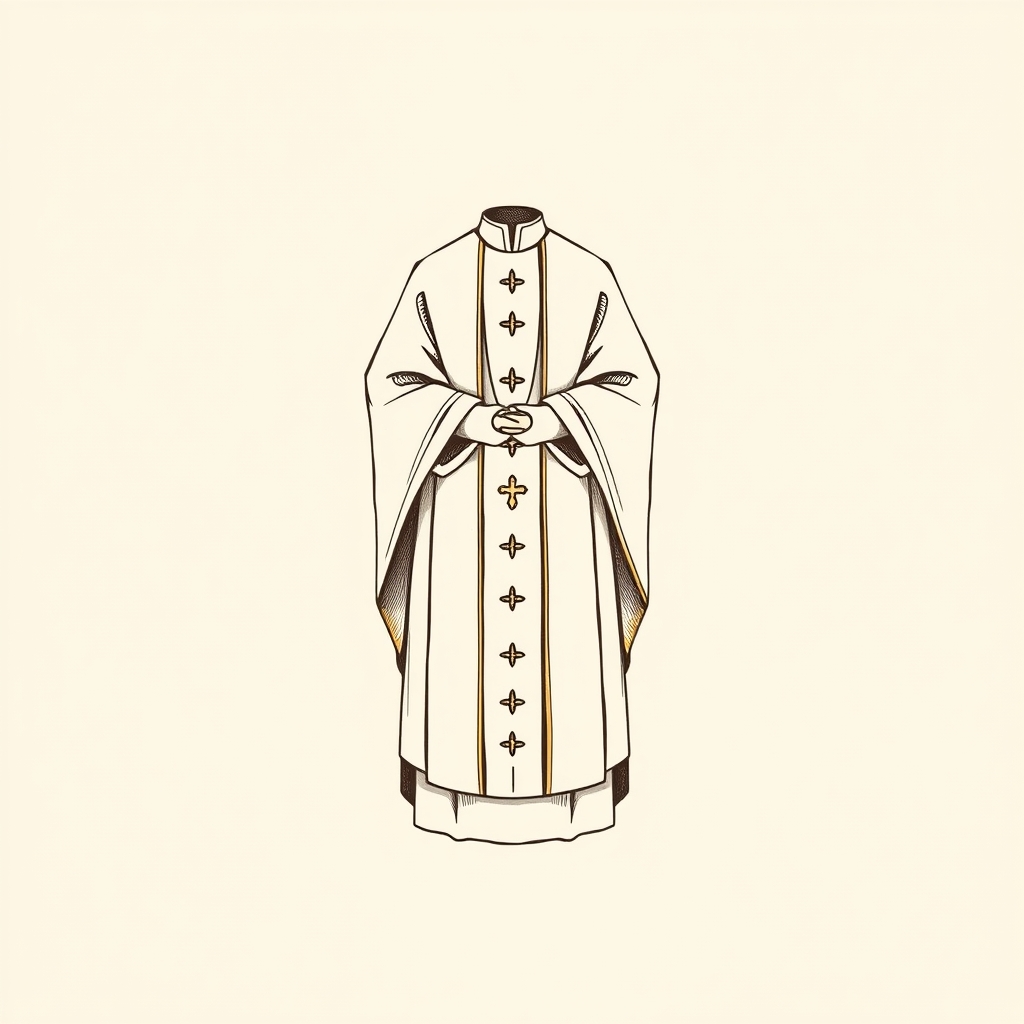
Iconography
Signs and attributes


Entities
Narrative network
The names, places, and concepts most present in the entry, weighted by centrality in the text.
The supernatural in their life
The miracles of Blessed Louis Alleman
Frequently asked questions about Blessed Louis Alleman
Who was Blessed Louis Alleman?
Louis Alleman was an illustrious prelate of the 15th century, Archbishop of Arles and Cardinal, involved at the forefront of the Council of Basel. After supporting the election of the antipope Felix V, he made amends, worked toward the end of the schism, and spent the rest of his life in deep penance and charity toward the poor. His holiness was confirmed by numerous miracles at his tomb in Arles.
What is Blessed Louis Alleman the patron saint of?
Patronage of Blessed Louis Alleman: Arles.
What is Blessed Louis Alleman invoked for?
Blessed Louis Alleman is invoked for: healing of fevers and the sick and infirm.
How is Blessed Louis Alleman depicted in Christian art?
In iconography, Blessed Louis Alleman is recognizable by: pontifical vestments, archiepiscopal cross and cardinal's hat.
What miracles are attributed to Blessed Louis Alleman?
2 miracles are attributed to this saint, notably: Healing.
Which saints were contemporaries of Blessed Louis Alleman?
Contemporaries include: Saint Peregrinus of Auxerre, Saint Ignatius of Loyola, Saint Colette (Nicole) and Saint Andrew Corsini.
When did Blessed Louis Alleman die?
Blessed Louis Alleman died around 1450.
What are the other names of Blessed Louis Alleman?
Other forms of the name: Ludovicus Alemannus and Cardinal d'Arles.
Who are the relatives of Blessed Louis Alleman?
Relatives of Blessed Louis Alleman: François de Conzié (uncle).
Annexes & related entities
Structured data for exploration: events, miracles, quotes, places, attributes, patronages, and important entities cited in the text.
Key Events
- Appointment as primicerius of the church of Valence
- Bishop of Maguelone and later of Montpellier in 1419
- Appointment to the Archbishopric of Arles in 1422
- Created Cardinal of the title of Saint Cecilia on May 24, 1426
- Presidency of the Council of Basel and involvement in the schism of Felix V
- Submission to Pope Nicholas V and retirement into penance
- Died in Salonne in 1450
Quotes
-
Omnia sunt hominum tenui pendentia filo, Et subito casu quae valuerunt ruunt.
Inscription on his tomb