
Saint Euphemia of Chalcedon
AND HER COMPANIONS SAINT LUCY AND SAINT GEMINIANUS, MARTYRS IN ROME
A virgin of noble family in Chalcedon, Euphemia was arrested under Diocletian for refusing to sacrifice to the god Mars. After miraculously surviving numerous tortures (wheels, fire, pits), she died from a bear bite in 303. Her relics played a famous role during the Council of Chalcedon by confirming the orthodox profession of faith.
Contemporaries

Figures and markers around the normalized period for this entry.
Guided reading
8 reading sections
SAINT EUPHEMIA, VIRGIN AND MARTYR IN CHALCEDON
AND HER COMPANIONS SAINT LUCY AND SAINT GEMINIANUS, MARTYRS IN ROME
Context of the persecution
Under the reign of Diocletian, imperial edicts forced citizens to sacrifice to idols during solemn festivals in order to identify and arrest Christians.
Circa 303. — Pope: Saint Marcellinus. — Roman Emperor: Diocletian. "We hope with the future life for a blessed eternity and an eternal happiness." Saint Prosper. During the persecution of Diocletian, the idolaters, in order to easily discover all the Christians and compel them to sacrifice to idols, used a diabolical invention that the priests of the false gods had inspired in them. They held solemn festivals in honor of some divinity and obtained edicts from the emperor to force the inhabitants of the places to attend, and those who failed to do so were immediately arrested as Christians and condemned to cruel tortures. Under Priscus, proconsul of Asia, a priest of Mars instituted one of these festivals in Chalcedon, where there was a famous temple and a notab le image of this false god; everyone was warned to come and sacrifice there to render more honor to this demon, who was called the god of armies. All the citizens were summoned there by edict, to the sound of a trumpet, with dreadful threats against those who would neglect to be present. On this terrible occasion, the faithful divided into several groups and hid in private houses, or withdrew into solitude to render their worship to the true God.
Arrest of Euphemia and her companions
Euphemia, from a noble family of Chalcedon, is arrested with forty-nine other faithful for refusing to sacrifice to the god Mars.
There was, in one of these assemblies, a virgin named Euphemi a, who w as its entire glory because of her eminent virtue, which was known and admired by the whole city. Her father, whose name was Philophron, was from a senatorial family and had held several magistracies. Her mother, named Theodorose, was a ve ry pious w oman, whom God seemed to have given to the poor to assist them in all their miseries. The care that both had taken in the education of their holy daughter had made her a marvel of piety, religion, and mercy.
Appellien, this is the name of the sacrificer of whom we speak, diligently observing the people who were not at the solemnity of which he was the author, soon noticed the absence of Euphemia. He did not delay in notifying the proconsul, who immediately gave orders to seize her; and, as she was found in a company of the faithful, all those who composed it, forty-nine in number, were arrested with her. They were all brought before Priscus, who promised them great wealth and assured them of the emperor's benevolence if they would sacrifice to the god Mars. But the generous confessors, among whom Euphemia was, for her youth, for her beauty, for her birth, and for her piety, like a luminous sun among the stars, all said with one voice and animated by the same spirit: "Know, proconsul, that we adore only the God who, by a single word, drew from nothingness the heaven, the earth, and all that they contain, and that we detest the worship you render to your idols. Give your gifts and offer your honors to souls base and interested enough to be won over by them; as for us, we think so little of them that we look upon them only with extreme contempt; we aspire to only one thing, which is to ascend to heaven to enjoy there an eternal life, which we call the kingdom of God. If you prepare torments for us, far from fearing their violence, we rather fear that they will not be rigorous enough to give us the opportunity to testify our love for Jesus Christ, and to make the power of his grace appear more clearly upon us. Do, therefore, without wasting your time in vain words, a trial of what we say, so that you may see that we are more disposed to suffer your torments than you are eager to make us endure them."
First tortures and miracles
After resisting the threats of Priscus, Euphemia miraculously survives the torture of the wheel and a burning furnace, prompting the conversion of her executioners.
Priscus was so irritated by this speech that he immediately ordered the Martyrs to be tormented for several days with all kinds of tortures: which was cruelly executed. But the more their bodies were afflicted, the more they testified to the joy they felt in suffering. Then he had them put in dungeons to keep them until he could send them to Diocletian, with the exception of Euphemia, whom he took aside, in the hope of winning her over with gentleness. He said everything he thought capable of bending her and shaking her firmness; but it was useless. "I am only a girl," the generous virgin replied, "but do you believe for that reason that I am capable of letting myself be seduced by your deceptive persuasions? I do not fear your artifices, and, young as I am, I will triumph over your malice. I have on my side my Savior Jesus Christ, who will lend me his invisible hand to deliver me from all your snares." The tyrant was so confused to see himself thus despised that, to take revenge for this Christian freedom of Euphemia, he had a machine built with several wheels, and had her placed upon it to be broken and torn to pieces. But the Saint, having made the sign of the cross and called her heavenly Spouse to her aid, emerged glorious from this horrible torture. Her wounds healed in an instant, her flesh regained its former integrity, and her face appeared more beautiful than ever.
This prodigy, instead of softening the proconsul, embittered him even more. He threatened to burn her alive if she did not renounce the faith. "I do not fear this fire with which you threaten me," she told him with an intrepid air, "it is lit when one wants, and it goes out by itself; I have enough courage not to fear pains that last almost only a moment; but what makes me shudder is the thought of that eternal fire which burns and will always burn in hell, of that fire which will ignite more and more, without ever diminishing; of that fire which is prepared for those who sacrifice to idols and who abandon the true God." Meanwhile, a great fire was made in a furnace, with pitch, sulfur, tow, and vine branches: which made the flame rise to forty-five cubits high. The Saint, before being thrown into it, had recourse to prayer and the sign of the cross; but, as two officers of justice were about to execute the tyrant's order and plunge her into this brazier, they saw angels, with a terrible gaze, who threatened to punish them if they had the temerity to lay hands on her. This vision seized them and stopped them. Priscus, seeing that they were delaying too long, ordered two others to take their place: they obeyed, but no sooner had they done so than they were themselves devoured by the flames, while the Saint, remaining tranquil in the middle of the brazier, as if she had been in a place of refreshment, singing the praises of her God, came out without having received the slightest harm, even to her clothes. The first two executioners, named Victor and Sosthenes, were converted at this spectacle, and the very next day, they were exposed to the beasts, which procured for them the glory of mar tyrdom.
The final martyrdom
After triumphing over multiple tortures and trap-filled pits, Euphemia dies in the circus from the bite of a bear, fulfilling her desire to join Christ.
The following day, the proconsul had Euphemia brought back before his tribunal to try to persuade her to sacrifice to the idols: "Is it not madness on your part," he said to her, "to let yourself be tormented in this way and to draw upon yourself, through your stubbornness, the indignation of the gods and the anger of the emperor?" — "Would it then be a sign of wisdom," our holy virgin replied, "to let myself be deceived by your vain solicitations; or rather, would it not be a strange madness to recognize some divinity in stone statues made by the hands of men? Prudence tells me to worship only the true God and to despise your idols." Priscus, despairing of being able to gain anything from her, thought only of inventing the most cruel tortures to torment her. He had her tied to an instrument made of stones and iron blades, which was supposed to dislocate all her limbs; but this torture did her no harm. He then had her thrown into a large pit filled with voracious fish; but she was respected by these animals, who, instead of pulling her down to devour her, carried her on their backs and moved her over the waters. He had another pit dug, where sharp stones, iron spikes, and pieces of saws were thrown, which he had covered with a little earth, so that Euphemia, not noticing this trap, would fall into it when she passed over it: for he attributed all her previous miracles to magic; he imagined, through a prodigious blindness that prevented him from recognizing the powerful hand of God, that being surprised, she would not be able to have recourse to her ordinary magic. But this precaution was useless with regard to the Saint, and very fatal to several idolaters. She passed over the pit without falling into it, being lifted up by the angels, and some pagans, who were following her, rushed into it and perished miserably; these words of the prophet were verified in this encounter: "They have dug a pit and they have fallen into it themselves." He had saws prepared to saw her body into pieces and large pans to roast them and reduce them to ashes; but the iron lost its strength, and the fire went out. Finally, the proconsul, furious that none of his tortures had succeeded, had her exposed to lions and bears to be devoured. The blessed Euphemia could have avoided death this time as well through her prayers and the sign of the cross, as she had triumphed over fire, water, wheels, and other torments; but, having sufficiently shown the power of her celestial Spouse, and ardently desiring to go and enjoy his presence in heaven, she addressed this prayer to him: "My Lord Jesus Christ, Sovereign of all the kings of the earth, after having shown until now the invincible power of your arm, by healing me of the wounds I have received through the violence of the tortures, and by delivering me from all the dangers to which I have been exposed; after having confounded the malice of the demons and shown the madness and weakness of the tyrants, give signs of your mercy toward your servant, and receive the sacrifice of her heart which she offers you with humility. Detach my soul from this mortal body, and place it in your sacred tabernacles among the choirs of your holy angels and those who have shed their blood for the glory of your name." This fervent prayer was immediately answered; for a bear, having given her a single bite without causing her any other wound, and the other animals licking the soles of her feet, she immediately rendered her very pure soul into the hands of the angels, who were calling her to the crown of martyrdom: which happened on September 16, at the beginning of the 4th century. A great earthquake, which occurred at the hour of her death, forced the idolaters to flee, and gave her parents the means to take her body, which they buried near the city of Chalcedon. They blessed God for the grace he had granted their daughter, and considered themselves abundantly rewarded for the care they had taken in her upbringing, since she had procured for them the honor of being the parents of a Martyr.
Martyrdom of Saint Lucy and Saint Geminian
Parallel account of the martyrdom in Rome of the widow Lucy and the patrician Geminian, who was converted by a celestial sign, both of whom were beheaded under Diocletian.
The Church also celebrates on this day the fea st of Saint Lucy a nd Saint Gemin ian, martyrs, who were also put to death under the same Diocletian. Lucy was a Roman lady: having been widowed at the age of thirty-nine, she had spent the rest of her life quietly in the practice of Christian virtues. She was already quite elderly when Euprepius, her son, out of a false zeal for the idolatry he professed, denounced her as a Christian to that great persecutor of the name of Jesus Christ. She was immediately arrested and brought before his tribunal. He asked her if it were true that she mocked the gods of the empire, and that in their place she worshipped a crucified man. Lucy replied generously that there was no other religion than that of the Christians, and that she was ready to suffer for Jesus Christ, fire, chains, and all kinds of torments. Upon this answer, she was cruelly mistreated with blows from sticks; but, during this execution, there occurred an earthquake so violent that it overturned the temple of Jupiter, leaving not one stone upon another. This prodigy not touching the emperor, he had her placed in a copper cauldron full of pitch and molten lead, where she remained for three days, singing psalms to the glory of God. At the end of this time, the prince, knowing that she had received no harm from this torture, ordered that she be paraded, ignominiously laden with iron and lead, through all the crossroads of Rome, in order to draw upon her all the curses of the populace.
She passed before the house of a patrician named Geminian, who was so devoted to idolatry that he had all kinds of idols in his home. A dove of admirable whiteness descended visibly upon him, and, after having fluttered three times in the shape of a cross, it rested on his head. This novelty made him raise his eyes on high; but he was even more surprised to see the heavens opened as if to receive him there. These wonders changed his heart in a moment; he ran after the Saint, prostrated himself at her feet, told her what had just happened to him, and begged her to have him baptized as soon as possible. At the same time, an angel appeared to the holy priest Protasius, and warned him to go immediately to the prison where Lucy was, to baptize the new neophyte Geminian whom he would find there. Diocletian was soon informed of this event; he had both of them brought to him, and, after having made them endure several torments, he placed them in the hands of a judge who was considered pitiless toward Christians, so that he might finish them off with other tortures. This barbarian had their heads struck off with clubs; but a new earthquake having occurred, his audience chamber fell and buried him under its ruins. They were then delivered to another judge, Albofrase, who invented new torments to break them; but they endured them so patiently that their constancy was the cause of the conversion of seventy-five people who accompanied them to martyrdom. The cruelty of this tyrant did not remain unpunished, for, while passing on horseback over a bridge, he fell into the river and was carried so far by the waters that his body could never be found. Finally, Saint Lucy and Saint Geminian, after so many illustrious victories, were beheaded by the command of Megalius, a consular personage, on September 16 of the year 303. A virtuous woman named Maxima took care to remove their bodies and bury them with all the piety and reverence possible in a time when the persecution was ignited with such fury. The nuns of the Visitation of Chaillot, near Paris, possessed a considerable relic of Saint Geminian.
Iconography of the saint
Description of the classic representations of Euphemia with the cross, the pyre, or the bears.
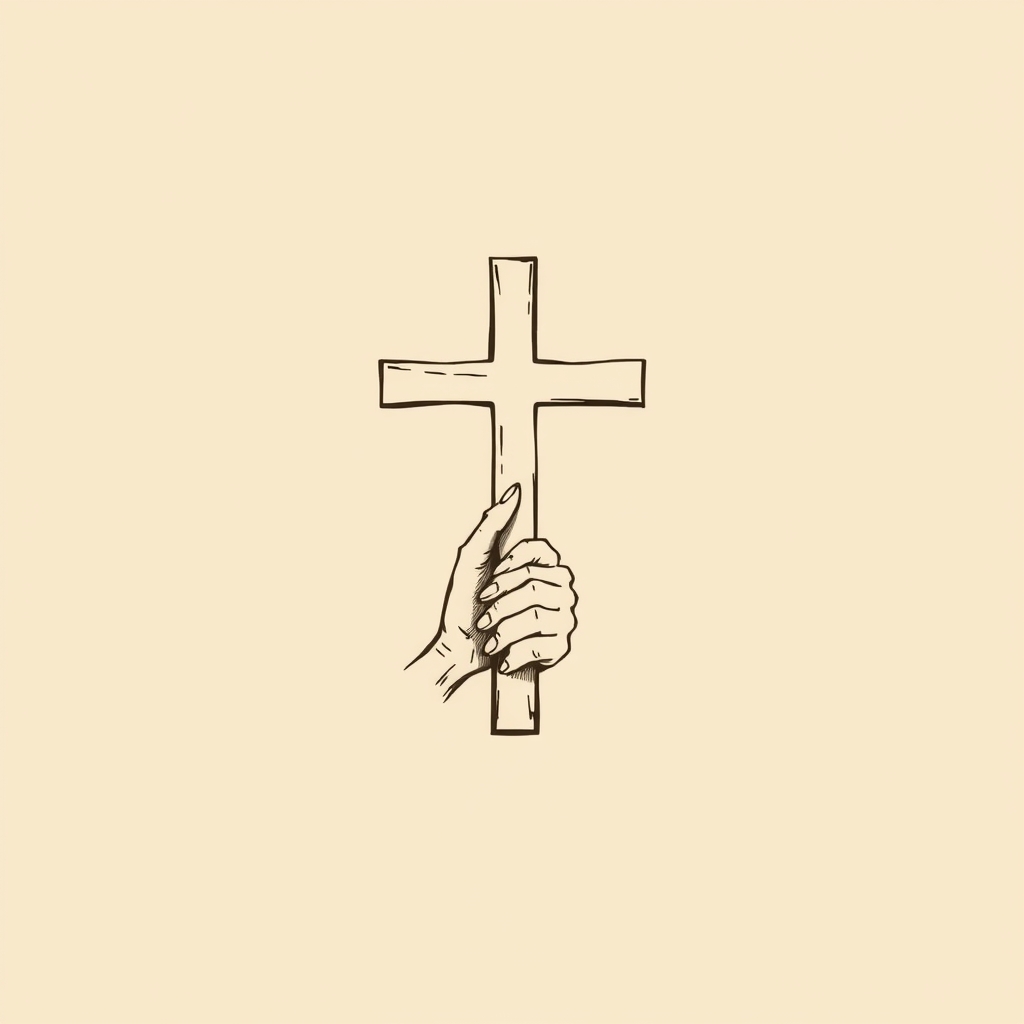
Saint Euphemia is represented with a cross in her hand, to recall that, as she was being led to prison before her final tortures, she stretched out her hands to call upon God for help; and, during this prayer, a cross appeared above her head. — She is also seen on a pyre from which angels divert the flames onto the executioners. — She is sometimes painted at the moment when a bear puts her to death, while other wild animals affectionately lick her feet.
The miracle of the Council of Chalcedon
During the Council of 451, the saint's body is said to have miraculously designated the orthodox profession of faith against that of the heretics.
## CULT AND RELICS.
A magnificent basilica was built in honor of Saint Euphemia at the site of her burial, which became the most famous in the East and was the place where the Council of Chal cedon was held. Some G reek authors report that the Fathers of this Council, wishing to confound the heretics who refused to accept the profession of faith that had been drawn up there, agreed with them that each would write their own separately, and that both would be placed in the reliquary where the body of Saint Euphemia rested; this reliquary was sealed with the seals of both parties; and after three days of prayer, the emperor having had it opened in his presence, the profession of faith of the heretics was found under the feet of the Saint; that of the Christians was found on her breast. Finally, she extended her hands to give the latter to the Patriarch of Constantinople, as the true and orthodox one. However, as it is not the custom of Councils to have recourse to miracles to know the truths of the faith, as they decide only by Holy Scripture, the tradition of the Church, and the writings of the Fathers, and since, moreover, there is no mention of this prodigy in the acts of the Council of Chalcedon, the account of Zonaras, Glycas, and many other authors approved by Baronius is more plausible: they say that after the Council, as the Eutychians were making a great noise in Constantinople about the profession of faith of the Fathers of Chalcedon, and their tumult was tending toward manifest sedition, Patriarch Anatolius, by divine inspiration, proposed to them to place this profession with theirs on the body of Saint Euphemia, and that to their extreme confusion, the Catholic one was confirmed by the miracle we have reported.
Cult and translation of the relics
History of the relics of Euphemia, from their miraculous bleeding to their successive transfers between Constantinople, Lemnos, and Paris.
For several years, the body of this illustrious Martyr distilled drops of blood which were received on sponges to be distributed to neighboring churches, and these precious drops always remained in the same state, without losing their vermilion color over the passage of time. Emperor Maurice, having difficulty believing this prodigy, came himself to the tomb of the Saint and received several of these drops in his hands, which compelled him to confess that God is admirable in His Saints. Her body, due to the incursions of the Persians, was transferred from Chalcedon to Constantinople ; it remained there until the reign of Emperor Constantine Copronymus, who, following the impiety of his father Leo the Isaurian, the destroyer of images and relics of the Saints, did not spare the churches and converted them into arsenals. He especially had the body of this holy virgin thrown into the sea to abolish the cult rendered to her; but God fortunately caused this rich treasure to fall into the hands of some passengers who carried it to the island of Lemnos, in the Hellespont, from where, through the piety of Emperor Constantine VI and his mother Irene, it was brought back to Constantinople with much pomp and magnificence. Before that, Saint Paulinus, Bishop of Nola, had obtained some bones with which he enriched his church, as he himself notes in a hymn he composed in praise of Saint Felix. At the beginning of the 17th century, the Grand Master of the Knights of Malta sent, by an express deputy, a considerable portion to the famous house of the Sorbon ne in Paris, where it was preserved with singular veneration. It was transferred there from the Hôtel du Temple on December 28, 1606, in a solemn procession composed of the rector of the University of the same city and all the doctors of this illustrious house, a large number of ecclesiastics, and an infinity of people.
We have drawn the life of Saint Euphemia from Simeon Metaphrastes, and the cult of Saint Lucy and Saint Geminian from Ado, Archbishop of Vienne. They are reported by Dureus in his volume V.
Iconography
Signs and attributes




Entities
Narrative network
The names, places, and concepts most present in the entry, weighted by centrality in the text.
The supernatural in their life
The miracles of Saint Euphemia of Chalcedon
Frequently asked questions about Saint Euphemia of Chalcedon
Who was Saint Euphemia of Chalcedon?
A virgin of noble family in Chalcedon, Euphemia was arrested under Diocletian for refusing to sacrifice to the god Mars. After miraculously surviving numerous tortures (wheels, fire, pits), she died from a bear bite in 303. Her relics played a famous role during the Council of Chalcedon by confirming the orthodox profession of faith.
What is Saint Euphemia of Chalcedon the patron saint of?
Patronage of Saint Euphemia of Chalcedon: Chalcedon.
How is Saint Euphemia of Chalcedon depicted in Christian art?
In iconography, Saint Euphemia of Chalcedon is recognizable by: holding a cross, pyre, bear, lions and torture wheel.
How did Saint Euphemia of Chalcedon die?
Saint Euphemia of Chalcedon suffered martyrdom for the Christian faith (4th century).
What miracles are attributed to Saint Euphemia of Chalcedon?
5 miracles are attributed to this saint, notably: Protection / deliverance, Conversion, Mastery of the elements and Levitation / bilocation.
Which saints were contemporaries of Saint Euphemia of Chalcedon?
Contemporaries include: Saint Blaise, Saint Hilary of Poitiers, Saint Basil the Great (Archbishop of Caesarea) and Saint Baudilus.
What are the other names of Saint Euphemia of Chalcedon?
Other forms of the name: Euphemia.
Who are the relatives of Saint Euphemia of Chalcedon?
Relatives of Saint Euphemia of Chalcedon: Philophron (father) and Théodorose (mother).
Annexes & related entities
Structured data for exploration: events, miracles, quotes, places, attributes, patronages, and important entities cited in the text.
Key Events
- Arrested with forty-nine other Christians in Chalcedon
- Torture of the wheel broken by miracle
- Trial of the fiery furnace from which she emerged unharmed
- Survived in a pit of voracious fish and a pit of sharp traps
- Martyred by a bear bite in the amphitheater
- Posthumous intervention during the Council of Chalcedon to designate the true faith
Quotes
-
I do not fear this fire with which you threaten me; it is lit when one wishes, and it extinguishes itself; [...] what makes me shudder is the thought of that eternal fire which burns and will always burn in hell.
Response to the proconsul Priscus