
Saint Maurilius
Saint Maurille, bishop and principal patron of the Diocese of Angers, was the subject of numerous relic translations between the 10th and 18th centuries. Honored through miracles and memorial sites such as the Pierre Saint-Maurille, his remains were almost entirely dispersed during the French Revolution.
Guided reading
5 reading sections
CULT AND RELICS.
Burial and patronage in Angers
The body of Saint Maurille was initially deposited in the church of Saint-Pierre in Angers, of which he became the principal patron until the 16th century.
The body of Saint Maurille was deposited in the crypt he had prepared for himself in the middle of the cemetery of the church of Saint-Pierre, which later took the name of the collegiate church of Saint-Maurille, and where the people came to pay him their res pects. The diocese of Angers chose him as its principal patron: a title of which he was not deprived until the end of the 16th century; and it took all the apathy of the 16th century to make him lose the immense popularity he had enjoyed for so long. The return to the Roman liturgy has restored some of his rights.
History of the translations
The text details the multiple transfers of his relics between the 10th and 18th centuries, notably to protect them from Breton invasions.
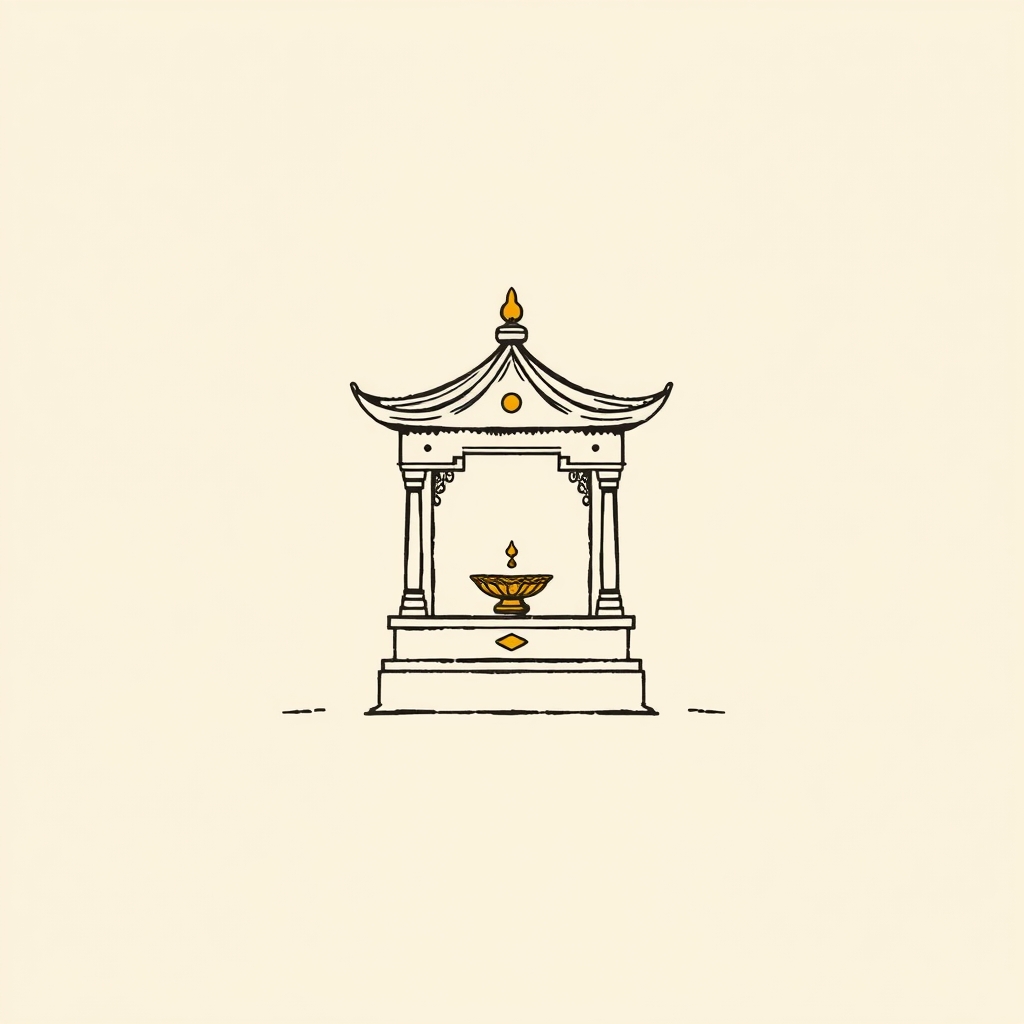
Formerly, several feast days were dedicated to him, in memory of several translations of his relics. The first translation, from the crypt where he was buried to the altar of the church that had been raised in his honor, was celebrated on January 15. In the 12th century, his body was transported to the ca thedral, f or fear of the Bre tons wh o were spreading fire, devastation, and death everywhere. In the 10th century, the most famous of the translations took place, which was celebrated on October 19, the day on which all the others were united, from the end of the 15th century. The relics were placed in a rich shrine and the ceremony was accompanied by several brilliant miracles. In 1239, on August 16, there was another translation of the Saint's relics. The head was separated from the body and placed in a rich silver reliquary. The great shrine was placed on the high altar of the cathedral, and on four columns that served as its shelter at the other end. Two centuries later, this shrine, beginning to fall into disrepair, was replaced by another in gilded silver and studded with precious stones of the greatest value. When the holy body had been deposited there, the shrine was replaced on the four columns where it remained until 1700. At this latter date, the high altar having been moved to the place it occupies today, the shrine was also transferred there; it was placed in a vast crystal tomb which was suspended above the altar. At the Revolu tion, the relics of Saint Maurille were sacrilegiously dispersed, and it is barely the case that a few small fragments of this venerated body remain. The church of Saint-Maurille in Chalonn es possesses a bone of it, and that of Notre-Dame in the same town preciously preserves a molar tooth of the Saint.
Destruction during the Revolution
The relics were dispersed during the French Revolution, leaving only rare fragments preserved in Chalonnes-sur-Loire.
Many churches and altars are dedicated to Saint Maurille, in Anjou and elsewhere. All ancient and modern martyrologies mention this holy bishop. One can still see, on the borders of the parish of Saint-Maurille of Chalonnes and that of Chandefonds, a rock called the Saint-Maurille Stone, from the top of which the Saint proclaimed the word of God; and, on the road that leads to Montjean , a foun tain, long frequented as miraculous, also recalls the memory of the holy apostle, who, it is said, caused it to spring forth by a supernatural virtue. There still remains a small arch above this fountain, which is almost abandoned today. Entire parishes once came there in procession.
Places of memory and miracles
Several natural sites in Anjou, such as the Pierre Saint-Maurille and a miraculous fountain, bear witness to the saint's apostolic activity.
Acta Sanctorum ; — Cf. Histoire de l'Église du Mans, by the R. P. Dom Piolin; and the Vies des saints de l'Anjou, by the R. P. D om François Chamard.
Documentary Sources
References include the Acta Sanctorum and the works of Fathers Dom Piolin and Dom François Chamard on Anjou and Le Mans.
Acta Sanctorum; — Cf. History of the Church of Le Mans, by the Rev. Fr. Dom Piolin; and the Lives of the Saints of Anjou, by the Rev. Fr. Dom François Chamard.
Iconography
Signs and attributes
Entities
Narrative network
The names, places, and concepts most present in the entry, weighted by centrality in the text.
The supernatural in their life
The miracles of Saint Maurilius
Frequently asked questions about Saint Maurilius
Who was Saint Maurilius?
Saint Maurille, bishop and principal patron of the Diocese of Angers, was the subject of numerous relic translations between the 10th and 18th centuries. Honored through miracles and memorial sites such as the Pierre Saint-Maurille, his remains were almost entirely dispersed during the French Revolution.
What is Saint Maurilius the patron saint of?
Patronage of Saint Maurilius: Diocese of Angers.
How is Saint Maurilius depicted in Christian art?
In iconography, Saint Maurilius is recognizable by: reliquary, silver reliquary and crystal tomb.
What miracles are attributed to Saint Maurilius?
2 miracles are attributed to this saint, notably: Mastery of the elements and Sign / wonder.
Annexes & related entities
Structured data for exploration: events, miracles, quotes, places, attributes, patronages, and important entities cited in the text.
Key Events
- Burial in the crypt of Saint-Pierre church
- Translation of relics on January 15
- Transfer of the body to the cathedral in the 12th century for fear of the Bretons
- Solemn translation on October 19 in the 10th century
- Separation of the head and body on August 16, 1239
- Dispersion of relics during the French Revolution