
A monk of Luxeuil who became Bishop of Thérouanne in the 7th century, Saint Omer evangelized the Morini and fought against idolatry. Founder of the monastery of Sithiu, he is renowned for his apostolic zeal, healing miracles, and exemplary piety. His relics rest in the cathedral of the city that bears his name.
Contemporaries

Figures and markers around the normalized period for this entry.
Guided reading
9 reading sections
SAINT OMER OR AUDMAR, MONK OF LUXEUIL
AND BISHOP OF THE ANCIENT SEE OF THÉROUANNE, IN THE DIOCESE OF ARRAS
Election to the Bishopric of Thérouanne
Noted for his fervor, Omer is elected Bishop of Thérouanne by King Dagobert, with the support of the clergy and Bishop Achair of Noyon.
It happens all too often to young men who begin to serve God with great ardor, and slacken afterwards through their negligence; his [reputation] increased so much that it spread throughout all of France. King Dagobert , being informe d of this, had him elected Bishop of Thérou anne by th e free votes of the clergy and the people; Saint Ac hair, Bishop of Noyon, contributed much to it.
Mission among the Morini
Omer works to convert the Morini, who had fallen back into idolatry, assisted by his disciples Bertin, Mommolin, and Bertrand.
Saint Omer found in his diocese an occupation worthy of his apostolic zeal. The Morini (as the peoples of the diocese of Thérouanne were called) had unfortunately fallen back into idolatry, from which they had been drawn by the preaching of Saint Victoric and Saint Fuscien, illustrious martyrs of Jesus Christ, in Amiens, where they were put to death by the cruelty of the prefect Bictiovare. He worked with such application to bring his flock back to the Christian religion that, after enlightening them with the light of the Gospel, he had their idols burned and entirely banished the worship of false gods from his diocese. He was assisted in this holy expedition by Saint Bertin, Saint Mommo lin, and Saint Bertrand, who all three marvelously seconded his zeal as his faithful disciples.
The Miracle of Boulogne
A disobedient cleric is carried away by a storm to England before being miraculously brought back to Boulogne through the intercession of the Saint.
A surprising event is reported concerning Saint Omer which occurred when he was in Boul ogne, a small town in his diocese; and, as it can serve as a great example to show the obedience that one owes to one's superiors, we believed we should not omit it here. A cleric asked him for permission to go and amuse himself on the seashore. The Saint, to whom God had revealed the misfortune that would befall him if he went, expressly forbade him to do so. The cleric did not fail to disregard this, and, having found a small boat used to cross the river at the place where it empties into the sea, he got into it to sail along the shore; but a furious storm having risen suddenly, he soon found himself in danger of shipwreck. The peril made him look into himself; he regretted his fault, and, seeing himself at the mercy of the winds without knowing where he was, he implored the assistance of the holy Bishop. After his prayer, he reached land; but he was very surprised to find himself on the coast of England. The fear of falling into the hands of pirates, in such a distant country, made him redouble his prayers; he conjured the Saint again not to abandon him. Trusting in his pastoral kindness, which he knew well to be informed by a prophetic spirit of the peril he was in, he got back into his boat, and, having a fortunate voyage, he arrived almost in a moment at the same place from which he had departed. He ran immediately to the Saint, prostrated himself before him to ask for pardon for his disobedience, told him everything that had happened, and thanked him for the grace he had obtained through the merit of his intercession. Saint Omer rebuked him severely for his fault, and, having made him reflect on the punishment that God draws from those who despise the orders of their superiors, he forbade him to tell anyone at all about the wonder that had occurred: which the young man faithfully executed, having only revealed it after the death of the holy Bishop.
The Luminous Cross of Jernac
A cross planted by Omer at Jernac becomes a place of pilgrimage and healing after the appearance of a celestial brightness.
But, although he did his utmost to remain hidden from the eyes of men, heaven revealed, through the following prodigy, how pleasing he was to God. While visiting his diocese, he rested under a tree near a village called Jernac (presently Journi), to recover a little from the fatigue of the journey. Upon waking, he had a wooden cross planted at the very spot where he had sat, upon which, the following night, an admirable brightness was seen to appear. Since then, the faithful have singularly honored this same place, as having been consecrated by the presence of such a holy man. All the sick who visit it with devotion receive the healing of their ailments there.
Conversion of Adroald and foundation of Sithiû
The lord Adroald converts and offers his lands of Sithiû, where Omer has a monastery built in honor of the Virgin.
Among the conversions he brought about, that of Adroald is particularl y notew orthy. He was one of the most significant lords of the country by birth and wealth, but he waged a cruel war against Christians and was so devoted to the worship of false gods that there was no hope of winning him to Jesus Christ. Saint Omer undertook this conversion, which met with full success. From then on, Adroald generously practiced the evangelical counsels: for, having no children, he gave all his goods to the Church, and particularly the land of Sithiû, where the Sa int ha d a beautiful monastery built in honor of the Blessed Virgin. "How praiseworthy and happy you are, Adroald," exclaims the historian of this life, "to have thus stripped yourself of earthly goods to clothe yourself in Jesus Christ! You have renounced a temporal inheritance to make yourself the heir of heaven; you had no posterity, and, through your liberality, you have acquired one so numerous that it will endure until the end of time."
Blindness and detachment from the world
Having become blind, Omer briefly regains his sight upon contact with the relics of Saint Vaast before asking to become blind again to better contemplate God.
After having governed the church of Thérouanne with truly pastoral vigilance for nearly thirty years, Divine Providence deprived him of bodily sight, so that, being spiritually enlightened by the lights of faith, he might draw closer to heaven, where he was soon to receive the reward for all his labors. This blindness, however, did not prevent him from attending, along with several other bishops, the translation of the body of Sain t Vaast, wh ich took place around the year 667, where he regained his sight through the touching of the holy relics. But our Saint, who had already tasted how advantageous it was to have his eyes closed to all the things of the world, in order to contemplate the perfections of the divinity with less distraction, begged the same Saint Vaast to return his infirmity to him, so that nothing would be capable of distracting him from the consideration of heavenly things. A happy state in which, no longer being able to see the bodily light, one can gaze fixedly upon the light of heaven, converse with the angels, consider at one's ease the ravishing beauties of paradise, and satisfy oneself, so to speak, with the continuous sight of Jesus Christ!
Passing at Wavrans
Omer died of fever at Wavrans around 667-670, surrounded by celestial signs and a sweet fragrance.
In 667 according to some, 670 according to others, Saint Omer, while on a tour, was seized by fever in a place nam ed Wavr ans, or Wauvrans (at some distance from Saint-Omer, three miles from Saint-Bertin): he then understood that his final hour was approaching. He had himself carried to the church, where, bursting into tears, he offered to God the incense of his prayers, and received, with the sentiments of the most touching piety, the body and blood of the Savior. After communion, he lay down on his bed, where, amidst the singing of a celestial melody, his soul left its dwelling to go and present itself before the majesty of God. At that moment, such a sweet odor exhaled from his body that it surpassed that of the most excellent perfumes.
Iconographic representations
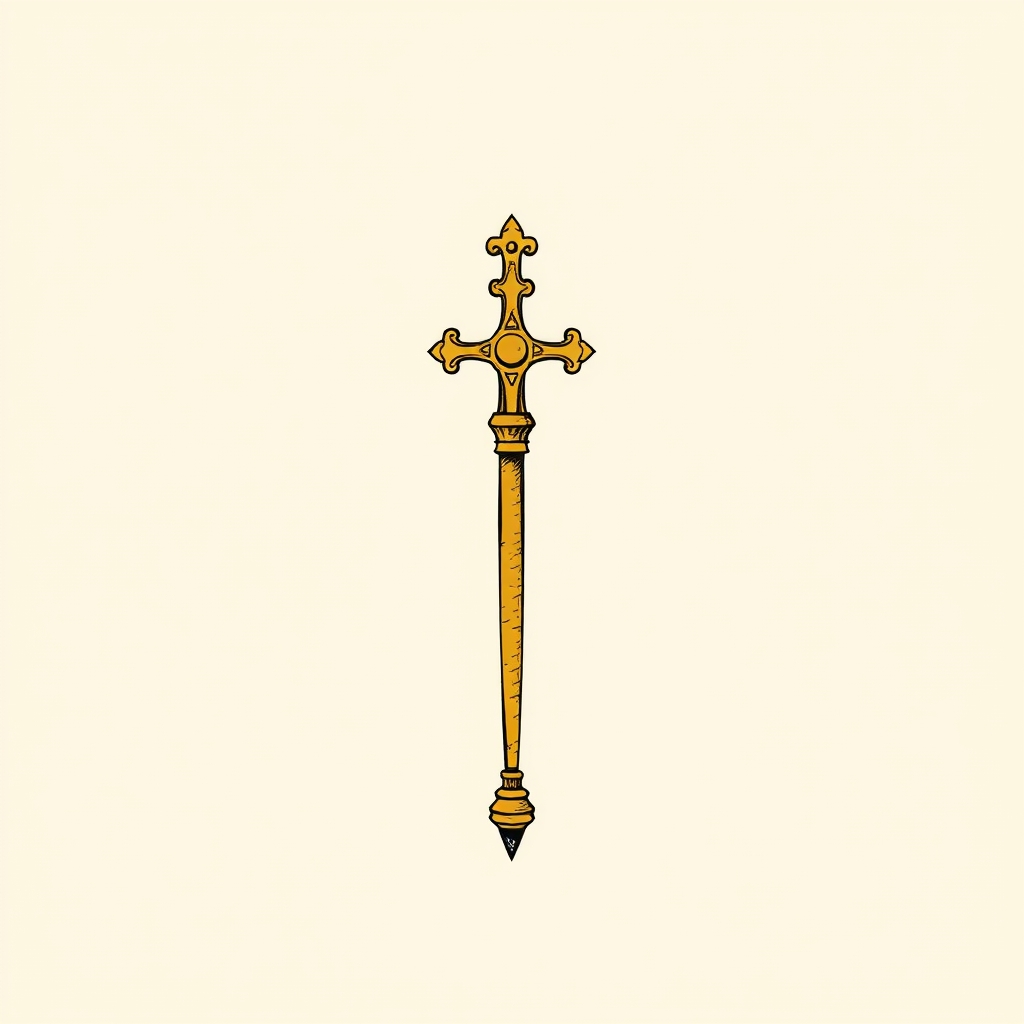
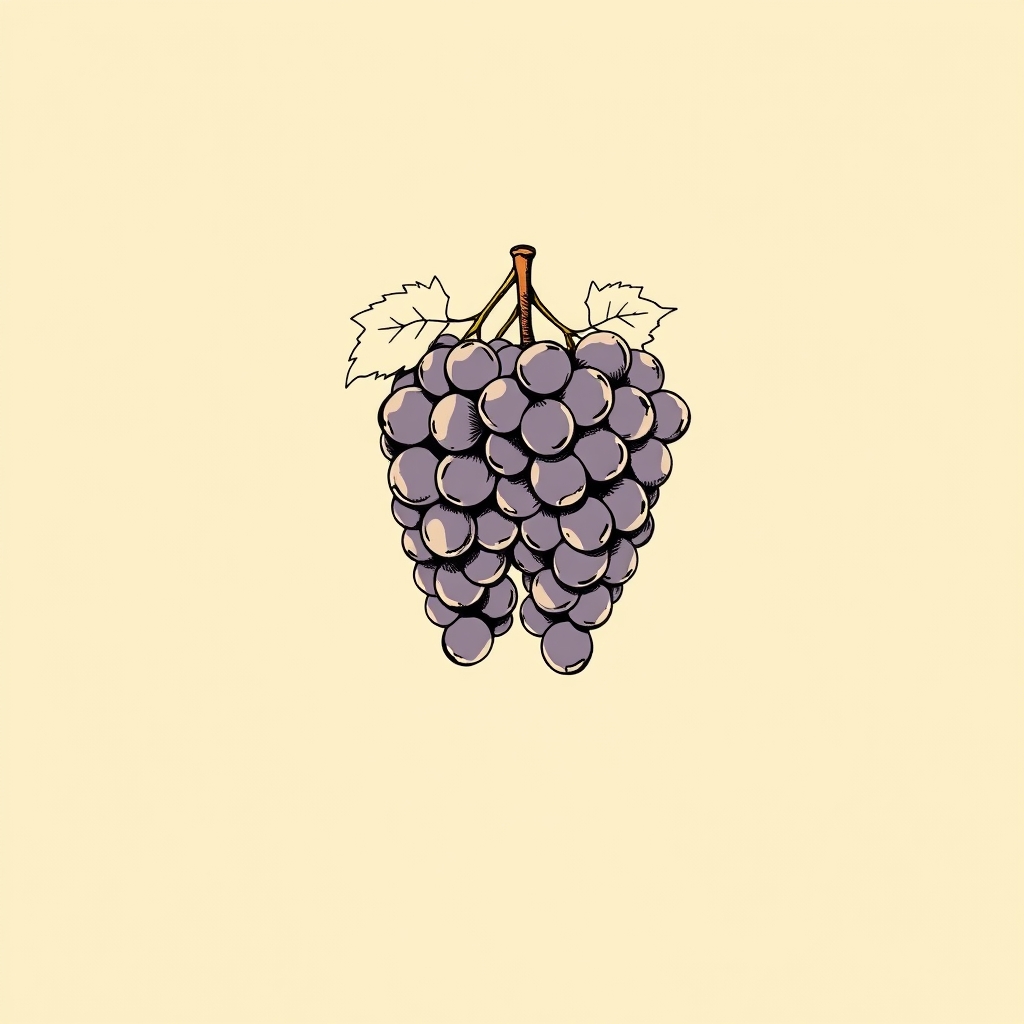
The saint is traditionally represented with a church, a crozier, bunches of grapes, or healing a blind child.
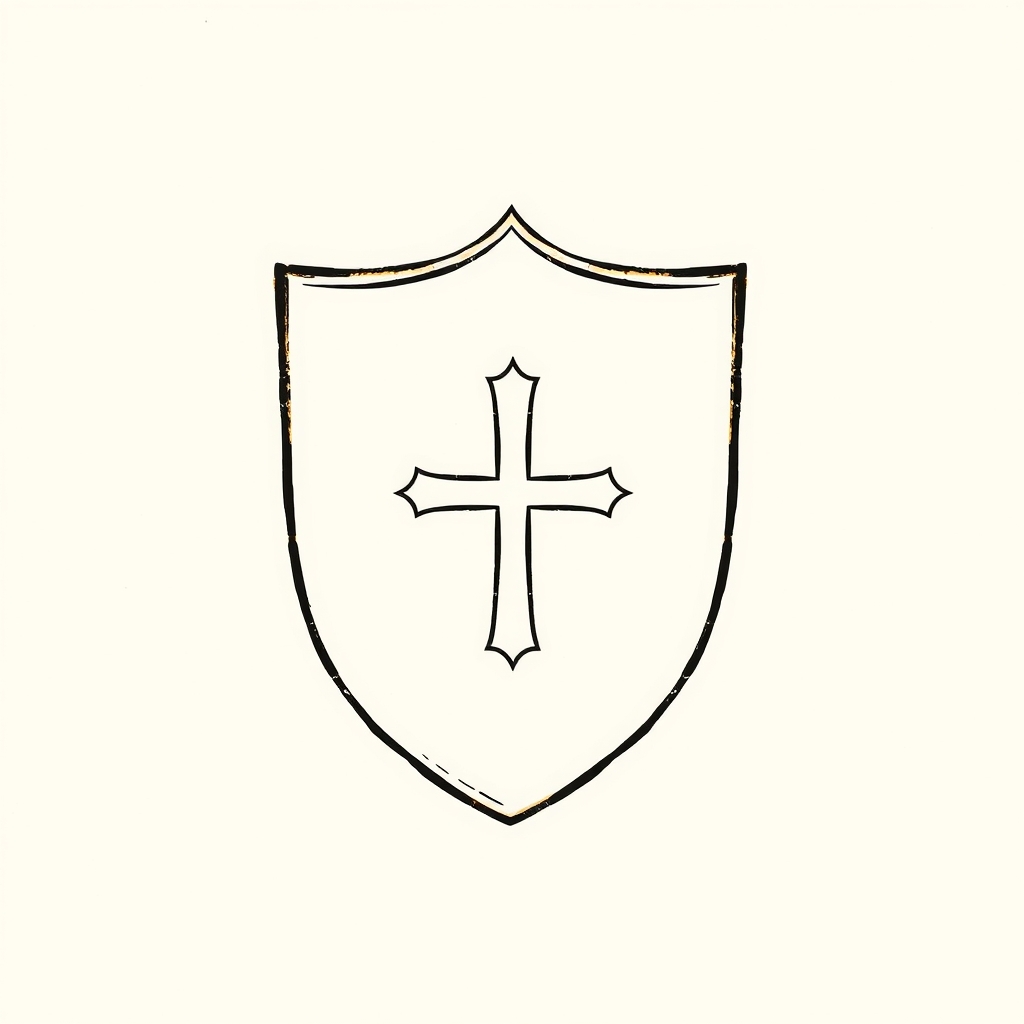
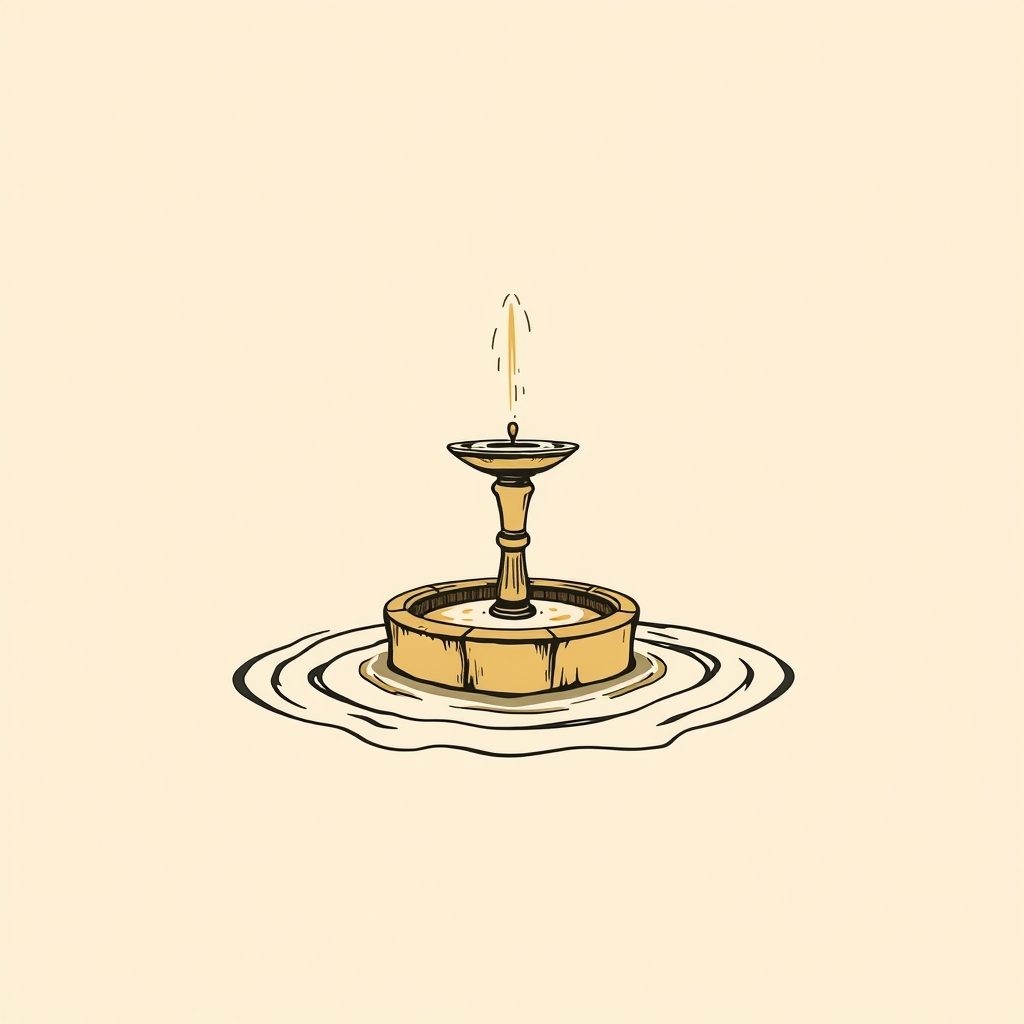
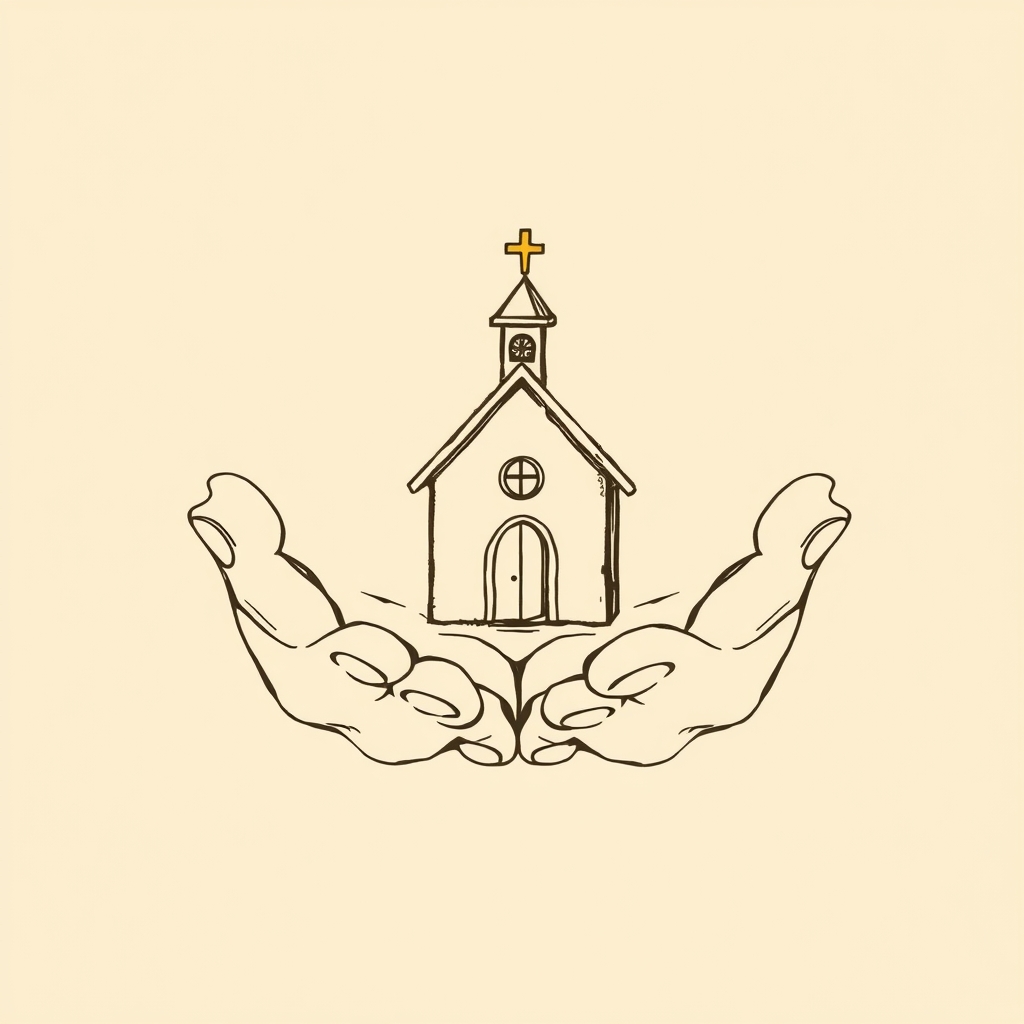
In the seals of the city of Saint-Omer, he often holds a shield charged with the double-barred cross, which is the coat of arms of the city. As can be seen, this attribute indicates the patronage of the Saint, and not a circumstance of his life. — He is represented causing a fountain to spring forth to baptize a sickly and blind child who was presented to him, but who recovered his sight along with his health upon receiving the sacrament. He is also seen, sometimes holding a small church in his hands, with a child at his feet who seems to be emerging from the ground; at other times standing, holding his crozier and two bunches of grapes, and having a reliquary at his feet.
History of the relics and the cult
The body of the saint, preserved in Saint-Omer, survived attempts at theft and the troubles of the French Revolution.
[APPENDIX: CULT AND RELICS.]
Abbot Bertin, informed of his death by revelation, hastened to go to Wavrans at the head of all his monks. Omer had specifically recommended that he be buried in the church of the Blessed Virgin, which he had built for this purpose. The funeral was held with great pomp, but in the midst of universal mourning; everyone wept for a guide, a friend, a father.
The church where he was buried later became the cathedral of Saint-Omer. His body was preserved there, save for a few parts granted to various churches. In the seventeenth century, one could still see at the monastery of Saint-Bertin the pluvial of Saint Omer, a type of cloak so named because of the hood that could be raised to protect against the rain. Hugues, Abbot of Saint-Quentin, having tried to remove the body of the Saint to enrich his monastery, could not get past the village of Lisbourg: for suddenly the coffin became so heavy that no human force could lift it from the ground, which gave Folquin, Bishop of Thérouanne, time to come and recover the sacred relics. This prelate even established, on this occasion, a feast that was celebrated in the month of June. And, to avoid such an accident in the future, he buried the sacred body in a secret place.
It was discovered in 955, and the authenticity of these holy relics was recognized several times in the church of Notre-Dame. In 1269, the head of the Saint was set apart. Before the French Revolution, this head was enclosed in a very rich bust, given by Mahaud or Matilda, Count ess of Flanders. It was behind a grille for which the chapter and the aldermen each had a key. It was brought down on certain feast days with great solemnity, and at that time it was guarded by two canons in copes and by two aldermen. The body of the Saint was placed on the high altar, in a reliquary as precious for the richness of the material as for the beauty of the workmanship.
The old cathedral of Saint-Omer still possesses a notable part of the head of its patron. A goldsmith who, during the revolution, bought the silver-gilt reliquary that contained this precious relic, returned it to respectable persons, and the authenticity was recognized on September 3, 1803; it is now enclosed in a bust representing a bishop. A part of this head was transported to Arras by Cardinal de La Tour d'Auvergne, bishop of that city, and he gave in exchange to the church of Saint-Omer a portion of the relics of Saint Vacet.
Lives of the Saints of the dioceses of Cambrai and Arras, by Abbot Destombes; Legendary of the Navy; Life of the Saints of Franche-Comté; Continuators of Godescard.
Iconography
Signs and attributes
Entities
Narrative network
The names, places, and concepts most present in the entry, weighted by centrality in the text.
The supernatural in their life
The miracles of Saint Omer (Audomarus)
Frequently asked questions about Saint Omer (Audomarus)
Who was Saint Omer (Audomarus)?
A monk of Luxeuil who became Bishop of Thérouanne in the 7th century, Saint Omer evangelized the Morini and fought against idolatry. Founder of the monastery of Sithiu, he is renowned for his apostolic zeal, healing miracles, and exemplary piety. His relics rest in the cathedral of the city that bears his name.
What is Saint Omer (Audomarus) the patron saint of?
Patronage of Saint Omer (Audomarus): City of Saint-Omer and Diocese of Thérouanne.
What is Saint Omer (Audomarus) invoked for?
Saint Omer (Audomarus) is invoked for: healing of diseases and recovering sight.
How is Saint Omer (Audomarus) depicted in Christian art?
In iconography, Saint Omer (Audomarus) is recognizable by: escutcheon with a double-barred cross, gushing fountain, small church in hands, child at his feet, crozier and two bunches of grapes.
What miracles are attributed to Saint Omer (Audomarus)?
5 miracles are attributed to this saint, notably: Mastery of the elements, Levitation / bilocation, Sign / wonder and Vision / apparition.
Which saints were contemporaries of Saint Omer (Audomarus)?
Contemporaries include: Saint Priest (Prix), Saint Gregory the Great (Pope and Doctor of the Church), Saint Die (Didier, Deodat) and Saint Augustine of Canterbury.
When did Saint Omer (Audomarus) die?
Saint Omer (Audomarus) died around 700.
What are the other names of Saint Omer (Audomarus)?
Other forms of the name: Audmar.
Annexes & related entities
Structured data for exploration: events, miracles, quotes, places, attributes, patronages, and important entities cited in the text.
Key Events
- Monk at Luxeuil Abbey
- Election to the bishopric of Thérouanne under King Dagobert
- Evangelization of the Morini and destruction of idols
- Foundation of the monastery of Sithiu on the lands of Adroald
- Loss of sight followed by miraculous healing during the translation of Saint Vaast in 667
- Died in Wavrans during a diocesan tour