
Saint Agricol of Avignon
Born in Avignon in the 7th century, Agricol trained at the Abbey of Lérins before becoming coadjutor and then successor to his father, Saint Magnus, on the episcopal see of Avignon. A zealous pastor and builder of churches, he is famous for having delivered the city from a plague caused by snakes brought by storks. He died in 700 after forty years of episcopate, remaining the principal patron of the papal city.
Contemporaries

Figures and markers around the normalized period for this entry.
Guided reading
8 reading sections
SAINT AGRICOL, BISHOP OF AVIGNON
Origins and education
Born in Avignon around 630 to noble and pious parents, Agricol received a rigorous Christian education centered on the love of God.
Saint Agricol was born in Avignon around the year 630, during the pontificate of Pope Honorius I and the reign of Dagobert I, King of the Franks. Hi s father wa s Saint Magnus, whom tradition traces back to the Albins, those illustrious Romans whom the beauty of the climate attracted to our lands, and whom Provence counted among its governors. Magnus himself filled, with the greatest distinction, the highest offices of the senate that existed at that time in this city. But his piety added even more to the brilliance of his functions and his birth, since, having become a widower, he was called to sit on the episcopal see of Avignon, and, immediately after his death, he was placed in the rank of Saints. As for his mother, who appears to us in hi story under the triple name of Gandaltrude, Angustadiale, or Austaliale, she was of Gallic origin; and, judging by the union she contracted, she must also have been of ancient lineage. These two spouses held the highest rank in the whole region, where the good odor of their virtues had earned them the esteem and consideration of all.
Saint Agricol, born of such commendable parents, was destined for high callings. The education he received corresponded to the illustration of his birth, and even more to the piety of those who gave it to him. The authors of his days knew that the first and most essential of their duties was to raise their family in a Christian manner; thus, they applied themselves, with particular care, to imprint early in their son's heart the fear and love of God, to teach him the truths of our holy religion, to make him taste the maxims of Christianity, and to exercise him, as much as his age could permit, in the practice of the evangelical counsels. They entrusted this delicate mission to no one, convinced that the elevation of their position could not exempt them from an obligation of conscience: in their eyes, moreover, a Christian education was the most precious inheritance that one could transmit to children.
God blessed their tenderness and their solicitude. They had the consolation of soon seeing the seeds of holiness and the inclination for good, which they had brought to life in him, or at least had fortified by their lessons and examples, develop in the young Agricol. They felt, with the sweetest satisfaction, the blessings of heaven spread over him in abundance, and they foresaw from then on what would be in him the marvelous effects of those chosen graces, which the Lord never fails to bestow upon those whom He destines for great things and whom He brings into the world for the salvation of others. Indeed, the precious seeds of piety cast from the cradle into such a well-disposed heart did not wait for the ordinary time of maturity to produce their fruit. One saw with astonishment Agricol, still in his early childhood, practicing virtues that are usually the share of a grown man. Full of respect for his parents, honoring God in their person, he showed entire deference to their advice, a blind obedience to their orders. Nothing was noticed in his actions that smacked of the lightness of childhood; he was distinguished, on the contrary, by the modesty and regularity of his conduct. The fear of the Lord seemed to regulate all his steps; he refused the innocent games and frivolous amusements of which children are naturally so jealous; the practices of religion were his dearest delights, and his ardor reserved all his impulses for works of piety. His assiduity at church did not, however, prevent him from devoting himself to study; it served, on the contrary, as a stimulant to his love for work. With God's help, he thus acquired knowledge in the human sciences which, far from making him proud, made him more careful to fulfill the duties they revealed to him.
Retreat to the Abbey of Lérins
At fourteen, he joined the Abbey of Lérins where he distinguished himself by his asceticism, his obedience to the Rule of Saint Benedict, and his theological studies.
The Lord, who led him by the hand, so to speak, and who wished to be the sole director of his innocent soul, gave him an early taste for solitude, in order to speak to him in the secret of his heart. Indeed, the blessed child had barely reached his fourteenth year when, yielding to the impulse of the Holy Spirit, he courageously tore himself away from the tenderness of his loved ones, from the affection of his friends, and retired to the Abbey of Lé rins, situated o n the island of Planasia, on the coasts of Provence, almost opposite Cannes and in the vicinity of Antibes. He found there masters consummate in the spiritual life; and, under their eyes, fashioned by their hands, he was in a short time able to walk with giant strides in the ways of perfection.
It is very difficult to distinguish oneself among people who have themselves reached the pinnacle of holiness; one must have extraordinary merit for that. Yet it was in the midst of these angels of the earth, "whose conversation was all in heaven," that the virtue of the young Agricol shone with a bright radiance. One admired his purity, his modesty, his charity, and above all his fidelity to the rule in the smallest of its prescriptions. It was hard to understand how, so young, he had made himself master of the movements of his heart, to the point of erasing even the memory of the years he had spent in the world; and it was looked upon as a true prodigy that he could, before the age determined by the Church, and despite the delicacy of his constitution, perform not only the abstinences to which all Christians are bound, but also those which Saint Benedict prescribes to his disciples.
He was then barely entering his adolescence, and already the perfume of his virtues embalmed the whole monastery and the entire island. All eyes were turned upon him; his name was on every lip, and he had ravished every heart. He alone was dissatisfied with himself; he condemned himself in secret; he humbled himself before God; and the favorable opinion that his superiors and his brothers had of his person, he considered as the effect of excessive charity, or as the devices of a skillful zeal that praised him only to encourage him to become better. He spent several years in this way at this holy school, exercising himself in the practice of Christian virtues, and applying himself at the same time with equal ardor to the study of theology and the Holy Scriptures. Whatever attraction he had for penance and prayer, he took care not to steal from study a single one of the moments that the rule devoted to it. But he did not give himself to it with that restless avidity inspired by the immoderate desire to know or the vanity of passing for a scholar. He had learned from his masters that when one studies with such views, one can only reap from one's labors swelling in the heart and dissipation in the spirit. He had, moreover, understood for himself that he who aspires to the priesthood, whatever virtue he may have, must also possess the treasure of science, in order to govern in all safety the peoples who will be entrusted to his solicitude. Thus, the desire to be instructed did not dry up his heart; and he showed by his example that piety loses nothing by study, when study is done for the sake of God.
The surprising progress he had been making for sixteen years in science and virtue determined the Father Abbot of the monastery to have him enter into holy orders. Assuredly, Agricol felt called like Aaron to this sublime honor; but at the sight of its formidable functions, he could not defend himself from a holy terror. It was necessary for obedience to speak very loudly for him to decide to present himself before the bishop, in order to receive from his hands the priestly unction.
Return to Avignon and Archdeaconry
Recalled by his father Saint Magnus, who had become bishop, Agricol was appointed archdeacon and distinguished himself through his management of Church property and his care for the poor.
He had been a priest for only a short time when Saint Magnus, who had been Bishop of Avignon for two years, recalled him to his side. Agricol would have liked to enjoy the inestimable sweetness of religious life and the ineffable consolations of solitude until the end of his days; but, at the voice of his pastor and his father, he did not hesitate to sacrifice his inclinations and his tastes; and he returned to his native city, like the star of day, which in the morning, according to the expression of the Psalmist, rises from the heights of the heavens, like a giant, to run its course. Scarcely had he arrived among his fellow citizens than he was seen, consumed by zeal for the house of the Lord, applying himself tirelessly to the functions of the holy ministry that were assigned to him. He fulfilled them with such wisdom that his father, yielding to the wishes of the entire population, joined him to himself in the capacity of archdeacon in the administration of his church. It was then that our Saint truly appeared as the eye of the bishop, as the holy canons express it.
As a dispenser of the divine mysteries, he had nothing more at heart than to share them with the faithful; and he employed all his activity to prepare them to approach them worthily. Charged with the care of widows and virgins, who, according to Saint Cyprian, are the noblest portion of the Church, he knew how to provide for all their needs and maintain them in piety; a perilous ministry that required nothing less than a virtue as proven as his own; as he was accustomed to watching over himself, he showed himself superior to all the weaknesses to which his youth and the necessary association with a sex always dangerous, even by its virtues, exposed him. As administrator of the temporal goods of the Church, a portion of which must be consecrated to the relief of the poor, he took care not to fail in this mission of charity. As a minister of the holy word of the Gospel, he was always ready to proclaim it, when the infirmities or the great occupations of Saint Magnus left the field free for his zeal. Thus it was that Agricol, by discharging with such fidelity the important functions of archdeacon, showed that he also possessed the qualities of an excellent bishop. He thereby led, without intending to, all minds to desire him as their pastor, and finally to choose him, when the time would come, to succeed his father.
Accession to the Episcopate
Designated coadjutor in 660, he officially succeeded his father in 670 and devoted himself to preaching and ecclesiastical discipline.
Saint Magnus, already weakened by age and the labors of his episcopate, was about to undertake a long journey in the interest of religion, and he wished to prevent the troubles to which his Church might have been exposed if death had surprised him while he was away. Following the example of Saint Augustine, he thought of securing a successor: to make the choice, he consulted the clergy and the notables of the city in a general assembly. The deliberation was not long; all votes were for Agricol, for all wishes had long called for him to replace his father. He was therefore designated, by unanimous vote, as coadjutor to Saint Magnus with future succession. The blessed old man wished to consecrate him himself with his own hands in his cathedral church. It was in the year 660: our Saint was barely thirty years old.
It was a great consolation for Saint Magnus to entrust his flock to another self, to leave his Church to his son, and to give to this cherished spouse, for whom he had worked so hard, a pastor whose zeal equaled his own, who had the same attachment to her, who would follow his maxims in everything, and in whom one would find all the wisdom and all the gentleness of his paternal government. These arrangements made, he left for Chalon-sur-Saône. He attended and subscribed, with several of his fellow bishops, to the council that was held there. Upon returning to Avignon, Magnus lived for about ten more years, thinking only of the things of the other life. Finally, on August 18, 670, he died, leaving to his Church the goods and revenues that remained of his patrimony, and to his people the precious heritage of his virtues, his examples, and his holy relics.
Agricol, seeing himself alone in charge of the diocese, gave himself with untiring zeal to the guidance of his flock. He made himself all things to all men to win everyone to Jesus Christ. He was truly the father of his people, and above all the father of the poor; he employed the greater part of the revenues of his Church for their relief. But even more attentive to the needs of souls, he regularly distributed the bread of the holy word on appointed days; and he always preached, say his old historians, with a force, a simplicity, and an unction that were truly apostolic. He occupied himself with the restoration of ecclesiastical discipline among his clergy, and he had the good fortune to succeed. But he attached himself mainly to preserving among his sheep the sacred deposit of the faith, to preventing the tares from growing there with the good grain, to fighting, to extirpating the errors that the enemy man strove to slip in with the truths of religion. He also applied himself tirelessly to uprooting vices from the midst of his people, to correcting morals, and to removing scandals.
Builder and Founder
He had several churches built in Avignon, including Saint-Pierre and Saint-Didier, and founded a monastery for women under the Rule of Saint Benedict.
All these efforts were not in vain. The number of the faithful increased considerably, and fervor reigned in Avignon. It seemed that there was a holy emulation for good among the inhabitants; the sacraments were frequented; there were no prayers, no public instructions that all the people did not wish to attend; so much so that the cathedral church, the only temple standing at that time, was found too small to contain the crowd. Agricol resolved to remedy this inconvenience. His liberality fertilized his zeal: he had another church built at his own expense. It was his own house, the one where he was born, that he wished to consecrate to such a holy use. This new sanctuary required new ministers, and their maintenance had to be provided for. Agricol, whose zeal was as liberal as it was enlightened, easily found the means to provide for these two objects. His wisdom first led him to choose the ministers he needed to serve it from among the solitaries of the Abbey of Lérins. He therefore brought in religious from that monastery and placed an abbot at their head; he granted them numerous privileges, and in his generosity, he did not fear to allocate a portion of his patrimony to their annual maintenance. A fine example for the rich who, by sacrificing the surplus of the income that Providence has allotted them, could easily create establishments useful to religion or advantageous to the poor!
The monks of Lérins, attached to the new abbey, performed the functions of the holy ministry with such edification that the holy Bishop called others to fill the places in his cathedral that the misfortune of the times and the small number of clerics had rendered vacant. The regularity and fervor that their presence brought about in the ranks of the cathedral clergy did not have a short duration: for several centuries, they were a subject of edification for the city. But due to the instability of human things, this fervor eventually slowed down, and the regularity weakened to the point that the canons no longer wished to live in common, as their predecessors had done until then, following the custom adopted in the Church at that time.
Strong in the zeal that inflamed him, assured of the affection of his flock, Saint Agricol, while working tirelessly to establish the reign of God in hearts, was actively occupied in giving the house of the Lord the splendor and majesty that befit it. According to the generally accepted opinion, our blessed Pontiff also built four churches within the city: two rose near the Roman theater, Saint-Pierre (then called Saint-Pierre and Saint-Paul), and Saint-Symphorien; another, Saint-Didier, was built on the ruins of an old pagan temple in the vicinity of the Arenas, and the fourth, Saint-Geniès, on the edges of the public road that crossed the city, going on one side to Bellinto, and on the other to Cypressetta. He also entrusted them to the monks of Lérins. It seems that by thus fixing such a large number of his former brothers in Avignon, Saint Agricol had knowledge of the future and wanted to save all those he could from the troubles that broke out in Lérins a few years later, and following which the holy abbot Aygulphe or Ayou was massacred with thirty-two religious, on the island of Amatis, between Corsica and Sardinia.
He also founded an abbey for women in the suburbs; he subjected them to the Rule of Saint Benedict and gave them Saint Victoire as abbess, whose name alone has come down to us. This convent no longer exists: the Durance, in one of its frequent and terrible overflows, has carried away even the slightest vestiges. It was around the year 690 that Saint Agricol made his pious foundations. Six years earlier, he had assisted Petronius, bishop of Vaison, at the inauguration of the monastery that this prelate had just founded in the territory of Malaucène, near the source of the Groseau, in honor of Saint Victor and Saint Peter. Seven neighboring bishops accompanied our Saint to this ceremony.
The miracle of the storks
Through his prayers, he delivered Avignon from an epidemic caused by snakes brought by storks, an event that would influence local heraldry.
The ancient acts of the Church of Avignon report that at that time, a considerable flock of storks descended upon the city. These birds, which usually feed on reptiles, deposited such a quantity of dead snakes on the roofs of the houses that the air was soon infected with the most mephitic miasmas, and an epidemic did not take long to break out in the city. Touched by the sad state of his flock, the holy Bishop began to pray, and by virtue of the sign of the cross, he immediately drove away the storks, which fled, never to reappear, carrying away the snakes, the cause of all the evil; thus, when it came time to give a coat of arms to his Church, the stork was chosen, with wings displayed or with a snake in its beak, to appear on its shield. The Church of Avignon also owes to Saint Agricol the practice of singing the divine office alternately and in two choirs. This custom, according to all ecclesiastical historians, had originated in Antioch; Pope Saint Damasus then established it in Rome, and Saint Patient in Lyon; but it was only well after it had been established in Avignon that King Pepin introduced it into France.
Last days and death
After choosing the hermit Veredemus to succeed him, he died in 700 after forty years of episcopate.
After providing for these foundations, Agricol, feeling his end approaching, understood that he must use the years of life that might still remain to him to prepare for a good death. He constantly had before his eyes this sentence of Our Lord, who says to all, but especially to those who are charged with the guidance of others: "Blessed is the servant whom the master will find awake upon his arrival." With this thought constantly occupying him, he applied himself with renewed zeal and fervor to the practice of good works and the exercise of the functions of his pastoral ministry. He watched constantly over himself and his people; his prayers became longer and more frequent, and his austerities redoubled.
So many virtues practiced over such a great number of years, so many labors undertaken for the good of religion, should undoubtedly have inspired him with great confidence at the end of his days, and made him look with a calm and joyful eye upon the death that was about to open heaven to him. He was, however, penetrated with a religious fear at the thought of the judgments of God: his profound humility made him close his eyes to his good works and showed him only his imperfections. It is for this reason that he implored the prayers of his clergy and his people, and that he recommended to the abbot of the monastery he had founded never to forget him, especially in the celebration of the holy mysteries. But he did not limit there the holy industries that his humility inspired in him to obtain sooner the vision of his God and the possession of eternal glory: he also founded in his cathedral a solemn mass that was to be celebrated in perpetuity for the repose of his soul, thus leaving his flock a testimony of his faith touching the virtue of the august sacrifice of the altar.
By occupying himself thus with his final hour, he could obviously not be surprised by death; and, as usually happens to just souls, his filial confidence in God finally taking the upper hand, far from fearing passing away, he ended on the contrary by desiring it. Because he knew that he served a Master full of goodness, he reassured himself of His mercy, and ardently wished, like the apostle Saint Paul, for the dissolution of his body, to be sooner with Jesus Christ. The more this fortunate moment for him approached, the more he glimpsed it with joy; but before dying he wished, following the example of his blessed father, to have a successor designated for him. A hermit from the neighborhood, called Ver edemus, who had come from the depths of Greece to retire to these regions to live more freely the eremitic life, seemed to him the man that Providence destined to replace him in the government of his Church; and it was upon him that he made all the votes fall, by giving his own, in the assembly of the clergy and the people that he convened to deliberate on this subject, according to the custom of that time.
After having provided in this way for the safety of his flock, he bequeathed all his goods to his church and to the most holy Virgin to whom it is dedicated, thus making known the particular devotion with which he had always honored the august Mother of God. He freed all his slaves and rewarded them liberally, in particular the one he had charged with the care of his temporal affairs.
A few days before his death, he exhorted his flock for the last time to the practice of Christian virtues and to the flight from sin; he showed them the dangers of the world, the vanity of its pleasures; he insisted above all on the eternal felicity enjoyed by the Saints. Finally, laden with merits and good works, he expired gently in the arms of God, in whom he had placed all his hopes. His death occurred on September 2 of the year 700; he was in the seventy-third year of his age and the fortieth of his episcopate. All of Provence was dismayed at the news of this death. The city of Avignon was in desolation: it wept for its child, its pastor, and its father. Thus, on the day of his funeral, there was an extraordinary gathering of people following the remains of the venerated prelate: the different bodies of the city accompanied this precious deposit to the cathedral church.
Cult and posterity of the relics
His relics, transferred by John XXII, crossed the centuries and the French Revolution before being restored to public veneration in the 19th century.
## CULT AND RELICS.
Saint Agricol was buried, as he had desired, in the chapel of Saint-Pierre, since called the Saint-Rosaire, and now Saint-Joseph, at the place where there was, before the Revolution, an iron grille. It is impossible to say how many miracles the Lord performed at this sacred tomb. The inhabitants of Avignon immediately realized that they had a powerful protector in heaven. Several chapels were, in a short time, erected in honor of the holy Bishop. One was dedicated to him, among others, at Clary, in the vicinity of Buquemaure: it can still be seen today; formerly, every Saturday of the year, the people of the surrounding area would flock there; all kinds of sick people were brought there, even the possessed, to obtain their healing through the intercession of the Saint. Saint Agricol is still honored at Savolhans, formerly in the diocese of Gap; he is venerated there as the Patron of the parish church, and he has given unequivocal signs of his credit with God there. He was also the titular of the chapel of Loubières (de Lupariis), on an island in the Rhône, between Beaucaire and Tarascon: Urban II mentions this patronage in his Bull of the year 1096, dated from Avignon and addressed to the canons of the cathedral, whose goods he specifies.
In 1321, Pope John XXII, who was then staying in Avignon, had the church which was placed under his patronage rebuilt on larger proportions; he founded there a chapter of twelve canons whom he endowed with munificence, and he transferred there his precious relics as well as those of his father which until then had rested in the cathedral church. The holy bodies were placed in a gilded wooden chest, under the high altar of the new sanctuary. He had the sacred head of Sain t Agricol placed in a silve r bust, so that it could be exposed to the veneration of the faithful and carried solemnly in procession.
In 1393, the people of Avignon judged that his sacred head was not decently enough enclosed in a silver bust; they had another more magnificent one made, all enhanced with gold and precious stones, and weighing one hundred and thirty-seven marks and six ounces. Twelve cardinals, several prelates, and a large number of inhabitants of all conditions made it an honor to contribute to the making of this rich jewel which, from then on, until the French Revolution, was constantly exposed on the Saint's altar and carried in the most solemn processions. Towards the middle of the following century, in 1458, the canonical recognition of the state in which the body of Saint Agricol was found was carried out with the greatest pomp.
In 1495, a pious Confraternity was erected in Avignon in honor of Saint Agricol; it took on new life around 1523 by admitting into its ranks the first magistrates of the country and the elite of the Avignon nobility. About a hundred years later, it received a signal favor: in 1618, Pope Paul V granted it numerous indulgences in perpetuity; which maintained fervor in its midst for a few more years. But, due to the weakening of religious sentiment, so general at that time, this pious association eventually disappeared, and, in the middle of the last century, hardly a memory of it remained. In 1539, Mgr the vice-legate Charles Contaniess, bishop in partibus of Cairo, separated the relics of Saint Agricol from those of Saint Magne, and, having enclosed each in a leaden chest, he placed them again under the high altar of our Saint's church. In 1612, the high altar having been moved because of the enlargement of the apse, the relics underwent a new translation. In 1625, the Archbishop Marius Filonardi permitted the changing of Saint Agricol's reliquary and its deposit in a wooden chest lined with gilded lead on the inside and brocade on the outside; he himself presided over the ceremony, which was magnificent, as well as the general procession that took place on this occasion.
In 1628, the Rhône overflowed its banks and was on the point of entering the city. In this extremity, the eyes of the Avignonais immediately turned towards their celestial protector, and, in a few hours, the river had resumed its accustomed course. In recognition of this benefit and to perpetuate its memory, public piety erected a statue of Saint Agricol in front of the Rhône gate itself, downstream from the Saint-Bénézet bridge, as if to command the waves. An unforeseen accident caused the fall of this monument in 1660, which was soon rebuilt. The same happened a century later, in 1763.
In 1647, Saint Agricol was chosen as the first patron of the city of Avignon, and it was from that time that his feast day was observed in the city as a holiday equal to Christmas and Easter. This feast remaining confined to the city walls, the Sacred Congregation of Rites, at the request of the Council, extended it to the suburbs, as is evident from the ordinance of Mgr de Manzi, dated August 7, 1764.
In 1793, the church of Saint-Agricol was closed like all the others; and, after having served for some time as a workshop for blacksmiths, it became a general storehouse for gunpowder and saltpeter. It was not until 1795 that it was returned to the Catholic religion by the municipality, at the insistence of a few men of faith. In 1801, it resumed its rank as the first parish of the diocese, to which it united, until 1830, that of cathedral, the ancient metropolitan basilica of Notre-Dame des Doms having only been able to be entirely restored at that time.
As for the relics of Saint Agricol, they were saved from profanation by the hands of a sworn priest, named Pignatelli, who had them hidden with those of Saint Magne at the bottom of a tomb near the choir. They were found in 1810, and, in 1826, Mgr de Mons returned them to public veneration. They were then replaced under the high altar where they still are today. Despite the events that have followed one another since the beginning of this century, the devotion of the Avignonais towards their patron Saint has undergone no alteration, and it has emerged from the revolutionary turmoil as pure as on its first day. The public solemnity, instead of taking place on September 2, is celebrated on the following Sunday with less pomp than before. The proper office of the Saint, which Mgr de Gontery had composed in 1741, was approved in 1856 by the Holy See and imposed not only on the city and its territory, but also on the entire diocese. And every time the population feels the hand of God weighing upon it, it resorts with confidence to its celestial protector, and it never fails to feel promptly the salutary effects of his powerful credit in the celestial abode.
Taken from the Life of Saint Agricol, by M. Augustin Cauron. — Cf. Acta Sanctorum.
Iconography
Signs and attributes


Entities
Narrative network
The names, places, and concepts most present in the entry, weighted by centrality in the text.
The supernatural in their life
The miracles of Saint Agricol of Avignon
Frequently asked questions about Saint Agricol of Avignon
Who was Saint Agricol of Avignon?
Born in Avignon in the 7th century, Agricol trained at the Abbey of Lérins before becoming coadjutor and then successor to his father, Saint Magnus, on the episcopal see of Avignon. A zealous pastor and builder of churches, he is famous for having delivered the city from a plague caused by snakes brought by storks. He died in 700 after forty years of episcopate, remaining the principal patron of the papal city.
What is Saint Agricol of Avignon the patron saint of?
Patronage of Saint Agricol of Avignon: Avignon and Savolhans.
What is Saint Agricol of Avignon invoked for?
Saint Agricol of Avignon is invoked for: protection against epidemics, protection against flooding of the Rhône and healing of the sick and the possessed.
How is Saint Agricol of Avignon depicted in Christian art?
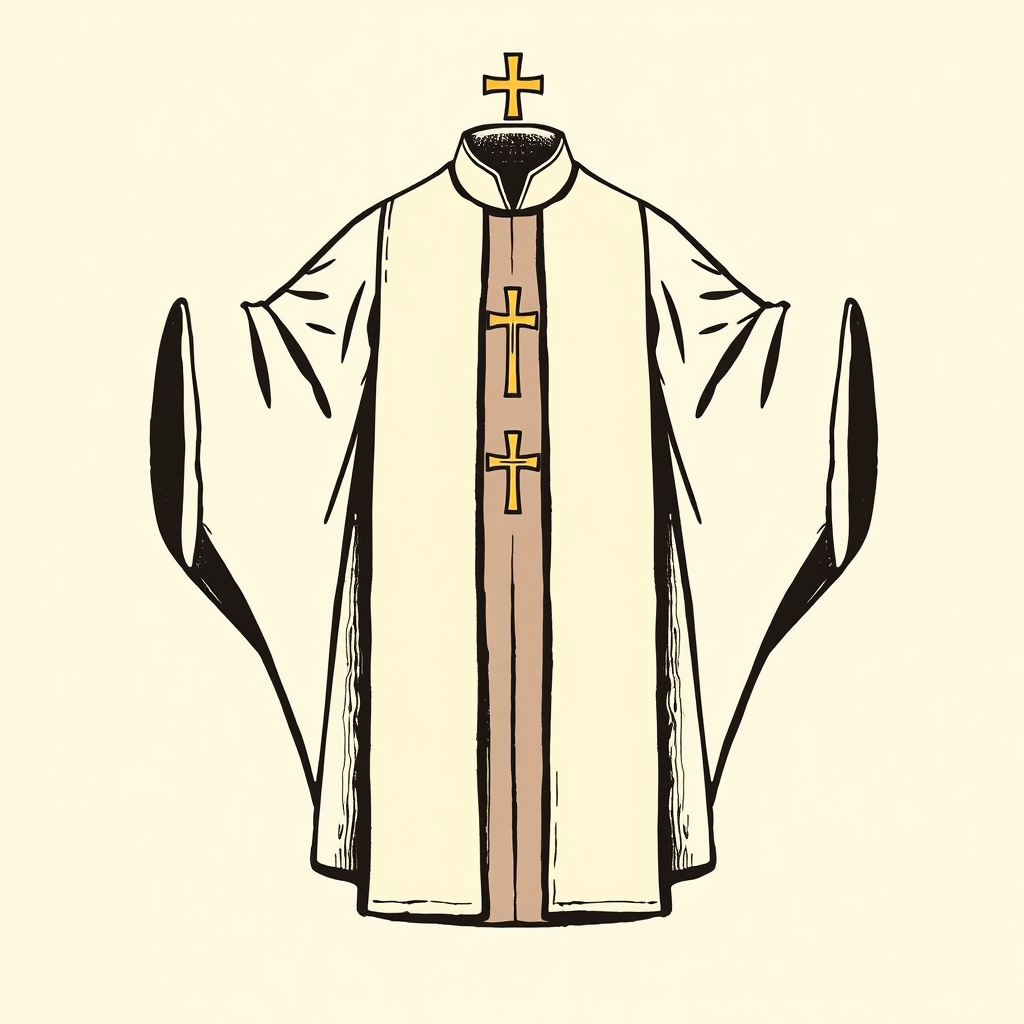
In iconography, Saint Agricol of Avignon is recognizable by: stork, serpent in beak and episcopal vestments.
What miracles are attributed to Saint Agricol of Avignon?
3 miracles are attributed to this saint, notably: Protection / deliverance, Mastery of the elements and Healing.
Which saints were contemporaries of Saint Agricol of Avignon?
Contemporaries include: Saint Priest (Prix), Saint Gregory the Great (Pope and Doctor of the Church), Saint Die (Didier, Deodat) and Saint Augustine of Canterbury.
When did Saint Agricol of Avignon die?
Saint Agricol of Avignon died around 700.
Who are the relatives of Saint Agricol of Avignon?
Relatives of Saint Agricol of Avignon: Saint Magne (father) and Gandaltrude (ou Angustadiale, Austaliale) (mother).
Annexes & related entities
Structured data for exploration: events, miracles, quotes, places, attributes, patronages, and important entities cited in the text.
Key Events
- Born in Avignon around 630
- Entered the Abbey of Lérins at the age of 14
- Priestly ordination after 16 years of monastic life
- Appointed archdeacon of Avignon under his father
- Consecration as coadjutor of Avignon in 660
- Succeeded his father Saint Magnus in 670
- Foundation of several churches and a convent for women around 690
- Deliverance of Avignon from an invasion of storks and snakes
- Died at the age of 73
Quotes
-
A pastor who loves God feeds his flock with his word, his example, and his goods
Saint Bonaventure (as an epigraph)