
Sister of Saint Bernard of Clairvaux, Hombeline renounced worldly splendor after a profound conversion. After living in seclusion within her marriage for two years, she became the first abbess of the monastery of Jully-sur-Sarce. She led a life of austerity and prayer there until her death in 1141.
Contemporaries

Figures and markers around the normalized period for this entry.
Guided reading
5 reading sections
SAINT HOMBELINE OR EMBELINE,
FIRST ABBESS OF JULLY-SUR-SARCE.
Conversion and Repentance
Hombeline, adorned with pomp, is rejected by her monk brothers; touched by their severity, she renounces vanity and adopts a life of piety within her marriage.
1141. — Pope: Innocent II. — King of France: Louis VII, the Young. Dixi ego in corde meo : Affluam deliciis et fruar bonis. Et vidi quod hoc quoque esset vanitas.
I said in my heart: I will immerse myself in delights and enjoy good things, and I saw that this too is vanity. Ecclesiastes, II, 1.
Hombeline was the daughter of Tescelin and Aleth, and the only sister of six brothers, the most illustrious of whom is Saint Bernard. She came into the world at the castle of Fontaines, near Dijon, in the year 1092, and was offered to God from her birth. She bore the most tender affection for her brothers: thus, when Bernard had drawn five of them with him into solitude, she could not conceal her grief. She accused the future abbot of Clairvaux of being the author of the ruin of her house and her future, and in a tone in which discouragement, affection, annoyance, respect, and hope were all evident, she begged him to suspend his plans; she implored him to have regard for the white hair of a father, for the abandonment in which he left the youngest of his brothers, so as to take pity on a weak sister whom he had loved so much and who would soon find herself alone and without support. She could not shake him: she herself was one day to feel the influence of Bernard's virtue.
Left alone with her father and her young brother, Hombeline soon accepted an alliance with a noble lord, a relative of the Duchess of Lorraine. Although she had preserved in her heart the sentiments of religion that her pious mother had developed there, she allowed herself to be dominated by the love of the world and its comforts. She swam in luxury and abundance, refused nothing to her slightest desires, and lived in the world amid pleasures and festivities.
God, however, inspired her with the desire to go to Clairvaux to visit her brother. She traveled accompanied by a numerous retinue and a brilliant train; she doubtless wished, by this magnificent display, to uphold the dignity of her rank and do honor to Bernard's reputation. But the thoughts of the Saints are very different from those of the world. Bernard, learning of the proud pomp displayed by his sister, could not bring himself to see her. He regarded this grandeur as a snare laid by the devil to ruin her soul and those of his brothers. The latter, following Bernard's example, likewise refused to speak to her, and one of them, Andrew, having been unable to avoid meeting her, opened his mouth only to address severe words to her. Hombeline, touched by grace, burst into tears: “I know,” she cried, “that I am but an unworthy sinner; but did not Jesus Christ die for those like me? If my brother despises my body, let not the servant of God despise my soul. Let him come, let him order, let him command, and I will obey him, and I will do what he says.”
Bernard could resist no longer, and, accompanied by his brothers, he received the noble lady, now humble and repentant. He had a serious conversation with her, reconciled her with God, and gave her as a rule of life the one her mother herself had kept in marriage: the flight from worldly vanities, the curtailment of luxury in dress, inner silence, and the practice of good works. Hombeline returned home, and her conversion was a subject of astonishment and edification for everyone. People admired in her the power of grace and blessed God who, in the midst of the world, caused a person of her rank to lead a life so opposed to the spirit of the world. She thus lived two years with her husband, who then freed her from the yoke of marriage, according to the discipline of the Church, and permitted her to give herself entirely to the service of God.
Entry into the monastery of Jully
After being released from her matrimonial obligations, she retired to the monastery of Jully-sur-Sarce to follow the Rule of Saint Benedict under the direction of Bernard.
Having become free, Hombeline retired to the monastery of Billette (this is the name that the monastery of Jully-sur-Sarce bore for a long time), and there embraced the Rule of Saint Benedict, under the eyes of the Abbot of Clairvaux. She spent the rest of her days there in penance, was chosen to lead her companions, and showed herself in all things worthy of Saint Bernard and his brothers. Often, she spent the night reciting psalms and meditating on the Passion of Jesus Christ; she barely granted herself a few moments of sleep, and even then, she only took this rest on the edges of her bed. The first to all exercises, she preferred to seek out the most arduous and humiliating tasks, wishing thus to expiate the pomp and pride that she had loved so much in the world.
Passing and Last Sacraments
Hombeline died in 1141, assisted by her brother Bernard and Prior Pierre, after sixteen years of rigorous penance.
Hombeline lived for sixteen to seventeen years under the discipline of the monastery, and when her soul was purified by the austerities of her life, the tears of her penance, and the fire of her love for Jesus Christ, she went to receive in heaven the eternal reward for her labors. She had the consolation of being assisted in her final moments by the illustrious Abbot of Clairvaux. Despite the exhaustion to which illness had reduced her, she found enough strength and clarity of mind to converse at length with her brothers about divine things and the infinite mercy of God toward her; she particularly thanked Bernard for his charity toward her, attributing her conversion to him after God, then she expired gently in his arms and those of the blessed Pierre, prior of the monastery and her confessor. It was the year 1141, and Hombeline was entering the fiftieth year of her age.
Cult and posterity
Her memory is honored on August 21 in Cistercian and French calendars, and her relics rest at Jully-sur-Sarce.
Her death is marked in the necrology of Cîteaux and in the martyrology of France on August 21, the day after the feast of Saint Bernard, undoubtedly to join the cult of the sister to that of the brother. However, there is no mention of her in the Roman martyrology.
Her authentic relics are in the church of Jully-sur-Sarce.
Sources and additional mentions
The text relies on the works of Abbé Defar and briefly mentions Saint Avitus of Clermont.
Excerpt from the Life of the Saints by Trogas, by Abbé Defar.
SAINT AVITUS I, BISHOP OF CLERMONT AND CONFESSOR. 103
Additional passages recovered from the sources
These passages from Les Petits Bollandistes supplement the entry. The references identify their context in the original volume.
Read the supplementary notes and passages (1)
Source and restoration of the beginning of the entry
The beginning of this entry had been omitted during extraction. The recovered page is reattached to the existing body, preserving the phrasing and chronology of the historical source.
Paul Guérin, Les Petits Bollandistes, volume 10, p. 101, 102. Bibliothèque nationale de France: https://gallica.bnf.fr/ark:/12148/bpt6k30740r
Iconography
Signs and attributes
Entities
Narrative network
The names, places, and concepts most present in the entry, weighted by centrality in the text.
Frequently asked questions about Saint Hombeline (Embeline)
Who was Saint Hombeline (Embeline)?
Sister of Saint Bernard of Clairvaux, Hombeline renounced worldly splendor after a profound conversion. After living in seclusion within her marriage for two years, she became the first abbess of the monastery of Jully-sur-Sarce. She led a life of austerity and prayer there until her death in 1141.
What is Saint Hombeline (Embeline) the patron saint of?
Patronage of Saint Hombeline (Embeline): Jully-sur-Sarce.
How is Saint Hombeline (Embeline) depicted in Christian art?
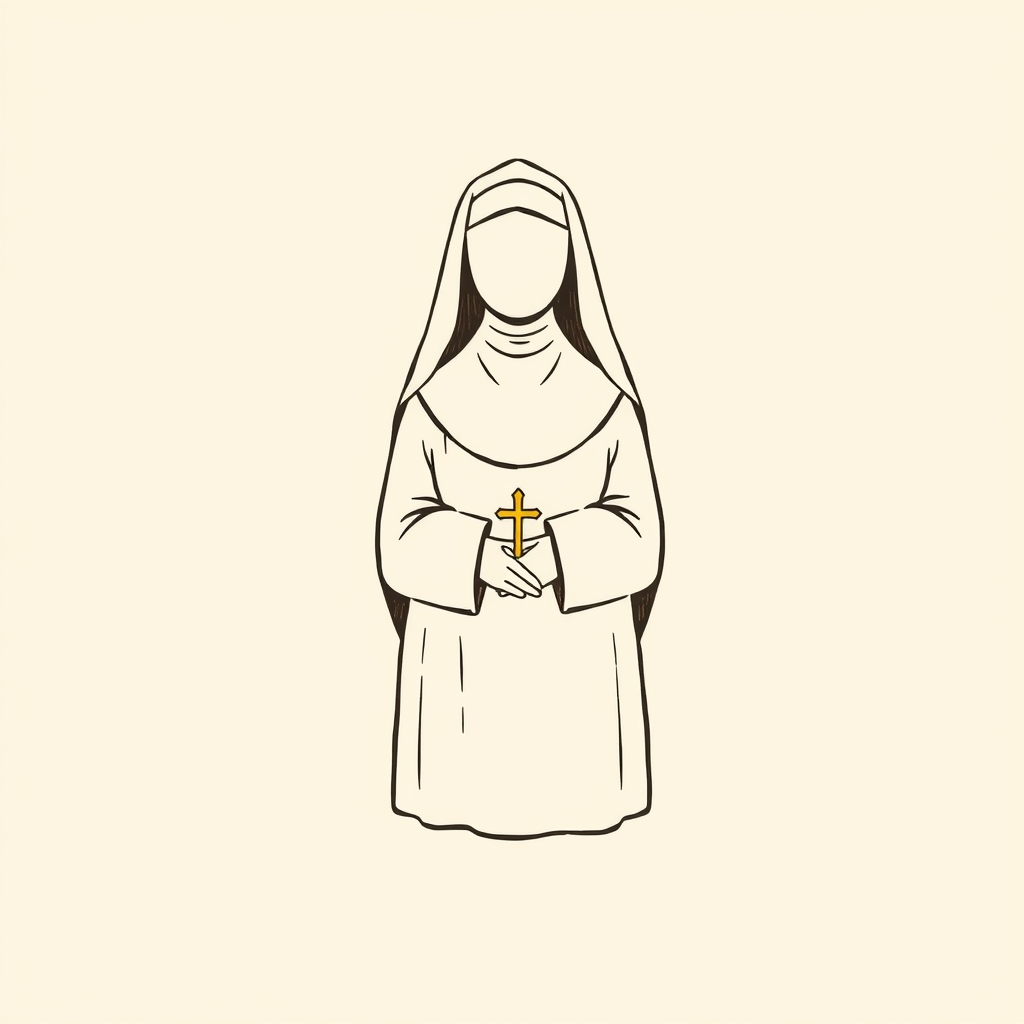
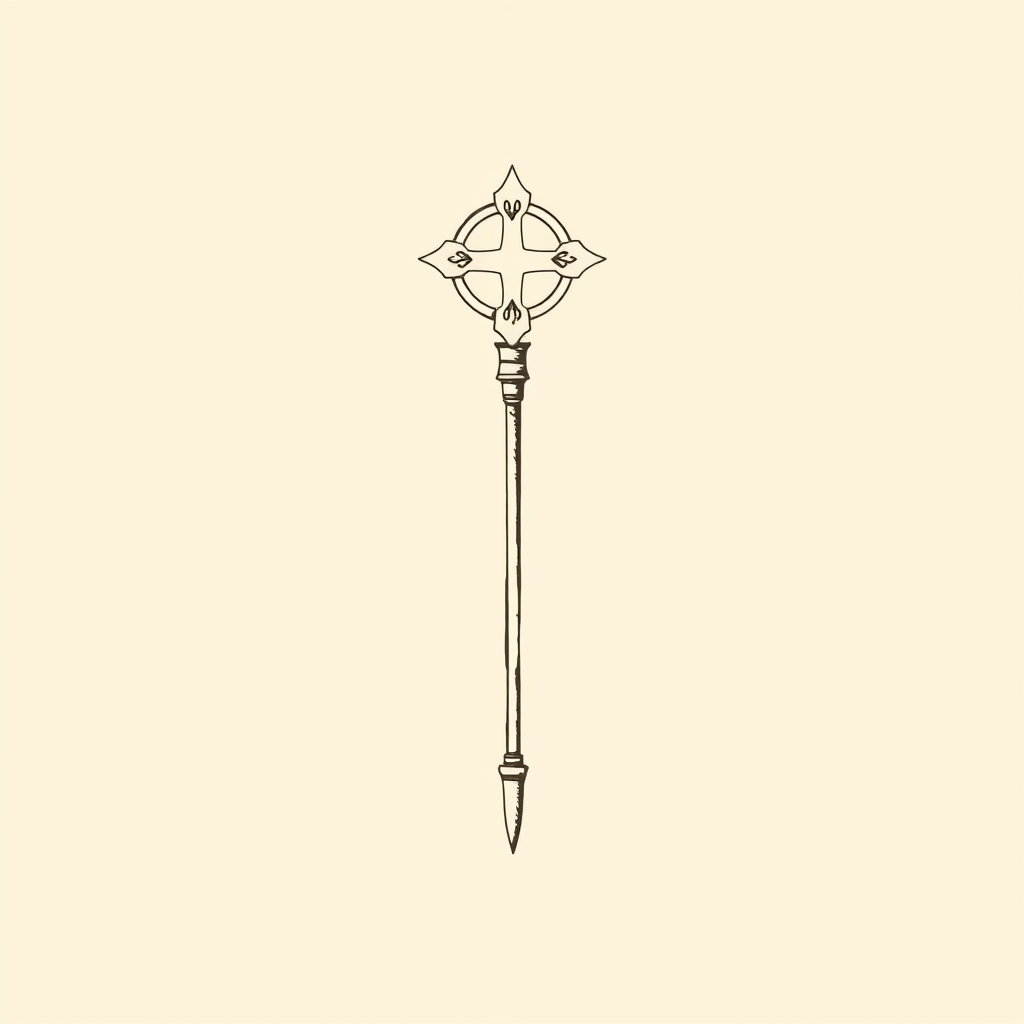
In iconography, Saint Hombeline (Embeline) is recognizable by: nun's habit and abbess's crozier.
Which saints were contemporaries of Saint Hombeline (Embeline)?
Contemporaries include: Saint Norbert of Magdeburg, Saint Bernard of Clairvaux, Saint Stephen of Hungary and Saint Arthaud of Belley.
When did Saint Hombeline (Embeline) die?
Saint Hombeline (Embeline) died around 1141.
What are the other names of Saint Hombeline (Embeline)?
Other forms of the name: Embeline.
Who are the relatives of Saint Hombeline (Embeline)?
Relatives of Saint Hombeline (Embeline): Saint Bernard de Clairvaux (brother), André (brother) and Inconnu (husband).
Annexes & related entities
Structured data for exploration: events, miracles, quotes, places, attributes, patronages, and important entities cited in the text.
Key Events
- Conversion following a stern encounter with her brothers
- Life of penance within marriage for two years
- Entered the monastery of Billette (Jully-sur-Sarce) with her husband's consent
- Elected abbess to lead her companions
- Died at the age of fifty, assisted by Saint Bernard
Quotes
If my brother despises my body, let the servant of God not despise my soul.
Source text