
A young martyr of Praeneste, Agapitus miraculously survived the lions of the amphitheater, which lay down at his feet. He was eventually beheaded by order of Antiochus. His courage converted the soldier Anastasius, and his relics are honored today in Palestrina and Besançon.
Contemporaries

Figures and markers around the normalized period for this entry.
Guided reading
4 reading sections
SAINT AGAPETUS OR AGAPITUS OF ROME,
MARTYR AT PALESTRINA, IN THE PAPAL STATES.
The Martyrdom at Praeneste
Agapetus miraculously survives the lions in the amphitheatre before being beheaded outside the city of Praeneste by order of Antiochus.
274. — Pope: Saint Felix I. — Roman Emperor: Aurelian. The kingdom of heaven suffers violence, and if you do not know how to do violence to yourselves, you will not reach it. Saint Jerome.
Born in Rome to a noble family, Saint Agapetus had renounced the world to lead an ascetic life, under the guidance of Porphyrius, in the city of Praeneste, now Palestrina, very close to Rome. It was the time when the Emperor Aurelian was persecuting the Christians. One of the ministers of his cruelty, Antiochus, gave the order to arrest the young Agapetus, who had dared to make just remonstrances to him in favour of the Christians. After a long interrogation, he had him struck with scorpions and leaden balls. The constancy of the young Martyr, and a prayer he addressed to God, converted five hundred pagans: they declared themselves Christians and were immediately executed. Agapetus was locked in a horrible prison where a heavenly vision fortified him; he was then subjected to a second interrogation, beaten with rods, then stretched upon a rack, his body torn with iron claws, and dragged into the temple of Apollo; as he refused to sacrifice, those leading him struck his limbs with stones and lacerated his entire body with iron cords. It would be too long to list all the torments with which the executioners afflicted his innocent body; he endured the rack several times, prison, burning coals on his head, flagellation, thick smoke above which he was suspended head downwards, boiling water poured over his body. Agapetus displayed an heroic, superhuman courage, giving admirable answers to the judges and executioners; many pagans were converted. Amas, one of his judges, by a just judgment of God, fell from his seat half-dead and shortly afterwards breathed his last. Then Antiochus had Agapetus exposed to wild beasts in the amphitheatre: two lions, whose eyes sparkled with fury, were set upon him; but at the sight of Agapetus they calmed down, lay at his feet, licked him gently and showered him with caresses, until the holy child ordered them to return to their dens. At the sight of this marvel, the people cried out that the true God was that of Agapetus. Finally, by order of Antiochus, two executioners led him outside the city of Praeneste, and having placed him between two columns, they severed his head with the sword. The Christians took away his body and buried it at night, a kilometre from the same city, in a field where they found a brand-new tomb, which seemed to have been prepared by a miracle to render the burial of this child martyr more glorious.
Conversion of the soldier Anastasius
Impressed by the constancy of Agapitus, the lieutenant Anastasius converted to Christianity and in turn suffered martyrdom.
His constancy, in the midst of so many torments, touched a soldier who was leading him; his name was Anastasius. The Roman Martyrology gives him the honorable title of cornicularius, that is to say, lieutenant to the military tribune. He abandoned paganism and embraced the Christian religion. Seized shortly thereafter, he was put to death on the following August 20.
Translation of relics
The saint's remains are preserved in Palestrina, while fragments were transferred to Liessies and Besançon over the centuries.
The relics of Saint Agapitus have been preserved until the present day in the city of Palestrina, which is now episcopal, at the choice of the first cardinals; some bones were transported to the Benedictine abbey of Liesses or Liessies, near Avesnes, in the current diocese of Cambrai. Chelidonius, Bishop of Besançon, brought back from Rome, in 445, the head of this holy Martyr, and deposited it in the church of Saint-Étienne. It is today in that of Saint-Jean, where Hugh I transferred it towards the middle of the 11th century. The Roman Martyrology makes mention of him, as do those of Bede, Usuard, and Ado. Baronius also speaks of him in his Notes and in his Annals.
Sources and references
The account is based on the work of the Bollandists and mentions the historical martyrologies of Bede, Usuard, and Baronius.
We have almost entirely rewritten the account of this martyrdom, inserted in Father Giry, with the help of the Bollandists.
Additional passages recovered from the sources
These passages from Les Petits Bollandistes supplement the entry. The references identify their context in the original volume.
Read the supplementary notes and passages (1)
Source and restoration of the beginning of the entry
The beginning of this entry had been omitted during extraction. The recovered page is reconnected to the existing text, preserving the wording and chronology of the historical source.
Paul Guérin, Les Petits Bollandistes, volume 10, p. 3, 4. Bibliothèque nationale de France: https://gallica.bnf.fr/ark:/12148/bpt6k30740r
Iconography
Signs and attributes


Entities
Narrative network
The names, places, and concepts most present in the entry, weighted by centrality in the text.
The supernatural in their life
The miracles of Saint Agapitus (Agapetus) of Rome
Frequently asked questions about Saint Agapitus (Agapetus) of Rome
Who was Saint Agapitus (Agapetus) of Rome?
A young martyr of Praeneste, Agapitus miraculously survived the lions of the amphitheater, which lay down at his feet. He was eventually beheaded by order of Antiochus. His courage converted the soldier Anastasius, and his relics are honored today in Palestrina and Besançon.
What is Saint Agapitus (Agapetus) of Rome the patron saint of?
Patronage of Saint Agapitus (Agapetus) of Rome: Palestrina.
How is Saint Agapitus (Agapetus) of Rome depicted in Christian art?
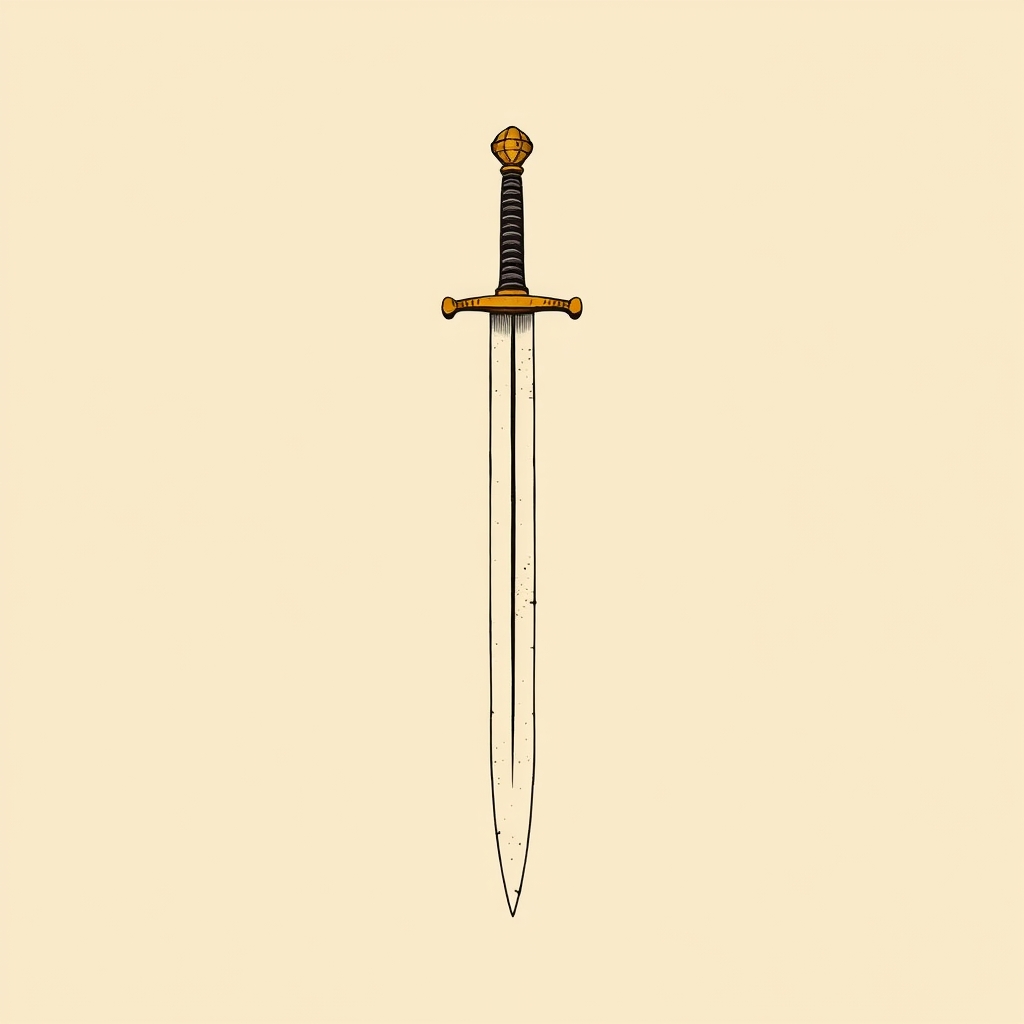
In iconography, Saint Agapitus (Agapetus) of Rome is recognizable by: lions, sword and two columns.
How did Saint Agapitus (Agapetus) of Rome die?
Saint Agapitus (Agapetus) of Rome suffered martyrdom for the Christian faith (3rd century).
What miracles are attributed to Saint Agapitus (Agapetus) of Rome?
2 miracles are attributed to this saint, notably: Protection / deliverance and Sign / wonder.
Which saints were contemporaries of Saint Agapitus (Agapetus) of Rome?
Contemporaries include: Saint Irenaeus of Lyon, Saint Ausonius of Angoulême, Saint Firmin of Pamplona and Saint Baudilus.
What are the other names of Saint Agapitus (Agapetus) of Rome?
Other forms of the name: Agapit.
Annexes & related entities
Structured data for exploration: events, miracles, quotes, places, attributes, patronages, and important entities cited in the text.
Key Events
- Exposure to wild beasts in the amphitheater
- Miracle of the lions lying at his feet
- Decapitation outside the city of Praeneste
- Miraculous burial in a new tomb