
Our Lady of Avenieres
The sanctuary of Notre-Dame d'Avénières in Laval was founded by Guy II, Lord of Laval, after he was miraculously saved from drowning in the Mayenne river. He discovered a statue of the Virgin surrounded by lamps and established a monastery there entrusted to his daughters. Having become a major pilgrimage center, the sanctuary was honored by Pope Pius IX and the statue was crowned in 1860.
Contemporaries

Figures and markers around the normalized period for this entry.
Guided reading
7 reading sections
NOTRE-DAME D'AVÉNIÈRES, IN THE DIOCESE OF LAVAL
The founding miracle of Guy II
The lord Guy II of Laval, saved from drowning in the Mayenne after invoking the Virgin, discovers a miraculous statue in an oat field and promises to erect an altar there.
Our Lady of Avénières has covered the land of Laval with her protectio n for eight c enturies; her altar is the most powerful bulwark of faith and piety in the entire region; the populations flock to it in all their needs; they surround it with constant and traditional homage; and they bless God for having given them such a helpful and gentle protectress.
It was through a signal miracle of her tenderness that the Queen who wears the triple crown designated the field where the sanctuary of Avénières stands as destined to be consecrated to her. Guy II, lord o f Laval, crossing the May enne on a bri dge loc ated below his castle, fell into the river with the horse he was riding. Carried away by a rapid current, he saw himself in evident peril of death; but immediately he raised his heart full of faith toward her whom the Church calls the Star of the Sea; he implored her help with the confidence of a son, and the Mother of Mercy cast an eye of kindness upon him; he was carried gently by the current toward a neighboring field, filled with oats, and he landed there safe and sound. Upon touching the bank, a new prodigy was revealed to his eyes and came to confirm the first: he perceived very close by a statue of the Mother of God, holding her divine Son in her arms, and all surrounded by lit lamps. The vivid glow they spread was but a faint image of the supernatural light that then flooded the mind and heart of the pious knight. To prostrate himself with his forehead against the ground, to swear eternal gratitude to Her who had just snatched him from the abyss and who was manifesting herself to him with such kindness, must have been the first movement of him who could proclaim himself the child of Mary. The second movement that spontaneously emerged from Guy's heart was to promise solemnly to his august Protectress to raise an altar to her on the very spot that his feet had sanctified.
Foundation of the monastery and the choir
Guy II founded a sanctuary and a cloister, bringing nuns from the Ronceray Abbey in Angers, including his own daughters Agnes and Odeline.
Soon a sanctuary rose on the very spot where the image of the Blessed Virgin had manifested itself to the eyes of Guy. In order that the homage rendered to Mary might be more complete, the pious founder resolved to establish at the same time a choir of virgins destined to sing the praises of God and his holy Mother day and night. Guy II had two of his daughters, Agnes and Odeline, also named Hildeburge, who had consecrated themselves to God in the Abbey of Sainte-Marie de la Charité or du Ronceray, in Angers. It was in this great monastery that he went to ask for the colony of nuns he needed to populate the new cloister he wished to found. His wishes were granted, and the pious knight had the happiness of seeing his two daughters charged, with their companions, to pay the tribute of gratitude that he owed to the Queen of Heaven.
The nuns of Avénières showed themselves worthy of the prerogatives that were granted to them, and the Queen of Heaven looked with a favorable eye upon this swarm of fervent virgins who surrounded her altar at all hours with such pure and ardent homage. Through such powerful aid, the community prospered rapidly.
The edifice and the miraculous image
Description of the Latin cross church and the stone and wood statue representing Mary, object of growing devotion over the centuries.
The pilgrimage of Notre-Dame d'Avénières had been frequented for about a century when the decision was made to erect a new church on this site. The number of pilgrims had increased, and the monastery of the nuns had acquired considerable importance. The priory of Avénières raised, to the glory of the august patroness, one of the most remarkable monuments in the province of Maine, and certainly the most beautiful of which the banks of the Mayenne can boast.
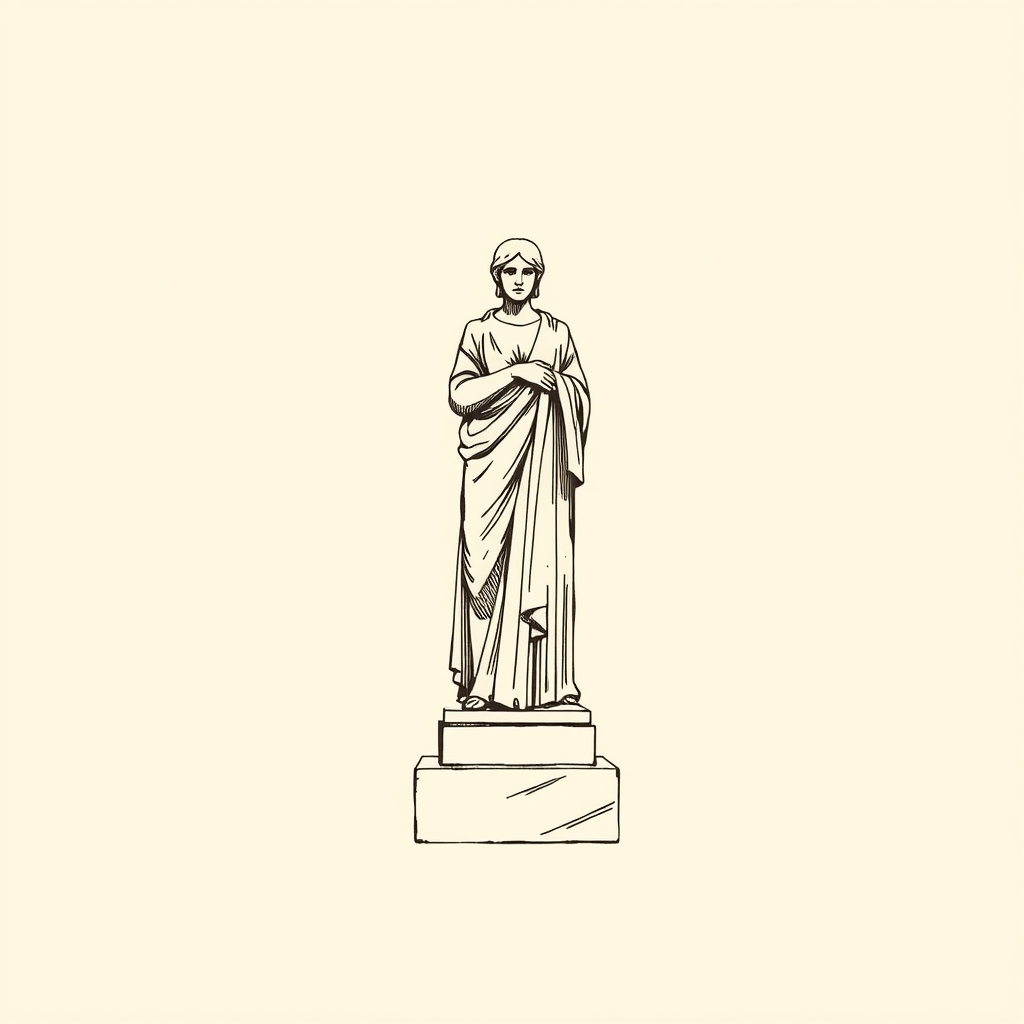
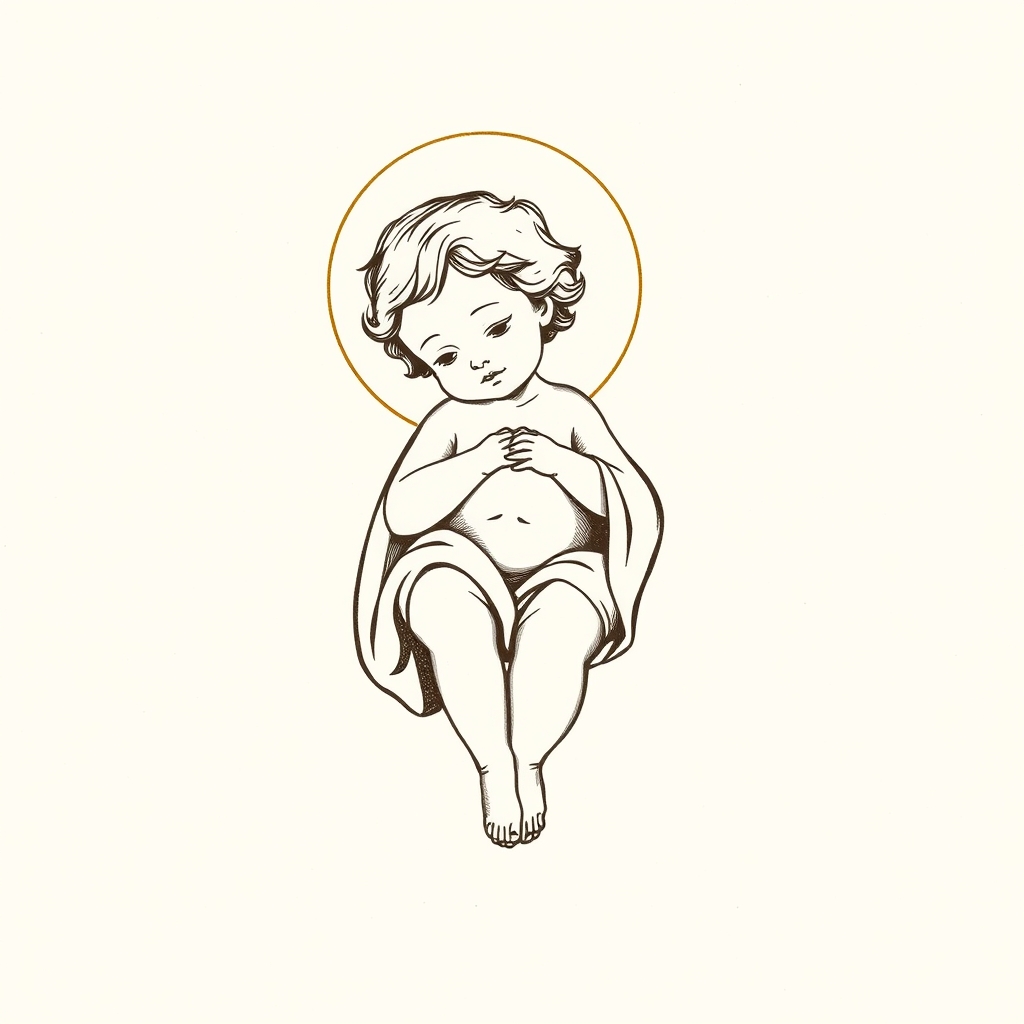
The church of Notre-Dame d'Avénières describes a Latin cross. According to the prescriptions of the apostolic age, the choir is turned to the East, the arms extend to the North and South, and the nave ends to the West. The miraculous image of the Blessed Virgin is placed below the high altar. It is a statue about two feet high and entirely of stone except for the head, which is of wood. It represents Mary carrying the divine Child in her arms. Although it is painted, the custom has long been established of dressing it in more or less precious ornaments, according to the solemnities of the liturgical cycle.
Pilgrimages and protections against plagues
The sanctuary attracts pilgrims from all over Western France, seeking the Virgin's protection against inclement weather and agricultural ruin.
The inhabitants of Laval were undoubtedly the first to experience the benefits spread by Our Lady of Avenières. From the beginning, they showed a praiseworthy eagerness to visit the new sanctuary; they went there to pray in all their undertakings, in all their difficulties, and in all their sorrows. Mary, always helpful, was pleased to shower her favors upon them; the faith of the populations welcomed them and made them known far and wide. Soon, pilgrims were seen flocking from distant provinces; Anjou, Brittany, and Normandy, rivaling the fervor of Maine, sent their children to implore Our Lady of Avenières and to present her with ex-votos, which remained hanging on all the walls of the sanctuary. Often the influx was so great that the pious travelers had to camp in the streets, under the awnings of shops, under the market halls, under the porticoes of the priory, and even in the cemeteries.
Although the 18th century was for our country an era of moral and religious ruin, devotion to Our Lady of Avenières lost none of its fervor or its brilliance. But this century, so guilty and so unhappy, opened for Mary's sanctuary with a serious accident. On February 2, 1701, a gust of wind uncovered the nave and carried away sixteen feet of the stone spire. This misfortune was promptly repaired. In 1708, at the request of the inhabitants, a new altar was erected to the Blessed Virgin, backed against the first pillar of the nave, on the Gospel side.
In 1724, the parishes of La Trinité, Saint-Vénérand, Louverné, L'Huisserie, and Argentré, along with the Dominican community of Laval, gave striking proof of the confidence that the populations placed in Our Lady of Avenières; they came in solemn processions to implore through her protection the deliverance from the continuous rains that were ruining the harvests and casting despair into the hearts of the rich as well as the poor. Mary, whom one never implores in vain, heard the groans of her pious clients, and the prompt cessation of the plague rewarded their faith and gave new nourishment to their piety toward Our Lady of Avenières, who covers the entire region of Laval with her aegis. Thus, in 1735 or 1736, the parish of Saint-Vénérand, having new graces to implore from heaven, remembered that our requests are always well received when they are presented by the hands of the Immaculate Virgin, and it made a new solemn pilgrimage, in which the clergy carried on their shoulders the venerated head of the parish's patron.
From the Terror to the Restoration
After the revolutionary persecutions, the cult was officially reborn in 1800, marked by the visit of the Bishop of Le Mans and the creation of a confraternity.
During the Terror, there was a moment when revolutionary passions seemed to subside after 9 Thermidor, and the sanctuary of Mary regained a few days of peace. Upon the petition of several inhabitants of the parish, the directory of the Mayenne department authorized the reopening of the church of Avénières by two decrees, one on April 28 and the other on May 4, 1795. But the calm lasted little, and the troubles that agitated the country provided a pretext for a resurgence of persecution. However, the Catholic cult, even before the Concordat, reappeared at Avénières. The opening and reconciliation of the church of the Mother of God took place on May 4, 1800, the second Sunday after Easter. One even saw men who had been involved in the horrors of the persecution come to seek at the foot of Mary's altar the peace and security that their conscience no longer knew. How many tasted, near Her who is called by the name Refuge of Sinners, the sweet fruits of reconciliation! How many ulcerated hearts withdrew from the pious sanctuary, healed and renewed! In 1805, Michel-Joseph de Pidoll, Bishop of Le Mans, visited the church of Avén ières and gave confirmation there to a large crowd. Three years later (August 6, 1808), the Confraternity of the Rosary was established, and a great number of the faithful hastened to join it.
Spiritual Graces and Coronation
Pope Pius IX grants indulgences, affiliates the sanctuary with the Santa Casa of Loreto, and authorizes the solemn coronation of the statue in 1860.
The sanctuary of Our Lady of Avénières was among the first to feel the fruits of the graces that the erection of an episcopal see in Laval was to produce throughout the Bas-Maine. One of the first cares of the vigilant prelate to whom the new church had been entrusted was to prepare for the solemn publication of the dogma of the Immaculate Conception, so dear to piety. It was, moreover, under the patronage of the Immaculate Conception that the Holy Fat her had placed t he diocese of Laval, and it was to be expected that the feast would be solemn. It was indeed; the entire population, in an outburst of joy, faith, and gratitude, took part in this beautiful manifestation. The city and the whole diocese testified to the religious sentiments that animated them. But the central place and, as it were, the heart of this feast was the sanctuary of Our Lady of Avénières. There, the entire episcopal city pressed in the footsteps of its pastor. The ancient church heard the promulgation of the dogma of the Immaculate Conception of the Virgin, to whom it is dedicated; and the pious Pontiff consecrated his person and his dioc ese to Mary there.
Soon the Sovereign Pontiff Pius IX added new spiritual graces to those enjoyed by the church of Our Lady of Avénières.
In a brief dated August 22, 1857, the Sovereign Pontiff Pius IX, moved by the desire to increase the religion of the faithful and to procure the salvation of souls, declared that he was opening the heavenly treasures of the Church in favor of all those who would visit the sanctuary of Our Lady of Avénières. The Holy Father made it known that to enjoy these favors, one must have confessed one's sins, be truly repentant for them, have received Holy Communion, piously visit the sanctuary, and pray there for the maintenance of peace between Christian princes, the extirpation of heresy, and the exaltation of our Mother the Holy Church. The indulgences thus granted are:
1st Plenary indulgence on the day of the Assumption or one of the days of the octave;
2nd Plenary indulgence on the six other principal feasts of the Most Holy Virgin (the Immaculate Conception, the Purification, the Annunciation, the Visitation, the Nativity, and the Presentation);
3rd Indulgence of seven years and seven quarantines every Friday of the year, for those who visit the church of Avénières with a contrite heart and pray there for the intentions of the Sovereign Pontiff.
At the beginning of 1859, the Bishop of Laval, having completed the *ad limina Apostolorum* visit, obtained even greater favors for the pilgrimage. The Holy Father was pleased to affiliate the sanctuary of Avénières to that of Loreto, to the Holy House in which the mystery of the Incarnation was accomplished, and which the angels, at the end of the 13th century, transported from Nazareth to Dalmatia, then to the States of the Church, to Loreto, where it has become the goal of a pilgrimage that the Catholic world knows and venerates. The concession of the Holy Father is dated March 15, 1859.
This affiliation gives the pilgrim of Avénières the right to the same graces and spiritual favors that he could acquire by visiting with piety and in the proper dispositions the very sanctuary where the Word was made flesh. To share in these graces, one must also fulfill the ordinary conditions that we have made known above. Here now are the particular favors that the brief of March 15, 1859, ensures for the church of Avénières:
1st Plenary indulgence, applicable to the souls in purgatory, for the feasts of Christmas, the Immaculate Conception, the Nativity, the Annunciation, and the Translation of the Holy House of Loreto;
2nd Indulgence of seven years and seven quarantines for the other feasts of Our Lord and Our Lady, for that of Saint Josep h, and for that of Saint Anne.
Three days later, on March 18, 1859, Pius IX issued a decree by which he authorized the Bishop of Laval to crown the statue of Our Lady of Avénières in his name. This new favor from the Sovereign Pontiff was welcomed with enthusiasm by all classes of society in the diocese of Laval. The solemnity of the Coronation took place on May 9, 1860. What was most touching in this great manifestation of faith was the recollection, the piety, and the sincerity of the sentiments imprinted on all faces. The crowd, having arrived the day before from all sides, crowded all the streets of the city in an attitude of respect and prayer.
The octave continued, with less pomp perhaps, but with the same energy of faith. Each day saw entire parishes coming from three or four leagues away, and even from further still, whose pious inhabitants tore themselves away from their field work to go and pay their tribute to the Queen who protected both their lives and their harvests. Most carried ex-votos; all sang the praises of Mary while parading along the streets of the city. The entire country was moved. This great solemnity has left memories in the Bas-Maine that will not fade for a long time.
Contemporary pilgrimage practices
Devotion is maintained through annual parish pilgrimages, notably that of Bonchamp, and weekly visits every Friday.
The parish of Bonchamp, ever faithful to the excellent spirit that animates it, performs the pilgrimage to Notre-Dame d'Avenières annually with particular pomp: it travels in procession to the sanctuary of the Mother of God, singing her praises and invoking her aid; and they do not depart until after having attended the holy mysteries.
The number of other pilgrims who visit this blessed sanctuary annually or even several times a year is very considerable; there are always more on the Friday of each week; and many inhabitants of Laval have the praiseworthy custom of making this journey every Friday of the year.
Excerpt from The Pilgrimage of Notre-Dame d'Avenières, by the Rev. Fr. Dont l'oïn.
Iconography
Signs and attributes


Entities
Narrative network
The names, places, and concepts most present in the entry, weighted by centrality in the text.
The supernatural in their life
The miracles of Our Lady of Avenieres
Frequently asked questions about Our Lady of Avenieres
Who was Our Lady of Avenieres?
The sanctuary of Notre-Dame d'Avénières in Laval was founded by Guy II, Lord of Laval, after he was miraculously saved from drowning in the Mayenne river. He discovered a statue of the Virgin surrounded by lamps and established a monastery there entrusted to his daughters. Having become a major pilgrimage center, the sanctuary was honored by Pope Pius IX and the statue was crowned in 1860.
What is Our Lady of Avenieres the patron saint of?
Patronage of Our Lady of Avenieres: Laval and Lower Maine.
What is Our Lady of Avenieres invoked for?
Our Lady of Avenieres is invoked for: protection against drowning, cessation of continuous rain, protection of harvests and needs of local populations.
How is Our Lady of Avenieres depicted in Christian art?
In iconography, Our Lady of Avenieres is recognizable by: stone statue with wooden head, Child Jesus in her arms, lit lamps and crown.
What miracles are attributed to Our Lady of Avenieres?
3 miracles are attributed to this saint, notably: Protection / deliverance, Vision / apparition, Sign / wonder and Mastery of the elements.
Which saints were contemporaries of Our Lady of Avenieres?
Contemporaries include: Saint Mary Frances of the Five Wounds of Jesus, Saint Alphonsus Liguori, Jesús María Echavarría Aguirre and Pauline of the Agonizing Heart of Jesus.
When did Our Lady of Avenieres die?
Our Lady of Avenieres died around 1800.
What are the other names of Our Lady of Avenieres?
Other forms of the name: Mère de Dieu, Étoile de la mer, Mère de miséricorde and Refuge des pécheurs.
Who are the relatives of Our Lady of Avenieres?
Relatives of Our Lady of Avenieres: Jésus-Christ (son).
Annexes & related entities
Structured data for exploration: events, miracles, quotes, places, attributes, patronages, and important entities cited in the text.
Key Events
- Apparition of the statue to Guy II de Laval after his rescue from the waters
- Foundation of the sanctuary and monastery by Guy II
- Reopening of the church after the Terror in 1795 and 1800
- Affiliation to the Sanctuary of Loreto in 1859
- Solemn coronation of the statue on May 9, 1860
Quotes
-
Our Lady of Avénières has covered the land of Laval with her protection for eight centuries
R. P. Dontloïn