
Saint Clare of Assisi
FOUNDRESS OF THE POOR LADIES OF THE ORDER OF SAINT FRANCIS.
A noblewoman of Assisi, Clare renounced her fortune in 1212 to follow the ideal of poverty of Saint Francis. Foundress of the Poor Ladies (Poor Clares), she led the monastery of San Damiano for forty-two years in heroic austerity. She is famous for having repelled the Saracens by exposing the Blessed Sacrament.
Contemporaries

Figures and markers around the normalized period for this entry.
Guided reading
8 reading sections
SAINT CLARE OF ASSISI, VIRGIN AND ABBESS,
FOUNDRESS OF THE POOR LADIES OF THE ORDER OF SAINT FRANCIS.
Origins and family
Clare was born in Assisi into a noble family; her mother Hortolana, very pious, received a prophecy regarding her daughter's luminous destiny.
Clare was born i n Assi si, in the Papal States, like the seraphic Father Saint Francis, into a noble and wealthy family, of which almost all the boys had taken up the profession of arms. Her father was named Favorino Scifi. The imposing ruins of Sasso-Rosso, a castle he owned on the southern slope of Mount Subasio, can still be seen today. Her mother, from the ancient house of Fiumi, was named Hortolana. She was a very pious lady who undertook, out of devotion, pilgrimages to Jerusalem, to Saint Michael at Mount Gargano, and to Saint Peter in Rome, and, after the death of her husband, entered the Order that her daughter had founded, where she lived and died in the odor of sanctity. One day, while she was praying before a crucifix to merit the assistance of heaven during her labor, she heard a voice saying to her: "Fear nothing, Hortolana; you will happily bring to light a light that will illuminate the whole world." This voice was the reason she had her daughter given the name Clare at baptism. She had two others, Agnes and Beatrice, whom we shall soon see, following the example of their eldest sister, renounce all earthly things to become poor disciples of Saint Francis.
Conversion and consecration
Under the influence of Saint Francis, Clare renounced the world in 1212, fled from her parents' home, and received the tonsure at the Portiuncula.
The childhood of Clare was perfectly innocent; grace anticipated her so much that nothing was seen in her of the petulance ordinary at that age. She was modest, quiet, docile, truthful in her speech, obedient, and always ready to pray to God and to perform the devotions that her mother prescribed for her. When her reason had developed, she soon showed that she would always follow the path of virtue: fasting, almsgiving, and prayer were her dearest exercises; having grown older, she was obliged, to satisfy her parents, to dress like persons of her rank; but she wore a small hair shirt under her clothes to crucify her virginal flesh. Her parents made vain efforts to engage her in marriage. She wanted no other spouse than Jesus Christ. Eager to hear Saint Francis of Assisi, she was able to procure this happiness and was delighted by it. She e ven desired to have an interview with him. Having obtained it, she came to see him in his little convent of the Portiuncula, and revealed to him the sentiments that God was imprinting in her heart. The Saint confirmed her in the design of keeping her virginal purity inviolably and of leaving all the goods of the earth to have no other inheritance than Jesus Christ. As Clare later paid him other visits, he formed her more and more according to his spirit of penance and poverty, and made her conceive the resolution to do for her sex what he himself had done for men. Thus, in the year 1212, on Palm Sunday, which fell on March 19, when the feast of Saint Joseph is ordinarily celebrated, she appeared in the morning in the cathedral church of Assisi, with all her jewels and precious garments; she went in the evening to the little church of the Portiuncula, where, having been received with very great joy by the holy patriarch and his religious, who all had a candle in their hand, she stripped herself of all her ornaments of vanity, had her hair cut, and was clothed in a sack and a cord, as the true liveries of a poor, suffering, and humiliated God. After such a generous action, the Saint, who could not take her into his convent, and who, moreover, did not yet have a house where he could lodge her in private, led her to the Benedictines of Saint-Paul.
When this resolution of Clare was divulged, everyone spoke of it according to their whim. Some attributed it to a lightness of youth, for she was only eighteen years old; others to an indiscreet fervor and an ill-regulated devotion. Her relatives especially were extremely irritated by it, and they spared nothing to persuade her to return to her father's home and to accept an advantageous alliance that had already been proposed to her. They wanted to use violence and drag her by force from the sacred asylum where she had taken refuge; but, to take away from them any hope of ever seeing her again in the world, she showed them her cut hair and clung so tightly to the ornaments of the altar that one could not tear her away without sacrilege and profanation. They therefore ceased to torment her after several days of pursuit, and Saint Francis, who was always watching over her sanctification, had her moved from the monastery of Saint-Paul, where he had placed her, to that of Saint-Angelo in Panso, also of the Order of Saint Benedict, which was outside the city. It was there that this dear lover of Jesus, prostrate at the feet of her Spouse, prayed to him insistently to give her as a companion the one he had given her as a sister, namely, the little Agnes of Sciffi. Her prayer was heard, and, only sixteen days after this retreat, this dear sister s ecretly left he r parents' house and came to join Clare, to practice with her the exercises of penance and mortification, of which she gave such rare examples. If the flight of the elder had so greatly irritated their parents, that of the younger offended them even more. They came to the number of twelve to the monastery of Saint-Angelo, and, as Agnes refused to follow them, they overwhelmed her with kicks and punches, dragged her by the hair, and carried her off by force, as a lion or a wolf carries off a sheep after having seized it in the middle of the fold. All that this innocent virgin could do was to cry out to her sister to have pity on her and not to suffer such an unjust abduction. Clare began to pray, and immediately, by a great miracle of divine Providence, the little Agnes, whom they had already carried quite far, became so heavy and so immobile that these twelve men could not lift her from the ground nor move her. In a rage, Monaldo, her uncle, wanted to kill her; but he was seized at that very moment with such great pain in his arm that he could hardly stand. Finally, when they were all in confusion, Clare arrived and forced them by her remonstrances to return her dear sister to her: she therefore brought her back to the monastery, and, shortly after, she received the habit from the hands of Saint Francis, although she was only fourteen years old. He then placed the two sisters in a small house that was contiguous to the church of Saint-Damian.
Foundation of the Order
The Order of the religious women of Saint Francis began at San Damiano, where Clare was joined by her sisters and her mother, becoming their abbess.
It was there, then, that the Order of the religious women of Saint Francis properly began, just as that of the religious men had begun in the church of the Portiuncula. The two sisters soon had a great number of companions; for, the odor of the sanctity of the virgin Clare spreading everywhere, many women and girls wished to have her as their mother. The principal ones, besides Hortolana, her mother, and Beatrice, her youngest sister, were the venerable ladies Pacifica, Amata, Christina, Agnes, Francesca, Benvenuta, Balbina, Benolte, another Balbina, Philippa, Cecilia, and Lucia, all excellent religious women whom God rendered illustrious by miracles, as is written in the martyrology of the Saints of this Order. Clare was first established as their superior by Saint Francis, into whose hands they all promised obedience; but when she saw their number increase, she wished to resign from this charge, preferring to serve God in humility and submission rather than to command daughters whom she believed to be more virtuous than herself; but the Saint, who knew how much his new plant would profit from the cultivation of such a holy abbess, confirmed her for her whole life in her office: the community applauded this measure; for, although it was filled with excellent subjects who were even employed in new foundations, none nevertheless was as capable of governing as Clare, who possessed the spirit of the blessed patriarch in an eminent degree. Thus, far from becoming proud of her prelacy, she used it only to humble herself further. She was the first to practice the exercises of mortification and penance. The lowest tasks were those that seemed most agreeable to her. She herself washed her sisters' feet, and often, when they were at table, she remained standing and served them. She also washed the feet of the serving girls who came from outside, and kissed them with respect and humility. Nothing is so disgusting or so contrary to the delicacy of young girls as the ministries that must be rendered to the sick in the infirmaries; but she did not believe that her dignity as superior should exempt her from them, and if she deputed some sisters to be in charge of them, it was on the condition that they often let her do what was most difficult and what the others would have had the most aversion to.
The Privilege of Poverty
Clare obtains from Innocent III the right to live without any possessions, refusing even the mitigation attempts of Pope Gregory IX.
From this great humility was born in her heart an ardent love for holy poverty. As her father's inheritance fell to her at the beginning of her conversion, she kept nothing of it for herself, nor for her monastery, but had it distributed entirely to the poor. Not only did she not want her house to possess any rents or income, but she did not even allow large provisions to be kept there, contenting herself with what was necessary to live each day. She preferred that the brothers who begged for her monastery bring pieces of already dry bread rather than whole loaves. Finally, her whole design was to resemble the poor Jesus Christ, who never possessed anything on earth, and who, born naked in a poor stable, died naked on the poor bed of the cross. She obtained from Pope Innocent III the privilege of poverty, that is to say, the rig ht to establish h erself solely on the foundation of the charity of the faithful, with the excellent quality of being poor, as a title of honor and glory: this is why her Order is commonly called the Order of the Poor Ladies. And when Pope Gregory IX, judging that such great poverty was too rigorou s for women, wan ted to mitigate it by dispensing them from the vow they had made and by giving them rents, she thanked His Holiness for this offer, and begged him earnestly not to change anything in the first provisions of her establishment: which he granted her. God has often justified by miracles this conduct of his servant, and shown that he watches over the relief of those who trust in him. One day, there was only one rather mediocre loaf of bread in the monastery, and the time for dinner having arrived, she ordered the sister bursar to send half of it to the religious who assisted them and to divide the other half into fifty pieces, for as many poor ladies who then composed her community. The bursar did with blind obedience what was commanded of her, and, by a surprising wonder, these pieces grew so much that they were sufficient to feed all the nuns. Another time, there was no more oil in the monastery: Clare took a barrel, washed it, and sent for the begging brother, so that he might go and have it filled with oil through alms. He came immediately, but, instead of finding it empty, he found it completely full. This made him believe that the good ladies had wanted to mock him, and he complained about it; but he changed his complaints into admiration and thanksgiving when he was told that the empty barrel had been placed on the turn, and that the oil he had seen there was miraculous oil.
Austerities and mystical life
The saint practices extreme mortifications and benefits from divine visions, notably during a Christmas night when she hears the office from a distance.
As for the austerities of our Saint, she was clothed only in a vile tunic and a small cloak of coarse fabric; she always walked barefoot, without clogs or sandals, slept on the hard ground, fasted all year, except on Sundays, and often on bread and water; she kept perpetual silence outside the indispensable duties of necessity and charity: it is true that these practices were common to her and her sisters. But what comparison is there between a delicate body like hers and a garment of pigskin, of which she applied the hairy and bristly side and the hard, prickly bristles against her flesh, to make it endure a continual martyrdom! She also used a hairshirt made of horsehair, which she tightened even more with a cord of similar weave, armed with thirteen knots. Her abstinence was so severe that what she ate would not have been sufficient for her nourishment if the virtue of God had not sustained her. During the great Lent and that of Saint Martin, she lived only on bread and water; and she did not eat at all on Mondays, Wednesdays, and Fridays. The bare earth, or a pile of vine branches, with a piece of wood for a pillow, made up all the furnishings of her bed at the beginning; later, feeling too weak, she slept on a leather mat and put straw under her head. Finally, she was so insatiable for pains and sufferings that Saint Francis was obliged to moderate this ardor and to have it moderated by the Bishop of Assisi. They therefore ordered her to sleep on a straw mattress and not to pass a day without eating. But her meal on Mondays, Wednesdays, and Fridays, in Lent, consisted of an ounce and a half of bread and a sip of water, which served more to irritate her hunger and thirst than to appease them.
As she was entirely dead to the world, and had a perfectly pure heart, nothing prevented her from attending to prayer and occupying herself at all times and in all places with the greatness and goodness of her God. Her custom was to spend several hours in prayer after Compline, with her sisters, before the Blessed Sacrament, where she shed many tears and excited others to groan and sigh by the example of her fervor. When they retired to take a little rest, she still remained constantly in the choir, to hear there, as if furtively, in solitude, the secret movements of the Spirit of God. There, all bathed in her tears and prostrate on the ground, she sometimes detested her offenses, sometimes implored divine mercy for her people, and sometimes deplored the sorrows of Jesus Christ, her beloved. One night, the angel of darkness appeared to her in the form of a small, completely black child and said to her: "If you do not put an end to your tears, you will soon lose your sight." And she replied to him immediately: "He will see very clearly who has the honor of seeing God." Which forced this monster to withdraw in confusion. He returned nevertheless after Matins, and added that by dint of weeping she would make herself sick. But she repulsed him again vigorously, telling him that he who serves God fears no inconvenience. One cannot describe the favors she received in this holy exercise. One day, Sister Bienvenue, one of her nuns, perceived during this time a globe of fire that rested on her head and made her admirably beautiful and luminous. Another time, Sister Françoise saw on her knees a perfectly beautiful child, giving her very lovely caresses. Sick, on a Christmas night, it was impossible for her to get up to go to Matins; however, she began to pray; in her poor bed, she distinctly heard the entire office that was sung by the friars of Saint Francis, in the church of Our Lady of the Portiuncula, very far from her monastery; and, what is more wonderful, she had the happiness of seeing the Child Jesus lying in his manger. When she emerged from her communications with God, her words were all fire, and they spread a certain unction that won and carried away the hearts of all those who had the happiness of hearing her.
Miraculous defense of Assisi
By exposing the Blessed Sacrament, Clare repels the Saracens of Frederick II and saves the city of Assisi from the siege of Vital of Aversa.
Moreover, she had such credit with God that she easily obtained everything she asked of Him. There is no better proof of this than what happened regarding the army of Saracens that Emperor Frederick II, in his dis putes with the Holy See, sent to depopulate the Duchy of Spoleto, and which came to besiege the city of Assisi and to pillage the convent of San Damiano. Everything was to be feared for defenseless women at the hands of barbarians without modesty or religion. In such a great cause for terror and dread, they all ran to Saint Clare, who was ill in the infirmary, as chicks run under their mother's wings when they see the kite coming to swoop down upon them. She told them to fear nothing, and, filled with confidence, she dragged herself as best she could, supported by their arms, to the door of the convent, where she had the Most Blessed Sacrament, enclosed in a silver ciborium and an ivory box, placed before her. There, prostrating herself before her sovereign Lord, she said to Him with tears in her eyes: "Will you suffer, my God, that your weak and defenseless servants, whom I have nourished with the milk of your love,
LIVES OF THE SAINTS. — VOLUME IX.
fall into the hands of the infidels? I can no longer guard them, but I entrust them into your hands, and I beseech you to protect them in such a terrible and pressing extremity." Scarcely had she finished these words when she heard a small voice, like that of a child, which answered her: "I will always guard you." Then, feeling bolder, she added: "Permit me, my Lord, to also implore your mercy and your help for the city of Assisi, which nourishes us with its alms." — "It will suffer several damages," the Savior replied, "but I will prevent it from being taken." — After such favorable answers, the Saint raised her head and said to her daughters: "I give you my word, my sisters, that you will have no harm; only trust in God."
The Saracens had already scaled the monastery, and some had entered the cloister; but, at the very moment this prayer was finished, they were seized with a panic terror, climbed back down the same walls precipitously, and left the servants of God in peace, and, shortly after, they lifted the siege of Assisi and left Umbria entirely.
The same city was another time extremely pressed by Vital of Aversa, captain of the imperial army; he had sworn not to return until he had taken it by force, or until it had surrendered at discretion. The Saint, touched by t his misfortune , assembled all her daughters and pointed out to them that it would be ingratitude on their part if, after having received so many charities from the inhabitants of Assisi, they did not employ all the credit they had with God to obtain the deliverance of this city. She therefore had ashes brought, covered her own head with them first, and then covered the heads of all the others; then, in this state, they pressed the goodness of God so effectively to look upon this city with an eye of pity and mercy that that very night the entire army of this new Holofernes was put to rout, and, forced himself to withdraw in confusion, he died shortly after a violent death, a just punishment for his pride.
Death and final visions
After 42 years of religious life, Clare died in 1253, visited by Pope Innocent IV and assisted by a vision of the Virgin Mary.
Finally, it pleased Our Lord to satisfy the desires of His Spouse, who asked, with incredible ardor, to enjoy Him in the blessed eternity. It had already been forty-two years that she had been in the faithful and assiduous practice of all the exercises of religion, without several violent illnesses, which she had endured for twenty-eight or thirty years, having drawn from her mouth a word of complaint or murmur, nor having been capable of diminishing the fire of her zeal and her charity. She had also predicted, two years prior, that she would not die before the Lord had come to visit her with his disciples. The time for her reward having arrived, Pope Innocent IV, who had an extraordinar y esteem for her virtue and who loved her perfectly in Jesus Christ as the most faithful Spouse that this lovable Savior had on earth, returned from Lyon to Perugia with the sacred college of cardinals. He learned, in that city, that Clare was dangerously ill, and that there was every appearance that her end was near. He traveled as soon as possible to Assisi, with his court, and to her convent of Saint-Damian, accompanied by his cardinals, as Our Lord by his disciples, he gave her his apostolic blessing with the plenary indulgence of all her sins, which this soul, already entirely celestial, asked of him with great insistence and received with a very profound humility. She had received the same day the holy Viaticum from the hands of the provincial of the Friars Minor, and, when it had been administered to her, one had seen, in the holy host, a child of inestimable beauty, with a globe of fire above. When His Holiness had retired, Saint Clare, all bathed in tears, hands joined and eyes raised toward heaven, said to her sisters: "Give thanks to God, my dear daughters, that I have had today an honor that heaven and earth could never pay, having been so happy as to receive my Savior, and to be visited by his vicar". Her sister Agnes begged her not to leave her on earth, but to take her with her into heaven. "Your hour has not yet come", she replied; "but rejoice, for it is not far off, and, before dying, you will receive from your beloved Spouse a great consolation". The thing happened according to this prediction.
Her nuns did not abandon her, and did not trouble themselves to eat or sleep, provided they did not lose a word from a mother so dear and such a holy lover of the Savior. Following the example of Saint Francis, she dictated a testament, not to bequeath to her daughters temporal goods of which she was entirely deprived, but to bequeath to them holy poverty and the perfect stripping away of all things, which is a greater treasure than all the goods of this world. Brother Reginald having approached her bed to give her a small exhortation on the advantages of patience, she said to him, with heroic strength, that, since Our Lord had called her to his service by means of his friend Saint Francis, no pain, by his grace, had been troublesome to her, no penance difficult, and no illness disagreeable. Several cardinals and several bishops visited her in private; and, what is marvelous, although it was impossible for her to take anything, which lasted seventeen days, one always saw in her an extraordinary presence of mind and vigor: she received these prelates with all the piety and devotion that the honor of their visit demanded, and she even exhorted all those who approached her to piety, just as if she had enjoyed perfect health.
She was also assisted, in this extremity, by Brother Juniper, Brother Angel, and Brother Leo, three excellent companions of Saint Francis, who, mingling their flames with those of the Saint, made of them a brazier of love that cannot be expressed. Finally Clare, being near death, spoke herself to her soul and said to it: "Go forth boldly, my soul, fear nothing, you have a good guide and a good safe-conduct. Go forth, I say, boldly; for He who created you, who sanctified you, and who loved you as a mother loves her daughter, is himself disposed to receive you". Then addressing her Savior, she said to him: "And you, my Lord and my God, who gave me being and life, be blessed". At the same instant Our Lord appeared to her, with a blessed company of virgins crowned with flowers of beauty and fragrance without equal; one of them, whose crown was closed, and gave more light than the sun (it was the Blessed Virgin), approached her to embrace her. The others vied with each other to spread over her body a carpet of inestimable fabric, and, during this action, which she shared with her sisters, her soul, all pure, flew into the bosom of the Divinity, to possess there eternally her sovereign happiness. This was the year 1253, the eleventh day of the month of August, which is the day after the feast of Saint Lawrence, although hers has been moved to the 12th, when her burial took place.
Posterity and relics
Canonized in 1255, her body was found intact in 1850. Her order multiplied into various branches throughout Europe.
Moreover, although Saint Clare never left her monastery of San Damiano during her lifetime, her Order nevertheless spread during her life to several parts of Europe, and she sent some of her daughters to various places to found new monasteries. It has since multiplied infinitely and divided into various branches, some of which have maintained themselves inviolably in the ancient observance, where they are taken up by the reform of Saint Colette, and retain the first name of Poor Ladies of Saint Clare; others, who have degenerated from the great poverty of the first institute by taking rents with the permission of Pope Urban IV, are called Urbanists; others, who have added some particular constitutions to one or the other, are called Capuchins, or of the Conception, or Annonciades, or Recollects, or Cordeliers. There are nearly four thousand convents and nearly one hundred thousand nuns in all these Orders together. The number of saints they have given to the Church cannot be counted. Above all, one could not sufficiently admire the austerity of the nuns of the Ave Maria of Paris, who lived in a body as if they had none, and who were on earth as if they had already been entirely separated from the earth. This community has not existed since the revolution, and the house has become a barracks.
She is usually represented at the foot of the most holy sacrament of the altar; sometimes with Saint Francis of Assisi, both rapt in ecstasy while they were conversing together; in various circumstances before a Pope, either when she refuses the dispensation from the strict poverty she had professed, or when, blessing the table in the refectory by order of the sovereign Pontiff, it happened that all the loaves were found marked with a cross, or when the Pope wished to take it upon himself to give her the viaticum and to assist solemnly at her funeral with the cardinals.
[APPENDIX: CULT AND RELICS.]
Her body was buried in Assisi, at the convent of Saint George, which Pope Gregory IX had given her, and where that of Saint Francis had also been transported, so that they would be safer and less exposed to the raids and insults of enemies.
So many miracles were immediately performed there through the intercession of the Saint that Pope Alexander IV, successor to Innocent, had no difficulty in canonizing her only two years after her death (1255).
Since 1260, her sacred remains have been transferred to a church built in her honor, which was dedicated to her in 1266, in the presence of Pope Clement IV. They remained there, not exposed to the veneration of the faithful, but buried.
After five hundred years, that is to say on August 23, 1850, it was decided to bring this holy body out of the obscurity of the tomb. The necessary excavations were made for this purpose: it was discovered; the tomb was opened with all the pomp befitting such a great feast, and the bones were legally identified. They were preserved whole, and not pulverized, despite the humidity of the vault; they were placed in a reliquary, with the exception of one rib, the one closest to the heart, intended for the sovereign Pontiff, and fragments reserved for the Poor Clares of France (September 23, 1850).
Several miracles were performed on this occasion. The dark recess where the relics of Saint Clare had rested for centuries was changed into an underground church.
Saint Clare's veil is preserved in its entirety at the convent in Florence, and God still uses it to pe rform several miracles , particularly in favor of children who have fallen into lethargy.
We have her life in Surina, written by an author of her time, following the order he had received from Pope Alexander IV after he had canonized her. Father Artus du Moustier, in the martyrology of Saint Francis, reports a long list of authors who have praised her. — Cf. Godescard; the Dictionnaire des Ordres religieux, by Hélynt; the Dictionnaire encyclopédique de la théologie catholique, by Goschler; and the Vie de sainte Claire, by Abbé Demore, of Marseille, where one will find the most precise information on the most recent discoveries of the relics of the holy abbess.
Iconography
Signs and attributes



Entities
Narrative network
The names, places, and concepts most present in the entry, weighted by centrality in the text.
The supernatural in their life
The miracles of Saint Clare of Assisi
Frequently asked questions about Saint Clare of Assisi
Who was Saint Clare of Assisi?
A noblewoman of Assisi, Clare renounced her fortune in 1212 to follow the ideal of poverty of Saint Francis. Foundress of the Poor Ladies (Poor Clares), she led the monastery of San Damiano for forty-two years in heroic austerity. She is famous for having repelled the Saracens by exposing the Blessed Sacrament.
What is Saint Clare of Assisi the patron saint of?
Patronage of Saint Clare of Assisi: Order of Saint Clare and Assisi.
What is Saint Clare of Assisi invoked for?
Saint Clare of Assisi is invoked for: eye diseases and children in lethargy.
How is Saint Clare of Assisi depicted in Christian art?
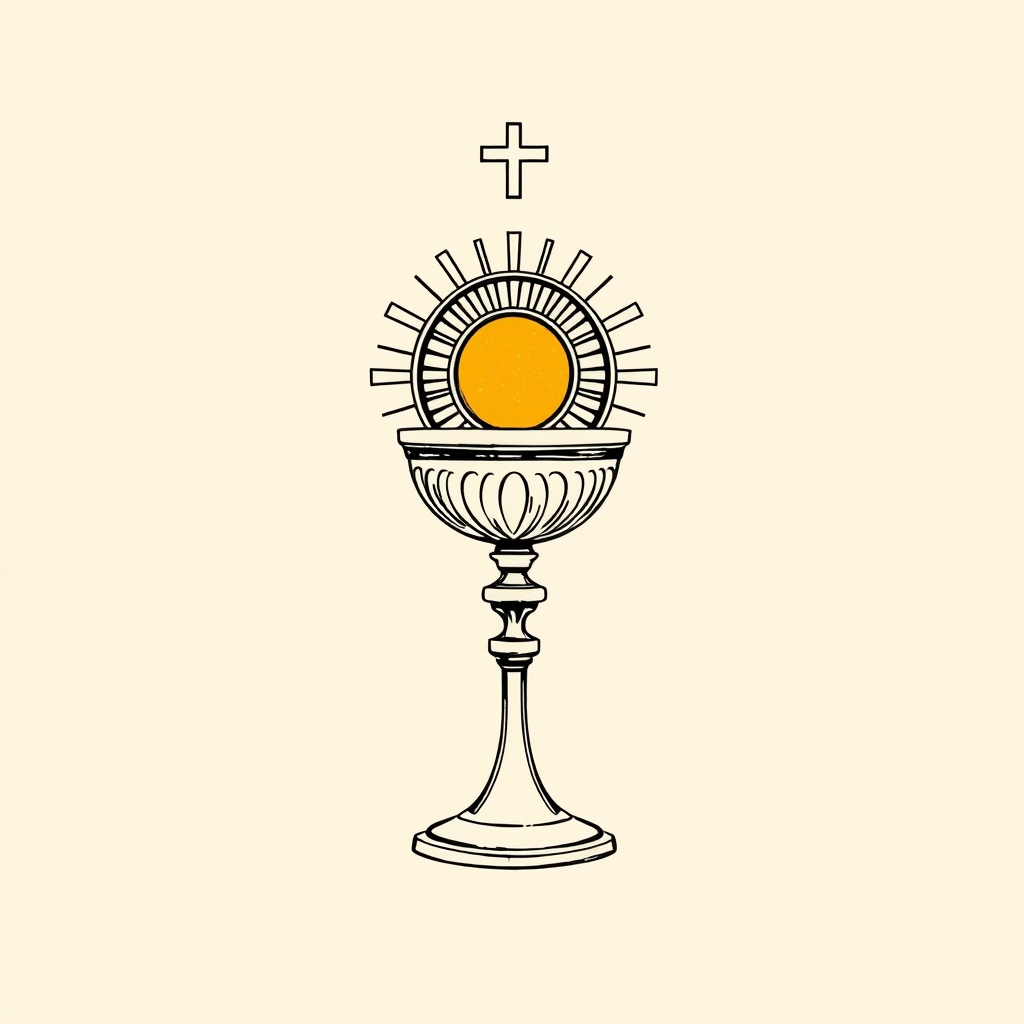
In iconography, Saint Clare of Assisi is recognizable by: monstrance or ciborium, cross, rope and book of the rule.
What miracles are attributed to Saint Clare of Assisi?
5 miracles are attributed to this saint, notably: Multiplication / provision, Protection / deliverance, Sign / wonder and Healing.
Which saints were contemporaries of Saint Clare of Assisi?
Contemporaries include: Saint Anthony of Padua (Ferdinand), Saint Arthaud of Belley, Saint Thomas Aquinas and Saint Bernard of Clairvaux.
When did Saint Clare of Assisi die?
Saint Clare of Assisi died around 1300.
What are the other names of Saint Clare of Assisi?
Other forms of the name: Claire de Sciffi and Chiara d'Assisi.
Who are the relatives of Saint Clare of Assisi?
Relatives of Saint Clare of Assisi: Favorino Scifi (father), Hortolana (mother), Sainte Agnès de Sciffi (sister), Béatrix (sister) and Monalde (uncle).
Annexes & related entities
Structured data for exploration: events, miracles, quotes, places, attributes, patronages, and important entities cited in the text.
Key Events
- Fled her father's house on Palm Sunday 1212
- Received the habit from the hands of Saint Francis at the Porziuncola
- Foundation of the Order of Poor Ladies at San Damiano
- Obtained the privilege of poverty from Innocent III
- Deliverance of Assisi from the Saracens through the exposition of the Blessed Sacrament
- Canonized in 1255 by Alexander IV
Quotes
-
He will see very clearly who has the honor of seeing God
Response to the demon -
Go forth boldly, my soul, fear nothing, you have a good guide and a good safe-conduct.
Last words