
Saint Fabian, Pope and Martyr
Miraculously elected pope after a dove landed on his head, Fabian was the first layman to accede to the pontificate. He organized the Church of Rome and documented the acts of the martyrs before dying himself, beheaded during the persecution of Decius in 250.
Contemporaries

Figures and markers around the normalized period for this entry.
Guided reading
7 reading sections
SAINT FABIAN, POPE AND MARTYR
A Providential Election
Fabian, a simple layman returning from the countryside, is unexpectedly designated pope by a dove landing on his head during the electoral assembly.
Fabian , a Roman by birth, was the son of Fabius. The pontificate of Saint Ant erus, also known as Eusebius, had lasted only one month. It is reported that after the martyrdom of this pope, Fabian was returning from the countryside with some friends when he was suddenly, and by a marvelous disposition of divine grace, unexpectedly called to lead the clergy.
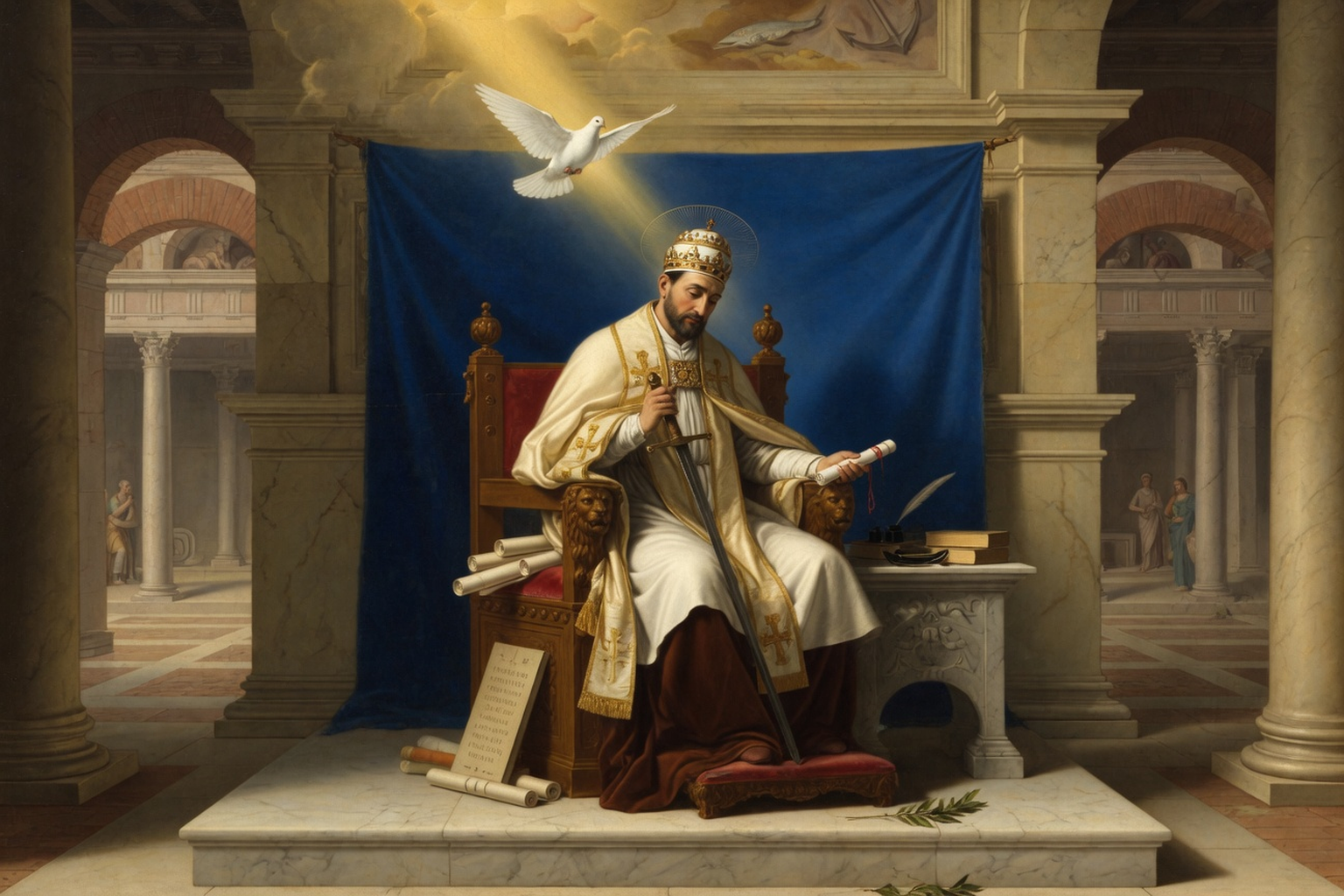
Fabian entered the church at the moment when all the brethren were gathered to proceed with the election. No one thought of electing him. Many were concerned with casting their votes for certain noble and illustrious personages. Suddenly, a dove, having descended through one of the skylights of the catacomb, came to rest upon his head. It seemed to recall the form the Holy Spirit had taken to descend upon the Savior on the banks of the Jordan.
The assembly, moved by this spectacle and clearly inspired by the Spirit of God, cried out in a transport of joy the unanimous acclamation: He is worthy! He is worthy!
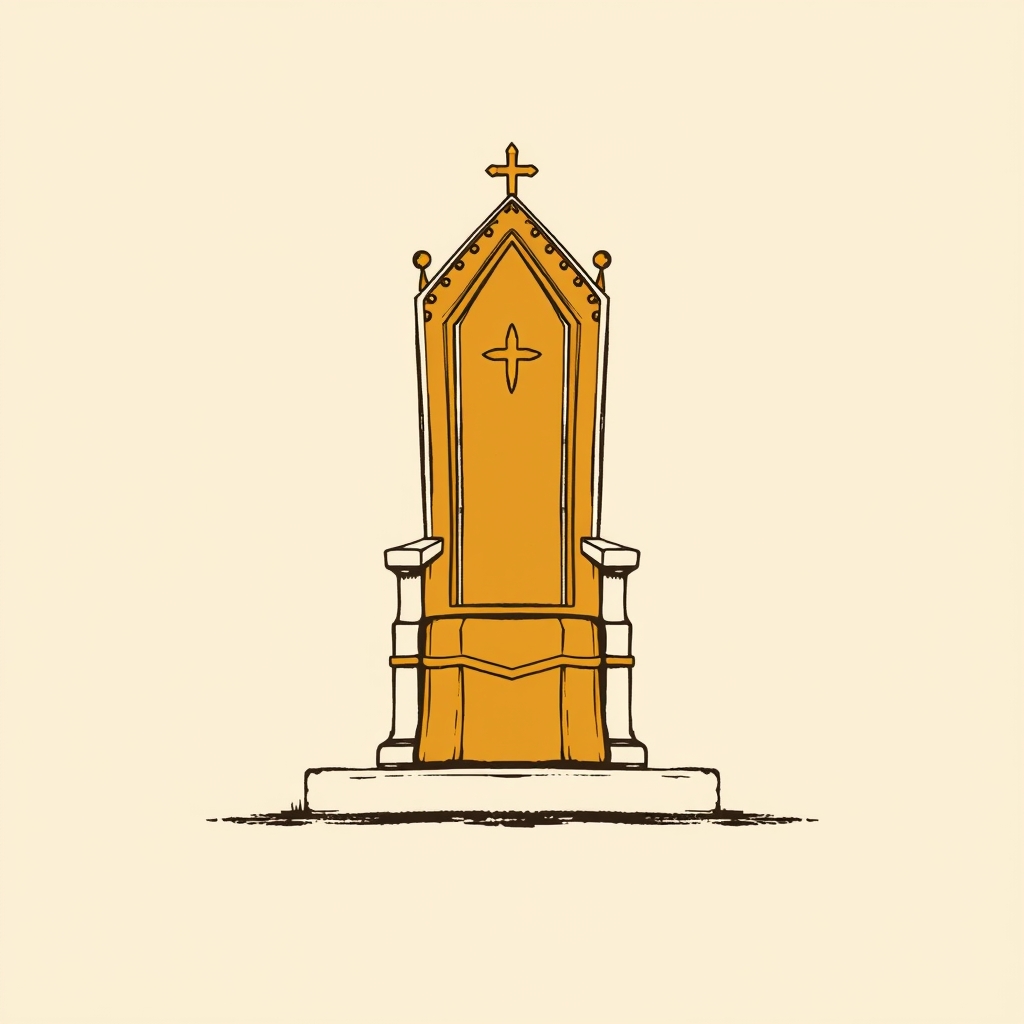
Despite Fabian's resistance, they surrounded him and seated him upon the pontifical throne. The catacombs have preserved the monumental memory of the miraculous election of Saint Fabian. Bosio had rediscovered, and Aringhi reproduced, the exact design of a catacomb bas-relief from the Appian Way, where the pontifical throne, adorned with flowing draperies, is surmounted by a dove that spreads its wings and seems to bring to the pontiff the inspiration of the Holy Spirit.
Administration of the Roman Church
The first layman elected pope, he organized Rome into seven ecclesiastical regions and tasked notaries with collecting the acts of the martyrs.
Fabian was the first pope elected as a simple layman, only to be raised to the summit of the sacred hierarchy. He justified this miraculous choice with his entire life. He assigned a deacon t o each of the s even regions of Christian Rome, and also placed a subdeacon there to direct the notaries charged with collecting the Acts of the Martyrs in their entirety. By his orders, numerous constructions were carried out in the cemeteries and the galleries of the catacombs.
The Church under Emperor Philip
Taking advantage of a period of relative peace during the reign of Emperor Philip, Fabian restored churches and evangelized the Roman high society.
The end of the pontificate of Saint Fabian corresponded to the reign of Emperor Ph ilip, who was a Christian, as was the Empress Severa, his wife. But the Caesar was afraid to act as a Christian. God did not want a murderer to be the first to raise the peaceful banner of the cross over the world. Upon arriving at the throne, Philip had put to death the son of his former master; this is why, on the eve of Easter, when he presented himself at the church of An tioch, the pa triarch Saint Babylas refused to open the doors to him. The emperor submitted. Yet he only rendered services to the Church in the sense that he did not persecute it, and even, during the celebration of the first Roman millennium, he permitted neither gladiator combats nor circus massacres; the Christian spirit had visibly inspired the emperor.
Saint Fabian took advantage of the peace that reigned then to spread the light of the Gospel more and more. Allied by his birth to the imperial family of the Gordians and to almost all those of the ancient patriciate of Rome, he must have extended the conquests of the faith into the highest ranks of society, where one saw, at the end of the third century, such a great number of illustrious Christians. The churches, ruined during the previous persecutions, were repaired and adorned with as much decency as possible.
The Decian persecution and martyrdom
Emperor Decius launched a violent persecution to seize the treasures of the Church; Fabian was the first victim and died by beheading in 250.
Finally , De cius having usurped the empire, and desiring to lay his hands on the treasures which he was led to believe had been left by his predecessor to the Church, renewed the persecutions that had ceased and watered the earth with the blood of t he faithful. Then, says Saint Cyprian, began an endless series of tortures at the hands of the executioners. The persecutions no longer had as their sole end condemnation, and as their supreme consolation death. Cruelty was graduated by a series of refinements, so that the victim would survive the torments. They did not want to grant them the crown too soon. They wore them out in the hope of breaking their courage, and if it happened, thanks to the mercy of God, that they died before the expected time, the executioners felt cheated. Such was the seventh general persecution. Its first victim was Pope Saint Fabian, who had his head severed on January 20, 250.
Impact and burial
The news of his death was spread as far as Carthage by the subdeacon Crementius, while his body was laid to rest in the crypt of Saint Callixtus.
This martyrdom, which brilliantly reopened the era of bloody struggles, had a great impact on Christendom. The clergy of Rome informed the other churches of it; the fact is certain; we even know one of the messengers. The subdeacon Crementius was sent to Carthage with an authentic letter from the Roman priests and deacons, in which the glorious death of the pontiff was, for general edification, recounted in all its details; — alas, we no longer have this account, but an epistle of Saint Cyprian attest s to it. Whil e the great and painful news spread throughout the world, the body of Fabian was lowered into the crypt of his predecessors; — that of Saint Callixtus.
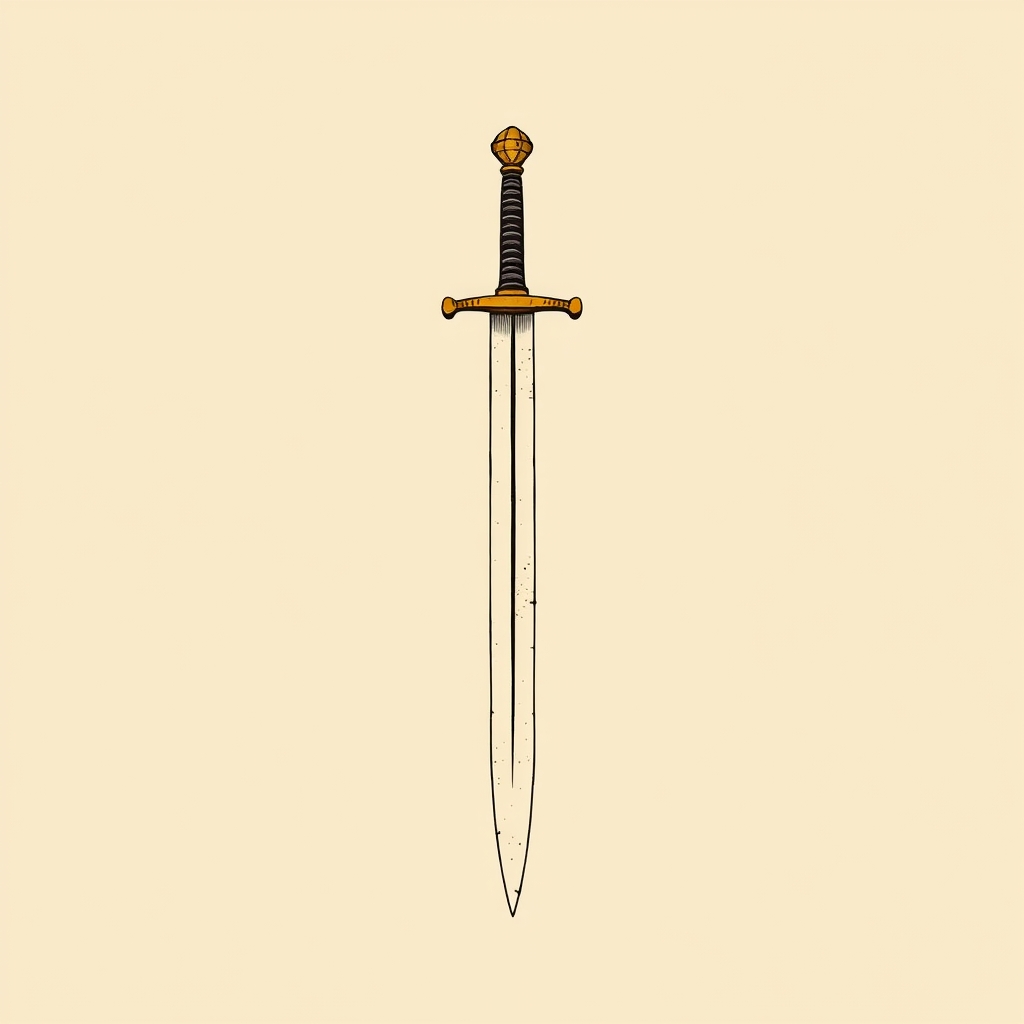
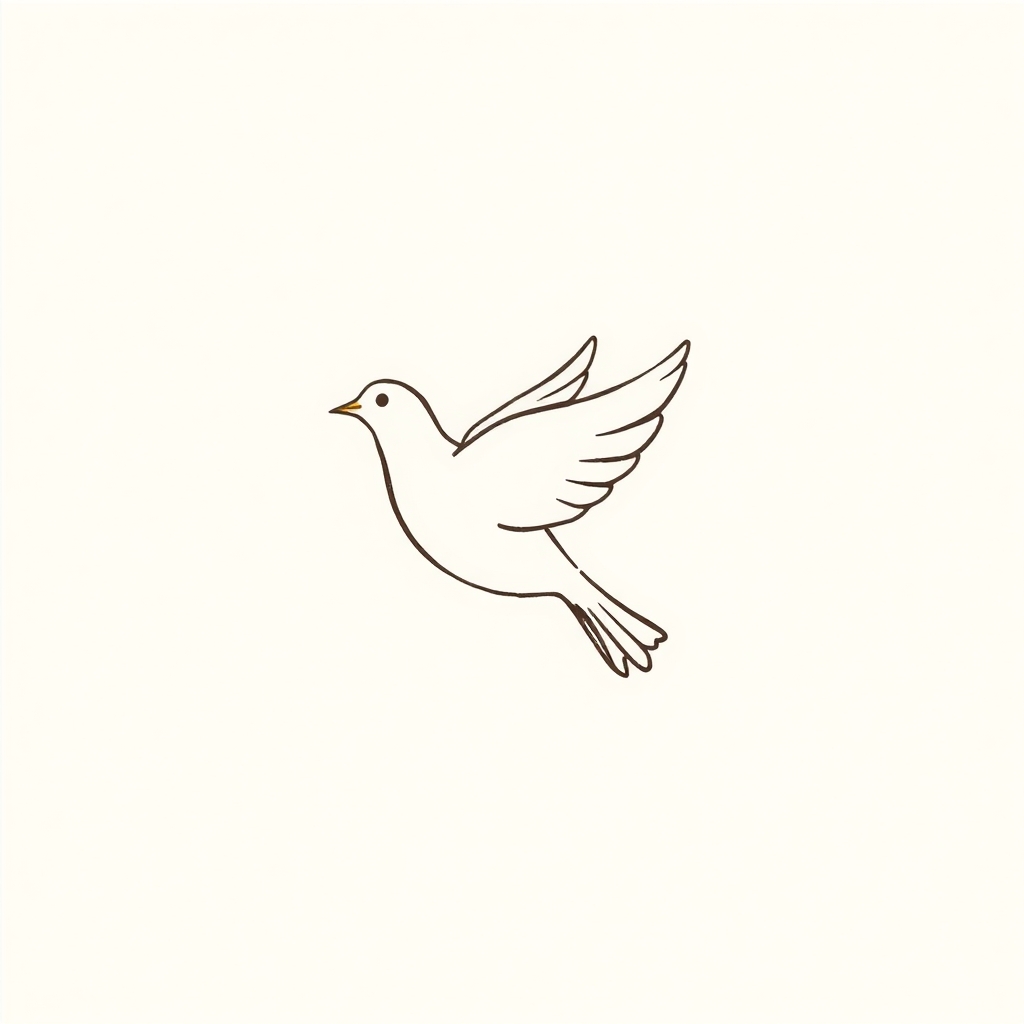
He is given as an attribute the sword, the instrument of his martyrdom, and the dove which designated him for the choice of the Christian people.
Critical study of the epitaph
The initial absence of the title of martyr on his funerary plaque is explained by the need for official recognition by ecclesiastical authority after the vacancy of the see.
## WAS SAINT FABIAN A MARTYR? — HIS WRITINGS.
We still possess in Rome the marble slab that enclosed the precious remains at that time, and in its laconicism it offers us more than one lesson. It seems, in fact, evident that the title of martyr was not inscribed on the epitaph at the same time as the name of the pontiff.
But the martyrdom of Fabian is supported by indisputable authorities, and no doubt as to its authenticity is possible. Why, then, from the beginning, was Fabian not called a martyr on his sepulchral stone, and when was this denomination added?
Here is the explanation given by Mr. Rossi in *Rom a Sotterranea*:
"The solemn title of martyr, to which an honorific cult was attached, was not given at the whim of the faithful or those who drafted funerary inscriptions. We know of the event, seemingly unimportant, which was in Carthage like the first spark of the Donatist schism: a Christian lady, named Lucilla, was reprimanded by the archdeacon Caecilianus and gravely consecrated by the bishop because, upon receiving communion, she kissed the relics of I know not what man, perhaps a martyr, but in any case not yet admitted as such!"
Martyrdom itself was therefore not enough to receive the honors of it; it was also necessary that an act of ecclesiastical authority had recognized and legitimized the title. Now, the pontifical see was vacant for ten months after the death of Fabian and many affairs were postponed to be settled after the accession of his successor. Might this not have been the case for the last and solemn honor rendered to his memory, and would this not be the explanation for the delay in the affixing of his most glorious title to his epitaph? If this induction is true, is this short inscription in several fragments the most ancient and important monument that has come down to us of the *vindication* or canonization of martyrs?
Legislative activity and cult
The Liber Pontificalis and various collections attribute to him decrees on the holy chrism, marriage, and communion, while his cult is associated with Saint Sebastian.
The author o f the Liber Pont ificalis devotes only a few lines to Saint Fabian; but he records an indication that obviously had considerable importance in his time. Fabian, says the chronicler, had numerous constructions made in the cemeteries. The pontificate of this great architect of early Christian Rome had lasted fourteen years, ten months, and eleven days.
He performed ordinations five times in the month of December, and ordained twenty-two priests, seven deacons, and eleven bishops for various dioceses.
We read in the first volume of the great collection of Councils some epistles under his name, full of very grave words and beautiful sentences; but it is not certain that he is the author of the first, because it mentions the heretic Novatian, who only appeared after the death of this most holy Pope. He made several decrees, one of which states that the holy chrism shall be consecrated every year on Holy Thursday, and that what remains from the previous year shall be burned and consumed. He forbade secular judges from interfering in ecclesiastical causes, and he prohibited marriage between persons related by affinity up to the fifth degree; nevertheless, he did not intend for marriages in the fourth degree, once made and consummated, to be broken. He ordered that the faithful receive communion at least on the three main feasts of the year, and made several other similar ordinances, which are found in the book of Councils and in the Decretum.
The Church has always solemnized the feast of Saint Fabian with that of Saint Sebastian, as it appears from the time of Saint Gregory. His office was formerly only semi-double; but Pope Pius V, in the reformation of the breviary in 1550, ordered it to be double, as it is celebrated. We no longer have the acts of the martyrdom of Saint Fabian.
Relics of the Saint are preserved at the Carmel and the Hôtel- Dieu o f Amiens.
Iconography
Signs and attributes

Entities
Narrative network
The names, places, and concepts most present in the entry, weighted by centrality in the text.
The supernatural in their life
The miracles of Saint Fabian, Pope and Martyr
Frequently asked questions about Saint Fabian, Pope and Martyr
Who was Saint Fabian, Pope and Martyr?
Miraculously elected pope after a dove landed on his head, Fabian was the first layman to accede to the pontificate. He organized the Church of Rome and documented the acts of the martyrs before dying himself, beheaded during the persecution of Decius in 250.
What is Saint Fabian, Pope and Martyr the patron saint of?
Patronage of Saint Fabian, Pope and Martyr: Rome.
How is Saint Fabian, Pope and Martyr depicted in Christian art?
In iconography, Saint Fabian, Pope and Martyr is recognizable by: sword, dove, papal throne and tiara.
How did Saint Fabian, Pope and Martyr die?
Saint Fabian, Pope and Martyr suffered martyrdom for the Christian faith (3rd century).
What miracles are attributed to Saint Fabian, Pope and Martyr?
1 miracle are attributed to this saint, notably: Sign / wonder.
Which saints were contemporaries of Saint Fabian, Pope and Martyr?
Contemporaries include: Saint Irenaeus of Lyon, Saint Ausonius of Angoulême, Saint Firmin of Pamplona and Saint Baudilus.
What are the other names of Saint Fabian, Pope and Martyr?
Other forms of the name: Fabianus.
Who are the relatives of Saint Fabian, Pope and Martyr?
Relatives of Saint Fabian, Pope and Martyr: Fabius (father) and Gordiens (allied imperial family).
Annexes & related entities
Structured data for exploration: events, miracles, quotes, places, attributes, patronages, and important entities cited in the text.
Key Events
- Miraculous election by the descent of a dove
- First layman elected pope
- Administrative organization of Rome into seven regions
- Restoration of churches and construction in the catacombs
- Martyrdom by beheading under Emperor Decius
Quotes
-
He is worthy! He is worthy!
Acclamation of the assembly of the faithful