
A nobleman from Toul who became Bishop of Troyes in the 5th century, Saint Loup was a great defender of the faith against the Pelagian heresy in Great Britain. He is famous for having saved the city of Troyes from the fury of Attila in 451 by his spiritual authority alone. After an episcopate of fifty-two years marked by austerity and charity, he died around 478.
Contemporaries

Figures and markers around the normalized period for this entry.
Guided reading
8 reading sections
SAINT LOUP, COMMONLY CALLED SAINT LEU,
BISHOP AND LIBERATOR OF TROYES.
Origins and secular life
Born in Toul into a noble family, Loup shone for his eloquence and character before marrying Pimeniola under the influence of Saint Germanus of Auxerre.
Saint Loup was born in Toul, in the current diocese of Nancy, to noble and virtuous parents. His father, whose name was Epiroque, soon left him an orphan under the guardianship of Alisticus, his uncle, who was a second father to him. This lord took great care of his education and had him trained in all the studies suitable for his station. He soon acquired an illustrious name among his fellow citizens, and the eloquence he displayed in the struggles of the bar, the beauty of his countenance, the gentleness of his character, and the soundness of his judgment made him sought after by the most brilliant societies. He could not resist the urgings of Ger manus, governor of Auxerre and later bishop of the same city, who drew him to his court; but the grandeurs and dissipations of the world were never able to turn his heart away from the virtue that was so dear to him. Despite his reluctance toward marriage, he yielded to the solicitations of Saint Germanus, who had him marry, in 417, at the age of thirty, one of his r elatives, Pimeniola, sister of Saint Hilary, Bishop of Arles, who was highly commendable for her modesty, her reserve, and the beauty of her mind. As they both possessed much piety, fear of God, and faithfulness in His service, their life in marriage was truly a school of wisdom and an example of religion and the most beautiful Christian virtues.
Entry into religious life and episcopal election
After seven years of marriage, the couple separated for God; Loup joined the monastery of Lérins before being elected Bishop of Troyes in 426.
However, knowing what Our Lord says: "If you want to be perfect, go, sell everything you have, give the proceeds to the poor, and come follow me," they resolved by mutual consent to dispose of their goods, to place them in the hands of the poor so that they might carry them into heaven, and to withdraw from the world. Saint Loup went to the monastery of Lérins, then gove rned by the great S aint Honoratus, who was later raised for his merits to the see of Arles, and he took the religious habit under his obedience (424). His year of probation was nothing but continual penance and prayer. He was not content with the abstinences and vigils of the community, which were nonetheless very rigorous; but, with the permission of his holy abbot, he added new austerities. After this trial, he was obliged to make a journey to Mâcon to finish selling his goods and giving them to the poor. It was then that Saint Ursus, Bishop of Troyes, having died, Saint Loup was suddenly taken to fill this see, without it being possible for him to resist the desires of the clergy and the people who had elected him (426). He was undoubtedly very happy to succeed such holy bishops who had worked with great zeal to sanctify their flock and to establish good order in their diocese; but the morals were so corrupt at that time that he still had much to work on to correct the disorders of the clergy and the laity. He applied himself to this first with truly apostolic prudence and vigor, employing for this the power of the word of God, public and private remonstrances, and even, when necessary, the severity of reprimands and punishments.
Struggle against Pelagianism
Sent by the Pope to Great Britain with Germanus of Auxerre, he combated the Pelagian heresy through his preaching and maritime miracles.
He had been working at this work of God for two years when it was learned in France that the heresy of Pelagius and Coelestius was making great progress in Great Britain. The Catholics of that kingdom, not believing they had enough light or skill to refute this heresy, begged the prelates of the Gauls to assist them and to send someone from their body to combat such a pernicious doctrine. By order of Pope Celestine I, the bishops of the Gauls gathered in a Council, probably at Troyes, condemned Pelagianism there, and commissioned Saint Germanus of Auxerre and Saint Lupus of Troyes to go and combat it in Gre at Britain. The two Sai nts accepted this commission with joy, despite the difficulties they foresaw, and, knowing that help given promptly is like a double assistance, they left as soon as possible to reach the place of combat, with the authorization of Pope Celestine I (429). They passed through Nanterre and gave the veil to a young shepherdess: it was Genevieve who, several years later, was to come to Troyes first, then to Arcis, t o lay in a supply of wheat for Paris decimated by famine, and to reward the service rendered to her homeland with numerous and striking miracles.
The journey of our two prelates through Gaul was but a succession of honors rendered to their dignity and their virtues. But the crossing was not as happy. The Venerable Bede, who reports the circumstances of their journey in his first book of the History of the English, says that the demons did what they could to thwart it: at sea, they stirred up such a horrible storm that the sailors no longer doubted the loss of the ship; the winds were so impetuous and the sea so stormy that there was no appearance that a passenger vessel could withstand the violence. The oars were breaking; the masts were falling under the redoubled blows of the raging winds; a few more moments, and sailors and passengers were going to disappear under the foaming waves. But the prayers of the holy prelates were stronger than all the malice of hell: they blessed a few drops of oil, threw them on the waves while invoking the most holy Trinity, and immediately the fury of that element subsided, and the skiff arrived gently at the port. It was already known that they were to come, for the possessed had published it, and news had also been received from the Gauls. Thus, a great number of Catholics came to meet them to receive them, and led them, with much joy and applause, to the places where the error was beginning to take deeper roots. The kingdom soon felt the happiness of their presence, for, by means of their preaching, where erudition and Christian eloquence appeared in all their brilliance, and which, moreover, were full of the spirit of Jesus Christ, they converted most of those who had let themselves be deceived. The miracles they performed contributed not a little to this happy success: for, by the imposition of their hands, the sign of the cross, and the application of holy relics, they healed many sick people and drove out evil spirits from the bodies of several possessed persons.
The principal ministers of the heresy, although astonished by these wonders, to which they could oppose nothing similar, did not, however, consider themselves defeated. They still had the temerity to demand a public discussion against the holy prelates, flattering themselves that, if they could not establish and persuade their dogmas, they would confuse the questions and shake minds by the subtlety of their reasoning. Saint Germanus and Saint Lupus gladly accepted the conference, but it was to the confusion of the heretics: for they refuted all their arguments so learnedly, and showed so clearly the falsity of their opinions and the truth of the doctrine of the Church, that these impious men remained without an answer and dared not appear again. The Venerable Bede, who excellently describes this combat, says that it took place in the presence of an immense crowd; that divine faith, true piety, and Jesus Christ speaking through his servants were on one side; and on the other, pride, human presumption, and Pelagius, filled with a good opinion of himself; and that the eloquence of the holy prelates having appeared there like a great torrent which, by the evident testimonies of the Old and New Testament, carried away all minds, there was, in their favor, a general cry and applause from the whole assembly. They also served extremely well, on the island, to exterminate the remnants of idolatry and to establish the Christian religion everywhere. We will report, in the life of Saint Germanus, all these wonders.
A life of austerity
Upon returning to Troyes, he led a life of extreme deprivation, sleeping on a board and dedicating his income to the poor.
The affairs of religion being happily concluded, the holy prelates returned to their dioceses. One cannot worthily enough represent the holiness of life of which the blessed Lupus gave examples everywhere. The great occupations of his pastoral office did not cause him to diminish any of the austerities he had professed in the cloister. For twenty years, he never lay on a bed, but only on a board. He wore a hair shirt continually, and over it, in winter and summer, he wore only a simple, very poor robe. Out of two nights, he slept only one, or rather, only the smallest part of one, and spent the rest in prayers accompanied by tears, sighs, and frequent glances toward heaven. He also usually ate only every other day: and on Saturdays, he contented himself with a little barley bread. His revenues belonged more to the poor than to himself, and he distributed them to them with such great profusion that almost nothing remained for the subsistence of his household.
The Savior of Troyes facing Attila
In 451, he confronted Attila, the 'Scourge of God', and through his holiness succeeded in sparing the city of Troyes from pillage.
He was thus spending his life in his diocese when Attila, King of the Huns and cruel persecutor of Christians, entered Gaul like a torrent of fire to depopulate its provinces. Throughout his march, one saw nothing but pillage, violence, massacres, fires, and the total ruin of cities and villages. Finally, after having sated himself on all sides with the blood of the Gauls and the Franks, who were beginning to mingle together, he came to Troye s to b esiege it, pillage it, and turn it into a great sepulcher. He was all the more eager for vengeance as he had just been defeated by Aetius on the Catalaunian Plains, in the vicinity of Méry-sur-Seine. The inhabitants were so terrified that they did not have the courage to defend themselves; and indeed, the city was then without arms, without a garrison, without fortifications, and in no state to resist such a powerful enemy. Saint Loup remained alone without apprehension; he assembled his people, exhorted them to penance and prayer, and gave them firm hope in the help of God, if they persevered in raising their hands to heaven in a contrite and humbled spirit. As for him, he solicited this help through extraordinary austerities and continuous tears that he shed at the foot of the altars, dressed in sackcloth and covered in ashes. Finally, having received a revelation that his city would be preserved, he donned his pontifical vestments and, having himself accompanied by his clerics—one of whom was Saint Nemorius, a de acon, who carried on his chest the book of the Gospels, covered in gold plates—he walked in procession before this barbarian king.
When Attila caught sight of this holy company, he ordered his soldiers to strike them down: and, indeed, Nemorius and several other clerics were massacred; but Saint Loup having advanced to speak to him, the barbarian was seized with such profound respect that he stopped the carnage and presented himself to grant him an audience. The Saint asked him who he was, and by what authority he had undertaken to cause such great ravages throughout the earth: "I am," replied the prince, "Attila, King of the Huns, and the Scourge of God." — "If you are the Scourge of God," replied the blessed bishop, "you are welcome, and chastise us as much as the hand that leads you will permit." These words softened the heart of the barbarian so much that he protested he would do no harm to the city of Troyes. The Saint thanked him for it; but wishing to move him away from his diocese as soon as possible, he had him cross the entire city with his army, without him or any of his soldiers being able to recognize where they were, struck by a blindness similar to that of the Syrians whom the prophet Elisha led into Samaria, without them seeing where they were entering, as is reported in the 4th Book of Kings. This conqueror, who had struck terror into all the East and all the West, was so astonished by this prodigy when he realized it that he could hardly believe it, and he confessed that a single bishop had caused him more confusion than all the armies of the empire combined. As the same thing happened to him again in Italy, when Saint Leo, Pope, triumphed over his courage and his fury and prevented him from besieging Rome, the Latins, alluding to the names of Leo and Lupus, Lion and Wolf, said that there was only a Lion and a Wolf capable of defeating such a terrible enemy. Many of these circumstances are not in the life of Saint Loup transcribed by Surius; but they are drawn from several other authors cited by Baronius, in the year 451 of his Annals, who treated at greater length the irruption of Attila into Gaul.
Slander, exile, and return
Suspected of complicity with the Huns, he withdrew to Mount Lansuine and then to Mâcon, where he performed numerous healings before making a triumphant return.
What we find in this life is that this prince, admiring the virtue of our Saint and recognizing the invincible strength of his prayers, wished for him to lead him as far as the Rhine, hoping that his presence would be of great help to his army in safely exiting Gaul, where two hundred thousand of his men had already been cut to pieces in the plains of Méry-sur-Seine. When he arrived at the Rhine, he sent him back, begging him earnestly not to forget him in his prayers. The Saint, upon his return, found the people in a state of terrible agitation: as it was necessary, after such great miracles, for temptation to test him and keep him in humility, there were malicious spirits who began to take offense at him and to suspect him of collusion with Attila, because of the extraordinary favors that his distinguished piety had earned him from that prince. This slander spreading more and more, Saint Loup deemed it appropriate to withdraw for a time from Troyes, while waiting for God to make his innocence known. He withdrew to Mount Lansuine, fifteen leagues from that city, and lived there for two years in great deprivation; but seeing that his diocesans remained in their sentiments, he withdrew to Mâcon, where he had formerly possessed great estates. It was there that divine goodness made his innocence and holiness appear through new wonders. On his way there, he healed a paralytic woman who was lying on the main road. Later, he restored the power of speech to a girl whom the demon had rendered mute. He restored to health Claude, son of a great lord named Germanien, who was on the verge of death. He brought back to perfect convalescence a mother, sister of the holy priest Rusticus, who for ten months had been so crippled in her whole body that she could move neither her feet nor her hands. Finally, these wonders made him so famous in Europe that all the princes took pleasure in granting him what he asked, to the point that Gébavulte, king of the Germans, released, without ransom, at his prayer, several prisoners of war from the land of the Brions or the county of Brienne.
The return of Saint Loup to Troyes was greeted with enthusiasm by his grateful diocesans. But if the city had not suffered from the invasion, thanks to the powerful influence of its illustrious pontiff, the same was not true of the countryside, the theater of the stationing and defeat of Attila's army; they had experienced only too well that grass no longer grew where the barbarian's horse had passed. Thus, Saint Loup, touched by the disasters of these unfortunate populations, hastened to repair them as much as depended on him, and to be the father of his people after having been their defender. The land of the Lassois, near Châtillon-sur-Seine (pagus Latiscensis, Latisco), had just been ruined by the Vandals led by the ferocious Chrocus; Saint Loup settled the victims of the new invasion on these abandoned lands. Soon after, he led other settlers to the village of Mâcon, near Nogent-sur-Seine, and gave them what remained of his patrimonial goods. It is undoubtedly in memory of this benefaction that the neighboring village took the name of Saint-Loup (de Buffigny).
Intellectual and spiritual influence
He trained numerous disciples and maintained a famous correspondence with Sidonius Apollinaris, who described him as the 'Father of Fathers'.
These material concerns, dictated by circumstances, did not prevent the holy prelate from engaging in works of zeal. He had built outside the city a church in honor of Our Lady, which was later that of the abbey of Saint-Martin-ès-Aires, and he delighted in gathering his clergy and disciples there, to converse with them about the things of heaven and to give them the rules of the most tender piety and the most sublime virtue. It was from this illustrious school that Saint Aventinus, Saint Camelianus, and Saint Mesmin emerged. History also includes among his disciples Saint Pulchronius, who was bishop of Verdun, Saint Severus of Trier, and Saint Alpinus of Châlons-sur-Marne.
The advanced age of Saint Loup, while making his virtue more venerable, had not diminished the vivacity of his zeal or the beauty of his mind. The only letter he wrote to Sidonius Apollinaris, as soon as he learned of his election to the see of Clermont, is peremptory proof of this. The new pontiff had asked our Saint for rules of conduct; one will not be displeased to find here the admirable response of Saint Loup. He speaks with the tenderness and authority of a lovable father, and with the eloquence of a skillful orator:
"I give thanks to Our Lord Jesus Christ," he told him, "that, to support and console the Church, his dear spouse, in the midst of the tribulations that afflict her on all sides, he has called you to the episcopate, so that you may be a light in Israel, and that you may fulfill the humble and arduous ministries of the Church with as much care and glory as you fulfilled the most honorable dignities of the Empire. Being in the world, you strove to add to the luster of your birth even more brilliant honors. You believed that a man should not be content to equal others, that he should surpass them. But today, you are in a state where, although superior to all, you must not believe yourself to be so to anyone. You must now work to become the servant of all those of whom you seemed to be the master... Employ then in the affairs of God that spirit which shone with such glory in the affairs of the world. May your people gather from your mouth the thorns of Jesus Christ crucified, just as they previously gathered from your speeches the roses of worldly eloquence... As for me, I am near my end; but I will not believe that I am dying entirely, because I will live in you, and I will leave you to the Church... Oh! If only God would grant me the consolation of embracing you! But I do in spirit what I cannot do otherwise. I honor and embrace in the presence of Jesus Christ, no longer a prefect of the republic, but a bishop of the Church, who is my son by his age, my brother by his dignity, and my father by his merits."
A letter of such a noble style makes us regret not having other works by Saint Loup. One is less surprised that a man so eloquent could calm the furies of the ferocious Attila.
Sidonius replied to Saint Loup in terms that clearly show the respect with which he was imbued for his holiness and his merit. "Blessed be," he said, "the Holy Spirit and the Father of Christ, God almighty, that you, who are the Father of Fathers, the Bishop of bishops, the Saint James of your century, deign to cast your eyes upon all the members of the Church, of whom your charity makes you like a vigilant sentinel. You are capable of consoling all the infirm and you deserve that everyone should consult you." Sidonius adds that Saint Loup "is without contradiction the first of all the bishops of the world, that he is the rule of morals and the column of virtues; that all his colleagues in the episcopate respect and fear his censure; that the oldest are but children in comparison to him, who had already spent nine lustra," that is to say forty-five years, "in the episcopate."
Thus the holiness and advanced age of Saint Loup caused him to be regarded, with reason, as the father and master of those who were his equals in rank. In this same letter, Sidonius, while painting a humble portrait of himself, admirably highlights the virtue of Saint Loup: "I am," he says, "the most unworthy of mortals; for I see myself obliged to preach to others what I do not have the courage to practice. I condemn myself by my own words; and by not doing what I command, I dictate my own sentence every day. But intercede for me with Jesus Christ, like another Moses; less aged than he, you are no less great. Pray to the Lord that he may extinguish in my heart the ardor of my passions, so that I may no longer bring to the altar a strange and profane fire."
This exchange of letters lasted several years, and Sidonius never tired of praising Saint Loup. He repeats once again in another letter that he is the greatest bishop of the Gauls.
Death and Posterity of the Relics
He died around 479 after 52 years of episcopate. His relics, long venerated in Troyes, were largely destroyed during the Revolution.
However, Saint Loup felt the years accumulating on his head, warning him of the approaching end of his pilgrimage here below. He prepared for death through greater fervor in his religious exercises, through a greater love of solitude and silence, and waited in peace for the Lord to call him to the rest he had so well earned through a laborious episcopate of fifty-two years. Finally, the hour of deliverance struck on July 29, 478 or 479.
Saint Loup was buried in the church he had built outside the city, at the current location of Saint-Martin-ès-Aires.
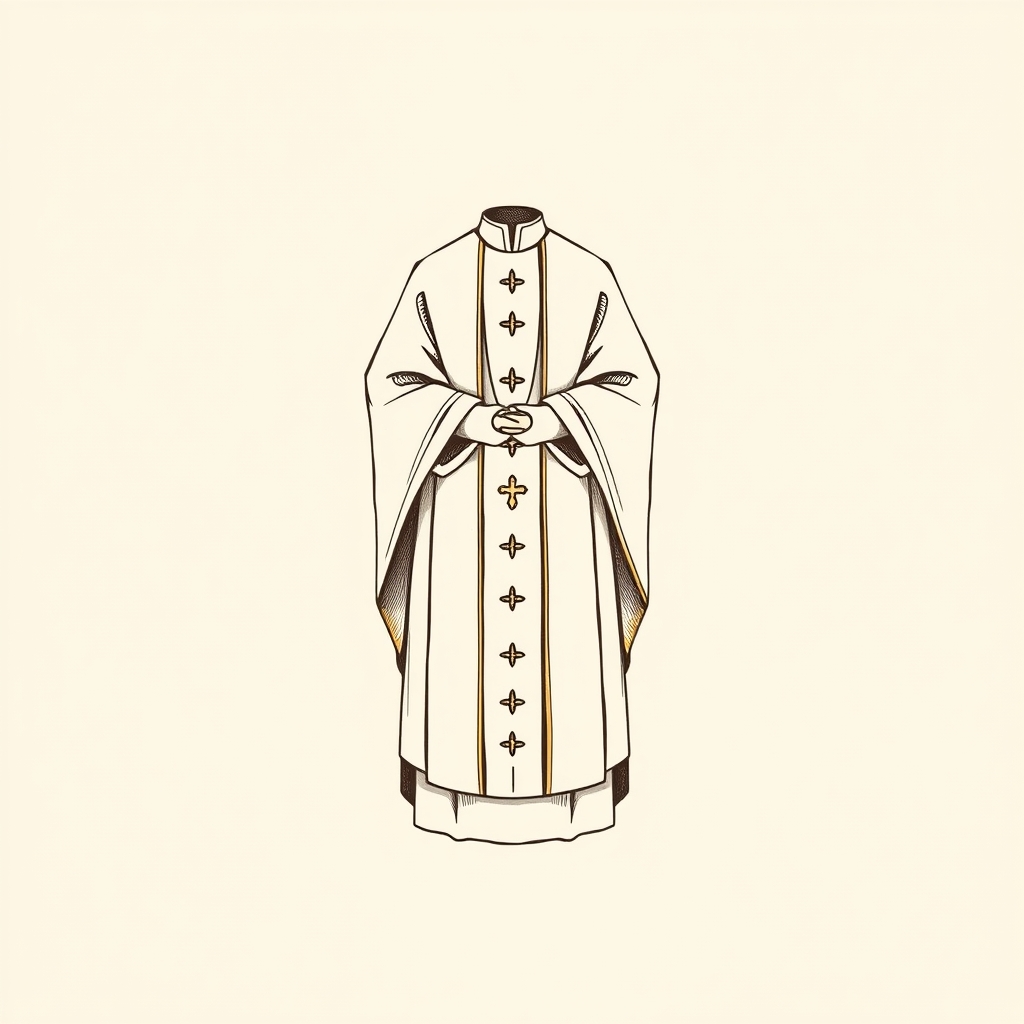
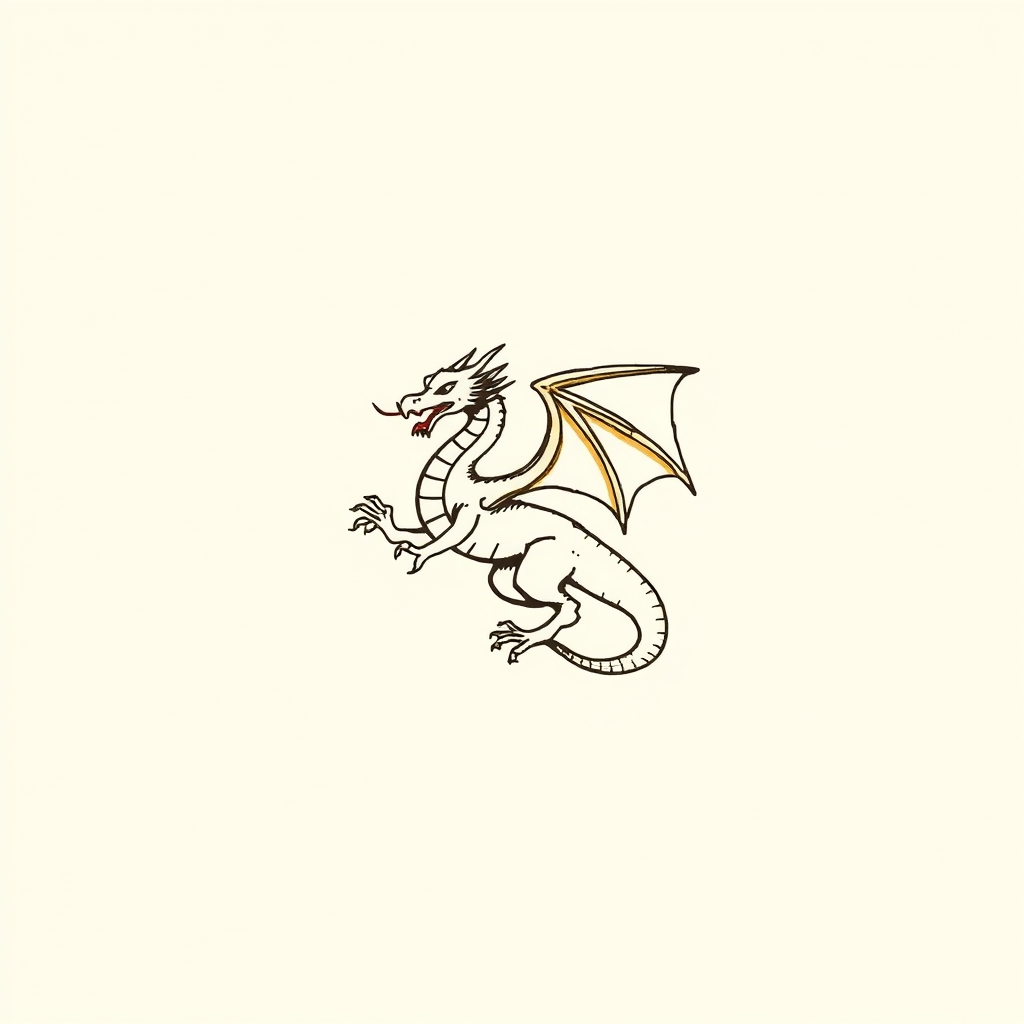
At the abbey of Saint-Loup, a double-sided seal was kept. On one side, Saint Loup was represented in pontifical vestments, with a sword, its point in the ground; one could read this inscription: *Sigillum capituli S. Lupi Trecensis*. The other side showed Saint Loup, in warrior attire and brandishing a sword, mounted on a horse at full gallop. The exergue bore: *S. Lupus, comes Trecensis*. — On one of the wooden panels lining the Fonts chapel at the cathedral, one sees Saint Loup leaving his wife Pimeniole. She, her head adorned with a rich diadem of pearls, in a pink dress, with jewels on her chest and a long gold chain hanging from her belt, walks between two grave figures: one of them, in a rich doublet and covered in a cloak of rich fabric brocaded with gold, holds her hand. The other, in a similar costume, wearing a black toque adorned with gold and a white feather, is at her right; before her, a young white dog; and behind, several women, her attendants. — His journey to England is depicted on a panel of the Fonts chapel at the cathedral. Saint Loup, in pontifical vestments, mitre on his head and cross in hand, puts to flight the devils of England, lodged in the mast of a ship, whose progress they are trying to stop; the Saint, placed on the shore, frightens the demons with a sign. One of the latter, plunged into the water up to his waist, clings to the ship's anchor, at the front of which is a holy abbot, in a black robe, with a gold crozier in his hand. — In one of the cathedral's stained-glass windows, one sees near the choir Saint Loup, in a red cope, holding his crozier in one hand, and in the other a sword, with which he pierces a dragon, symbol of heresy. — Above the western door of the chapel of the Hôtel-Dieu-le-Comte, a stained-glass window forming a rose window represents Attila stopped by Saint Loup at the gates of Troyes, as well as the annual commemorative procession of the event. — At Chappes, of which Saint Loup is patron, a stained-glass window also represents this interview: it is in the side chapel on the south side. Attila, followed by his army, presents himself at the gate of Troyes, from the top of which he is received by Saint Loup. The King of the Huns rides a bay horse richly caparisoned; he is covered in a gold cuirass and wears an imperial crown of the same metal on his head. His warriors are also covered in rich armor. In the corner, to the left of the painting, one sees a soldier of Attila beheading a Saint who, kneeling, receives the mortal blow.
## CULT AND RELICS.
The people's confidence in the holy bishop soon became increasingly vivid. Mothers offered him their children after baptism; they carried them to his tomb when they were sick, and often their faith received its reward. The name of Saint Loup spread rapidly everywhere, and temples in his honor multiplied, not only in his diocese but in several provinces of Gaul and even in Belgium.
For a long time, the disciples of Saint Loup used the pontiff's ornaments and exposed them to the veneration of the faithful. As for his precious body, it rested at the place of his burial until the 9th century, and it was on his tomb that, in 570, Kings Gontram and Chilperic came to swear a reciprocal peace. But, around the year 890, under the episcopate of Boden, the thirty-seventh bishop of Troyes, the clerics of Saint Loup had it transported within the city walls and then placed it in the church of Notre-Dame-de-la-Cité, which they built, and which subsequently became the abbey of Saint-Loup, today the Public Library.
The holy bishop's tomb was opened in 1147, under Everard, the second abbot of Saint-Loup.
His shrine was carried in procession through the villages to collect some offerings; but it was broken during one of these journeys. Jean de Chailley, the 18th abbot, had another one made in 1320, which met the same fate, and was replaced in 1505 by a reliquary, "very well made and one of the most beautiful and rich jewels of France, set up by an ingenious goldsmith of Troyes, called Jean Papillon."
This shrine was made under the care of Nicolas Ferjot, the 24th abbot of Saint-Loup, son of a farrier from Plancy. It was a large bust made entirely of silver and adorned with diamonds, supported by angels, on one of which (the one supporting the bishop's right hand) shone a carbuncle cut in a long square, about three centimeters long, which was valued at more than three thousand gold pieces. The holy bishop was, like the angels, raised on a pedestal of similar workmanship, all gilded and covered with delicately worked enamels. This reliquary was worth at least two hundred thousand francs.
On December 21, 1640, Queen Anne of Austria asked the convent of Saint-Loup for "as much as possible of the holy bishop's relics." The religious made it their duty to accede to this pious and royal desire. At the same time, they distributed parcels of bones to some parishes, such as Saint-Nicolas de Vérose (diocese of Geneva), Saint-Éloi de Noyon, Lévi (diocese of Auxerre), etc.
The venerable bones of the liberator of the Trojan city could not find grace in the eyes of the revolutionaries: on the night of January 9 to 10, 1794, these profaning annihilators opened the shrine and threw the bones into a fire lit in the sacristy called the Preacher's Chamber. Only a portion of the skull could be diverted by two employees of the Church; it is this precious remnant that is kept in a shrine enriched with enamels, coming from the old reliquary.
These enamels are of admirable finesse of execution and a taste in design that recalls the early schools of Italy. There are parts highlighted with gold, and the precious stones that adorn the copes or other costumes are simulated in relief. They are arranged around the shrine in a series of semi-circular arcades; but one can see, from the traces that remain, that they had occupied trefoil-arched frames. There are five enamels on each large face of the shrine, and only three at the ends: in all, sixteen. In the base, below each of the subjects, one reads a legend in angular Gothic; but only fourteen are preserved. The letters are blue on a white background. One sees there:
| How Saint-Loup, being a knight, married the sister of my lord Saint Hilaire. | How Saint-Loup repelled the Pelagian error in the land of England. | | --- | --- | | How Saint-Loup took leave of his wife to enter religion. | How Saint-Loup sent Saint Némor ahead of Attila with his two choir boys. | | How Saint-Loup entered religion and took the habit at Lérins. | How Saint-Loup went to bury Saint Némor and his children who were slain. | | How Saint-Loup, being a religious, was elected to be bishop. | How Saint-Loup preserved the city of Troyes from King Attila and the Vandals. | | How Saint-Loup was CONSECRATED bishop of the city of Troyes. | How Saint-Loup delivered a great number of Burgundians from prison. | | How Saint-Loup and Saint Germain gave the religious habit to Saint Genevieve. | How Saint-Loup healed a woman who was paralyzed. | | How the devils wanted to hinder Saint Loup while passing through Brittany. | How Saint-Loup protected a girl who was infected by a venomous serpent. |
At the middle arcade, at the end of the shrine, the enamel which is without an inscription presents as a subject a martyrdom: a young man on his knees, hands joined, and inclined toward a tomb or coffin, probably that of Saint Loup, is about to have his head cut off with a sword stroke by a man whose rather rich costume seems to indicate that he is not an executioner. The arm of the latter is held back by Death, represented by a naked man with a skeleton's head and emaciated arms.
At the opposite end, between the marriage of Saint Loup and the miracle of the young girl delivered from the devil, one sees Saint Loup on a throne, holding his crozier in one hand, and in the other a sword with which he overturns a winged monster, symbol of heresy. Around the Saint are assistants of all ages and both sexes; several of them are kneeling.
According to immemorial custom, every year, on the Sunday following July 29, the relic of Saint Loup is carried in procession, and a station is made near the Hôtel-Dieu. It is there that, according to an ancient tradition, Saint Loup met the King of the Huns and appeased his fierce temper.
A pious association has been formed under the patronage of Saint Loup, which enjoys special favors. For nine weeks, starting from July 29, a novena of masses is said for the intention of the living and dead associates. On July 30, the holy sacrifice is offered, in addition, for the deceased associates, and on May 10, for the living and the dead. To be part of this Association, it is sufficient to register at the Sacred Heart chapel, at the cathedral, during the octave of Saint Loup.
Chronicle of Lérins, by Vincent Barali; Life of the Saints of the diocese of Troyes, by Abbé Defer; History of the diocese of Toul, by Abbé Guillaume; The Monks of the West, by the Count of Montalembert; V. Trojan Hagiography, by Mgr Crousier.
Iconography
Signs and attributes


Entities
Narrative network
The names, places, and concepts most present in the entry, weighted by centrality in the text.
The supernatural in their life
The miracles of Saint Lupus (Saint Leu)
Frequently asked questions about Saint Lupus (Saint Leu)
Who was Saint Lupus (Saint Leu)?
A nobleman from Toul who became Bishop of Troyes in the 5th century, Saint Loup was a great defender of the faith against the Pelagian heresy in Great Britain. He is famous for having saved the city of Troyes from the fury of Attila in 451 by his spiritual authority alone. After an episcopate of fifty-two years marked by austerity and charity, he died around 478.
What is Saint Lupus (Saint Leu) the patron saint of?
Patronage of Saint Lupus (Saint Leu): Troyes, Chappes and Saint-Loup-de-Buffigny.
What is Saint Lupus (Saint Leu) invoked for?
Saint Lupus (Saint Leu) is invoked for: protection against invasions, healing of sick children and deliverance of the possessed.
How is Saint Lupus (Saint Leu) depicted in Christian art?
In iconography, Saint Lupus (Saint Leu) is recognizable by: pontifical vestments, sword (sometimes point to the ground), dragon (symbol of heresy) and horse (depicted as a count).
What miracles are attributed to Saint Lupus (Saint Leu)?
4 miracles are attributed to this saint, notably: Mastery of the elements, Healing and Protection / deliverance.
Which saints were contemporaries of Saint Lupus (Saint Leu)?
Contemporaries include: Saint Augustine of Hippo, Saint Honoratus of Arles, Saint James of Tarentaise and Saint Jerome of Stridon.
When did Saint Lupus (Saint Leu) die?
Saint Lupus (Saint Leu) died around 500.
What are the other names of Saint Lupus (Saint Leu)?
Other forms of the name: Leu and Lupus.
Who are the relatives of Saint Lupus (Saint Leu)?
Relatives of Saint Lupus (Saint Leu): Epiroque (father), Alistique (uncle), Piméniole (wife) and Saint Hilaire d'Arles (brother-in-law).
Annexes & related entities
Structured data for exploration: events, miracles, quotes, places, attributes, patronages, and important entities cited in the text.
Key Events
- Marriage to Pimeniole in 417
- Entered the monastery of Lérins in 424
- Election to the episcopal see of Troyes in 426
- Mission to Great Britain against Pelagianism in 429
- Meeting and negotiation with Attila in 451
- Two-year voluntary exile on Mount Lansuine
Quotes
-
If you are the scourge of God, you are welcome, and chastise us as much as the hand that leads you will allow.
Response to Attila -
He is without contradiction the first of all the bishops in the world, the rule of morals and the pillar of virtues.
Sidonius Apollinaris